• The move to the new server is done. There are some software and database maintenance updates in process. This has us passing the hat around to help out. We appreciate any donations. Seriously, even a dollar helps. The payment page may be found here - https://www.audiokarma.org/support.html

Help! Pioneer PL-5 turntable spins in reverse

If the issue is that pesky running wild in reverse problem then he needs to replace the speed control circuit board (same circuit as speed switch and power supply) not the board by the tonearm or the motor board.

Agree with you on replacing the speed control circuit, but it's not on that little board with the 33/45 selector switch and fine speed var resistor. The only parts on that board are converting the transformer voltage from AC to DC via a bridge rectifier.

I’m suggesting that he jump out the speed selector switch to see if that is it. He said in his first original post, that the switches were all gummed up with like nicotine or something. If that is true it will mess those switches up. I’ve had the same problem. It would save them a ton of money if he would swap out the switch or the control board.

My 2 cents. If It is the switch itself that is gummed up and causing the motor/board to get a bad signal it will not matter if he replaces the speed controller board, because the switch could be the problem.
 
Last edited:
Drum roll, please....

I received the replacement parts in the mail today, and tonight I simply switched out the motor assembly. It's three screws and done! I put the turntable back together, and... it started spinning backwards. Same problem. No change.

So, once again I took the PL-5 apart, and this time undid the red power wires and switched out the speed control assembly -- the same one I'd been cleaning with Deoxit for an entire weekend. Except for the power wires, it's also just three screws. I cleaned the switches with more Deoxit, put it back together, hit play and...

She's alive!!! She's alive.

After a few adjustments of the speed control switch, she is exactly at 33 rpm.

The turntable came with a Stanton or Pickering Gold cartridge, and I had a new stylus lying around from another turntable project.

Right now I'm spinning the soundtrack for Pretty in Pink... it's a traditional for me following turntable work. It has lots of highs from electronic drum beats (which the Stanton Gold really likes), and it is impressing me with some decent bass. I'm not trading this for my Denon DP-2550 with its Grace tonearm, but this PL-5 is a decent backup turntable.

Plus, it's one more 80s turntable saved from the landfill. And, it's in a good home.

In the coming weeks, I envision me replacing the stylus Shure M97X, which will make this turntable sing the best it can.

Thanks for everyone's help in helping me perform this operation.
 
Nicely done!

I've taken to simply replacing any questionable pots with nice bournes sealed cermets. It's a cheap way to eliminate the problem in it's entirety. It does take a steady hand with a soldering iron though. :)
 
Drum roll, please....

I received the replacement parts in the mail today, and tonight I simply switched out the motor assembly. It's three screws and done! I put the turntable back together, and... it started spinning backwards. Same problem. No change.

So, once again I took the PL-5 apart, and this time undid the red power wires and switched out the speed control assembly -- the same one I'd been cleaning with Deoxit for an entire weekend. Except for the power wires, it's also just three screws. I cleaned the switches with more Deoxit, put it back together, hit play and...

She's alive!!! She's alive.

After a few adjustments of the speed control switch, she is exactly at 33 rpm.

The turntable came with a Stanton or Pickering Gold cartridge, and I had a new stylus lying around from another turntable project.

Right now I'm spinning the soundtrack for Pretty in Pink... it's a traditional for me following turntable work. It has lots of highs from electronic drum beats (which the Stanton Gold really likes), and it is impressing me with some decent bass. I'm not trading this for my Denon DP-2550 with its Grace tonearm, but this PL-5 is a decent backup turntable.

Plus, it's one more 80s turntable saved from the landfill. And, it's in a good home.

In the coming weeks, I envision me replacing the stylus Shure M97X, which will make this turntable sing the best it can.

Thanks for everyone's help in helping me perform this operation.


Well I'm happy you got it working. I had a feeling it was in that speed selection switch. Good news is now it works and in the future all the PL owners can start there if they have similar problems. The PL's seem to be able to deliver some decent sound.

dr
 
That’s what I was saying to start with, but it is impossible to say what’s wrong without being there and actually testing things out. I don’t claim to have magical powers but the only parts with PL 7 to the motor getting power are the speed selector switch and the transformer.

The pl -4,5,7 have the one integrated board that controls the motor. It’s directly connected to it on the back of the motor. On my quartz locked, there isn’t a fine pitch control but there are two separate ones on that board for initial set up so everything is close and the quartz lock can work.

That’s why I started off saying check that switch, and jump it out for 33 only. It would save a lot of time and money to eliminate the selector switch from the loop.

This explains why I can get mine to act up, I need to really clean out that selector switch.

I’m glad OP got it fixed. Maybe he can send back one of his motor assembly to keep viable parts out there. I’m going to try donating my old parts so they don’t go to a landfill and wasted.
 
Last edited:
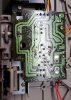
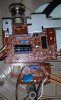
Actually the PL-4 and PL-5 do have a speed control board. See pics.
 

Attachments

  • spd ckt in place_1.jpg
    spd ckt in place_1.jpg
    80 KB · Views: 48
  • spd ckt inverted_1.jpg
    spd ckt inverted_1.jpg
    68.8 KB · Views: 47
Last edited:
Actually the PL-4 and PL-5 do have a speed control board. See pics.


EDIT: I’m with you on this but those boards aren't the speed control circuit, only there for 33/45 switch, pitch var-resistor, and the bridge rectifier (taking AC off the transformer and converting it to DC). Take a look at the PL-4 schematic on vinyl engine.

I don’t agree that little board is the speed control circuit, it's only for pitch control and rectifying bridge assembly (s1rba10). I didn’t remember that on the pl-5 as I had the PL-7 open at the time. The PL-7 puts that bridge rectifier on the little board with the tone arm wires.

But I’m still seeing the problem with the speed selector switch on my used PL purchases. When I have time I think I will eliminate that switch from mine and see if it eliminates the problems that OP asked about. I really think something is going on with them in my PL-units.
 
Last edited:
I’m with you on this! I don’t agree with him either! Stand corrected because I didn’t remember that on the pl-5. I’ll go back and edit so it doesn’t confuse anyone else in the future.

But I’m still seeing the problem with the speed selector switch on my used PL purchases. When I have time I think I will eliminate that switch from mine and see if it eliminates the problems that OP asked about.
Your choice of course. Before you do that I recommend that you try re-flowing some of the solder connections in the circuit.
 
Your choice of course. Before you do that I recommend that you try re-flowing some of the solder connections in the circuit.

I’m thinking that previous owners spilled something on them as one is stained and one was really sticky. If not the problem , then I can start tracking it down the circuit.

EDIT: What I'm trying to say is not being conveyed well with words. Take a look at the schematic below.
 
Last edited:
Actually the PL-4 and PL-5 do have a speed control board. See pics.

Beej, I thought I was way off base there until I dug up the schematic for the pl-4 off vinyl engine this evening. I’m going to have to make edits back to my original thoughts.

I know you have those pics for the little board, but they are not the speed control boards. That little board only has the var- resistor on it and the rectifier bridge assembly and the speed selector switch connected to it. This only differs from the pl-7 where they put the bridge rectifier on the power input.

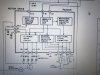
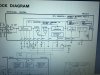
Those caps on there are there to smooth out the power signal coming off of the power transformer. I will show the schematic with a couple pics below.

The speed control board is actually on the motor control assembly board, it’s controlled by an IC chip PA 2007 designated “speed control“ along with it is the motor drive with IC chip PA2008. That was my original post and thought.

Both of those are connected to the large board connected to the back of the motor assembly. They are all part of the main IC chips on the back of the motor.

If you look at the schematics for it you will see that the motor drive has an actual “reverse rotation detection circuit” and a “position signal formation” circuit and also a “rotational direction indicator circuit”. That’s amazing for back then.

So the original poster was correct that if the motor was spinning in the reverse direction, he should replace the motor drive circuit.

Contrary to those thoughts,I thought the whole time that it was that speed selector switch was causing the problem. Only because on mine, when I changed from 33 to 45 it would sometimes spent too fast, or actually spin backwards.

It does not make any sense to me. But that is what happens. My only conclusion is that the gummed up selector is making a dual connection for both 33/45 at the same time. One is probably at a different voltage and causing havoc with the speak control IC chip and circuit.Take a look at the pics below of the schematics for the PL – 4 and you can see where all of the motor and speed control is coming from the large board on the back of the motor assembly.
 

Attachments

  • C3C27DDA-FD41-4355-B0BB-7026C8452B13.jpeg
    C3C27DDA-FD41-4355-B0BB-7026C8452B13.jpeg
    94.4 KB · Views: 19
  • 531F7F9A-C33E-4E70-A038-1FD55F2C71DF.jpeg
    531F7F9A-C33E-4E70-A038-1FD55F2C71DF.jpeg
    89.7 KB · Views: 19
  • 14C2FF45-E9A8-4624-8BFF-6B27FF57BAB6.jpeg
    14C2FF45-E9A8-4624-8BFF-6B27FF57BAB6.jpeg
    88.1 KB · Views: 18
Last edited:
The switch is part of the board we are talking about, it is separate from the motor assembly.

Yes, but it is only for those switches and part of the initial power set up, but that is not the correct board for speed control or motor control with the rotation detection circuit.

That's what I'm saying from the start. I thought, and as he found out, the problem was with the 33/45 selector switch. It is tied in directly to the pitch control.

The OP was correct when he purchased the motor with that board if he wanted to replace the Speed Control circuit. That board he purchased that is on the back of the motor is the SPEED control and motor control, basically all of the control other than power, transformer (obviously) and the rectifier with IC control for smoothing out the voltage further.

Turns out his problem wasn't the speed control though, as he posted after receiving the parts.

Take a look at the schematic I've posted or for even more info, the one on vinyl engine for the PL-4, should be same as the PL-5 and same as PL-7 (only difference is the quartz lock, no fine pitch var-resistor).

dr
 
The more I read the service manual, the more I think it's the motor control board... A full replacement from eBay may be what the doctor ordered.

Following the troubleshooting chart, it seems if the motor runs away (which this one is certainly doing!) Pioneer believes the semiconductors are bad... That means a new used motor assembly.

My $50 turntable is getting expensive, but it's not about the money... it's about not wanting this in some landfill.

I shall attempt to purchase one. I'll eventually update this post.

I looked up the schematic tonight. You were right with the choice and buying the motor control board as it also has the speed control on it. Funny as I look through the circuit, that motor control board has a built in "rotational direction indicator circuit", a "reverse rotation detection circuit", I'm not making this up! But even with this protection, you and me, and a slew of others have had them spin backwards.

Hence, my thought it is the 33/45 selector switch as it gives the initial input for the control circuit prior to that board. Since the 33/45 is just a switch, it is easy to jump it out and see if it eliminates the problem. On the PL-4, 5, since they are not quartz control, they have the pitch control with is right after the 33/45 selector switch. They are tied together in series right from the start and must be causing havoc.

Learning as we go, yes? I am glad you got it going and working. I love the sound they are capable of delivering although I'm not sure how they get such a nice sound.

I'm glad you posted the question as it forced me to dive into the schematic and now I've answered a lot of my own questions. Won't hesitate to repair one of the the PL-4,5,7s now.

Thank you Kylemac, Beej, and all. Definitely a learning experience.

dr
 
Interesting. I have never known that high speed spin or rotational reversal to be related to the motor board. In trouble shooting the matter I've replaced the motor/motorboard and the problem invariably persisted. However, cannibalizing and replacing that power supply/speed circuit invariably resolved the issue. If I recall correctly I've resolved that issue in that way on at least 3 occasions.
 
The rectifying circuit board(not speed control) has the pitch control and the rpm selector switch all connected with the board.

Since it controls the voltage prior to the speed control/ motor control I’m thinking this is now making sense.

I totally agree that the little board is the problem. That’s all I have seen also. I’m finding every used PL - 4,5,7 seems to have been used as a wet bar with some mixed drinks spilled all over the front.

Corruption of the switch, pitch control, and rectify circuit will definitely screw up the main control board function.

Every time I’ve cleaned them up, it has fixed it. Also, I can see where people put a lot of pressure or smack those switches too hard and could probably break that little circuit board, hence your comment of re-soldering those joints is a good idea!
 
Drum roll, please....

I received the replacement parts in the mail today, and tonight I simply switched out the motor assembly. It's three screws and done! I put the turntable back together, and... it started spinning backwards. Same problem. No change.

So, once again I took the PL-5 apart, and this time undid the red power wires and switched out the speed control assembly -- the same one I'd been cleaning with Deoxit for an entire weekend. Except for the power wires, it's also just three screws. I cleaned the switches with more Deoxit, put it back together, hit play and...

She's alive!!! She's alive.

After a few adjustments of the speed control switch, she is exactly at 33 rpm.

The turntable came with a Stanton or Pickering Gold cartridge, and I had a new stylus lying around from another turntable project.

Right now I'm spinning the soundtrack for Pretty in Pink... it's a traditional for me following turntable work. It has lots of highs from electronic drum beats (which the Stanton Gold really likes), and it is impressing me with some decent bass. I'm not trading this for my Denon DP-2550 with its Grace tonearm, but this PL-5 is a decent backup turntable.

Plus, it's one more 80s turntable saved from the landfill. And, it's in a good home.

In the coming weeks, I envision me replacing the stylus Shure M97X, which will make this turntable sing the best it can.

Thanks for everyone's help in helping me perform this operation.

Thanks so much kylemac for posting your solution!

Thanks to both you and beej I was able to fix my Pioneer PL-420 (a PL-5 with black buttons)

It was spinning erratically, forward at a variable speed and even occasionally backward.

After I took it apart (thanks beej for the disassembly/reassemblyinstructions), I cut a small slit in the white plastic housing of the speed selector switch so that I could flood the inside with Deoxit. I then worked the button rapidly like a fire button on a classic arcade game (think "Defender"). I repeated this process three times with the switch, then I flooded the pitch adjustment pot with Deoxit and turned the pitch wheel back and forth a bunch of times - also repeating this process three times.. Finally, I put a piece of tape over the slit in the selector switch and reassembled the turntable. Now it works just great!

picture of selector switch and where I cut a the small slit
https://i.imgur.com/LTgDfVh.jpg

video of turntable spinning erratically (forwards, backwards)
https://streamable.com/e55up

video of fixed turntable turning at a steady speed
https://streamable.com/4gaqo
 
Last edited:
Don't know if it is relevant, but the switches in that series all need a serious cleaning. When they first came out, there was a service bulletin from Pioneer to change the feet - there was a problem with sulfide outgassing and the switches had silver contacts, which caused lots of speed problems. My 2 cents....
 
Don't know if it is relevant, but the switches in that series all need a serious cleaning. When they first came out, there was a service bulletin from Pioneer to change the feet - there was a problem with sulfide outgassing and the switches had silver contacts, which caused lots of speed problems. My 2 cents....

Think it’s the problem in mine at least. So far my backwards rotation and speed problems have all been fixed by cleaning them. Add on 1 cent.
 
Just to be clear on this (I can be terribly dense at times) you were able to resolve your reverse rotation issue by cleaning the speed switch and the fine speed adjustment pot? Am I correct?
 
Back
Top Bottom