


You are using an out of date browser. It may not display this or other websites correctly.
You should upgrade or use an alternative browser.
You should upgrade or use an alternative browser.
Help! Pioneer PL-5 turntable spins in reverse
- Thread starter kylemac
- Start date
-
- Tags
- pioneer pl-5 speed issues


sam562
Member
Just to be clear on this (I can be terribly dense at times) you were able to resolve your reverse rotation issue by cleaning the speed switch and the fine speed adjustment pot? Am I correct?
Yes that is correct.
I can't be sure if it was the switch or the pot that was causing the problem.
Btw, some guy (I think from this forum) put a video on youtube showing how to work on a PL-5 using your instructions:

Thanks for getting back to me. I must confess I've run into that problem several times and have resorted to replacing the speed circuit after 3 attempts at de-oxing the switch and speed pot. I'll be more persistent going forward. Thanks also for posting the video. This gent is doing it right. Do you know who it is? I'd like to thank and congratulate him.
sam562
Member
Thanks for getting back to me. I must confess I've run into that problem several times and have resorted to replacing the speed circuit after 3 attempts at de-oxing the switch and speed pot. I'll be more persistent going forward. Thanks also for posting the video. This gent is doing it right. Do you know who it is? I'd like to thank and congratulate him.
Sorry, I don't know him - I just happened upon his video while looking for info about the turntable.
I'm just guessing he's on AK because he has your disassembly guide.

sam562
Member
Here's an update to my PL420 speed control problem (long):
TL;DR: For speed problems on direct drive Pioneer PL turntables reflow all solder joints on the motor if cleaning the speed pots and speed selector switch doesn't work.
The erratic spinning returned.
I have somewhat limited experience troubleshooting electronics but I went ahead and took the turntable back apart. I tested the continuity of the wire leads and used jumper wires to bypass the speed adjustment pot and speed selector but I still had erratic spinning, and to make things worse suddenly the platter started spinning ridiculously fast - a run away motor situation.
I put the turntable away until this week when I was inspired to pull it back out after noticing that the PL5/PL420 service manual had a troubleshooting flow chart specifically for "Motor runs away"
The first step listed is to check that the Vcc voltage is 28.8v DC.
Mine read just over 30v DC and my readings at the lone voltage regulator transistor 2SD985 (B: 30.6v, C: 44.4v E: 30.6v), were all higher than the specified voltage (B: 30v, C: 38v, E: 28.8v) The service manual says that if the Vcc isn't 28.8v then your power supply is bad full stop. The AC voltage from the transformer was 33.8v which seemed high, but there was none specified. Was my mains voltage too high at 123vac at the outlet?
I guessed that some component(s) probably needed to be replaced in the power supply, probably a capacitor, maybe even the darlington 2SD985 transistor? I bought a 1000uf/50v electrolytic capacitor and the replacement 2SD985 transistor online. I also bought a cheap TC1 multi-function tester. After pulling and testing all of the components of the power supply and replacing the transistor and filter cap I still had a runaway spinning platter.
Convinced that my power supply was still at fault for overvoltage, I disassembled my working daily driver Pioneer PL7 turntable (nearly identical to the PL420) to compare the power supply voltage. Wouldn't you know it, its Vcc voltage was even a bit higher than my screwed up PL420!
I figured the power supply probably wasn't the issue after all.
Looking at the PL420 motor I noticed how stingy they were with the solder on the backside of the PC board.
After simply reflowing all of the solder joints on the back of the motor the platter now spins up to a rock steady speed, just like new.
I must have had a cold solder joint somewhere all along.
So if your PL series Pioneer direct drive turntable (with a speed adjusting knob) spins erratically it's still probably just that the speed adjustment pot or speed selector switch needs cleaning with contact cleaner. But if you still have problems after that or if your direct drive table doesn't have a speed adjusting knob I strongly recommend reflowing all solder joints on the motor pc board before you start replacing things. It honestly doesn't take too long to add solder to ~95 joints, maybe 30 minutes or so and you eliminate a bunch of important variables for almost no money.
TL;DR: For speed problems on direct drive Pioneer PL turntables reflow all solder joints on the motor if cleaning the speed pots and speed selector switch doesn't work.
Pioneer direct drive turntables that this may apply to: PL4 PL5 PL7 PL200 PL200X PL220 PL250 PL255 PL260 PL300 PL320 PL400 PL420 PL430 PL720 PL730 PL930
TL;DR: For speed problems on direct drive Pioneer PL turntables reflow all solder joints on the motor if cleaning the speed pots and speed selector switch doesn't work.
The erratic spinning returned.
I have somewhat limited experience troubleshooting electronics but I went ahead and took the turntable back apart. I tested the continuity of the wire leads and used jumper wires to bypass the speed adjustment pot and speed selector but I still had erratic spinning, and to make things worse suddenly the platter started spinning ridiculously fast - a run away motor situation.
I put the turntable away until this week when I was inspired to pull it back out after noticing that the PL5/PL420 service manual had a troubleshooting flow chart specifically for "Motor runs away"
The first step listed is to check that the Vcc voltage is 28.8v DC.
Mine read just over 30v DC and my readings at the lone voltage regulator transistor 2SD985 (B: 30.6v, C: 44.4v E: 30.6v), were all higher than the specified voltage (B: 30v, C: 38v, E: 28.8v) The service manual says that if the Vcc isn't 28.8v then your power supply is bad full stop. The AC voltage from the transformer was 33.8v which seemed high, but there was none specified. Was my mains voltage too high at 123vac at the outlet?
I guessed that some component(s) probably needed to be replaced in the power supply, probably a capacitor, maybe even the darlington 2SD985 transistor? I bought a 1000uf/50v electrolytic capacitor and the replacement 2SD985 transistor online. I also bought a cheap TC1 multi-function tester. After pulling and testing all of the components of the power supply and replacing the transistor and filter cap I still had a runaway spinning platter.
Convinced that my power supply was still at fault for overvoltage, I disassembled my working daily driver Pioneer PL7 turntable (nearly identical to the PL420) to compare the power supply voltage. Wouldn't you know it, its Vcc voltage was even a bit higher than my screwed up PL420!
I figured the power supply probably wasn't the issue after all.
Looking at the PL420 motor I noticed how stingy they were with the solder on the backside of the PC board.
After simply reflowing all of the solder joints on the back of the motor the platter now spins up to a rock steady speed, just like new.
I must have had a cold solder joint somewhere all along.
So if your PL series Pioneer direct drive turntable (with a speed adjusting knob) spins erratically it's still probably just that the speed adjustment pot or speed selector switch needs cleaning with contact cleaner. But if you still have problems after that or if your direct drive table doesn't have a speed adjusting knob I strongly recommend reflowing all solder joints on the motor pc board before you start replacing things. It honestly doesn't take too long to add solder to ~95 joints, maybe 30 minutes or so and you eliminate a bunch of important variables for almost no money.
TL;DR: For speed problems on direct drive Pioneer PL turntables reflow all solder joints on the motor if cleaning the speed pots and speed selector switch doesn't work.
Pioneer direct drive turntables that this may apply to: PL4 PL5 PL7 PL200 PL200X PL220 PL250 PL255 PL260 PL300 PL320 PL400 PL420 PL430 PL720 PL730 PL930
Last edited:
This is excellent stuff. Thanks for that. I might add that I've encountered this problem on several in this series that I've worked on. It's interesting that the problem was actually in the motor because I've tried replacing the entire motor board assembly with one I knew to be working properly and the problem persisted. If I may, I'd like to add that reflowing the solder in other soldered components may be necessary if reflowing the motor board doesn't do the trick.Here's an update to my PL420 speed control problem (long):
TL;DR: For speed problems on direct drive Pioneer PL turntables reflow all solder joints on the motor if cleaning the speed pots and speed selector switch doesn't work.
The erratic spinning returned.
I have somewhat limited experience troubleshooting electronics but I went ahead and took the turntable back apart. I tested the continuity of the wire leads and used jumper wires to bypass the speed adjustment pot and speed selector but I still had erratic spinning, and to make things worse suddenly the platter started spinning ridiculously fast - a run away motor situation.
I put the turntable away until this week when I was inspired to pull it back out after noticing that the PL5/PL420 service manual had a troubleshooting flow chart specifically for "Motor runs away"
The first step listed is to check that the Vcc voltage is 28.8v DC.
Mine read just over 30v DC and my readings at the lone voltage regulator transistor 2SD985 (B: 30.6v, C: 44.4v E: 30.6v), were all higher than the specified voltage (B: 30v, C: 38v, E: 28.8v) The service manual says that if the Vcc isn't 28.8v then your power supply is bad full stop. The AC voltage from the transformer was 33.8v which seemed high, but there was none specified. Was my mains voltage too high at 123vac at the outlet?
I guessed that some component(s) probably needed to be replaced in the power supply, probably a capacitor, maybe even the darlington 2SD985 transistor? I bought a 1000uf/50v electrolytic capacitor and the replacement 2SD985 transistor online. I also bought a cheap TC1 multi-function tester. After pulling and testing all of the components of the power supply and replacing the transistor and filter cap I still had a runaway spinning platter.
Convinced that my power supply was still at fault for overvoltage, I disassembled my working daily driver Pioneer PL7 turntable (nearly identical to the PL420) to compare the power supply voltage. Wouldn't you know it, its Vcc voltage was even a bit higher than my screwed up PL420!
I figured the power supply probably wasn't the issue after all.
Looking at the PL420 motor I noticed how stingy they were with the solder on the backside of the PC board.
After simply reflowing all of the solder joints on the back of the motor the platter now spins up to a rock steady speed, just like new.
I must have had a cold solder joint somewhere all along.
So if your PL series Pioneer direct drive turntable (with a speed adjusting knob) spins erratically it's still probably just that the speed adjustment pot or speed selector switch needs cleaning with contact cleaner. But if you still have problems after that or if your direct drive table doesn't have a speed adjusting knob I strongly recommend reflowing all solder joints on the motor pc board before you start replacing things. It honestly doesn't take too long to add solder to ~95 joints, maybe 30 minutes or so and you eliminate a bunch of important variables for almost no money.
TL;DR: For speed problems on direct drive Pioneer PL turntables reflow all solder joints on the motor if cleaning the speed pots and speed selector switch doesn't work.
Pioneer direct drive turntables that this may apply to: PL4 PL5 PL7 PL200 PL200X PL220 PL250 PL255 PL260 PL300 PL320 PL400 PL420 PL430 PL720 PL730 PL930
Again, thanks for sharing your success with us. Very much appreciated.

desertrat748
Super Member
I went back and read most of this thread. I wish I could go back and just eliminate half of what I posted. I apologize to all if my responses were too matter of fact.
I’ve realized that there just too many things that can cause similar problems in these PL series.
After lots of talk with an electronic repair technician (David) who does it as his job and as a hobby, he’s convinced me that I shouldn’t focus on just one area.
It could be anywhere in the electric path and it is best to check everything out as much as possible before removing or replacing anything. Solder joints, plug connects, oxidation on switches, cracks in cb, etc.
I have heard “bad capacitors” so many times that I was believing it “most likely” a bad capacitor in a lot of my repair attempts. It was surprisingly to hear from David, that in his 40 years of repair, it was not a common problem compared to bad solder joints or plug connections, etc.
I think his words were “rare” occurrence. Furthermore he said that the old capacitors seemed to be of better quality than today’s build. “Older ones seem to last 40 years or more and I’ve had to replace new ones I’ve installed after 3 years. Don’t replace any of them just to update your board.” His words.
I have to respect someone who has been doing it for 40 years full time. Plus he’s restored a few JVC TT-101.
For the ones repaired I have to replace the motor on one, with it’s separate connected circuit board. I have had two that have had the failing speed select switches and one with oxidation on the pitch pot.
I probably should have thoroughly checked solder joints on all but didn’t. In future endeavors I think I will slow down and not jump to conclusions.
Thanks to everyone that have helped out on any troubles and repairs.
I’ve realized that there just too many things that can cause similar problems in these PL series.
After lots of talk with an electronic repair technician (David) who does it as his job and as a hobby, he’s convinced me that I shouldn’t focus on just one area.
It could be anywhere in the electric path and it is best to check everything out as much as possible before removing or replacing anything. Solder joints, plug connects, oxidation on switches, cracks in cb, etc.
I have heard “bad capacitors” so many times that I was believing it “most likely” a bad capacitor in a lot of my repair attempts. It was surprisingly to hear from David, that in his 40 years of repair, it was not a common problem compared to bad solder joints or plug connections, etc.
I think his words were “rare” occurrence. Furthermore he said that the old capacitors seemed to be of better quality than today’s build. “Older ones seem to last 40 years or more and I’ve had to replace new ones I’ve installed after 3 years. Don’t replace any of them just to update your board.” His words.
I have to respect someone who has been doing it for 40 years full time. Plus he’s restored a few JVC TT-101.
For the ones repaired I have to replace the motor on one, with it’s separate connected circuit board. I have had two that have had the failing speed select switches and one with oxidation on the pitch pot.
I probably should have thoroughly checked solder joints on all but didn’t. In future endeavors I think I will slow down and not jump to conclusions.
Thanks to everyone that have helped out on any troubles and repairs.
sam562
Member
This is excellent stuff. Thanks for that. I might add that I've encountered this problem on several in this series that I've worked on. It's interesting that the problem was actually in the motor because I've tried replacing the entire motor board assembly with one I knew to be working properly and the problem persisted. If I may, I'd like to add that reflowing the solder in other soldered components may be necessary if reflowing the motor board doesn't do the trick.
Again, thanks for sharing your success with us. Very much appreciated.
Thanks Beej, Good idea.
In fact in the course of pulling and testing all of the components on the rectifier/speed control board I ended up reflowing most of the speed control board as well.
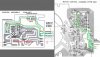
The fact that the "speed control adj" (pitch adjustment) wheel and speed selector switch are on the same pc board as most of the power supply components really threw me at first.
I thought that they must be somehow switching/adjusting the voltage from the power supply on the same board. But no, it turns out they are completely isolated from each other on the pc board. The speed control pot and selector switch are functioning as a wired remote control specifically for pin 6 of the PA2007 IC on the motor pc board:
desertrat748
Super Member
Thanks Beej, Good idea.
In fact in the course of pulling and testing all of the components on the rectifier/speed control board I ended up reflowing most of the speed control board as well.
The fact that the "speed control adj" (pitch adjustment) wheel and speed selector switch are on the same pc board as most of the power supply components really threw me at first.
I thought that they must be somehow switching/adjusting the voltage from the power supply on the same board. But no, it turns out they are completely isolated from each other on the pc board. The speed control pot and selector switch are functioning as a wired remote control specifically for pin 6 of the PA2007 IC on the motor pc board:
View attachment 2580367
I thought the same thing with the voltage switching on the speed control. My pl-5 was possessed. Speeding up and slowing down to ridiculous speeds. Then would play backwards.
Thanks for the wiring diagram. Very interesting to see how it’s isolated.
Haven’t had a problem since though. Very interesting.