• The move to the new server is done. There are some software and database maintenance updates in process. This has us passing the hat around to help out. We appreciate any donations. Seriously, even a dollar helps. The payment page may be found here - https://www.audiokarma.org/support.html

Here It Is: The All Singing All Dancing HTMCPS

Thanks

No, you need both a 7809 and a 7909, one on each leg ref'ed to the central neutral, with the stabilizing caps.
Disregarding the nearly inaudible noise is easier.

I am going to try what Phil suggests first...

Ignore a noise? Me ? LOL

I still don't understand the 7809 7909 vs the 1 18v regulator

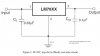
I gather the 7809 is the positive voltage regulator, the 7909 the negative. So would the center pin of each be connected to the neutral coming in as ref ?

So taking the 7809 as an example ...would it get positive wire to .33uf cap to pin 1, neutral to pin 2, pin 3 to .1uf cap to red wire to HTMCPS + ?

Maybe this is a better representation of what I mean - see below


Same for negative using a 7909?

1) Do I have that right?
2) The net voltage at that point is 18v ?

Thanks for the help, I may not do it but want to understand it
 

Attachments

  • better diagram.jpg
    better diagram.jpg
    28.9 KB · Views: 19
Last edited:
The pin-out is different between the two regs so watch that, the tab is ground ref on one but not the other F.I. Otherwise the I/O stabilizing caps are the same.
This a center-ref'ed balanced power system, the regulators should treat it as such for best stability. A single-sided reg won't do that.
 
Last edited:
Steve,

It's been suggested that 10 ohm - 100 ohm isolation resistors in the supply rails for the op amps will reduce noise, what are your thoughts on this?

OpAmpFilter_zps76f09fea.png


As to disregarding the noise, some people can and some can't. Rod Elliot says if it's lower than the surface noise of the record it's not worth worrying about, but some people turn the volume right up and put their ear near the speakers and hope to hear nothing.
 
Last edited:
I am going to try what Phil suggests first...

Ignore a noise? Me ? LOL

I still don't understand the 7809 7909 vs the 1 18v regulator

I gather the 7809 is the positive voltage regulator, the 7909 the negative. So would the center pin of each be connected to the neutral coming in as ref ?

So taking the 7809 as an example ...would it get positive wire to .33uf cap to pin 1, neutral to pin 2, pin 3 to .1uf cap to red wire to HTMCPS + ?

Maybe this is a better representation of what I mean - see below


Same for negative using a 7909?

1) Do I have that right?
2) The net voltage at that point is 18v ?

Thanks for the help, I may not do it but want to understand it

Here is what is going on. Some devices need simply one voltage. Typically a positive DC voltage with respect to ground. These op amps are different from that. They need both a positive voltage with respect to ground and a negative voltage with respect to ground. To be noise free, both the positive voltage and the negative voltage must be stable and fixed with respect to ground. Since ground is the reference for the ENTIRE system once it is hooked up, this is vital to a noise free system. One 18 volt regulator would fix the two voltage with respect to each other but would allow the ground to float between them. Once hooked up to your system, that ground point would become fixed at the ground potential of the rest of the system and then both voltages would start to float. When one voltage floats high the other will float low. You need fixed voltages for the op amps to do their jobs correctly. The 2 regulators will get that for you.

Does this help?

Shelly_D
 
No joy

Changed R2 and R10 to 150ohm...Now this actually INCREASED gain...so where I might normally listen with the pre-amp on 35, 45 was now good. well, 45 with no music had a very very low hiss...but turn it up (especially above 20 and its a roaring hiss)

So I went back to 18v (2 9v). Guess what? Same thing. Strange, I don't remember that. Sigh. So I Went back to the 24v, left the 150ohms in place and will see what sound quality is like.

Thanks for the help...Phil...what about you 10ohm rail idea?
 
what if

I replaced the 150 ohm resistors with 150ohm 5w wirewound resistors ?

Based on this
http://www.aikenamps.com/ResistorNoise.htm

Thoughts ?

Also wonder if I should go to 100ohm ? Too much gain ?

I say it based on this
•The first stage of an amplifier is the most critical; in order to maximize the overall amplifier signal-to-noise ratio, the first stage gain should be maximized. This will raise the signal level farther above the noise floor of following stages.
 
Hi Mario,

Sorry for the late response.

Aside from the switchable power between MM/MC, the input is also switchable.

Regards.


Hi Andy,

Nice build :thmbsp:
I've finished building and testing the CNC and want to start the HTMCPS too. Thought to build it in one single case, switchable for the very reasons you mentioned. Do you also switch the RCA for input and/ or output ?

Regards :)
Mario
 
I replaced the 150 ohm resistors with 150ohm 5w wirewound resistors ?

Based on this
http://www.aikenamps.com/ResistorNoise.htm

Thoughts ?

Also wonder if I should go to 100ohm ? Too much gain ?

I say it based on this
•The first stage of an amplifier is the most critical; in order to maximize the overall amplifier signal-to-noise ratio, the first stage gain should be maximized. This will raise the signal level farther above the noise floor of following stages.

Rob,

The lower the resistor value the lower the gain.

Gain is calculated by dividing the value of R2/R10 by the internal resistance of your cart and adding 1.

So if you have 250 ohms for R2/R10 divided by the 12 ohms of the cart = 20.83 + 1 = 21.83 x the input or 26.8db.

Then you change to 150 ohms divided by 12 + 1 = 13.5 x the input or 22.6db.


Might be a case of trial and error.
 
Last edited:
Hi Rob,
Why did you opt for high power(5w)wirewound resisters.1/4 or 1/2 watts should be good for low noise.Wirewound resisters could increase noise IMO.

Regards,
Sachin
 
I am going to try what Phil suggests first...

Ignore a noise? Me ? LOL

I still don't understand the 7809 7909 vs the 1 18v regulator

I gather the 7809 is the positive voltage regulator, the 7909 the negative. So would the center pin of each be connected to the neutral coming in as ref ?

So taking the 7809 as an example ...would it get positive wire to .33uf cap to pin 1, neutral to pin 2, pin 3 to .1uf cap to red wire to HTMCPS + ?

Maybe this is a better representation of what I mean - see below


Same for negative using a 7909?

1) Do I have that right?
2) The net voltage at that point is 18v ?

Thanks for the help, I may not do it but want to understand it

The 10^-1/2W metal film series resistors can help with PS-generated noise but probably won't make much difference with a battery PS.
 
Makes no sense

Rob,

The lower the resistor value the lower the gain.

Might be a case of trial and error.

I believe you but when I went down to 150 ohm, gain INCREASED as evidenced by how much volume I applied at the preamp level. It took much less volume to get the same sound

Also, reading that article, it recommends wire wound and use higher wattage (even though lower is sufficient) for the reasons outlined in the article...

Experiments will continue...thank god you made it so the resistors are easily swapped...
 
Increased gain= increased noise floor and output level for input level. Unless the noise goes up exponentially for gain / PS voltage it's a pretty direct relationship if the noise floor stays basically the same for a given listening level/input level.
 
IMO the gain should be so that your normal listening level is at least 10.00 o'clock and no more than 12.00 o'clock.

In a quiet room if you turn up the volume you shouldn't hear any noise until 2.00 o'clock.
 
Last edited:
Sorry..but the math is off

Rob,

The lower the resistor value the lower the gain.

Gain is calculated by dividing the value of R2/R10 by the internal resistance of your cart and adding 1.

So if you have 250 ohms for R2/R10 divided by the 12 ohms of the cart = 20.83 + 1 = 21.83 x the input or 26.8db.

Then you change to 150 ohms divided by 12 + 1 = 13.5 x the input or 22.6db.

First, the cart is 12ohms but the first resistor is 10ohms.

In your case 250 / 12 = 20.83 + 1 = 21.83 x Input (which is ?) So how did you arrive at 26.8 DB ? Simple division say it would be X 1.227

So case 2

150 / 12 = 12.5 + 1 = 13.5 x 1.227 = 16.56db ? So what did I calc wrong ?

Also, aren't we starting with 10ohms (R1, R9) , not 12 ?

Lastly why did I notice a GAIN in volume...? But just so you know it would be the equivalent of 10oclock and the hiss is so low, I have to put my ear there at my medium low listening

So in any even I think the problem is SOLVED but please, still want to understand the math ..and would really like to eliminate the hiss altogether..That much gain hiss as I go up the dial seems excessive, no ?

Sorry, but I think this thread continues to be helpful for those of us enjoying your first master creation...LOL
 
12 ohms is the resistance of the cart, in a transimpedance design the cart takes the place of the shunt resistor in the feedback loop.

The 10 ohm resistors R1/R9 is just to keep things in balance and doesn't have to be exact.

Voltage gain to dB is done using this formula: 20 * Log (Vout / Vin) = dB

Or just use this :D:

http://www.muzique.com/schem/gain.htm

Hiss is always present.

If you can't hear any hiss from your normal listening position at normal volume that is the main thing.

If when you crank it up and hear hiss from your normal listening position, try dropping the needle at that point, if your speakers are about to blow then you needn't worry about that either. :D

 
Last edited:
thank you

12 ohms is the resistance of the cart, in a transimpedance design the cart takes the place of the shunt resistor in the feedback loop.

The 10 ohm resistors R1/R9 is just to keep things in balance and doesn't have to be exact.

Voltage gain to dB is done using this formula: 20 * Log (Vout / Vin) = dB

Or just use this :D:

http://www.muzique.com/schem/gain.htm

Hiss is always present.

If you can't hear any hiss from your normal listening position at normal volume that is the main thing.

If when you crank it up and hear hiss from your normal listening position, try dropping the needle at that point, if your speakers are about to blow then you needn't worry about that either. :D

Perfect
 
some interesting findings

First, I have never tried to see how low the scale goes on my marantz. Remember I said 0 was max volume ? Well -90 is lowest, not -60. So based on that, my normal range of -35 is 2/3 volume !

But that's not just phono, that's cd, surface tablet aux. I don't think that scale is correct because
1 it doesn't matter if I use a tube or ss power amp...so its not watts
2 that was always normal even when I use the marantz as a receiver instead of a pre
 
Back
Top Bottom