

You are using an out of date browser. It may not display this or other websites correctly.
You should upgrade or use an alternative browser.
You should upgrade or use an alternative browser.
Hitachi HA 610 Recap - Elna Silmic vs Nichicon Gold?
- Thread starter Isaac C.
- Start date
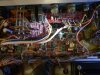
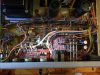
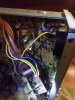
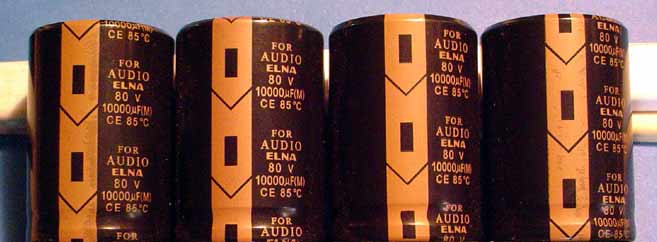
Looks pretty good.  Though personally, I would be changing out the 2 main filter caps too, and go the next step higher in voltage. They look like 63v (hard to see) so 80v would be the next step up. If they are 12,000uf you could probably safely go to 15,000uf which might help out the bottom end some at higher listening levels.
Though personally, I would be changing out the 2 main filter caps too, and go the next step higher in voltage. They look like 63v (hard to see) so 80v would be the next step up. If they are 12,000uf you could probably safely go to 15,000uf which might help out the bottom end some at higher listening levels.
Isaac C.
Cat Hoarder
I thought about upping the capacitance, but this thing has bass that can be felt even at low volume, at higher volumes it is really good too, so I didn't want to unbalance it and have too much bass.Looks pretty good.
It really wouldn't be an issue with "too much" bass, but rather not having the rail voltage sag under higher draw of the bass/low frequency range. But then there does come the point of diminishing returns. The stock value apparently provides plenty of headroom.I thought about upping the capacitance, but this thing has bass that can be felt even at low volume, at higher volumes it is really good too, so I didn't want to unbalance it and have too much bass.

The schematic is your friend.Considering my amp does not have a dedicated psu pcb, what cap values are generally considered to be "power" caps in a circuit? There were some 470mf 16v, 25v, and 35v caps. Two 220mf 35v caps, and the rest were 47mf, 22mf, 10mf, and a lot of 1mf caps.


JohnT123
Super Member
The filter caps are those 2 big black cans mounted by the power transformer. I think any caps that are used to generate your main rail voltages can be considered "power" caps. In tube gears it's simple because power caps are all 350 wvdc or higher. At least in everything I've ever worked on.
In tube gear, pretty much every electrolytic cap will be for the power supply. In solid state, there are numerous power circuits beyond the main power rail supply to power other sections such as preamp, tone board, phono, power amp/driver, etc.The filter caps are those 2 big black cans mounted by the power transformer. I think any caps that are used to generate your main rail voltages can be considered "power" caps. In tube gears it's simple because power caps are all 350 wvdc or higher. At least in everything I've ever worked on.

sKiZo
Hates received: 92644 43.20°N 85.50°W
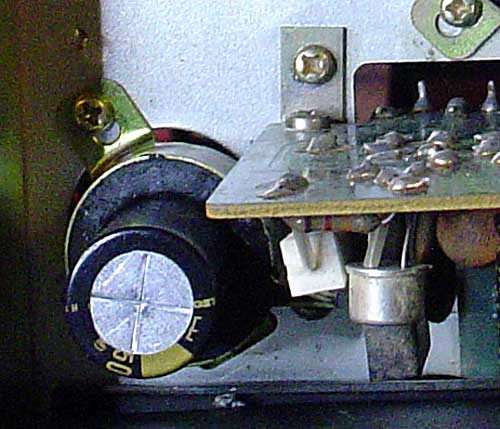
Also the new filter caps are smaller than the brackets, how do y'all usually go about making them fit. I saw a while back somewhere that some sort of foam was used around the caps in someone's rebuild.
I've always got a roll of windshield setting rope laying about for this and that, and just adjust the size of the rope to fit the gap. Press it in hard enough that you cut the top edge against the clamp for a clean look, and yer golden. Stuff's high temp (made to sit in a hot parking lot all day?) and no issues with bleeding on any boards I've seen.
Another comment made about cap differences. You should be aware the Elna Silmic II uses some high end materials that can take forever to break in properly. I find they tend to bloom nicely at a couple hundred hours, so grab some popcorn and be patient - they're worth the wait. Big fan myself, but they can be difficult to find in the right values. I shopped four different suppliers for my QRX 9001 restoration.
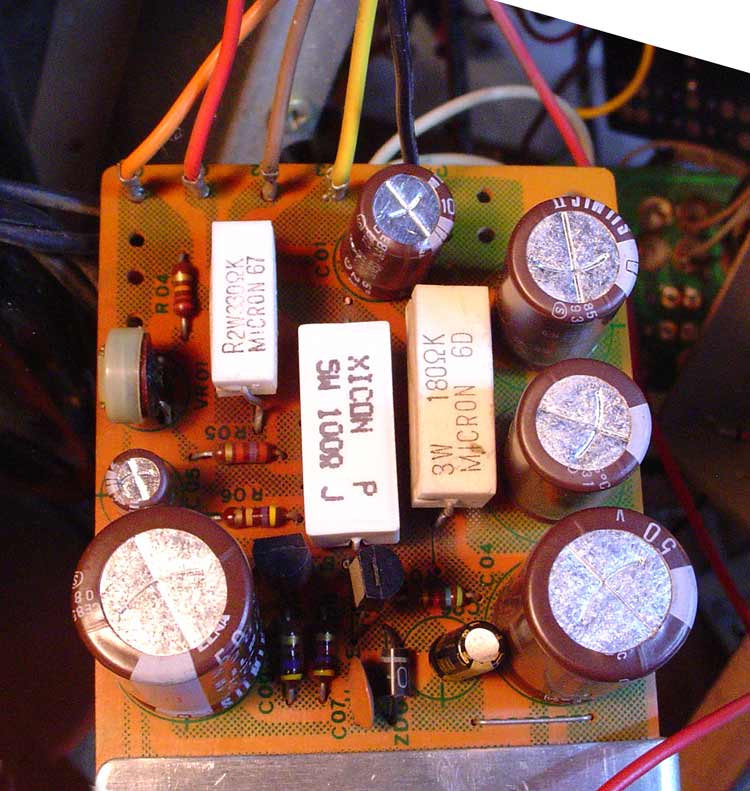
PS - I tend to use these in the low level signal sections myself. Tone controls and such. Power rails are usually what I can find that fit and have good high temp specs. Then again, every now and then, I get lucky, eh.
Isaac C.
Cat Hoarder
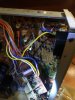
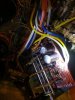
Complete brain fart when putting the new filter caps in, did I rewire the bottom one correctly? The top one I know is correct.

On top the green goes to the negative then goes to the chassis, the red is on the positive. On the bottom the green goes to the negative and the blue goes to the positive. I want to make sure before I do anything else. Did I switch the bottom one around? Thanks, sorry for the lack of knowledge, I usually do not forget which wires go where.
On top the green goes to the negative then goes to the chassis, the red is on the positive. On the bottom the green goes to the negative and the blue goes to the positive. I want to make sure before I do anything else. Did I switch the bottom one around? Thanks, sorry for the lack of knowledge, I usually do not forget which wires go where.
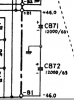
Well, you should have taken that picture *before* you swapped them out for a "picture perfect" reference.  The caps are in series. + -+ - The outer + is B+, the outer - is B-, and the center -+ together is ground.
The caps are in series. + -+ - The outer + is B+, the outer - is B-, and the center -+ together is ground.The Silmic uses silk fibers in the paper. That is the "high end" material. It is also more delicate and "softer" than "normal" paper compositions. I personally wouldn't waste them in power circuits. They are designed for low level signal path use.I've always got a roll of windshield setting rope laying about for this and that, and just adjust the size of the rope to fit the gap. Press it in hard enough that you cut the top edge against the clamp for a clean look, and yer golden. Stuff's high temp (made to sit in a hot parking lot all day?) and no issues with bleeding on any boards I've seen.
Another comment made about cap differences. You should be aware the Elna Silmic II uses some high end materials that can take forever to break in properly. I find they tend to bloom nicely at a couple hundred hours, so grab some popcorn and be patient - they're worth the wait. Big fan myself, but they can be difficult to find in the right values. I shopped four different suppliers for my QRX 9001 restoration.
PS - I tend to use these in the low level signal sections myself. Tone controls and such. Power rails are usually what I can find that fit and have good high temp specs. Then again, every now and then, I get lucky, eh.
Isaac C.
Cat Hoarder
I stole the 35mm clamps from my Lafayette since its not being used right now. I'll have to order some for it. Also got the voltage across the output resistor at about 24-25mv in each channel, manual says 23.5 +/-9.4.
I would consider myself still a novice, but hands on experience is the best way to learn with vintage gear for sure.
I would consider myself still a novice, but hands on experience is the best way to learn with vintage gear for sure.
Isaac C.
Cat Hoarder
One Week Update: It has been exactly one week since I replaced the capacitors. I now have between 10-15hrs of break in at this point. The highs are really smooth and detailed, the mids are great, and the bass is very prominent but not overpowering. In regards to the highs, cymbals have the nice shimmering effect that they do in real life and trumpets and brass are really airy. The bass is very realistic, on some songs I can definitely hear the plucking and its not a muddy mess. Kick drums and toms are very percussive and room filling as they are at a live performance. Overall the imaging is about the same, there is not really any difference in instrument separation, (might be the speakers, cartridge, room, etc) though I can definitely determine their positioning. Vocal harmonies sound really good, very defined and room filling. Anyway, thats the summary at this point, hopefully I can get some more hours on the capacitors. If this is as good as they get, I'm still pleased with the result, but I'm really curious if they get better like many members have pointed out about the Elnas.

Ohmagoo
Youve done it again!
One Week Update: It has been exactly one week since I replaced the capacitors. I now have between 10-15hrs of break in at this point. The highs are really smooth and detailed, the mids are great, and the bass is very prominent but not overpowering. In regards to the highs, cymbals have the nice shimmering effect that they do in real life and trumpets and brass are really airy. The bass is very realistic, on some songs I can definitely hear the plucking and its not a muddy mess. Kick drums and toms are very percussive and room filling as they are at a live performance. Overall the imaging is about the same, there is not really any difference in instrument separation, (might be the speakers, cartridge, room, etc) though I can definitely determine their positioning. Vocal harmonies sound really good, very defined and room filling. Anyway, thats the summary at this point, hopefully I can get some more hours on the capacitors. If this is as good as they get, I'm still pleased with the result, but I'm really curious if they get better like many members have pointed out about the Elnas.
Thanks for coming back and giving an update, I have been reading this thread to see how it turned out. I have the same amp also, and will be doing upgrades to it at some point in the future. I love the sound this one puts out!
I have a couple questions for you - do you think the cap upgrades was worth the time and effort, compared to what it sounded like before? Did you replace the fuse-resistors in it, or do you plan to?
Isaac C.
Cat Hoarder
Thanks for coming back and giving an update, I have been reading this thread to see how it turned out. I have the same amp also, and will be doing upgrades to it at some point in the future. I love the sound this one puts out!
I have a couple questions for you - do you think the cap upgrades was worth the time and effort, compared to what it sounded like before? Did you replace the fuse-resistors in it, or do you plan to?
Prior to the recap it was a little dull and not "lively". When I first got it (about 3 weeks ago) I thought my Hitachi SR 603 sounded better. After the recap, it was better and seems to be getting better the more I listen to it. At this point it sounds better than the SR 603, with a little bit better channel separation and soundstage. I think the caps were just old and out of spec because dull is definitely not what Hitachi's late 70s stuff is supposed to sound like. I only replaced the Electolytics, I probably will not replace the fusible resistors. I'm glad I replaced the caps as there were quiet a few questionable looking caps. I see your in Saskatchewan, I'm not sure where you purchase your caps but I could send you my Mouser project that has all the Electrolytics that I ordered if you would like.
It took me about 9hrs here and there over the course of three days, but I took my time to make sure polarity and values were in the right spots. I like little projects, so yes I think it was worth it.