• The move to the new server is done. There are some software and database maintenance updates in process. This has us passing the hat around to help out. We appreciate any donations. Seriously, even a dollar helps. The payment page may be found here - https://www.audiokarma.org/support.html

How do you find the right amplifier - speaker match

Thank you everyone for taking the time to answer my questions and sharing your stories. This has been very helpful. There is no doubt I'll be experimenting with different equipment, but now I'm equipped with some knowledge. I will also be relooking at some of the Kenwood amplifiers I had previously considered (KA-5700 and a KA-9100).

I also own a Technics SE-A900S which seems to fall in the "somewhat" decent amps category based on the comments in this thread. I bought the amp knowing it was faulty (distortion issue in the right channel) and so have not been able to try it with my speakers yet. I have already spent some time trying to find the fault but haven't had any luck - will be posting a seprate thread in the DIY forums with all the details later today. (P.S. I'm one of those electronics engineers that never got a chance to get any hands on experince with electronics in the real world. And so I'm trying to use my love for music as a way to learn/get some hands on experience while enjoying this hobby.)

Thanks again!


The Kennys are great amps, real work horses that sound outstanding. I purchased my first in 1978, a KA-7100, the same day my older brother purchased the smaller KA-3500. The 3500 is a very nice 40watt amp I wouldnt hesitate to recommend (same damping factor of 50) as its bigger brothers.

A little research on the 7100 will show it's gained quite the reputation as a solid performer, the similarly powered 7300 even more so.

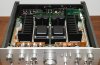
The clean architecture layout of its true dual mono design paying obvious homage to the legendary Trio Supreme line.
kenKA7300.jpg
6debaf45375b391120f0064318b834aa.jpg
 
my old Kenwood KA-7100 had no issues driving my "sealed" AR 12's all day long at ear damaging levels back in my youth

same goes for my current Kenwood KA-7300 driving "sealed" AR 58's

both with a damping factor of 50, blanket statrments are generally wrong.

The legendary 600 Supreme
View attachment 2288519


Pioneer Spec-2
Stereo Power Amplifier (1976-80)

(1 review)


Description
The Spec-2 is a 250W rack mount stereo power amplifier featuring a current limiter circuit, peak level meters, protection circuit, power switch on/off and impedance selector muting and a temperature detector.

This high power design employs a cascaded differential amplifier first stage, push-pull drive, and darlington triple push-pull circuit with all stages direct coupled (OCL).

Specifications
Power output: 250 watts per channel into 8Ω (stereo)

Frequency response: 5Hz to 80kHz

Total harmonic distortion: 0.1%

Damping factor: 50

Input sensitivity: 2V

Signal to noise ratio: 110dB

Speaker load impedance: 4Ω to 8Ω

Semiconductors: 55 x transistors, 75 x diodes

Dimensions: 480 x 186.5 x 445mm

Weight: 24.3kg

On the other hand, sealed box Acoustic Suspension just might be the reason that all manufacturers ceased making products with damping factors below 60 in the late 70's after Acoustic Suspension became popular and ported boxes were no longer the norm ..

It's about control of the driver in the box, not necessarily whether you can make it loud or not ..
Ported box drivers have tight suspensions ... Sealed box drivers have very loose suspensions ..
 
Last edited:
On the other hand, sealed box Acoustic Suspension just might be the reason that all manufacturers ceased making products with damping factors below 60 in the late 70's after Acoustic Suspension became popular and ported boxes were no longer the norm ..

It's about control of the driver in the box, not necessarily whether you can make it loud or not ..
Ported box drivers have tight suspensions ... Sealed box drivers have very loose suspensions ..

no, but it's about SQ, and what the OP was asking about. Your comment that it's due to sealed speakers being harder to drive is mistaken.

you've got your history a bit mixed up, sealed designs have been around longer than my 64yrs on this planet, ported designs came later.

Acoustic suspension or air suspension is a variation of the closed-box enclosure, using a box size that exploits the almost linear air spring resulting in a −3 dB low-frequency cut-off point of 30–40 Hz from a box of only one to two cubic feet or so.[17] The "spring" suspension that restores the cone to a neutral position is a combination of an exceptionally compliant (soft) woofer suspension, and the air inside the enclosure. At frequencies below system resonance, the air pressure caused by the cone motion is the dominant force. Developed by Edgar Villchur in 1954, this technique was used in the very successful Acoustic Research line of "bookshelf" speakers in the 1960s–70s. The acoustic suspension principle takes advantage of this relatively linear spring. The enhanced suspension linearity of this type of system is an advantage. For a specific driver, an optimal acoustic suspension cabinet will be smaller than a bass reflex, but the bass reflex cabinet will have a lower −3 dB point. The voltage sensitivity above the tuning frequency remains a function of the driver, and not of the cabinet design


Ported (or reflex) enclosures
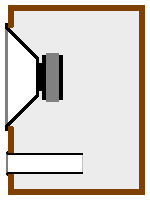

Bass reflex enclosure.

RCA shelf stereo bass reflex multi-way speakers.
Also known as vented (or ported) systems, these enclosures have a vent or hole cut into the cabinet and a port tube affixed to the hole, to improve low-frequency output, increase efficiency, or reduce the size of an enclosure. Bass reflex designs are used in home stereo speakers (including both low- to mid-priced speaker cabinets and expensive hi-fi cabinets), bass amplifier speaker cabinets, keyboard amplifier cabinets, subwoofer cabinets and PA system speaker cabinets. Vented or ported cabinets use cabinet openings or transform and transmit low-frequency energy from the rear of the speaker to the listener. They deliberately and successfully exploit Helmholtz resonance. As with sealed enclosures, they may be empty, lined, filled or (rarely) stuffed with damping materials. Port tuning frequency is a function of the cross-sectional area of the port and its length. This enclosure type is very common, and provides more sound pressure level near the tuning frequency than a sealed enclosure of the same volume, although it actually has less low frequency output at frequencies well below the cut-off frequency, since the "rolloff" is steeper (24 dB/octave versus 12 dB/octave for a sealed enclosure). Malcolm Hill pioneered the use of these designs in a live event context in the early 1970s.[18]

Vented system design using computer modeling has been practiced since about 1985. It made extensive use of the theory developed by researchers such as Thiele,[19][20][21] Benson,[22][23] Small[24][25][26][27] and Keele,[28] who had systematically applied electrical filter theory to the acoustic behavior of loudspeakers in enclosures. In particular Thiele and Small became very well known for their work. While ported loudspeakers had been produced for many years before computer modeling, achieving optimum performance was challenging, as it is a complex sum of the properties of the specific driver, the enclosure and port, because of imperfect understanding of the assorted interactions. These enclosures are sensitive to small variations in driver characteristics and require special quality control concern for uniform performance across a production run. Bass ports are widely used in subwoofers for PA systems and sound reinforcement systems, in bass amp speaker cabinets and in keyboard amp speaker cabinets

let's get back to what will really help the OP please
 
Last edited:
no, but it's about SQ, and what the OP was asking about. Your comment that it's due to sealed speakers being harder to drive is mistaken.

you've got your history a bit mixed up, sealed designs have been around longer than my 64yrs on this planet.

Acoustic suspension or air suspension is a variation of the closed-box enclosure, using a box size that exploits the almost linear air spring resulting in a −3 dB low-frequency cut-off point of 30–40 Hz from a box of only one to two cubic feet or so.[17] The "spring" suspension that restores the cone to a neutral position is a combination of an exceptionally compliant (soft) woofer suspension, and the air inside the enclosure. At frequencies below system resonance, the air pressure caused by the cone motion is the dominant force. Developed by Edgar Villchur in 1954, this technique was used in the very successful Acoustic Research line of "bookshelf" speakers in the 1960s–70s. The acoustic suspension principle takes advantage of this relatively linear spring. The enhanced suspension linearity of this type of system is an advantage. For a specific driver, an optimal acoustic suspension cabinet will be smaller than a bass reflex, but the bass reflex cabinet will have a lower −3 dB point. The voltage sensitivity above the tuning frequency remains a function of the driver, and not of the cabinet design


Ported (or reflex) enclosures


Bass reflex enclosure.

RCA shelf stereo bass reflex multi-way speakers.
Also known as vented (or ported) systems, these enclosures have a vent or hole cut into the cabinet and a port tube affixed to the hole, to improve low-frequency output, increase efficiency, or reduce the size of an enclosure. Bass reflex designs are used in home stereo speakers (including both low- to mid-priced speaker cabinets and expensive hi-fi cabinets), bass amplifier speaker cabinets, keyboard amplifier cabinets, subwoofer cabinets and PA system speaker cabinets. Vented or ported cabinets use cabinet openings or transform and transmit low-frequency energy from the rear of the speaker to the listener. They deliberately and successfully exploit Helmholtz resonance. As with sealed enclosures, they may be empty, lined, filled or (rarely) stuffed with damping materials. Port tuning frequency is a function of the cross-sectional area of the port and its length. This enclosure type is very common, and provides more sound pressure level near the tuning frequency than a sealed enclosure of the same volume, although it actually has less low frequency output at frequencies well below the cut-off frequency, since the "rolloff" is steeper (24 dB/octave versus 12 dB/octave for a sealed enclosure). Malcolm Hill pioneered the use of these designs in a live event context in the early 1970s.[18]

Vented system design using computer modeling has been practiced since about 1985. It made extensive use of the theory developed by researchers such as Thiele,[19][20][21] Benson,[22][23] Small[24][25][26][27] and Keele,[28] who had systematically applied electrical filter theory to the acoustic behavior of loudspeakers in enclosures. In particular Thiele and Small became very well known for their work. While ported loudspeakers had been produced for many years before computer modeling, achieving optimum performance was challenging, as it is a complex sum of the properties of the specific driver, the enclosure and port, because of imperfect understanding of the assorted interactions. These enclosures are sensitive to small variations in driver characteristics and require special quality control concern for uniform performance across a production run. Bass ports are widely used in subwoofers for PA systems and sound reinforcement systems, in bass amp speaker cabinets and in keyboard amp speaker cabinets

I'm well aware of the history and concepts, and you just stated as did I, that it's about Sound Quality ..

A low damping factor amp fails to properly control ringing and overshoot that results from the driver's loose suspension as well as an amp with a higher damping factor ...
Beyond some level damping factor ceases to be an issue .. above 70 became the accepted norm back in the late 70's early 80's.

You're a fan of your equipment like nobody else ..

Oh, and it was the late 60's to early 70's before acoustic suspension became the norm and not the exception ..
A speaker that was smaller than a refrigerator and still had bass had a certain appeal.

Damping factor was considered irrelevant in the days of only ported Bass Reflex drivers, because the driver's suspension was tightly controlled,
and further damping from the amp was unnecessary ..
Once Acoustic Suspension (sealed) appeared and the driver's suspension was loosened up, amplifier damping became an issue ..

And unsealed enclosures ... open baffle, slotted, and folded horn enclosures were all the norm prior to sealed box ...
I would guess that the "port" that your wiki quote refers to is likely regarding port "tuning" which did evolve right along with the Acoustic Suspension sealed boxes..
A slot is certainly a "port".. though I'm likely using Bass Reflex sloppily .. I should refer to them as ported.


.
 
Last edited:
Thank you everyone for taking the time to answer my questions and sharing your stories. This has been very helpful. There is no doubt I'll be experimenting with different equipment, but now I'm equipped with some knowledge. I will also be relooking at some of the Kenwood amplifiers I had previously considered (KA-5700 and a KA-9100).

I also own a Technics SE-A900S which seems to fall in the "somewhat" decent amps category based on the comments in this thread. I bought the amp knowing it was faulty (distortion issue in the right channel) and so have not been able to try it with my speakers yet. I have already spent some time trying to find the fault but haven't had any luck - will be posting a seprate thread in the DIY forums with all the details later today. (P.S. I'm one of those electronics engineers that never got a chance to get any hands on experince with electronics in the real world. And so I'm trying to use my love for music as a way to learn/get some hands on experience while enjoying this hobby.)

Thanks again!

As I stated earlier a robust power supply is the base to build a good amplifier on, but don't get hung up on the amp needing to "double down" into 4ohms, most don't. A good damping factor is a must, again don't get hung up on the numbers, the Pioneer Spec 2 is a beast, damping factor =50.

My McIntosh MC2002 with 200watts/channel, 600 bridged, with a damping factor of 100 doesn't. The SoundTech beast I posted earlier doesn't, my Belles reportedly comes close at 185watts into 4ohms but still doesn't.

See a trend here? If you find an amplifier that specs to double down most likely the numbers were understated to allow the appearance of such.

Added to the above, didn't you know all amplifiers sound the same lol?

One enduring theme you'll see repeated here, "don't get hung up on the numbers".
 
Last edited:
I'm well aware of the history and concepts, and you just stated as did I, that it's about Sound Quality ..

A low damping factor amp fails to properly control ringing and overshoot that results from the driver's loose suspension as well as an amp with a higher damping factor ...
Beyond some level damping factor ceases to be an issue .. above 70 became the accepted norm back in the late 70's early 80's.

You're a fan of your equipment like nobody else ..

Oh, and it was the late 60's to early 70's before acoustic suspension became the norm and not the exception ..
A speaker that was smaller than a refrigerator and still had bass had a certain appeal.

Damping factor was considered irrelevant in the days of only ported Bass Reflex drivers, because the driver's suspension was tightly controlled,
and further damping from the amp was unnecessary ..
Once Acoustic Suspension (sealed) appeared and the driver's suspension was loosened up, amplifier damping became an issue ..


.

you're contradicting yourself, rhetorical question, did "ported" speakers come first or not lol?
 
I love pepsi!!! Amp is nice to!!!

Pepsi: Too sweet. Almost twice the sugar of Coke. Measured using a refractometer.
US Coke: Not the real thing anymore. They use high fructose Corn syrup. It doesn't taste the same as Cane Sugar.
Mexican Coke: It's the "real deal". It's the only Coke currently made that uses pure Cane Sugar.

All diet soda tastes awful to me. They have a bad aftertaste.
 
Pepsi: Too sweet. Almost twice the sugar of Coke. Measured using a refractometer.
US Coke: Not the real thing anymore. They use high fructose Corn syrup. It doesn't taste the same as Cane Sugar.
Mexican Coke: It's the "real deal". It's the only Coke currently made that uses pure Cane Sugar.

All diet soda tastes awful to me. They have a bad aftertaste.

agreed, but at least you can get Pepsi with real sugar, and I don't drink any sodas so no dog in their fight.
 
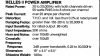
My favorite little amp, I'm not a numbers guy but for those that are


Screenshot_20210717-224831.png

and it's little brother
Screenshot_20210717-224843.png
 
Last edited:
Its always better to have more power than not enough. The choice of speakers is the most important factor. For average folks I still recommend speakers with over 96 db sensitivity with the voicing you prefer. That way as you become involved with your music reproduction more and more your speakers will have the necessary dynamic range with out having to buy very expensive amplifiers, whether pre-owned or not. My old speakers are rated at 95.5 db with one watt and 40 to 50 is all I ever need. The latest speakers with an Equivalent of 89 db sensitivity because they are line arrays seldom need more than 60 watts. But have seen 125 watts peaks.
 
Back
Top Bottom