


I decided to do some testing of the HPM-100 crossover. Not scientific by any means but still interesting.
I removed the woofer, midrange and tweeter of my HPM-100's from their cabinets to take response measurements at each drivers terminals. I used a pink noise cd, a speaker level to line level converter and TrueRTA software that is installed on my computer.
Midrange and Treble controls set at 0. I've attached an image of the response results.
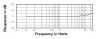
The first image is the response of my sound card and the speaker to line converter.
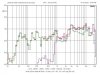
The second image is the overlay of the individual results at the woofer, midrange and tweeter terminals. The drivers were left connected for my testing.
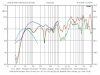
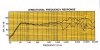
The third image is the response graph from the original literature.
You can clearly see that there is no hump in the spectrum as shown on the HPM-100 literature. There is however a dip of about 4 1/2 db where the woofer and midrange cross.
I also notice that the crossover points for the mid and tweeter are just about where the literature states at 3kHz and 4Khz respectively. My results show ~3500kHz and 4500kHz. But I'm not going to nit pick this as I'm not using laboratory grade equipment here. I also find it very interesting that the difference in response between the mid and tweeter is minimal until the midrange control is turned past 0 at which point the lower end of the midrange response will come up about 3db (not shown).
Am I correct in assuming that the hump in the response between 1500Hz and 10kHz shown in the speaker literature is actually caused by the drivers and not the design of the crossover?
That is eye opening. I've been "Cutting" the tweeter to reduce some of the ringing on certain tracks. Think a look at the midrange may be in order. Changing these two drivers was a big improvement, But I still tweaked with an EQ, But not near as much as the HPM 100 driver. Maybe in the second gen series they realized a change was needed. HPM900 drivers are much less "in your face".








 ]
]

