• The move to the new server is done. There are some software and database maintenance updates in process. This has us passing the hat around to help out. We appreciate any donations. Seriously, even a dollar helps. The payment page may be found here - https://www.audiokarma.org/support.html

Hpm 100

Status
Not open for further replies.
Perhaps that is a good way to approach disaggrements on equipment- it might make people more receptive to your experiences, give them some weight. We could all benefit from it. Instead of just getting so upset-kind of a turn off, and a tune out as well. And them it seems to turn into a 'you suck', 'your speakers suck' fest. Cheez!
We've certainly had better success with focusing on ascertaining what stuff actually is, of late. If you look back at prior HPM-100 discussions, threads get contentious and are closed.

There's more info yet to come in this one, looks like.... :thmbsp:
 
Four sets!! Sheesh, Are you married? Told my wife I was getting a second pair, And saw that look. There's members here with 2 sets that they stacked, Haven't heard of more than that. Taking a guess, There's probably around 100-150 members who abuse these speakers, Glad your aboard. A big welcome to the unofficial club.:thmbsp:


Thanks for the Welcome NeedForSpeed. I enjoy the browsing and information of discussions here. No, I'm not married but luckily seem to find tolerant girlfriends who appreciate my passion for good music. Looking forward to many more discussions here. Regards!
 
As most of us said, these were our opinions. My first (years ago in the store)and current experience with these were similiar.
It was never a scientific review by any means. I just recorded what I found because I thought it might be useful.
If you enjoy them, awesome, :thmbsp:but don't get upset-"what the hell?"-etc if someone doesn't find them appealing. Don't take it so personal.
Perhaps I didn't give them more of a chance, and that's probablly true, but I went for something I new would perform well, with out a lot of tweeking. And perhaps that was cop out, I agree.
Just because they are Pioneer, Sansui, etc doen't automatically make them good or bad in my eyes. The names are mere potential.
For example, I recently picked up a H/K PA2400, that I think is one of the best sounding amps I have ever heard , period. It totally blows me away. But I know alot of people here pretty much dismiss H/K, and this amp as well, based soley on the name.
I have tried to point the virtues of this amp, but wasn't upset about a couple comments that thought the amp was pretty much trash. I just pointed out they should give it a chance based on my experience, and reiterated my findings.
Perhaps that is a good way to approach disaggrements on equipment- it might make people more receptive to your experiences, give them some weight. We could all benefit from it. Instead of just getting so upset-kind of a turn off, and a tune out as well. And them it seems to turn into a 'you suck', 'your speakers suck' fest. Cheez!
If your looking for that kind of entertainment-there are probaly better web sites then this one.
However, I did find a lot of information-between the lines- that just might make me want to give these speakers another listen-given the chance.

Automojo, please don't misinterpret my comments. I wasn't upset by any means just commenting on this entertaining discussion and trying to point out that everyone has a different listening environment yielding unique results that inevitably some will like and others won't. I think many of the previous posts alluded to the fact that sometimes you just have to experiment with speakers to really test their limits and hopefully find the sweet spot that lets you enjoy something out of them you were seeking in the first place. I certainly don't get offended or upset about comments I read on this site. Honestly, if everyone liked the same things that would be kind of stagnant and boring. It's just opinions and tastes people have on equipment anyway. No right or wrong. I was merely closing my comments with my own personal experience with the HPM 100s while remaining open minded enough to know they are not the do all end all. Just what I've found to really allow me to escape in the music I play through them for now. It's also why I was applauding the beer buying and toasting that I really do hope takes place among our fellow AKers. :D
 
Automojo, please don't misinterpret my comments. I wasn't upset by any means just commenting on this entertaining discussion and trying to point out that everyone has a different listening environment yielding unique results that inevitably some will like and others won't. I think many of the previous posts alluded to the fact that sometimes you just have to experiment with speakers to really test their limits and hopefully find the sweet spot that lets you enjoy something out of them you were seeking in the first place. I certainly don't get offended or upset about comments I read on this site. Honestly, if everyone liked the same things that would be kind of stagnant and boring. It's just opinions and tastes people have on equipment anyway. No right or wrong. I was merely closing my comments with my own personal experience with the HPM 100s while remaining open minded enough to know they are not the do all end all. Just what I've found to really allow me to escape in the music I play through them for now. It's also why I was applauding the beer buying and toasting that I really do hope takes place among our fellow AKers. :D

Veegoss,
Sorry, I wasn't directing my comment towrds you,:D I grabed your 'quote' by mistake, is was actually directed at a few earlier comments.
Regardless, you point out some very valid points, and I appreciate it. ANd I do look foward to the upcoming test-hopefully it can be kept to a productive simmer?:scratch2:
I think passion for ones equipment can easily turn into 'stupid pride'. Finding a system of componets that REALLY works for you, regardless of your budget-well that's what all of us are, and have been looking for-and the information on this site is a true testiment to that- it's really quite amazing!!
 
I decided to do some testing of the HPM-100 crossover. Not scientific by any means but still interesting.

I removed the woofer, midrange and tweeter of my HPM-100's from their cabinets to take response measurements at each drivers terminals. I used a pink noise cd, a speaker level to line level converter and TrueRTA software that is installed on my computer.

Midrange and Treble controls set at 0. I've attached an image of the response results.

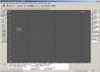
The first image is the response of my sound card and the speaker to line converter.

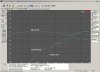
The second image is the overlay of the individual results at the woofer, midrange and tweeter terminals. The drivers were left connected for my testing.

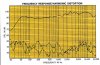
The third image is the response graph from the original literature.

You can clearly see that there is no hump in the spectrum as shown on the HPM-100 literature. There is however a dip of about 4 1/2 db where the woofer and midrange cross.

I also notice that the crossover points for the mid and tweeter are just about where the literature states at 3kHz and 4Khz respectively. My results show ~3500kHz and 4500kHz. But I'm not going to nit pick this as I'm not using laboratory grade equipment here. I also find it very interesting that the difference in response between the mid and tweeter is minimal until the midrange control is turned past 0 at which point the lower end of the midrange response will come up about 3db (not shown).

Am I correct in assuming that the hump in the response between 1500Hz and 10kHz shown in the speaker literature is actually caused by the drivers and not the design of the crossover?
 

Attachments

  • spk to line lvl conv.jpg
    spk to line lvl conv.jpg
    118.2 KB · Views: 56
  • HPM-100 crossover test.jpg
    HPM-100 crossover test.jpg
    121.5 KB · Views: 103
  • response graph from literature.jpg
    response graph from literature.jpg
    155.8 KB · Views: 729
  • xover schem.jpg
    xover schem.jpg
    73.3 KB · Views: 252
It's also why I was applauding the beer buying and toasting that I really do hope takes place among our fellow AKers. :D

Feel free to join in...especially the beer buying part. :thmbsp:

A belated welcome, nice to have you around here.

Ray
 
Am I correct in assuming that the hump in the response between 1500Hz and 10kHz shown in the speaker literature is actually caused by the drivers and not the design of the crossover?

Great stuff there. Yes, you're correct. What you've plotted out is the electrical signal that the drivers see. What actually comes out will be the combination of that with the driver's natural response and any efficiency discrepancies between them. At some point when I get time I'll go through and unhook all drivers but one and measure response and then move on to the next. That will be the next step from your analysis.

Ray
 
So, you would make the measurements without the drivers except one hooked up?

I initially measured each drivers terminals without the particular driver hooked up but wasn't certain the results would be accurate without a load.

Unfortunately I didn't save those results.
 
I initially measured each drivers terminals without the particular driver hooked up but wasn't certain the results would be accurate without a load.
Yes, you must have loads in place for the filters to operate properly.

You are showing the voltage drives with the drivers as loads. You can see that the mid and tweet are highpass only; there's nothing shutting off their drives at higher frequencies above where they are initially turned on, and the woofer is apparently being allowed to run full range as well. Is that how it was designed from the schematics?

It is difficult to accurately model the electrical characteristics of the actual drivers in simulations, so the design of the filters and confirmation of their behavior are typically done with resistive "dummy" loads at this level.

The next step is to measure the frequency response, the acoustic output of each driver operating on its respective filter, and how they behave in combination. That's done with a measurement microphone under controlled conditions.

Good job! You're on your way to quantitatively characterizing the HPM-100, and it'll be even more fun comparing your results to those of others, and correlating them with listening impressions.... :thmbsp:
 
Yes, you must have loads in place for the filters to operate properly.

You are showing the voltage drives with the drivers as loads. You can see that the mid and tweet are highpass only; there's nothing shutting off their drives at higher frequencies, above where they are initially turned on.

It is difficult to accurately model the electrical characteristics of the actual drivers in simulations, so the design of the filters and confirmation of their behavior are typically done with resistive "dummy" loads at this level.

The next step is to measure the frequency response, the acoustic output of each driver operating on its respective filter, and how they behave in combination. That's done with a measurement microphone under controlled conditions.

Good job! You're on your way to quantitatively characterizing the HPM-100, and it'll be even more fun comparing your results to those of others, and correlating them with listening impressions.... :thmbsp:

I agree-excellent, this is getting to be (very) :scratch2:interesting!
 
I happen to have two 8 ohm non-inductive resistors I purchased a while back for testing purposes. I will redo the tests with the resistors when I get a chance.

Paul
 
You are showing the voltage drives with the drivers as loads. You can see that the mid and tweet are highpass only; there's nothing shutting off their drives at higher frequencies above where they are initially turned on, and the woofer is apparently being allowed to run full range as well. Is that how it was designed from the schematics?

Zilch and Ray,

I've added a pic of the x-over schematic above with the other pics so this should answer your question. I'm no x-over expert but it looks that it's designed that way to me..

Paul
 
Ok, had a little time before an appointment this morning.

Here is a pic of the same tests using 8 ohm non-inductive dummy load's. I installed them on the mid and tweeter to make those 2 measurements. Than I removed the dummy load from the tweeter since I only have 2 of them and moved it to the woofer connections. I figured the crossover point to the tweeter is high enough from the woofer that there should be minimal effect on the woofer response measurement, if any at all.

I'm going to leave the rest to the resident speaker experts. You know who you are. I did have fun taking the measurements though. Quite educational.

I don't have a laboratory calibrated mic so I will be standing by for the results of that test.

Paul
 

Attachments

  • test using dummy_ load.jpg
    test using dummy_ load.jpg
    122.9 KB · Views: 54
You are showing the voltage drives with the drivers as loads. You can see that the mid and tweet are highpass only; there's nothing shutting off their drives at higher frequencies above where they are initially turned on, and the woofer is apparently being allowed to run full range as well. Is that how it was designed from the schematics?

You're looking at the woofer plot as a woofer plot. I did the same thing at first glance. That's the electrical filter response. It's 1st order electrical.

In this case the responses with the driver loads looks more like what I'd expect than the resistive loads. Must be some pretty good inductance on those drivers. It also looks like the soundcard has an effective upper limit of about 15kHz since all 3 drivers look to fall off exactly the same right about there and there's nothing in the circuits to make it do that.

Ray
 
The soundcard does drop off after 15kHz. Can you tell me what valuable info you get from my graphs, if any.

If so, can you describe the good and bad that you see from them. I'm really trying to get a better understanding of what you see here. For example, you say the drivers must have a lot of inductance. Can you tell me if this is a good thing or bad.

One thing I don't understand is why Pioneer would make the mid and high response so similar. Looks to me that you could leave out the driver and have very similar sound characteristics. I was expecting the mid to roll off, not extend to the upper limits of the spectrum. I would think that with both the mid and tweeters operating in the same basic range that their outputs would add up to cause the hump you see in the literature graph. Am I mistaken here?

Thanks,
Paul
 
You're looking at the woofer plot as a woofer plot. I did the same thing at first glance. That's the electrical filter response. It's 1st order electrical.
One look at the schematic told me I was wrong about the woofer running full range. I can now see the filter rolling off the voltage drive, plain as day. :yes:

One thing I don't understand is why Pioneer would make the mid and high response so similar. Looks to me that you could leave out the driver and have very similar sound characteristics. I was expecting the mid to roll off, not extend to the upper limits of the spectrum. I would think that with both the mid and tweeters operating in the same basic range that their outputs would add up to cause the hump you see in the literature graph. Am I mistaken here?
You've got it right again, Paul. The voltage drives and the frequency response of the drivers themselves in combination comprise the acoustic response. Drivers typically roll of naturally at both extremes of their useable range, some more gracefully than others.

It's an engineered system, and if there's a hump in the response, it's very likely intentional.

I don't have a laboratory calibrated mic so I will be standing by for the results of that test.
I think it's relatively inexpensive to get a DIY "Mitey Mike" setup running to measure frequency response. Google will find it for you.... :thmbsp:
 
Great info! Zilch, A pair for further review, Will be coming your way the weekend of the 19th, If your free. I know it sounds crazy, But there gonna be used at a 80's themed wedding this weekend. I'm donating my HMP 100's there's a pair of Infinity ref monitors, And a pair of polk 3 way's. You may need to do a repair if they don't survive the Carver ZR1600's that I'm told will drive them. That should be some serious hair band rock'n I guess. Let me know if that date works for you. Later, Robert
 
Status
Not open for further replies.
Back
Top Bottom