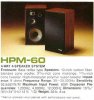
Be very careful with those cones. They are incredibly fragile!
Engineers consider it a design ideal that a speaker cone have a high order of stiffness and minimal mass. The stiffness makes it resistant to standing waves and other parasitics. The low mass makes the cone both easy to accelerate and easy to decelerate.
Generally, these two factors work against each other. You can stiffen a cone with high mass, but this makes it hard to move around and requires a hefty suspension system -- and this in turn requires a HUGE amplifier. You can make a speaker "sensitive" with low mass, but this makes the cone receptive to secondary vibrations.
On top of this, you want good damping. In other words, if you removed the driving current instantly, you would want the cone as well to stop moving almost instantly.
* * * * *
Historically, the problem with super-rigid-super-low-mass cones is that they were fairly brittle leaving the gate, but became incredibly brittle after a few turns around the track. (Historically, Pioneer used polymer graphite and similar formulations. Now Pioneer features Interlaced Aramid fiber.)
* * * * *
I have repaired cracks in these brittle cones with special speaker glue, but I know in my heart that this did not bring the sound back to spec.
So..............be real careful. And, if the woofers require new surrounds, find someone with a real gentle hand. To refoam a woofer you have to strip off most or all of the original surround material. You can toy with a Cerwin-Vega all day and not worry the cone material; one slip and the Pioneer cone cracks.
Best,
Fred Longworth
owner
StereoTech Classic Audio Repair
http://www.repairaudio.com