

You are using an out of date browser. It may not display this or other websites correctly.
You should upgrade or use an alternative browser.
You should upgrade or use an alternative browser.
I can't get my head around anti-skating.
- Thread starter CharLimitDum
- Start date

WaynerN
Addicted Member
The spring is connected to a brake shoe that puts pressure (AS) on the pivoting shaft. It's correct length and force can be correctly calculated, measured and put into operation as springs are everyday, all around the world in the manufacturing sense. AT screwed up at its first attempt.

Pio1980
AK Member
String/weight and spring/cam A/S introduce asymmetrical drag lateral forces on the arm as it tracks, maybe ok for damping lateral resonant oscillation as with Grado and other carts. Intentional fluid damping would be better, magnetic A/S is drag free.
Yes, A/S is an approximation, I tend to trust the recommendations of the arm maker unless there's a valid reason not to.
Yes, A/S is an approximation, I tend to trust the recommendations of the arm maker unless there's a valid reason not to.


sKiZo
Hates received: 92644 43.20°N 85.50°W
Anti-skating? Anybody remember Nancy Kerrigan?

And, seems the question's been more or less answered, but most important first step is making sure the table is level. I use a spot bubble in several locations around the plinth, then repeat around the platter itself WITH the mat installed. Giving the mat a slight spin on the platter (if allowed) can help a lot with a "problem" table.
Next up would be double checking/adjusting cartridge alignment and overhang. Anti-skate would be more of a final tweak once all that's done.
And, seems the question's been more or less answered, but most important first step is making sure the table is level. I use a spot bubble in several locations around the plinth, then repeat around the platter itself WITH the mat installed. Giving the mat a slight spin on the platter (if allowed) can help a lot with a "problem" table.
Next up would be double checking/adjusting cartridge alignment and overhang. Anti-skate would be more of a final tweak once all that's done.


turboyam
The Kenwood fan!
What?!. No i don't think so!. How do you explain that if you dial in too much AS, the arm returns to rest position!.The spring is connected to a brake shoe that puts pressure (AS) on the pivoting shaft. It's correct length and force can be correctly calculated, measured and put into operation as springs are everyday, all around the world in the manufacturing sense. AT screwed up at its first attempt.

Mystic
We're all born mad
I take anti-skating with a grain of salt. My PL-41 doesn’t have it. Doesn’t need it, sounds excellent.
AR XA TTs don’t have anti-skating either. Apparently they don’t need it.
My RPM3 does have magnetic AS. I use it with a grain of salt. I have numerous LPs that are a bit off-centered. I can watch the tonearm move back and forth. One more reason to take AS with a grain of salt.
My older (circa 1980) AR TT (Sumoko arm + Shure V-III + Shure styli only) has never "skated" 'cross a single "single" (45) or LP (10" or 12"). Not even once.
Pio1980
AK Member
Then, you have sufficient VTF to track and trace the groove and overcome skating force.My older (circa 1980) AR TT (Sumoko arm + Shure V-III + Shure styli only) has never "skated" 'cross a single "single" (45) or LP (10" or 12"). Not even once.
The balance of the VTF between the groove walls still varies somewhat across the record favoring the inner wall. That means that side of the tip will wear and lose fine tracing ability first and tracing distortion increases in that channel first.


JMelton
Active Member
I wouldn’t use the term “gimmick”. The design seems reliable enough. It’s going to be less accurate over long enough time, but simply adjusting it will compensate and it should be fine given the inherent imprecision of skating.I always thought that a spring anti-skating was gimicky, compared to a weight/ string or a canti-lever one. Spring tension changes with time and are in-consistant, what do you guys think?
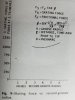
As you can see from the graph (from Shure); Skating decreases as the tone arm travels across the record with a slight increase at the spindle.This is the type of AS i mean, a mechanical one, that's consistent over time (no springs). I my opinion, these types were calculated (the angles), to have a greater AS effect as you get near the spindle, what do you guys think?
Pio1980
AK Member
Good if friction drag is low, most examples I've seen were low drag.This is the type of AS i mean, a mechanical one, that's consistent over time (no springs). I my opinion, these types were calculated (the angles), to have a greater AS effect as you get near the spindle, what do you guys think?View attachment 1659329
Simple and direct, better than the spring cam on the Sony PUA-7 which has imo excessive asymmetrical friction drag. Fab arm with AD disabled, very low bearing friction drag in both axis.

master_fo
Active Member
I believe this mechanism (e.g. Yamaha) is designed to follow exact graph by Shure brothers.This is the type of AS i mean, a mechanical one, that's consistent over time (no springs). I my opinion, these types were calculated (the angles), to have a greater AS effect as you get near the spindle, what do you guys think?View attachment 1659329

Doug G.
Lunatic Member
Regardless of the method to counteract it, skating force is real and efforts to eliminate/reduce it need to be employed or the inevitable uneven stylus and groove wear will occur.
BTW, my Dual 1019 is over 50 years old and the spring anti-skate still works fine. My original BIC 980 is 43 years old and the spring anti-skate still works fine.
Doug
BTW, my Dual 1019 is over 50 years old and the spring anti-skate still works fine. My original BIC 980 is 43 years old and the spring anti-skate still works fine.
Doug
There are dozens of ways to guess at correct anti skate setting, only one way to cosistsntly accurately set it.
Has been the standard since the 60s and supported by professional record companies with deep stakes in professional broadcast (CBS) and at least two cartridge manufacturers ( ShureBros. And Audio Technica). All three companies provided to their dealers proper test records and the dealer needed to provide a
osciliscope.
All other methods are pure guesses.
Sure lots of excuses by dealers to not make the investment in proper tools or training to properly set up tables.....but the vested interest was that it cost them money to do it right and a guess was "good enough" for the general public.
Has been the standard since the 60s and supported by professional record companies with deep stakes in professional broadcast (CBS) and at least two cartridge manufacturers ( ShureBros. And Audio Technica). All three companies provided to their dealers proper test records and the dealer needed to provide a
osciliscope.
All other methods are pure guesses.
Sure lots of excuses by dealers to not make the investment in proper tools or training to properly set up tables.....but the vested interest was that it cost them money to do it right and a guess was "good enough" for the general public.

Given that most tables aren't (and never were) bought from, and set up by, dealers, it seems a little hard on the dealers to blame them. Clearly most of the public thought 'good enough' was just fine - otherwise they would have bought turntables from dealers and demanded proper set up, the cost be hanged. But most buyers will drive two hours to save two bucks, and mail order was big even in the 60s and 70s.
I also think that you are overstating how consistent the correct antiskating force is - you can set it perfectly for one section of music, and it's wrong for others, so all that oscilloscope work is specific to that cut, on that record.
I also think that you are overstating how consistent the correct antiskating force is - you can set it perfectly for one section of music, and it's wrong for others, so all that oscilloscope work is specific to that cut, on that record.