• The move to the new server is done. There are some software and database maintenance updates in process. This has us passing the hat around to help out. We appreciate any donations. Seriously, even a dollar helps. The payment page may be found here - https://www.audiokarma.org/support.html

I don't think I Need to Replace the Crossover Capacitors, Do you?

Grid

Active Member
I guess it wouldn't hurt to just do it. But the crossover pot seems to be fully working, from very dark to full highs. Would you still change the caps? The speakers are probably close to 50 years old. Utah 12" 3-way acoustic suspension with horns. Model A-100, 36 watts max. I already know they are not considered Holy Grail. But they were affordable and seemed a good match with my 30W per side tube amp.

Thank you.
 
Register to hide this ad
There's only one way to find out!
In my experience, the one pair of vintage speakers I have re-capped changed immensely, all on the good side. From what I've read, some speakers benefit more than others.
I would say do it. It's cheap and easy, as long as the crossover is easy to get to.
 
There's only one way to find out!
In my experience, the one pair of vintage speakers I have re-capped changed immensely, all on the good side. From what I've read, some speakers benefit more than others.
I would say do it. It's cheap and easy, as long as the crossover is easy to get to.
OK, will do, at some point. Yes, crossover is very easy to get to. But let me ask you, specifically what sound improvements did you notice--more bass, more or smoother highs, mids? I do remember recapping crossovers in the past and noticing a dramatic difference in the highs.
 
Kind of everything. It was as if a veil was lifted off the speakers. Highs were crisper, mids were more defined, and stereo separation seemed cleaner. This was a pair of Rectilinear III's, which seem to be known as speakers that benefit from new caps. It was like that feeling when you have clogged ears, and you yawn and it all opens up!
 
Last edited:
Kind of everything. It was as if a veil was lifted off the speakers. Highs were crisper, mids were more defined, and stereo separation seemed cleaner. This was a pair of Rectilinear III's, which seem to be know as speakers that benefit from new caps. It was like that feeling when you have clogged ears, and you yawn and it all opens up!
I see, yeah. It seems your situation is similar to mine. My speakers sound "fine" now and the crossover control is doing its job but I'm probably not getting peak performance till I recap.
 
The question is what are the original caps? If PIO or film then you're probably fine as is. If NPE then definite improvements are possible by replacing.
 
The question is what are the original caps? If PIO or film then you're probably fine as is. If NPE then definite improvements are possible by replacing.
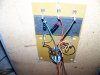
Hi, thank you. I'm just a novice at all this. How do I tell? Should I take photos?
 
Oh, those look like the "Temple" NPEs that came in Rectilinears and KLHs back in the day... garbage. Recap. Just my opinion.

Seriously, if it weren't for AK I would have thought that Rectilinear IIIs were complete garbage speakers based on the way they sounded with those miserable caps in them. They sounded awful when I test drove them at seller's house but they passed the paper towel tube driver check test so they came home. A few caps later and such a dramatic difference!
 
Also: you might be pleasantly surprised with your rig once you get it done. I haven't heard much bad about Utah drivers.
 
Also: you might be pleasantly surprised with your rig once you get it done. I haven't heard much bad about Utah drivers.
Sounds encouraging but I'm having difficulty finding them. Mouser is impossible to sort through, no matter what I put in search. I did find a Parts Express in Canada though.
 
Last edited:
Got it. Thank you. So, since the voltage doesn't matter, I'd get 4uf or 4.7 uf and that 8.2 uf I guess. Right?
 
voltage doesn't matter as long as the rating is the same or greater than originals.

Getting the capacitance value right is important though. An "off" value will shift the crossover points. I can't quite read the original values in your pics. What are they? Understand that you can parallel caps and add values if the originals aren't available in current production. I would try to get as close as possible to original unless you have a deliberate reason to shift the x-over points.
 
voltage doesn't matter as long as the rating is the same or greater than originals.

Getting the capacitance value right is important though. An "off" value will shift the crossover points. I can't quite read the original values in your pics. What are they? Understand that you can parallel caps and add values if the originals aren't available in current production. I would try to get as close as possible to original unless you have a deliberate reason to shift the x-over points.
4 uf and 8 uf 50 volts. I forget how tolerance plays into it. Express has a Dayton 4 uf / 250 V with a 1%. Should I get that one?
 
that'll work. 1% is probably not necessary as the old ones were probably 10% or 20% tolerance but it is cheap insurance that your speakers will sound balanced after you're done.

It doesn't look like 8 uF is an off the shelf value, but for example, you could replace it with two 4 uF in parallel
 
Back
Top Bottom