
• The move to the new server is done. There are some software and database maintenance updates in process. This has us passing the hat around to help out. We appreciate any donations. Seriously, even a dollar helps. The payment page may be found here - https://www.audiokarma.org/support.html

Inner Groove Distortion- Turntable problem?

Hello everybody and welcome to my first post on this forum.
I have been in a battle with IGD since I got into this hobby 3 years ago, and since purchasing a Technics sl1500c with a VM95ML during the summer, it's been reduced, but hasn't gone away.

I have many records that play with varying degrees of IGD. Loud instrumentals/vocals sound awful on some records, especially as I listen a lot through headphones. Then I have loads that don't play with any issues, but I'm getting it on enough records to make me paranoid, let me say that. I've gotten to the point that I wince at the thought of me putting on a heavy metal record or something- I'm not into that but I feel that if I were, my turntable wouldn't play ball...it's bad enough on rock/pop.

About one in 5 or 6 used records I buy will have it, and I'm picky about condition. Some used records I've gone through three or four pressings to get one that doesn;t play without distortion.By the way, this isn't 50s or 60s stuff either...it's 70s and 80s vinyl. Also, I used to think that it was just a problem on used vinyl, but earlier today I stuck on a 180g record I bought new and guess what, there was a hint of it on that. Maybe they're all bad pressings but I don't know...is this common?

I have aligned my cartridge with both a printed Stevenson protractor and the Technics overhang gauge. Nothing makes a difference. I have played with both ends of the VTF scale. VTA also makes no difference. The turntable is level. Preamp has also been eliminated as the source of the problem.
I swapped out my VM95ML stylus and stuck on my old VM95E..same issues so it's not the stylus.

I was told by a few hifi dealers that if some records play fine, then it's not the TT, but I'm kind of not convinced. But if it was my turntable, then what on Earth would be causing it? It's basically new. But I'm fast coming to the conclusion that either a) my TT is incapable of reproducing loud pieces of music (especially at end of sides), or b) the Microline styli are not all they're cracked up to be.

Yes, some distortion I hear may be subtle enough to be overlooked by other listeners, but also I have some records where it's unmissable and would give you tinnitus! I regret that I haven't the technology to upload needledrops, basically it sounds like a hissing/crackling on loud bits. Sometimes in left channel, sometimes in right, sometimes both.

Sibilance, interestingly, is not really an issue for me, only on a select few used records. But high frequency distortion is ruining my enjoyment of the hobby.

Thanks for reading...I really hope someone can help me out. All stores are closed where I am due to restrictions.
 
Register to hide this ad
Bad stylus, cartridge mounting, or you’re still not getting your alignment correct.

I haven’t had IGD in years. Not in 10 pivot arm tables, over 80 cartridges. Records from 1954-2019.

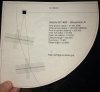
What are you using to align with? If you’re not using it, I’d HIGHLY recommend you print and use the Conrad Hoffman Arc protractor from VE.

927E82F4-3B17-492B-AF0B-38DBADF776C1.jpeg
 
Bad stylus, cartridge mounting, or you’re still not getting your alignment correct.

I haven’t had IGD in years. Not in 10 pivot arm tables, over 80 cartridges. Records from 1954-2019.

What are you using to align with? If you’re not using it, I’d HIGHLY recommend you print and use the Conrad Hoffman Arc protractor from VE.

View attachment 2033987
I'm using the Technics overhang gauge, aligned with the help of a jewellers loupe. I dont think I'm able for the stress of an arc protractor TBH!!
 
Overhang is only part of the equation. You really need to do a proper alignment with a protractor as well as azimuth. Without this, all bets are off. If you don't feel comfortable (not sure why you wouldn't) take it to someone who can. It's really not that hard, loosen screw, move cart, tighten screws and check both points on protractor. Rinse, repeat until you get it properly aligned on both points.
 
Why are you using a Stevenson alignment? Much better off with a Baerwald (Lofgren A). The 1500c is a brand new table (sells for $1200) and is very capable of awesome playback. What VTF are you using and what setting do you have your anti-skating set too?

Also, used records certainly have some odds of being played with some lesser quality equipment before you got the record, and who knows what damage could have been done to them. I have a couple of new records that are just plain bad cuts (over-driven) which should not happen in this day and age, but they do.
 
Some degradation of high frequency response and audio quality in the inner grooves is inevitable. It’s a limitation of the format. But, apparent distortion is usually a sign of either a poor setup or damaged vinyl. A VM95ML should not have this problem. Usually, AT’s quality control is pretty good, so I wouldn’t assume that the stylus is defective... But, it may be worth giving a careful look-see under a powerful loupe. Make sure that the stylus tip is mounted square on the cantilever, and that it is undamaged. If everything is good there, I will echo what other’s have mentioned. Try a protractor. Set up VTF and AS to spec, then fine tune by ear on a new, or known clean record. (If the record has groove damage, you’ll just wind up chasing your tail.) Usually, moving settings to the extreme ends of the scale won’t be of benefit. Small adjustments matter more than you’d think. For instance, I have a VM95E that doesn’t sound great In the inner grooves at 2g and 2 on my anti-skate dial, per setup instructions. But I discovered through my AKG headphones that changing the VTF to about 2.1g and dialing back the anti-skate to about 1.8 made all of the difference in the world. Another thing, with your line contact stylus, VTA should matter a great deal. The tonearm should be parallel to the record surface. If you can adjust on the fly, try tweaking it while listening. Again, drastic changes usually won’t help. A small nudge one way or the other can really help bring things into focus.

Once, your setup is as good as it can be, there will still be the ever-present issue of bad vinyl. On used records, groove damage may have taken place that may not be apparent to the naked eye. If the previous owner played that record on a BSR changer with a stack of pennies on the headshell, there’s no bringing it back with any stylus. And yes, bad pressings are a thing, particularly with some of the early vinyl revival pressings. Recordings straight from a digital source don’t transfer well to vinyl, unless an experienced mastering engineer works some “vinyl voodoo” prior to cutting. In the last few years, I would say that the quality of new pressings have become more consistent, but a few clunkers still emerge from time to time. I have a few newer records that are victims of the volume war... too hot, too bright, and compressed sounding. And yes, distortion can creep in during playback on those. In fact, I think the distortion was actually cut into the grooves in some cases. (Jack Johnson “On And On” is a good example of this. No setup could play that frisbee without distortion.) So, you’ll probably always have some problem records, but the idea is to get the best setup possible to play the majority of your collection perfectly. Then, maybe seek out better pressings of some of those problem records over time.
 
Some degradation of high frequency response and audio quality in the inner grooves is inevitable. It’s a limitation of the format. But, apparent distortion is usually a sign of either a poor setup or damaged vinyl. A VM95ML should not have this problem. Usually, AT’s quality control is pretty good, so I wouldn’t assume that the stylus is defective... But, it may be worth giving a careful look-see under a powerful loupe. Make sure that the stylus tip is mounted square on the cantilever, and that it is undamaged. If everything is good there, I will echo what other’s have mentioned. Try a protractor. Set up VTF and AS to spec, then fine tune by ear on a new, or known clean record. (If the record has groove damage, you’ll just wind up chasing your tail.) Usually, moving settings to the extreme ends of the scale won’t be of benefit. Small adjustments matter more than you’d think. For instance, I have a VM95E that doesn’t sound great In the inner grooves at 2g and 2 on my anti-skate dial, per setup instructions. But I discovered through my AKG headphones that changing the VTF to about 2.1g and dialing back the anti-skate to about 1.8 made all of the difference in the world. Another thing, with your line contact stylus, VTA should matter a great deal. The tonearm should be parallel to the record surface. If you can adjust on the fly, try tweaking it while listening. Again, drastic changes usually won’t help. A small nudge one way or the other can really help bring things into focus.

Once, your setup is as good as it can be, there will still be the ever-present issue of bad vinyl. On used records, groove damage may have taken place that may not be apparent to the naked eye. If the previous owner played that record on a BSR changer with a stack of pennies on the headshell, there’s no bringing it back with any stylus. And yes, bad pressings are a thing, particularly with some of the early vinyl revival pressings. Recordings straight from a digital source don’t transfer well to vinyl, unless an experienced mastering engineer works some “vinyl voodoo” prior to cutting. In the last few years, I would say that the quality of new pressings have become more consistent, but a few clunkers still emerge from time to time. I have a few newer records that are victims of the volume war... too hot, too bright, and compressed sounding. And yes, distortion can creep in during playback on those. In fact, I think the distortion was actually cut into the grooves in some cases. (Jack Johnson “On And On” is a good example of this. No setup could play that frisbee without distortion.) So, you’ll probably always have some problem records, but the idea is to get the best setup possible to play the majority of your collection perfectly. Then, maybe seek out better pressings of some of those problem records over time.
The thing is, the majority DO play perfectly, but this is after careful swapping-out of the bad ones and replacing with good ones. Out of my small collection of 30-35 or so records, around 15 were bad until I swapped them.
For instance, I may buy 5-6 used records in 'NM' condition. Upon bringing them home, cleaning them, and playing them, 4 or 5 will be keepers, however I'll seek a replacement for the 1 or 2 (there;s ALWAYS at least one) that distort on the highs. This often sends me on a journey of 3 or 4 records before I find a pressing that's good. I was putting this down to groove wear or bad pressings due to them being used. But since I found that one of my new records has slight IGD, it throws this into question. It's not throughout, it's a crackling in one or two loud areas that many may not notice but I do. Yes it could also just be a bad pressing (the song is quite loudly cut), but what are the chances? I don't have much new vinyl.
OK, this particular record definitely wasn't cut for audiophiles (soundtrack for a teen Netflix series, it's actually my brother's), but then you could argue the same for most records I suppose. The particular song is a new one; it would have been recorded digitally.

And by the way, no matter how loud/hot a record is cut...I'd imagine the combination of my TT and cart , which are both very highly esteemed, should be able to deal with them. But I'm not an expert.
 
Last edited:
Overhang is only part of the equation. You really need to do a proper alignment with a protractor as well as azimuth. Without this, all bets are off. If you don't feel comfortable (not sure why you wouldn't) take it to someone who can. It's really not that hard, loosen screw, move cart, tighten screws and check both points on protractor. Rinse, repeat until you get it properly aligned on both points.
The overhang gauge takes care of alignment also, by squaring the cart in the headshell if I'm not mistaken. I've heard of many enthusiasts who do nothing more than align with this gauge, some swear by it.

If anyone owns these records, here's a few examples that cause hassle for me:

Mike Oldfield, QE2 (1980 UK)- 'Arrival' end side 1.
Gary Numan, The Pleasure Principle (1979 UK)- end of both sides (went through three of this pressing)
Thomas Dolby- Golden Age of Wireless (1983 Germany)- 'Cloudburst on Shingle St' sounds rotten.
Dire Straits- Brothers in Arms (1985 UK)- The guitars at the end of the title track sound very fuzzy. OK, this record was unlistenable anyway due to excessive surface noise, but it still irked me when the IGD popped up.
Ultravox- Vienna (1980 UK)- Listenable but the track on the end of each side is 'pushing it'.
 
Last edited:
Just an observation of something that happens on here often. When experienced people give feedback to a question asked there is often push back from the person asking the question. :dunno:

But since I found that one of my new records has slight IGD, it throws this into question.


You cannot use the fact that a pressing is a new one as a troubleshooting aid unless it’s a known good. I have plenty of new stuff that is meh...
 
Just an observation of something that happens on here often. When experienced people give feedback to a question asked there is often push back from the person asking the question. :dunno:


You cannot use the fact that a pressing is a new one as a troubleshooting aid unless it’s a known good. I have plenty of new stuff that is meh...
I know what you mean man and I don't mean to be ignorant. It's just that when some of my new/used vinyl plays flawlessly, and some plays cr*p, I start to think that maybe the good ones just weren't pressed in a hot, challenging way...and all the ones that were give me IGD issues.
 
Some degradation of high frequency response and audio quality in the inner grooves is inevitable. It’s a limitation of the format. But, apparent distortion is usually a sign of either a poor setup or damaged vinyl. A VM95ML should not have this problem. Usually, AT’s quality control is pretty good, so I wouldn’t assume that the stylus is defective... But, it may be worth giving a careful look-see under a powerful loupe. Make sure that the stylus tip is mounted square on the cantilever, and that it is undamaged. If everything is good there, I will echo what other’s have mentioned. Try a protractor. Set up VTF and AS to spec, then fine tune by ear on a new, or known clean record. (If the record has groove damage, you’ll just wind up chasing your tail.) Usually, moving settings to the extreme ends of the scale won’t be of benefit. Small adjustments matter more than you’d think. For instance, I have a VM95E that doesn’t sound great In the inner grooves at 2g and 2 on my anti-skate dial, per setup instructions. But I discovered through my AKG headphones that changing the VTF to about 2.1g and dialing back the anti-skate to about 1.8 made all of the difference in the world. Another thing, with your line contact stylus, VTA should matter a great deal. The tonearm should be parallel to the record surface. If you can adjust on the fly, try tweaking it while listening. Again, drastic changes usually won’t help. A small nudge one way or the other can really help bring things into focus.

Once, your setup is as good as it can be, there will still be the ever-present issue of bad vinyl. On used records, groove damage may have taken place that may not be apparent to the naked eye. If the previous owner played that record on a BSR changer with a stack of pennies on the headshell, there’s no bringing it back with any stylus. And yes, bad pressings are a thing, particularly with some of the early vinyl revival pressings. Recordings straight from a digital source don’t transfer well to vinyl, unless an experienced mastering engineer works some “vinyl voodoo” prior to cutting. In the last few years, I would say that the quality of new pressings have become more consistent, but a few clunkers still emerge from time to time. I have a few newer records that are victims of the volume war... too hot, too bright, and compressed sounding. And yes, distortion can creep in during playback on those. In fact, I think the distortion was actually cut into the grooves in some cases. (Jack Johnson “On And On” is a good example of this. No setup could play that frisbee without distortion.) So, you’ll probably always have some problem records, but the idea is to get the best setup possible to play the majority of your collection perfectly. Then, maybe seek out better pressings of some of those problem records over time.
The inner grooves of a record can easily produce from 10hrz to 45000hrz. If they couldn't CD 4 quadraphonic records would be useless.
 
I have a VM95ML and it tends to eliminate any IGD due to setup issues. If I still hear IGD, I conclude it’s built in to the used record and I toss it out. I come across IGD very rarely but I buy a lot of used records and some are damaged, probably due to being played with a badly-aligned cartridge. IGD is especially noticeable to me on a classical record with a loud finale around the inner grooves. But the ML seems to eliminate any that isn’t built-in.
 
I have a VM95ML and it tends to eliminate any IGD due to setup issues. If I still hear IGD, I conclude it’s built in to the used record and I toss it out. I come across IGD very rarely but I buy a lot of used records and some are damaged, probably due to being played with a badly-aligned cartridge. IGD is especially noticeable to me on a classical record with a loud finale around the inner grooves. But the ML seems to eliminate any that isn’t built-in.
Yeah mine's probably doing that too, but I don't notice LOL. Maybe I should use my vm95E for a month in order to appreciate the ML a bit more! I remember in particular my UK press of Depeche Mode- Some Great Reward played with horrible sibilance...the ML took 100% of it away. Now it's one of the finest records in my collection, plays like a CD.

I'm the opposite to you I'm afraid- If I hear it, I conclude that it's not built-in to the record and start to fret about whether my TT is faulty!!! It may be a stupid question, but how do you know the ML is eliminating IGD that's not built in, if you hear it from time to time?

But if it is indeed groove wear, I seem to buy a disproportionately high amount of worn records. I would be more inclined to think that if it is the records, then much of the time maybe it's a poor recording/pressing rather than wear? I've heard countless times that records are very resilient...did you see that video on youtube where a guy played a record something like 100 times on a Crosley, and it didn't have much of an effect on it?
 
Last edited:
research threads here on the issues with new vinyl, you might get a new insight.
I definitely hear that a lot of new vinyl is noisy, warped and cut off centre but I rarely seem to hear about built in IGD.
That said, I do have another used record that plays with IGD, however a quick search on Discogs told me that others were experiencing this too...it was the pressing. (OMD- self titled album 2018 remaster). However for 99% of my problem vinyl, there seems to be no issues for any other people.
 
Well, I had some recent experience with IGD on an old turntable I bought. It completely went away after I had really levelled the platter and fine-tuned the antiskating. These may not be causes of your IGD but I just wanted to mention it as it doesn't have to be a drastic fault, just some extra fine-tuning.
How exactly do you fine tune the antiskate? I don't have a test record or anything.
 
Yeah mine's probably doing that too, but I don't notice LOL. Maybe I should use my vm95E for a month in order to appreciate the ML a bit more! I remember in particular my UK press of Depeche Mode- Some Great Reward played with horrible sibilance...the ML took 100% of it away. Now it's one of the finest records in my collection, plays like a CD.

I'm the opposite to you I'm afraid- If I hear it, I conclude that it's not built-in to the record and start to fret about whether my TT is faulty!!! It may be a stupid question, but how do you know the ML is eliminating IGD that's not built in, if you hear it from time to time?

But if it is indeed groove wear, I seem to buy a disproportionately high amount of worn records. I would be more inclined to think that if it is the records, then much of the time maybe it's a poor recording/pressing rather than wear? I've heard countless times that records are very resilient...did you see that video on youtube where a guy played a record something like 100 times on a Crosley, and it didn't have much of an effect on it?

True, it's hard to tell and sometimes the reason is a bad pressing, not wear. (In one case I was able to find out the truth because I bought a second copy of the same album and the second copy didn't have IGD whereas the first one did, which proved to me that the first one was worn/damaged).

But the way to test is to get a cartridge with a high-end stylus (like the ML) and align it properly and test. If the ML sounds great with most records but there's IGD on some, then it's likely that IGD is from a bad pressing or wear.
 
True, it's hard to tell and sometimes the reason is a bad pressing, not wear. (In one case I was able to find out the truth because I bought a second copy of the same album and the second copy didn't have IGD whereas the first one did, which proved to me that the first one was worn/damaged).

But the way to test is to get a cartridge with a high-end stylus (like the ML) and align it properly and test. If the ML sounds great with most records but there's IGD on some, then it's likely that IGD is from a bad pressing or wear.
Yeah very true. I suppose I'm just very paranoid as a novice, due to some people saying they have huge collections of used records and never get IGD. Not doubting them, maybe they're very lucky with buying used. Also I was once told that even though another pressing of the same album hasn't got IGD, it's not an accurate test unless the writing on the runout is identical. Sigh.
Now I tend to notice any little bit of distortion on albums. Sometimes on harsh guitar hits, for example, I'll hear a faint 'buzzing' in the left or right channel as it fades away, if you know what I mean. Stuff that you probably wouldn't hear on speakers but I hear on headphones. Stuff that although not overpowering, makes you question your setup and whether you're damaging records.
Like this for example but not as bad
 
Last edited:
Back
Top Bottom