• The move to the new server is done. There are some software and database maintenance updates in process. This has us passing the hat around to help out. We appreciate any donations. Seriously, even a dollar helps. The payment page may be found here - https://www.audiokarma.org/support.html

Is great soundstaging at low volume possible?

Is great soundstaging at low volume possible?

  • Sure, if you have $5k+ to blow on it

    Votes: 5 16.7%
  • Can't be done for science reasons

    Votes: 2 6.7%
  • Can be done with $500 in craigslist gear

    Votes: 11 36.7%
  • I've got just the thing....

    Votes: 10 33.3%
  • Be that guy at the office with unprofessionally large headphones

    Votes: 5 16.7%

  • Total voters
    30
You can still only get so much from stereo.
All you need is stereo. Your ears are only stereo, after all.

Whilst only two channels (stereo) are sufficient to create a soundstage, what multi-channel (i.e., > 2, not including LFE or subwoofers) systems give you is a larger "sweet spot" and the ability to move your head relative to the speakers without losing the soundstage.
 
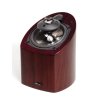
The attached are no longer available, but interesting if you want a "3 D" sound...a lot of used available by various makers in omni directional types.....Also consider smaller efficient speakers with high dynamic range as they tend to fill room better at lower volumes. I own the OMD 5s. At one time I thought of getting an entire system, but now use for a small spare room.I mention Mirage as just an example of the genre....Exquisite rosewood finish on mine. OMD-5_1.jpg

https://audiophilereview.com/afford...r-the-best-150-desktop-speaker-ever-made.html
 
Last edited:
Why not both?

I work in a place where I'm walking around and surrounded by noisy equipment a lot of the time, so a good pair of headphones is pretty crucial. Even if you're deskbound, it seems like you'd want the option in case you want to have the door open, your nextdoor neighbor has an important meeting, or you want to turn the volume up a little.

upload_2018-12-16_10-2-13.png
 
Unless the source material has a soundstage you won't hear one. Most pop/rock does not have a soundstage on playback because there isn't one there to begin with. Those recordings have separation and imaging to beat the band. Unfortunately, they have no soundstage. You can't reproduce what was never there.
 
Unless the source material has a soundstage you won't hear one. Most pop/rock does not have a soundstage on playback because there isn't one there to begin with. Those recordings have separation and imaging to beat the band. Unfortunately, they have no soundstage. You can't reproduce what was never there.

IMHO .. when most audio enthusiast (those that actually care about sound quality) use the term "soundstage" .. they are talking about separation & imaging (pop music) in an old school Audiophile sense. Words meanings change over the decades.

I agree with your statement (in bold) .. but I find myself using the term "soundstage" when I technically mean separation & imaging.
 
Armchair speculation- at low volumes you lose highs and lows, the Fletcher/Munson curve, though I know this has been revised somewhat over the years. Imaging probably relies more on higher frequencies, so suffers as the volume drops. A good loudness compensation, preferably adjustable like on old Yamaha receivers and others, will address both ends of the spectrum. It should give you better imaging. Just boosting the bass probably won't be as effective, in fact it might make things worse. An equalizer, or just intelligent use of tone controls, should help too.
 
I find myself using the term "soundstage" when I technically mean separation & imaging.

I've come to realize that's what many mean when they talk of headphones having a soundstage. They don't. They do have superb separation and pinpoint imaging. IME all headphones do.
 
I've come to realize that's what many mean when they talk of headphones having a soundstage. They don't. They do have superb separation and pinpoint imaging. IME all headphones do.

Sometimes too much, thus the blend control found on some older equipment.
 
Get some older DCM bookshelves, like the CX-17
p1040364_zpsebc77138.jpg

Easier than most to find, replacement parts are reasonable and plenty, and cost is reasonable too.

These series of DCM square grill coaxials image very well, and have 92db sensitivity, while a lot of speakers that size are usually range from 86-89db. I find this series to sound consistent from a low level until they start getting harsh when uncomfortably loud.

The CX-27 is the next step up from there, and while they are more like a 1/3 sized tower, they are still smallish and benefit from being off the ground anyway, and have better bass extension, down to 35hz vs the cx 17's 45hz.

They sound good plopped down anywhere, but when much care is taken to get the placement right, they do have an accurate "you are there" staging- IF listening to a recording with an accurate soundstage. Lots of recordings don't put an emphasis on getting that right, and some recordings did it unintentionally.

For instance, I have a mid 90's stereo clock radio that makes Billy Idol's "Rebel Yell" sound a mile wide, but would never recommend it for its "soundstage"

 
Last edited:
Armchair speculation- at low volumes you lose highs and lows, the Fletcher/Munson curve, though I know this has been revised somewhat over the years. Imaging probably relies more on higher frequencies, so suffers as the volume drops. A good loudness compensation, preferably adjustable like on old Yamaha receivers and others, will address both ends of the spectrum. It should give you better imaging. Just boosting the bass probably won't be as effective, in fact it might make things worse. An equalizer, or just intelligent use of tone controls, should help too.
Good point.....that's why most receivers had a loudness button 40 years ago....they had the same need as SchweinHaus
 
Here's another thought- balance is critical to soundstage/imaging or whatever you want to call it. Most volume controls become inaccurate at low levels, sometimes horribly so. Make sure your control tracks well, or get a stepped attenuator with discrete resistors. Or a transformer if cost is no object.
 
I think that good soundstage is as much in one's state of mind as in the delivery method. The extremely precise timing that good imaging and soundstage requires comes from the equipment, but the third leg in this is in our brain, developed over hundreds of thousands of years to pinpoint game, danger etc from just the crack of a twig.

But if you are not paying attention, (or perhaps have hearing loss in one ear) soundstage diminishes. It is just stereophonic sound, with very precise timing of sounds coming from the speakers, but our amazing hearing is what decodes it and gives it the holographic imagery IMHO.
 
I've been getting into oddball speaker design. I figure there are only so many configurations of 2-4 drivers in a box mounted on a flat panel, and maybe there's something more to be had from more spatial designs. This REALLY piques my interest. Sadly, it looks like somebody wants to be the last person to sell a used pair at $499. I will be keeping on eye out for these used.
The attached are no longer available, but interesting if you want a "3 D" sound...a lot of used available by various makers in omni directional types.....Also consider smaller efficient speakers with high dynamic range as they tend to fill room better at lower volumes. I own the OMD 5s. At one time I thought of getting an entire system, but now use for a small spare room.I mention Mirage as just an example of the genre....Exquisite rosewood finish on mine. View attachment 1358254

https://audiophilereview.com/afford...r-the-best-150-desktop-speaker-ever-made.html
 
Do you have any recommendations on cans and/or how to make them sound good? I've been considering getting something electrostatics and maybe a tube headphone amp? I've got a pair of Pioneer SE-A1000's I enjoy well enough, but, y'know, they could be better. Shame they discontinued those as well. I'd like to be in the $100 range if possible, but I don't mind having something to save up for either.
Why not both?

I work in a place where I'm walking around and surrounded by noisy equipment a lot of the time, so a good pair of headphones is pretty crucial. Even if you're deskbound, it seems like you'd want the option in case you want to have the door open, your nextdoor neighbor has an important meeting, or you want to turn the volume up a little.

View attachment 1358292
 
I juuuust passed up a pair of CX-27's. They seemed a bit high at $120. These have a similar coaxial allignment to the Time Window 3's I have, without the transimission line layout. I like these smaller ones for an office rig.
Get some older DCM bookshelves, like the CX-17
p1040364_zpsebc77138.jpg

Easier than most to find, replacement parts are reasonable and plenty, and cost is reasonable too.

These series of DCM square grill coaxials image very well, and have 92db sensitivity, while a lot of speakers that size are usually range from 86-89db. I find this series to sound consistent from a low level until they start getting harsh when uncomfortably loud.

The CX-27 is the next step up from there, and while they are more like a 1/3 sized tower, they are still smallish and benefit from being off the ground anyway, and have better bass extension, down to 35hz vs the cx 17's 45hz.

They sound good plopped down anywhere, but when much care is taken to get the placement right, they do have an accurate "you are there" staging- IF listening to a recording with an accurate soundstage. Lots of recordings don't put an emphasis on getting that right, and some recordings did it unintentionally.

For instance, I have a mid 90's stereo clock radio that makes Billy Idol's "Rebel Yell" sound a mile wide, but would never recommend it for its "soundstage"
 
You could get a pair of LS3/5As or the next size up (e.g., Harbeth 30.2). The LS3/5A came out in 1975 and the closest thing to the original currently sold is by Falcon. Be prepared to be blown away by the prices for these little things. But, there is good reason for it. :bigok:

This is just the two small Chartwells (one of the original manufactures licensed to make the LS3/5A) running full range (a 5" and a 1.1"). These would probably date back to the 70's. This is in "Pure Direct" and there are no subs, eq, or digital processing being used. This was recorded on my Nikon.

 
As has been previously stated, low volume listening can be a bit tricky--inaccurate volume controls, sledgehammer-like loudness controls, and speakers that just don't "open up" until you hit a certain power/volume level.

These issues aside, a decent set-up (for not a lot of money) can render a decent soundstage at low volumes--perhaps even more easily than retaining one at high volumes. As you start to push into high volumes, you run into issues of amplifier "headroom" and driver compression, which can rapidly kill soundstage.

My question is--does your employer know that you are spending most of your working hours "critically listening", rather than doing your job? I am self-employed, and work from home or remote job-sites, and music may be on all day long, but I probably couldn't even tell you what the last 4 tracks played were. Just askin' ;)
 
Back
Top Bottom