• The move to the new server is done. There are some software and database maintenance updates in process. This has us passing the hat around to help out. We appreciate any donations. Seriously, even a dollar helps. The payment page may be found here - https://www.audiokarma.org/support.html

Is there any risk of using a 3 gram tracking force?

So I'm sure this is a heavily debated topic, but I wanted to get some input. :)
3 grams, though... What kind of damage is this bound to do in the long run? I'm not really a heavy vinyl listener. But, now that I have this new cartridge, that might change!

Tracking force + contact patch + level of diamond polish + tip wear/condition + record cleanliness = amount of total record wear. A .2 x .7 elliptical is toughest on vinyl for a given tracking force due to its tiny contact patch. They can sound great (when new) but Shure's research showed how record and tip wear on a .2 x .7 tip goes up quickly as forces increase. Personally I dont let .2 x .7 tips anywhere near my records. I do have records that were played hundreds of times with the Stanton 680SL (long contact stereohedron/Shibata) at 4 grams and they still sound great. A perfect condition, well polished .7 conical at 3 grams should be similar as far as wear.
 
I'm a fanatic and can usually start to hear slight changes around 150 hours on a conical that tracks at 3 grams. (My systems are accurate and revealing, I can still hear to 17k) As soon as a tip starts to sound 'not new" in the drawer it goes. That's just me and I'm NOT preaching. To each their own.

Cheers, Pat

Better safe than sorry. I have yet to wear out a needle. I am always trying another one. I do have a Ortofon Quintet Blue but I rarely use it.
 
Tracking force + contact patch + level of diamond polish + tip wear/condition + record cleanliness = amount of total record wear. A .2 x .7 elliptical is toughest on vinyl for a given tracking force due to its tiny contact patch. They can sound great (when new) but Shure's research showed how record and tip wear on a .2 x .7 tip goes up quickly as forces increase.

But....

Even Shure limited VTF (pressure) to 0.75-1.25 grams for that tip. At that VTF, Shure’s own testing showed that this tip (ALL tips) did not damage grooves and lasted a long time (500 hours).

No, I wouldn’t go against Shure’s research and use a 2x7 tip at 3 grams.
 
Last edited:
Better safe than sorry. I have yet to wear out a needle. I am always trying another one. I do have a Ortofon Quintet Blue but I rarely use it.
The only needles I’ve ever worn out was the original bonded elliptical for the Goldring Elektra, followed by an LP Gear copy of it. Both lasted about 300-400 hours at 1.3 grams.

In 1981 I started using an NAD 9200 Diasa 3x7 elliptical (ADC). I used it until 1990. At 1.1 grams, I never did wear that one out. I damaged it when I mounted it on a DP45F headshell. Bought a nude NAD 93 stylus. Never wore it out at 1.0 grams. Still have it.
 
0.2 x 0.7 @ 3.0 grams VTF ? OMG ! You could probably see it shred the record. I saw that happen once. I don't remember all of the details.
 
I think a stylus is the one thing in hifi that actually needs break in. I have a couple Kyowa stylus that had to be run above recommended tracking force that were okay after 10 hours or so. There is a guy, on the Shure site in Q&A section who recommends leaving stylus sitting on a record overnight to help it break in. For a week or more. Guy claims to be a professional. Doesn't hurt anything, I guess. I do have a vn15e that wont break in, sibilant at 2 grams. Maybe I should try it with a quarter on the headshell. Hmm, maybe a penny.
That recommendation from sure is (was) for the M44-7 stylus when used for scratching. The suspension needed a few hours to settle in to reliably hold the groove while scratching, something the m44-7 was particularly good at.
 
But....

Even Shure limited VTF (pressure) to 0.75-1.25 grams for that tip. At that VTF, Shure’s own testing showed that this tip (ALL tips) did not damage grooves and lasted a long time (500 hours).

No, I wouldn’t go against Shure’s research and use a 2x7 tip at 3 grams.
I think we're saying the same thing, you saying it more clearly. My recollection from Shures literature was that a (non-worn) .2 x .7 was fine up to 1.5 grams but that record and stylus wear became an issue as vtf went above 2 grams and higher.
 
We are. I was just clarifying that the 2x7 is a perfectly fine tip, as long as it’s used below 1.3 grams. At 1.5 grams, wear accelerates at the tip.

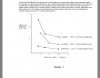
From Shure:
ED0E6DDD-2065-488E-82AA-4C07548511B1.jpeg
 
Just another source of information on the elliptical vs. spherical stylus shape. Stereophile reviewed the Decca Mark V, which is spec'd as "Stylus: 0.5 to 0.6-mil spherical. Recommenced tracking force: 3 grams." It's a bit inconsistent with Kogen's 1964 study, which seemed to equate a .7 mil spherical at 3 grams with a .2 mil elliptical at 1.5 grams in terms of record wear, but Stereophile wrote:

"We have discussed the record-wear question in connection with spherical-styli pickups before, but it can bear repeating. The Decca has a spherical stylus, which gives a larger area of groove contact than an elliptical. Thus, while the tracking force of a spherical may be higher than that of an elliptical, the contact pressure may actually be lower, and it is pressure that does the groove damage, not force. The pressure exerted by a 0.5-mil spherical at 3 grams force is actually about the same as that exerted by the .2-mil contact radii of an elliptical at 1 gram. The spherical does not give quite as clean tracing of high-level high-frequency modulations, but we have yet to observe it producing any more record wear with repeated playings than any elliptical." https://www.stereophile.com/content/decca-mark-v-phono-cartridge-page-2
 
Just another source of information on the elliptical vs. spherical stylus shape. Stereophile reviewed the Decca Mark V, which is spec'd as "Stylus: 0.5 to 0.6-mil spherical. Recommenced tracking force: 3 grams." It's a bit inconsistent with Kogen's 1964 study, which seemed to equate a .7 mil spherical at 3 grams with a .2 mil elliptical at 1.5 grams in terms of record wear, but Stereophile wrote:

"We have discussed the record-wear question in connection with spherical-styli pickups before, but it can bear repeating. The Decca has a spherical stylus, which gives a larger area of groove contact than an elliptical. Thus, while the tracking force of a spherical may be higher than that of an elliptical, the contact pressure may actually be lower, and it is pressure that does the groove damage, not force. The pressure exerted by a 0.5-mil spherical at 3 grams force is actually about the same as that exerted by the .2-mil contact radii of an elliptical at 1 gram. The spherical does not give quite as clean tracing of high-level high-frequency modulations, but we have yet to observe it producing any more record wear with repeated playings than any elliptical." https://www.stereophile.com/content/decca-mark-v-phono-cartridge-page-2

There are quite a few people that mistakenly believe that a smaller elliptical tip somehow has a larger contact area than a spherical tip. It's not so, and it needs to be understood. Thank you for posting this.
 
There are quite a few people that mistakenly believe that a smaller elliptical tip somehow has a larger contact area than a spherical tip. It's not so, and it needs to be understood. Thank you for posting this.

Yes, they are thinking of the various line contact styli.

And,I always use this example when involved in the "let a record rest overnight" debate: Back in 1981, I had "Zenyatta Mondatta" and for a reason I won't get into, it remained on a BSR turntable, playing all through the night, overnight with the changer on continuous repeat. It must have been at least 8 hours.Of course, only one side was subjected to this. The other side was played only a couple of times before this.

I still have that record and I can't hear any difference in quality between the two sides. In fact, I'm not even sure which side it was that was played over and over with no rest in between except for the time it takes for the side to play.

Doug
 
. . . I still have that record and I can't hear any difference in quality between the two sides. In fact, I'm not even sure which side it was that was played over and over with no rest in between except for the time it takes for the side to play.
Having worked for a Linn dealer part-time about 30 years ago, I can also attest that Linn's preferred technique of playing very short passages when doing A/B comparisons ("as little as ten seconds and certainly no more than thirty seconds") didn't hurt our demo records, either, and with much less rest time than the time it takes for a full side to play.

https://www.linn.co.uk/tunedem
 
When RCA was doing record wear tests to determine how well the ultrasonic carrier of the CD-4 quadraphonic system held up under extended use, they determined that playing a record using an automatic turntable set to infinite repeat was fine as long as at least 15 minutes had passed before the same part of the groove was played again. So if the side of the LP is at least 15 minutes long and you play it all the way through every time, then it's safe to play it again immediately.
 
Back
Top Bottom