• The move to the new server is done. There are some software and database maintenance updates in process. This has us passing the hat around to help out. We appreciate any donations. Seriously, even a dollar helps. The payment page may be found here - https://www.audiokarma.org/support.html

JVC RX-401 display has gone dark

I don't think those are for the back light. Those are for the remote received and whatever other things are lit with LEDs.

Did you check the fuse lamps?

I have not opened it up yet but I will soon. The reason I believe at least one of these has to do with the backlight is because I just listed a total quantity of 6 LEDs and the only things lit in this unit besides the display are a light for "Surround", a light for "CSRP" and a light for the remote received. That's only 3. Everything else is in the display.

Another reason I suspect these are the backlight is because Mouser has this part that looks a heckuva lot like what I need, and the part number is one digit off (it is SLR-343DC3F instead of SLR-34DC3F). Theirs is even orange in color, which is what color the display is

https://www.mouser.com/ProductDetail/ROHM-Semiconductor/SLR-343DC3F?qs=hegm/m%2B/z5njvc8YlyIlqQ==
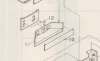
 
Where are they? Do they have a special shape?

The only reason to choose a specific LED would be if it had some special moulded case/lens, rather than the classic 3mm or 5mm domed top. IIRC, Rohm did specialise in this sort of thing. Brightness and colour you can deal with by choosing correct device and current.

I'm mainly trying to avoid having to splice in a resistor or something because the LED that I ordered can't handle the voltage or current
Also, if there was a sub identified, we'd be really confident that it was the correct device and current. Since I think I know the part number from the service manual, it was worth a shot. I guess I might be left with making an educated guess based on the voltage I measure and hoping for the best
 
the part number is one digit off (it is SLR-343DC3F instead of SLR-34DC3F

Looking at the data sheet, the 340/343 is the package type. SLR says it's a single die LED, round package. Sadly, it doesn't give a list of the package types in the data sheet. But they're simple LEDs, not something with integrated resistor..

As redk says, LEDs don't fail often, so it may not be the LEDs. I'd dismantle the thing and see what is broken first. Could be the lamps, or it could be the power supply to them.
 
I cannot find anything called a fuse lamp on the parts list. There are a couple things called a "Fuse Clip" which I assume to be where a fuse would mount.

I will open this thing up this weekend and see what I can see and maybe get a voltage.
 
Parts express and others sell them. I would make sure there is 12V where the lamps mount before proceeding. JVC has a weird set up for these and they found out that when a bulb burns out, it burns crap up. There are service bulletins out about it. I'm not sure if your model is affected. Hopefully all is fine and dandy! If not, you may have to replace some zener diodes and resistors.
 
Parts express and others sell them. I would make sure there is 12V where the lamps mount before proceeding. JVC has a weird set up for these and they found out that when a bulb burns out, it burns crap up. There are service bulletins out about it. I'm not sure if your model is affected. Hopefully all is fine and dandy! If not, you may have to replace some zener diodes and resistors.

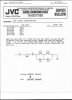
Yes I noticed that there was a service bulletin in the back of the service manual that I got about this but I didn't realize it would be these exact lamps affected. This is a scan of the service bulletin.
JVC RX401 Service Bulletin SM.jpg
 
I opened up the receiver and I can see the two diodes. Sure enough the PCB does look burnt near them. Pretty incredible that I have a service bulletin from 1990 that predicted this.

The diodes are on the power amplifier PCB. This is going to be more of a project than I was thinking. Since I'm going to be operating on that power amplifier PCB should I be looking at replacing some electrolytic capacitors as well? The two largest capacitors are on that PCB. I only ask to try to avoid having to do this operation twice. Looks like I will have to just about take the entire thing apart.

As you can see from my profile picture I normally work on OLD consoles from the 1960s and 70s mostly. The rule of thumb with those older ones is to replace all electrolytics. This receiver is from the late 1980s though, and it actually sounds nice. I am on the fence. The argument for replacing them is because they will never be easier to get at, and I have the parts already. The argument against is to don't fix it if it ain't broke.
 
Would something like this be a valid replacement for those Zener diodes? The bulletin says you want 1W and if I'm understanding the part numbers, they are 12V diodes.

Then is it also safe to assume the fuse lamps are also 12V? Thoughts on replacing those fuse lamps with LED fuse lamps?

Sorry for all the questions but thanks so much for getting me on the right path.
 
I believe those will work.. When I did my RX-950V, I also used some spacers to elevate them off the PCB. I would also look at the resistors upstream of the diodes! I wouldn't worrry about any caps at this point unless there is a defect.
 
The bulletin says you want 1W and if I'm understanding the part numbers, they are 12V diodes.

The voltage and the power rating are different parameters.

If one bulb blows, the remaining bulb current flows through the zener diode across the blown bulb. 150mA (if that really is the lamp current) at 12V gives 1.8 W. So the original 500mW was way under-rated. Even the 1W is under-rated.

I'd look to replacing the entire lighting circuit (bulbs, zeners, those parallel resistors) with one using LEDs.
 
I would rather remove the Zener diodes and keep filament fuse lamps, because LEDs are more directive. With LEDs, the display might be very bright in front of the LEDs and dim in between.
 
Thanks for the input. I am not looking to redesign a circuit. That is a bit above my skill level. I think I will just go with Zener diodes with an even higher power rating. I mean this thing was built in 1988 and the fuse lamps didn't burn out until 2023 so it should be good possibly for the rest of my life.
 
I am curious what people think about using something like this as a fuse lamp. Would be brighter but does it come with risks? Should I just go the vintage route? I saw the part number I needed on Ebay for $1. I just thought it might look really cool if it was brighter.
 
Back
Top Bottom