you've got it, it makes absolutely NO sense at all, some here will NEVER get it. The signal that reaches the subwoofer driver is not the same signal that reaches the mains, it's gone through a ton of electronics the mains aren't seeing.
Funny how someone comes in here, makes a statement, even highlites parts of their statement in bold, THEN declares someone else laid down the gauntlet.
Hey Pot, you're black, get it?
You don't have it.
Three points:
1. Opinions about which connection type is better for a given system/environment? -- entirely debatable and situational based upon equipment and preferences
2. Which connection type more accurately reflects what the main speakers see? Not debatable at all.
3. Whether that connection type (that more accurately reflects what the mains see) sounds better than driving a sub with the preamp signal? Entirely situational depending on equipment and preferences
Focusing on point 2 only, because that's the only point that is not debatable and where your argument is not correct
The signal that reaches the subwoofer driver is not the same signal that reaches the mains, it's gone through a ton of electronics the mains aren't seeing.
Here is the problem with your argument: Yes, the signal that reaches the
internal subwoofer driver is not the exact same as the main speakers see because it is amplified by the sub's internal amp. That part is factually true, but it's not relevant for two reasons:
First, the
minor point: An active subwoofer's audio output is typically neutral to the input signal because: a) An active subwoofer designer controls everything about the internal amp and driver they've chosen (amp/speaker interactions are to their own exact design spec); and b) because active subwoofers are always designed to act neutral to the input because active subs are almost always tossed into use with random brands/models of main amps and main speakers (most subs will not be paired with their own brand of main speakers or amps). The output reflects the input as accurately as the designer of an active sub intends to make it.
Second, the
major point: The
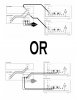
only thing we can control on a sub, input signal-wise, is the connection type because an active sub is a closed system of internal amp and driver -- it's a "black box" -- we can only control what we have the ability to control. When you drive the sub input with speaker-level connections, the sub's input is seeing the exact same signal the main sees -- they are physically shorted together -- it's not debatable. When you drive the sub via line-level inputs, the main stereo amp is completely bypassed in the signal that is sent to the sub, and the sub input does not see the same signal that the mains see.
For example, if your system has a solid state stereo preamp feeding a tube main stereo amp -- when you use speaker-level sub inputs, the sub's input will receive the exact same tube amp signal the mains receive. If you instead connect the sub via line-level, the sub's input will only receive the solid state preamp signal and will be completely isolated from the tube amp. As a second example, you see all this talk about interaction between individual amps and individual speakers on AK -- it is a frequent discussion. When you drive an active subwoofer with speaker-level connections, the sub is directly involved with that main amp/main speaker interaction because it sees the same signal the main speakers see. However, if you drive the sub with line-level connections, the sub signal is totally isolated from main amp/main speaker interaction. That doesn't mean either connection type is inherently better -- it will always be situational -- but only speaker-level connection allows the active sub's input to receive the exact same signal as the mains.
Please note that I'm not engaging in this discussion to win an argument -- and I should not be viewed as being argumentative -- we should say things on audio forums that are accurate so that nobody is mislead. Which connection type sounds better? That's an active debate and it would be constructive to hear feedback from those who have taken time to evaluate both. Their answer will still be situational, depending on their equipment and preferences, but still good to get everyone's experience for a given set of equipment. That's what our discussion should be focused on. Which sub input connection type more accurately reflects what the mains see? That's not debatable at all -- in fact the sub's input is short-circuited to what the main speakers receive when you connect an active sub using speaker-level inputs.