• The move to the new server is done. There are some software and database maintenance updates in process. This has us passing the hat around to help out. We appreciate any donations. Seriously, even a dollar helps. The payment page may be found here - https://www.audiokarma.org/support.html

Looking for tips&trix to make ha heavy layered plywood plinth

Glad to hear the new grommets have improved things. That pretty much confirms that the problem is (or was) motor noise causing the metal top plate to vibrate.

I think that's putting effort into the wrong part of the turntable. Look at it: that top plate is a piece of fairly thin pressed steel which is being vibrated by motor noise. No matter what you do to the plinth it will still be a thin piece of pressed steel being vibrated by the motor.
I would concentrate on adding damping material to the underside of the top plate. The number of mechanical gizmos attached to it doesn't leave a lot of room for adding damping but I would do whatever is possible before doing anything to the plinth.

Thanks for input! So you don´t think coupling (dumping the springs) the top plate to a heavy dampened plinth would help handle those vibrations?
 
Thanks for input! So you don´t think coupling (dumping the springs) the top plate to a heavy dampened plinth would help handle those vibrations?
I doubt it, but it's worth a try. In the first instance you could try just tightening the springs down hard so they're having no effect and see what happens. In my opinion you're already ahead of many people because you're using Audacity (or whatever it was) to make measurements and analyze the results of your mods. Try locking the top plate down hard and see what happens.
 
  • Like
Reactions: T68
I'm catching up (this thread, and a 35 year hibernation). I definitely see me researching and building a thoughtful plinth after I finish assembling and restoring my system. I dabbled with makeshift attempts at an isolation base in school, on a students budget, trial and error, with some success. We drug our gear around to many places, and some didn't really need isolation such as slab floor rooms, but some definitely did need something like wood frame floors, especially the older houses and structures. I appreciate that there are several things that have to be considered, not just soft=good isolator, or stiff=less motion, or heavy=???. The designs I've seen look like a mix of high mass designs, high-damped designs, or a mix. And they look nice and functional. A plinth seem like a great centerpiece for a system with a turntable.
 
Well, here's what the plan resulted in:
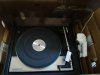
4kg of modelling clay for mass and dampening of the stock plinth. Then patches of adhesive rubber insulation (that stuff for car booths etc) between the bits, bobs and do-dahs on the plate.
Haven't recorded needle drops yet but plugged the Zero in to the main rig for a quick audition. Sounds really good. No disturbing noises at my listening levels.
...but may have another project to adress: Speed is not rock solid. Not compared to the Lenco L75 atleast. Hmm, still not sure about that idler wheel...

But when it comes to musicality and slam, this Brit may have the edge over the Swiss!

Gonna try coupling the plate to the plinth next. Not quite sure how though. Maybe replace those transport screws ? Cannot take the bottom out to flip those lock things now when the box is full of clay :D

IMG_20200904_215056.jpg

IMG_20200904_215241.jpg

IMG_20200905_001323.jpg

IMG_20200904_223555.jpg IMG_20200904_234015_1.jpg
 

Attachments

  • IMG_20200905_001443_1.jpg
    IMG_20200905_001443_1.jpg
    62.3 KB · Views: 1
Hi!
Being a bit lazy and (as my wife likes to point out) bad at finding stuff, I would appreciate your best advice or links regarding making a straightforward heavy layered plinth for an idler driven turntable with all the stuff bolted in the usual way to the top plate. Some of my questions is about stuff like:
- What material to use that wont break the bank
- How to get the boards together. Glue? Screws etc
- Should I keep the springed suspension to the top plate or bolt it fixed to the heavy plinth.
- What kind of feet to use?
- Should I try to add mass by making compartments for for example led?
- What tools do I need
- If I don´t want to veneer, how do I get it to look nice?
- ...and all other things that you more experienced guys can point out. This is my first go at this.

Thanks in advance!
This is one I did https://www.vinylengine.com/turntable_forum/viewtopic.php?t=34547
Or do something like this, my Orpheus https://vinylengine.com/turntable_forum/viewtopic.php?f=18&t=59173
Or my SP10mk2 https://www.vinylengine.com/turntable_forum/viewtopic.php?f=18&t=80320
Chris
 
  • Like
Reactions: T68
Today I dealt with another issue: speed stability has never been good on this one not even after a idler wheel refurb.
Especially after enjoying a rock steady L75 for half a year this just wouldn't do.

So after getting the noise under control I thought I would have a go at this.
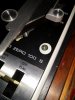
Well, got this clunker wreckage of an Garrard SP25 MK4 a while ago understanding that some parts will fit the Zero 100.
So I took the idler out from that poor thing and popped it into the Zero, gave it a light sanding and isopropanol cleanup.
Hit the switch and boom! Almost rock steady strobe and Audacity analysis shows another 2 dB drop in background noise!
So much for spending 35 euros on an idler refurb on one of the "good places" when a 5 euro wreck saved the day.

Hero of the day:
IMG_20200905_113603.jpg

IMG_20200905_110236_1.jpg

Steady lines!
IMG_20200905_112903.jpg

Well, just a beauty shot. Can't look enough on those golden flippers :)
IMG_20200905_112840.jpg
 
Last edited:
Here´s some compares made with audacity. Unfortunately I missed saving the one with old idler and damping+springs. But if I remember correctly no difference compared to without dampening.
Interesting though that there came a knee at around -54db at 100hz with the new idler event though noise floor started at a lower db level. Nothing my ears can hear compared to the old idler.

But maybe more interesting that after removing the springed suspension and coupling the top plate to the now dampened plinth that -54db knee moved to -57db. This is interesting tinkering
smiley.gif
! But I think I´ll make a pause and enjoy the music for a while now. Very happy that the Garrard now is quite enjoyable to listen to:rockon:.

...and removing the springs was a path with no return. They were a tight squeeze fit to the top plate. Force was used to remove. They wont fit if I want to put them back. Oh well, noone remembers a coward.
jmf_med_utan_fjädring.jpg
 
What are those measurements? Are they recordings of the lead in groove? Are they recordings of the stylus sitting on a stationary record with motor running? That "knee" looks to be at about 120Hz, which would be twice the mains frequency and probably the dominant frequency of the motor's vibrations. It appears to be about 6dB worse in the second picture compared to the first.
 
My experience has been that usually those old sprung suspensions and/or loosely coupled top plate mountings in old idler drives give any motor vibrations that are transmitted to the top plate nowhere to escape - it's like whatever little rumble you get, it's trapped forever in your top plate, trying to escape through your cartridge and speakers one 50Hz sine wave at a time :) Just clamping down the transport screws with the springs still in place isn't 100% same as a tightly coupled mounting, but it's usually a step in the right direction. With different idlers, I've found it's a compromise sorting out the best one. For example with my Lenco, I have two originals and one new aftermarket idler wheel for it, one of the originals was worse, but the better one is just about as good as the aftermarket replacement. It's just because of the slightly different rubber composition, one idler wheel shifts the rumble balance between fundamental and harmonics - ie. with one wheel 50Hz rumble is less than the other but 100Hz and 150 etc. are a bit higher. But both perform so well in my setup the difference is not audible.

A heavy plinth won't do magic, like with a good Lenco you can get already very good results by just resting the top plate on coke cans or whatever, it's all already there (or in the case of rumble, not there...) - all a heavy plinth does is make a good thing better. But in more marginal cases, a good plinth can mean the difference between inaudible and barely audible, or barely audible and slightly annoying etc. :) The direct coupling without any springs or mushy rubber pieces between the top plate and plinth can be a huge upgrade, depending on the turntable and condition.

EDIT: just to add, when experimenting with these things, I didn't wing it, I listened, recorded and analyzed, right down to some minute details as how many screws the top plate was fastened with and where exactly the screws were situated. I don't have much answers, but what I did learn was that there are a huge amount of questions...

 
  • Like
Reactions: T68
I'm kind a looking at this as a proof of concept while experimenting with stuff.
So it seems like this deck benefits from having top plate coupled to a heavier and damped plinth without suspension.
Question is if I will settle for this modified stock plinth pumped with kids modelling clay or build a new one...

Soundwise this is good enough for me. But always fun to construct stuff.

I'll have to get back to you on that one :-).

Once more: thanks for good input and advice!
 
I'm kind a looking at this as a proof of concept while experimenting with stuff.
So it seems like this deck benefits from having top plate coupled to a heavier and damped plinth without suspension.
Question is if I will settle for this modified stock plinth pumped with kids modelling clay or build a new one...

Soundwise this is good enough for me. But always fun to construct stuff.

I'll have to get back to you on that one :).

Once more: thanks for good input and advice!
There are two ways to approach a plinth, one is make from things that damp well and the other is the mass approach. The heavier the plinth is the more energy it takes to get it vibrating as energy is spread through the material. Problem with mass is when they start vibrating harder to stop. Plan is with a mass plinth we make it heavy enough so no issues. My Commonwealth plinth is both mass and damping, inside is a much softer wood in layers as frequency changes each time vibrations pass a layer. Plinth is around 40kg. When I set up turntables in new room before records moved onto the long shelf and before I addressed this isolation issue all my turntables had feedback from the room music vibrating the shelf (shelf was 8m long). The only turntable that had no issues at all was the Commonwealth so clearly the plinth is doing a very good job.
Chris
 
  • Like
Reactions: T68
So my first attempt at coupling the top plate to the plinth is complete.

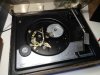
With the stock plinth the only possible way seems to use the screw holes for the transport screws and modify the corresponding holes in the frame. Glued and screwed pieces of plywood under the holes and the screwed the top plate into those.
When and if I build a custom plinth I need to figure out more points for screws somehow. Guess that two screws are not quite enough.
First spin sounds good :thumbsup:!

Ply pieces under the lock screw holes to get some material for the screws to attach to.
IMG_20200907_182044.jpg

Need to get some better looking screws...
IMG_20200907_195639.jpg

IMG_20200907_195644.jpg

Up and running!
IMG_20200907_193645.jpg
 
I've been using a lot of stainless steel Low Head Socket Cap Screws. They are kind of like a regular socket head cap screw but are about half the height and have a much nicer, more finished look to them. McMaster Carr sells them but I'm sure other places as well.

BillWojo
 
I've been using a lot of stainless steel Low Head Socket Cap Screws. They are kind of like a regular socket head cap screw but are about half the height and have a much nicer, more finished look to them. McMaster Carr sells them but I'm sure other places as well.

BillWojo

Thanks for the advice, Bill! Will try those
 
Back
Top Bottom