• Please note that Audiokarma will be offline briefly for updates early on Monday morning, September 28th.

Marantz TT-15S1 spinning to fast after moving to EU

malotru007

New Member
Hope I can benefit from the knowledge in this thread. My Marantz TT15S1 was bought in the US so it runs on 120V 60hz. It was in storage for 5 years. I moved to Italy permanently and brought it along. I read that I needed a step-down transformer and a different pulley size (a 50hz) and I would be good to go. However After buying the 50hz pulley, I noticed that it has the same exact diameter (44mm) than the one that came with my table (the 60Hz pulley)!!!??? (see attached image)

Of course when I play a vinyl, it spins too fast (chipmunk effect). Based on the hap +14%. I know that Marantz makes 2 pulleys:
50Hz pulley (90M31BW262010, or SS-T15/032 from Jap s/m) and SS-T15/031 from Int. s/m 44mm
60Hz pulley 37mm

So my questions are:
  • Why did I got a 50Hz pulley from my table bought at MusicDirect in the US?
  • The pulley size is the correct one for EU, why is it still off-speed?
  • What do you suggest? would trying to add some tape, size to the existing pully to mak it bigger solve the issue? Thanks!!!!

pulley picture

TT speed
 
Register to hide this ad
Hope I can benefit from the knowledge in this thread. My Marantz TT15S1 was bought in the US so it runs on 120V 60hz. It was in storage for 5 years. I moved to Italy permanently and brought it along. I read that I needed a step-down transformer and a different pulley size (a 50hz) and I would be good to go. However After buying the 50hz pulley, I noticed that it has the same exact diameter (44mm) than the one that came with my table (the 60Hz pulley)!!!??? (see attached image)

Of course when I play a vinyl, it spins too fast (chipmunk effect). Based on the hap +14%. I know that Marantz makes 2 pulleys:
50Hz pulley (90M31BW262010, or SS-T15/032 from Jap s/m) and SS-T15/031 from Int. s/m 44mm
60Hz pulley 37mm

So my questions are:
  • Why did I got a 50Hz pulley from my table bought at MusicDirect in the US?
  • The pulley size is the correct one for EU, why is it still off-speed?
  • What do you suggest? would trying to add some tape, size to the existing pully to mak it bigger solve the issue? Thanks!!!!

pulley picture

TT speed

That would make it run even faster, you would need to add a whole bunch of tape to the platter diameter.

Sounds like you need the smaller pulley.
 
Last edited:
That are Clearaudio components. Maybe buy a CA 220V motor?
Yes, but that's my last option as the motor is quite expensive and I would like to figure out the pulley issue first. But I'm leaning towards an issue with the motor. Perhaps it didn't appreciate to be left all that time in storage and some parts corroded?

Is it possible that the silicone belt is the problem? I remember reading that it should not but perhaps others have different input on that?
 
Just my gut but given it was working in the US with the old pulley, the new pulley is the same size as the old, it goes too fast in Italy with the new pulley, then it seems clear you were shipped the wrong pulley.

The overage of 14% is somewhat near what would be expected from (60hz-50hz) / 60hz = 16,6%.

I have not had a problem with belts but I don't know that TT.
 
Yes, but that's my last option as the motor is quite expensive and I would like to figure out the pulley issue first. But I'm leaning towards an issue with the motor. Perhaps it didn't appreciate to be left all that time in storage and some parts corroded?

Is it possible that the silicone belt is the problem? I remember reading that it should not but perhaps others have different input on that?
The belt can be a problem! Maybe you should replace it first and then look for other options. But +14% is a big gap for a belt. I think its strange there would be 2 pulley's. Clearaudio has only one. Mine is 44 mm wide on the upper side.
(I have a TT15 S1)
 
Last edited:
Just my gut but given it was working in the US with the old pulley, the new pulley is the same size as the old, it goes too fast in Italy with the new pulley, then it seems clear you were shipped the wrong pulley.

The overage of 14% is somewhat near what would be expected from (60hz-50hz) / 60hz = 16,6%.

I have not had a problem with belts but I don't know that TT.
But the pulley size is 44mm for both so I'm quite confident it is the right pulley as I ordered it from a UK distributor of ClearAudio

The belt can be a problem! Maybe you should replace it first and then look for other options. But +14% is a big gap for a belt. I think its strange there should be 2 pulley's. Clearaudio has only one. Mine is 44 mm wide on the upper side.
(I have a TT15 S1)
The turntable came with 2 belts. I tried the replacement one and same result. Unless the silicone belt degraded for both with storage but silicone is quite stable and durable.

As far as the 2 pulleys, they are 2 pulleys parts number for the Marantz service manual for JAPAN (half of the country runs on 50Hz and the other on 60Hz) perhaps for the US market there is only one size pulley (60Hz) and it is the same as the one for EU that would explain why they are identical pulleys. But then EU countries run on 50Hz...

Puzzles as why the motor still runs fast?
 
But the pulley size is 44mm for both
Not sure how that could be true - the smaller pulley has to be for the faster AC cycle, unless there is another component regulating the speed. Try measuring the pulleys - 7mm is not a lot of difference visually. Also check the wiring diagram for clues between the various regional configurations. In any event, your platter is spinning too fast so a smaller pulley would help and possibly fix the issue.

Another possibility: Maybe your transformer is doing something funky.

I am sort of amazed that line cycles would be used for speed regulation in a precision device. Elevators yes, turntables no. Is that generally how it's done these days?
 
I am sort of amazed that line cycles would be used for speed regulation in a precision device. Elevators yes, turntables no. Is that generally how it's done these days?
AC synchronous motors have been used with belt drive turntables since the days of 78 rpm records, at least. Line frequency is considered much more stable than line voltage.
 
But the pulley size is 44mm for both so I'm quite confident it is the right pulley as I ordered it from a UK distributor of ClearAudio

But then EU countries run on 50Hz...

Puzzles as why the motor still runs fast?
So we got the same TT, belt and pully, and we are both in Europe.
I think its not the pully and not the belt. I think its motor related. (Transformer?)
 
Agreed on the line hz vs. v stability but the hz will vary less than .25% (the speed accuracy of that Marantz)? That is interesting if so.

I’m no EE but I thought most TTs had a regulated DC power supply between the line and the motor plus a servo or PLL circuit to correct variations.
 
Agreed on the line hz vs. v stability but the hz will vary less than .25% (the speed accuracy of that Marantz)? That is interesting if so.

I’m no EE but I thought most TTs had a regulated DC power supply between the line and the motor plus a servo or PLL circuit to correct variations.

You're thinking direct drive not belt drive.
 
Could be fir sure. I just thought line cycles +~1% as utilities pump it out (per Wikipedia) is not accurate enough. Another reason to be a DD fan if so.
 
The specs say that the motor is asynchronous. That means a variation in voltage can have some effect on the speed. A synchronous motor speed is completely locked to the supply frequency, no so in an asynchronous.
I suggest that you check the output voltage of your step down transformer. It could be a bit higher than 120 volts.

Regards
 
Last edited:
If you have gone from 60 hz to 50 htz, I believe the table should run slower with the same size pulley. I would check your voltage with the table running, if possible.
As analogadict says if it's over 120 volts that could be the problem. Does your transformer have multi tap output?
 
If you have gone from 60 hz to 50 htz, I believe the table should run slower with the same size pulley. I would check your voltage with the table running, if possible.
As analogadict says if it's over 120 volts that could be the problem. Does your transformer have multi tap output?
A nice gentlemen at Steve hoffman forum explained it to me:

If you are using a step down transformer that steps down the voltage but does not change the frequency will result in the motor actually spinning faster.

When using a step-down transformer in Europe with your US model turntable, the motor will actually spin faster, not slower, resulting in faster playback of the audio.

  • AC motors: They rely on the magnetic field generated by the alternating current to create torque and rotation. The frequency of the AC current determines how often the magnetic field changes direction, directly influencing the motor's synchronous speed.

  • US vs. Europe: Your 60Hz turntable motor expects the magnetic field to reverse 60 times per second. In Europe, with 50Hz power, the field reverses only 50 times per second.

  • Impact on speed: With fewer field reversals in a second, the motor completes its rotations faster, leading to increased RPM. This, in turn, makes the turntable spin faster and play audio at a higher pitch.

  • Calculation: The increase in RPM is proportional to the frequency difference. Since 50Hz is 16.67% less than 60Hz, the motor spins 16.67% faster in Europe, explaining the faster audio playback.
 
A nice gentlemen at Steve hoffman forum explained it to me:

If you are using a step down transformer that steps down the voltage but does not change the frequency will result in the motor actually spinning faster.

When using a step-down transformer in Europe with your US model turntable, the motor will actually spin faster, not slower, resulting in faster playback of the audio.

  • AC motors: They rely on the magnetic field generated by the alternating current to create torque and rotation. The frequency of the AC current determines how often the magnetic field changes direction, directly influencing the motor's synchronous speed.

  • US vs. Europe: Your 60Hz turntable motor expects the magnetic field to reverse 60 times per second. In Europe, with 50Hz power, the field reverses only 50 times per second.

  • Impact on speed: With fewer field reversals in a second, the motor completes its rotations faster, leading to increased RPM. This, in turn, makes the turntable spin faster and play audio at a higher pitch.

  • Calculation: The increase in RPM is proportional to the frequency difference. Since 50Hz is 16.67% less than 60Hz, the motor spins 16.67% faster in Europe, explaining the faster audio playback.
This is completely and absolutely wrong.
The gentleman is saying exactly reverse of the actual situation.

For example, a four pole ac synchronous motor shall spin at 1500 RPM on 50Hz supply. It shall spin at 1800 RPM on 60Hz supply. For example the Garrard synchro-lab motor .
A four pole asynchronous motor ( also known as shaded pole induction motor) shall have some slip in the speed, it will rotate at around 1460 RPM on 50Hz and 1750 RPM or thereabouts on 60 Hz. The motors of Garrard 301/401 , Lenco L75 are of this type. As this type of motor doesn't lock to the supply frequency, the speed can be varied by changing the supply voltage.

I have been able to find only a single line about the motor specs, it says " ASYNCHRONOUS MOTOR"

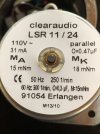
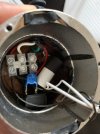
If the OP can share pics of the motor, any labels on it and also components around it , then it shall help.

Regards,

Anwesh
 
This is completely and absolutely wrong.
The gentleman is saying exactly reverse of the actual situation.

For example, a four pole ac synchronous motor shall spin at 1500 RPM on 50Hz supply. It shall spin at 1800 RPM on 60Hz supply. For example the Garrard synchro-lab motor .
A four pole asynchronous motor ( also known as shaded pole induction motor) shall have some slip in the speed, it will rotate at around 1460 RPM on 50Hz and 1750 RPM or thereabouts on 60 Hz. The motors of Garrard 301/401 , Lenco L75 are of this type. As this type of motor doesn't lock to the supply frequency, the speed can be varied by changing the supply voltage.

I have been able to find only a single line about the motor specs, it says " ASYNCHRONOUS MOTOR"

If the OP can share pics of the motor, any labels on it and also components around it , then it shall help.

Regards,

Anwesh
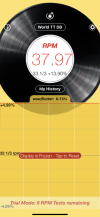
I would have think that it makes sense because it actually sounds to fast. and when measured with the app it confirms it.

Here what it looks like
 

Attachments

  • IMG_2772.jpg
    IMG_2772.jpg
    90.2 KB · Views: 41
  • IMG_2773.jpg
    IMG_2773.jpg
    95.3 KB · Views: 43
  • IMG_2767.PNG
    IMG_2767.PNG
    166.6 KB · Views: 40
Could be fir sure. I just thought line cycles +~1% as utilities pump it out (per Wikipedia) is not accurate enough. Another reason to be a DD fan if so.

Speed control devices are available for reasonable money if wanted, never felt the need with any BD I've owned.
 
Last edited:
Back
Top Bottom