• The move to the new server is done. There are some software and database maintenance updates in process. This has us passing the hat around to help out. We appreciate any donations. Seriously, even a dollar helps. The payment page may be found here - https://www.audiokarma.org/support.html

Mark's 2235B restoration

mstewart

Active Member
I just want to preface this by saying I don't claim to be an expert in the ways of stereo restoration. This one in particular is, in a way cheating, because I didn't hunt down all the parts. Rather, I bought a kit to recap this receiver. With that being said I would really like any input I could get for part substitutions. Or parts that were left out that should be included. I'm not trying to do a half-hearted job here. I just don't really know what's critical and what is not on this one.
 
Last edited:
Register to hide this ad
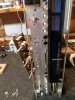
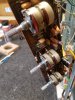
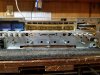
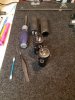
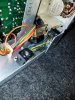
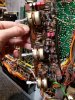
The initial complaint I got for the stereo was a friend telling me the left channel was cutting out and some lights were burned out. He asked if I'd take it home and look at it. So my first thought was to make sure all the switches were clean. I noticed right away the balance slider seemed to be cutting out. So I dug into it and cleaned every switch and the slider.
 

Attachments

  • 20200618_175728.jpg
    20200618_175728.jpg
    107.9 KB · Views: 50
  • 20200618_175736.jpg
    20200618_175736.jpg
    127.9 KB · Views: 52
  • 20200618_182537.jpg
    20200618_182537.jpg
    113 KB · Views: 53
  • 20200618_184708.jpg
    20200618_184708.jpg
    108.4 KB · Views: 53
  • 20200618_185501.jpg
    20200618_185501.jpg
    138 KB · Views: 53
That seemed to clear up the issue with the left channel. So I asked where to go from here? He said recap it, do what you can do.
 
Last edited:
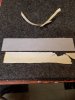
My next throught since I was handed a full set of lights was to just go ahead and change all the lights for him and while I'm at it I might as well install new vellum on the dial scale and meters. I wasn't too sure about the best way to go about changing the paper on the meters. I ended up cutting the wires. Then I unscrewed the dial cord mount next to the meters and took the meter housing off. I used a piece of the old meter vellum to make a template out of paper. Then since I had purchased a dial vellum package I had to splice two pieces of paper together to get the size of the original meter vellum. I used 1/8 double sided tape from Michaels for all the places the paper would attach.
 

Attachments

  • Old vs new paper.jpg
    Old vs new paper.jpg
    143.3 KB · Views: 55
  • 20200701_163802.jpg
    20200701_163802.jpg
    146.1 KB · Views: 55
  • Disassembled meter housing.jpg
    Disassembled meter housing.jpg
    111.4 KB · Views: 53
  • New vellum meters.jpg
    New vellum meters.jpg
    138.6 KB · Views: 55
Last edited:
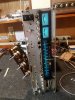
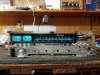
New paper on the meters and dial scale with the new bulbs installed.
 

Attachments

  • Reassembled dial scale stereo light.jpg
    Reassembled dial scale stereo light.jpg
    142 KB · Views: 52
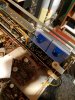
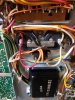
After all of the lights and vellum was replaced I started the recap. One thing I thought was odd was that I can't find much information about replacing transistors anywhere. I know that it's not uncommon to at the very least completely rebuild the power supply boards. However my kit didn't include any transistors at all. Instead they are all Elna Silmic 2's with some Wima film caps. Would I want to use the Silmic's on the power supply board? Does it make sense to do so? Anyways, going with the kit, that included a relay, I installed the caps and relay on the power supply board.
 

Attachments

  • Protection board,relay, caps.jpg
    Protection board,relay, caps.jpg
    126.3 KB · Views: 40
Last edited:
Looking good!

I can't find much information about replacing transistors anywhere.

The 2235B does not use the failure prone 2SC458 transistors that are common on earlier 22xx models and that are replaced on sight by broad consensus. There is less agreement on replacement of transistors that are working fine with no history of failure.
 
Would I want to use the Silmic's on the power supply board?
You won't hurt anything but better electrolytic capacitors for use in power supplies are those rated at 105°C and Silmic 2 caps are rated at 85°C. There's higher temperatures on power supply boards, so having higher temperature rated caps will result in an increased life span.
 
Last edited:
Looking good!

The 2235B does not use the failure prone 2SC458 transistors that are common on earlier 22xx models and that are replaced on sight by broad consensus. There is less agreement on replacement of transistors that are working fine with no history of failure.

Thank you! I'm all for not changing parts for no good reason. I have asked this same question to a few folks on AK already. Just wanted to triple check due to the fact that I have come across some rebuild kits online that included everything on the power supply.
 
You won't hurt anything but better electrolytic capacitors for use in power supplies are those rated at 105°C and Silmic 2 caps are rated at 85°C. There's higher temperatures on power supply boards, so having higher temperature rated caps will result in an increased life span.
This seems to coincide with a rebuild thread I have been reading posted by Leestereo a few years ago. The difference was that in his thread he replaced a lot of components with caps that were different values altogether. I do not have the technical expertise to understand the logic of it all. Even with his explanations! Haha...one day maybe. If I wanted to just sort of beef up the power supply caps are there any recommendations?
 
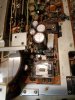
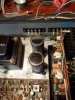
New Nichicon Gold Tune 10,000uf/50v filter caps were installed. They are the same spec and size as the originals. This made the swap a lot easier.
 

Attachments

  • Old filter caps.jpg
    Old filter caps.jpg
    164.3 KB · Views: 53
  • New filter caps installed 1.jpg
    New filter caps installed 1.jpg
    124.5 KB · Views: 55
  • New filter caps installed 2.jpg
    New filter caps installed 2.jpg
    123 KB · Views: 53
Last edited:
This seems to coincide with a rebuild thread I have been reading posted by Leestereo a few years ago. The difference was that in his thread he replaced a lot of components with caps that were different values altogether. I do not have the technical expertise to understand the logic of it all. Even with his explanations! Haha...one day maybe. If I wanted to just sort of beef up the power supply caps are there any recommendations?
If you ask @Leestereo, hopefully he will simplify his explanation in a way for you to understand.
 
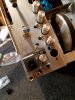
I received the replacement headphone jack today. Got that spliced in. Thanks @Ruppert
 

Attachments

  • 20200706_203250.jpg
    20200706_203250.jpg
    127.3 KB · Views: 39
  • New jack spliced old jack.jpg
    New jack spliced old jack.jpg
    190.4 KB · Views: 40
This seems to coincide with a rebuild thread I have been reading posted by Leestereo a few years ago. The difference was that in his thread he replaced a lot of components with caps that were different values altogether. I do not have the technical expertise to understand the logic of it all. Even with his explanations! Haha...one day maybe. If I wanted to just sort of beef up the power supply caps are there any recommendations?
One way you might upgrade your power supply caps is replace them with the same capacitance, but one higher voltage rating. If the original was rated 16V, replacement could be 25V. If original was 25V, replacement could be 35V, etc. modern caps are generally smaller for the same rating, so a bit more robust cap can replace the older ones without being too large. But only change the capacitance if someone you trust recommends it with an informed rationale. Leestereo would definitely be one if those people you could trust if he recommended a different capacitance from the original. And, as mentioned above, using 105 degree Celsius rated caps is a general rule in power supplies. In Nichicon, that could be UPW series, and in Panasonic, that could be FC series.
 
One way you might upgrade your power supply caps is replace them with the same capacitance, but one higher voltage rating. If the original was rated 16V, replacement could be 25V. If original was 25V, replacement could be 35V, etc. modern caps are generally smaller for the same rating, so a bit more robust cap can replace the older ones without being too large. But only change the capacitance if someone you trust recommends it with an informed rationale. Leestereo would definitely be one if those people you could trust if he recommended a different capacitance from the original. And, as mentioned above, using 105 degree Celsius rated caps is a general rule in power supplies. In Nichicon, that could be UPW series, and in Panasonic, that could be FC series.
This will be my fourth recap. Along the way I have encountered the suggestion to up the voltages for caps but haven't read a clear answer as to why it's ok to do so. I have had to look for bom's a few times and see how the caps often have a higher voltage as well. What I think is the most odd thing about this recap "kit" is that almost all the caps match the original cap specs exactly. Additionally, isn't it sort of a waste of money to use Silmic 2's in every single cap location? Or would there be an audible benefit to do so? I know with the Pioneer recaps I've done, Markthefixer uses low leakage caps in the audio path and general purpose caps elsewhere. I think I read that's where Leestereo and MTF differ. One usually opts for low leakage current and Leestereo uses low esr. I read that MTF's logic is that there's no real benefit to the special "audio" caps. I asked Leestereo for his bom to redo the power supply board on this one. I'll probably place that order tonight. Another reason why I'm wondering if I should swap out anything else. If I hadn't already purchased the recap kit I would have tried to get Leestereo's whole bom for the recap. I'm not ripping the kit at all. Every question I ask is just based on curiousity and my desire to learn. Obviously I would also like make my future recaps the best they can be and be able to choose my own caps logically without having to find someone else's bom.

Edit: I know I am probably generalizing something that is much more complicated. I'm trying to recall bits and pieces of information I've read over time on this site. It's very possible I am mixing up my information
 
Last edited:
I am not the most knowledgeable when it comes to the science of caps, but what I have picked up from a few years of following the gurus is this: the voltage rating simply tells what the max voltage that should be applied to the cap. So, increasing it will have no effect on the operation of the cap in circuit. A physically larger cap might require more current to load it up on power up, thus the recommendation to up the voltage rating only a notch or two. I’m not personally a big fan of “exotic” caps, like Mundorf oils. I’ve tried them and found little or no improvement, but a much higher cost. I stick with Nichicon, Elna and Panasonic, along with numerous WIMA films for the most part, and am always happy with the sound I get.
 
I am not the most knowledgeable when it comes to the science of caps, but what I have picked up from a few years of following the gurus is this: the voltage rating simply tells what the max voltage that should be applied to the cap. So, increasing it will have no effect on the operation of the cap in circuit. A physically larger cap might require more current to load it up on power up, thus the recommendation to up the voltage rating only a notch or two. I’m not personally a big fan of “exotic” caps, like Mundorf oils. I’ve tried them and found little or no improvement, but a much higher cost. I stick with Nichicon, Elna and Panasonic, along with numerous WIMA films for the most part, and am always happy with the sound I get.
See now that was easy enough to understand! I guess I had been under the impression that increasing the voltage had some benefit to it. I haven't even heard of any exotic caps like you mentioned. I remember seeing a post by MTF where he described a comparison between certain caps that were specifically more expensive audio grade ones vs low noise caps and proved there was no difference. I also remember reading a post (maybe the same one) where it was said back when stereo manufacturers made what is now considered vintage they didn't have the technology we do today. Yet they were able to get very impressive specs out of their gear with what they had. So essentially dumping a bunch of money into the latest and greatest capacitor that comes out is completely unnecessary. This Marantz is the first one I've actually recapped with audio grade ones. I did it out of curiosity for the most part. The downside is that I don't have another 2235B sitting here with a new set of some other brand of caps to compare it to.
 
Back
Top Bottom