• The move to the new server is done. There are some software and database maintenance updates in process. This has us passing the hat around to help out. We appreciate any donations. Seriously, even a dollar helps. The payment page may be found here - https://www.audiokarma.org/support.html

Minimus 7 Loudspeakers - Measurements

I'd guess that the speaker in question has nothing in common with a Minimus 7 other than similar dimensions, and therefore it seems highly unlikely that a crossover designed for one would be ideal for the other.

Yeah, I would tend to agree. I decided against the Micca crossover and I ordered a custom matched set of capacitors off Ebay from "Joe342c52k". I'll try that inexpensive and easy fix and see how it works.
 
Original cap and new cap. New caps appear to be Chinese cheapies but they were a matched pair and the tweeters are sounding better.
IMG_4108.JPG
 
I did the crossover mod on the cheap. My 7's are dated 1993. Before doing anything, I made some observations. They had a bad midrange peak, I believe around 2.5khz and these tweeters were not as bright as my newer RCA branded speakers. I left out the resistors and moved the 4.7 BP cap to the woofer. The end result is actually decent except for that midrange peak. It gets combed out at certain angles but not at ear level over my PC monitor. It is from the woofer. Anyone else experience this? I'm thinking of trying a larger inductor , which may create a dip with a small peak. I'll probably try adding resistors and/or an L-Pad too.
 
Just to clarify, the 1mH choke was added on the woofer and the tweeter cap was changed to 2.2µf. I just didn't use resistors. So today I made a simple A/B switch and put the modified set beside the RCA. That's when I realized how much of a difference there is. The unmodified pair is much more harsh. The modified pair is not perfect but much better than the unmodified. The Pro-x88AV sounds OK with its unmodified crossover, except the midbass is a little too prominent. I am using these with a Pioneer sub and Fosi amp on my computer. Not perfect but better than any computer speakers I've tried.
 
Last edited:
The seller of my matched capacitors from Ebay makes an interesting point for forgoing a full crossover mod in favor of changing to perfectly matched film caps. I hope he doesn't mind me quoting his listing, but below is his argument. Is he right, wrong or someone in between? I'm not sure as I haven't heard a full crossover mod yet. But I do know that the new matched caps (both were 4.52uf) does improve things over the original caps. Imaging does improve.


I purchased an inventory of capacitors and have sorted them into matching pairs. These are high quality 400 volt, metallized film polypropylene capacitors. Their tolerance specification is within 5% of the nominal value. This is an acceptable tolerance for most applications but not for this one. Subsequently, each pair was measured and matched again to be within 1/2 % or less of each other. **

You might ask why bother? Well, because each tweaked capacitor represents "half" of the entire Minimus 7's crossover components. The upgrade is accomplished by just swapping out the original crossover capacitors. The matched pair provides an identical upgrade for each speaker. Once installed, things sounds better and this includes their imaging. None of this is speculation. I have conducted this simple upgrade on my pair of 7's. The attached photos show how and the improvement is remarkable.

I know there are people attempting to redesign the entire crossovers of these little speakers and I admire their effort. They tend to add more components and complexity to trim the woofer's extended range. Still, by doing so, they also eliminate some of the benefit from the original configuration. In the original crossover the woofer operates full range (no crossover at all). This arrangement does cause some overlap even as the woofer's output rolls off. Also this overlap is slightly out of phase with the dome tweeter. OK -- less than perfect but just the same not too bad either.

For more than four decades these gems have had an enthusiastic following. That longevity has been supported by many people hearing and proclaiming the same thing -- "Not too bad indeed". Consider that the dispersion patterns of these drivers are very different. Their slight out of phase blend is scattered about the room and delivers a "sizeable" (pun intended) portion of the 7's over all magic.
Jon Dahlquist intentionally added a touch of out of phase content to the mid-range of his DQ 10's. This helped his much larger speaker sonically disappear and let them sound even more open. No, it is not my contention that the Minimus 7 could ever be compared to Jon's masterpiece; yet, my point remains: No matter how it arrives, if by accident or design, once you hear that magic -- you will forever know when it's missing. This upgrade keeps the original overlap and improves the tweeter's blend, clarity and speed. The result is a noticeable and very entertaining improvement.
Before you apply your upgrade, turn your system on and then come back in about an hour or so. Now play one of your favorite recordings, making note of the volume setting. After the swap let the system warm-up and play that favorite track again at the volume noted. The smile that comes to your face will exceed the effort spent by at least a factor of ten.

** The original Realistic capacitors were identified as 50 volt 4.7uf at +/- 10%. That range would span 4.23uf to 5.17uf. Even so, my old capacitors measured 5.62uf & 6.18uf not even close to the designed nominal and more like +/- 20%. Symmetry is everything when it comes to imaging and the Minimus 7's are better at imaging than any fifty dollar speakers should be. This is a byproduct of a few things, their diminutive size, physical symmetry and dispersion pattern; but also, and I know it's odd, they only use "1/2" of a crossover. What this upgrade does is make that 0.5 of a crossover "electrically" symmetrical in the midrange. If you thought their imaging was good before it should seem almost tangible after the swap. Then -- after 50 to 70 hours of play time it gets better. Just so we are clear (pun intended) they will never send Jon Dahlquist back to the drawing board.
 
I know there are people attempting to redesign the entire crossovers of these little speakers and I admire their effort. They tend to add more components and complexity to trim the woofer's extended range. Still, by doing so, they also eliminate some of the benefit from the original configuration. In the original crossover the woofer operates full range (no crossover at all). This arrangement does cause some overlap even as the woofer's output rolls off. Also this overlap is slightly out of phase with the dome tweeter. OK -- less than perfect but just the same not too bad either.
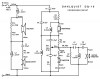
Entertaining read. It's fun when a sparing hand in crossover design is advocated over complexity, while venerating Dahlquist's DQ-10 as the very model of success. Ever seen a DQ-10 crossover? Looks like this:

DQ10_schematic-pR.png

Irony on the prowl ... ;)
 
Last edited:
The seller of my matched capacitors from Ebay makes an interesting point for forgoing a full crossover mod in favor of changing to perfectly matched film caps. I hope he doesn't mind me quoting his listing, but below is his argument. Is he right, wrong or someone in between? I'm not sure as I haven't heard a full crossover mod yet. But I do know that the new matched caps (both were 4.52uf) does improve things over the original caps. Imaging does improve.


I purchased an inventory of capacitors and have sorted them into matching pairs. These are high quality 400 volt, metallized film polypropylene capacitors. Their tolerance specification is within 5% of the nominal value. This is an acceptable tolerance for most applications but not for this one. Subsequently, each pair was measured and matched again to be within 1/2 % or less of each other. **

You might ask why bother? Well, because each tweaked capacitor represents "half" of the entire Minimus 7's crossover components. The upgrade is accomplished by just swapping out the original crossover capacitors. The matched pair provides an identical upgrade for each speaker. Once installed, things sounds better and this includes their imaging. None of this is speculation. I have conducted this simple upgrade on my pair of 7's. The attached photos show how and the improvement is remarkable.

I know there are people attempting to redesign the entire crossovers of these little speakers and I admire their effort. They tend to add more components and complexity to trim the woofer's extended range. Still, by doing so, they also eliminate some of the benefit from the original configuration. In the original crossover the woofer operates full range (no crossover at all). This arrangement does cause some overlap even as the woofer's output rolls off. Also this overlap is slightly out of phase with the dome tweeter. OK -- less than perfect but just the same not too bad either.

For more than four decades these gems have had an enthusiastic following. That longevity has been supported by many people hearing and proclaiming the same thing -- "Not too bad indeed". Consider that the dispersion patterns of these drivers are very different. Their slight out of phase blend is scattered about the room and delivers a "sizeable" (pun intended) portion of the 7's over all magic.
Jon Dahlquist intentionally added a touch of out of phase content to the mid-range of his DQ 10's. This helped his much larger speaker sonically disappear and let them sound even more open. No, it is not my contention that the Minimus 7 could ever be compared to Jon's masterpiece; yet, my point remains: No matter how it arrives, if by accident or design, once you hear that magic -- you will forever know when it's missing. This upgrade keeps the original overlap and improves the tweeter's blend, clarity and speed. The result is a noticeable and very entertaining improvement.
Before you apply your upgrade, turn your system on and then come back in about an hour or so. Now play one of your favorite recordings, making note of the volume setting. After the swap let the system warm-up and play that favorite track again at the volume noted. The smile that comes to your face will exceed the effort spent by at least a factor of ten.

** The original Realistic capacitors were identified as 50 volt 4.7uf at +/- 10%. That range would span 4.23uf to 5.17uf. Even so, my old capacitors measured 5.62uf & 6.18uf not even close to the designed nominal and more like +/- 20%. Symmetry is everything when it comes to imaging and the Minimus 7's are better at imaging than any fifty dollar speakers should be. This is a byproduct of a few things, their diminutive size, physical symmetry and dispersion pattern; but also, and I know it's odd, they only use "1/2" of a crossover. What this upgrade does is make that 0.5 of a crossover "electrically" symmetrical in the midrange. If you thought their imaging was good before it should seem almost tangible after the swap. Then -- after 50 to 70 hours of play time it gets better. Just so we are clear (pun intended) they will never send Jon Dahlquist back to the drawing board.

Well cipriano, at least we know for sure this person has never designed a crossover! What a load of audiophool waffle! :rflmao:
 
Upgrading the capacitors alone is certainly a valid way to upgrade. Matching of the capacitors in the high-pass filter is potentially useful but it must be noted that the tweeters themselves are probably not matched to anywhere near half a percent. If you're "filling the room" with these speakers rather than listening in the near field, then controlling the woofer might not be too important...but NF listening is probably the more useful application of these speakers.
 
My pair of Minimus 7 are currently earmarked to go into PC Speaker duty soon and am wondering if I should do the XO upgrade now and just be done with it. Is there a go to for a parts kit that everyone suggests or is it better to source/piece together myself?
 
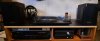
Wow, time flies when life gets in the way. I originally posted to this thread back in Sept 2019 and then forgot about my Optimus Pro 77. Yesterday while moving some stuff we had in storage I rediscovered these gems. I have been thinking of setting up a nearfield listening position in my office as I have the house to myself during the day now. Well I set them up with a 3116 based Class D amp today. WOW, I need to get the cross overs rebuilt and rebuild the amp too. (Dont worry I am not spinning vinyl with this configuration)>20210730_141626.jpg
 
Small update. I still have not even ordered the parts to rebuild these yet, just enjoying the music. Today I finally got around to hooking up my Polk M5jr ported model that you can see hiding behind the Pro77s. The Polks have had their crossovers rebuilt and tweeters upgraded to the Polk RO194. These little Rat Shack speakers sound so much better! Time to sell the Polks I think!
 
I just finished rebuilding the crossovers in my JBL L7s. While the parts are on order to do the L5s, I built the Minimus 7 crossovers. I'll work on getting them installed while thing are in transit. Can't wait to hear the "new" M7s.
 
This comes along a bit late, but better late than never, I guess.

I did two sets of PZ-2.1 crossover builds a few years ago, for two pairs of speakers I rescued (inexpensively as they both needed new woofer surrounds) at a local flea market. One is installed in a set of Minimus 7s, which I use as near-field/computer speakers in my work studio (along with a gifted Onkyo subwoofer). This is an extraordiarily pleasant listening system - the best "work speakers" I've ever had, by far.

The other set is in a set of Minimus 77s, in my bedroom system, along with a refurbished flea-market Definitive Tech subwoofer. I haven't ever been sure that these speakers turned out right - the sound is a bit "wooly" and bloated. My guess has been that the room arrangement is a problem. They're hung from the ceiling, right by the side walls (the only place available) and I'm sure that there's some bass reinforcement taking place which is added to the known "slight upper-bass boost due to having a Q higher than 0.7" of small mini-monitors like this. I also had a sneaking fear that I might accidentally have hooked the tweeters up with the wrong polarity when I installed the new crossovers, and created a midrange suck-out as a result. Finally, I had read (and assumed) that the PZ-2.1 ought to work about as well with the Minimus 77's larger (5.25") woofer as it does with the Minimus 7 drivers, but I didn't know that for certain.

Eventually I broke down, and decided to get a decent calibrated measuring microphone so I could evaluate them (and the room acoustics) properly. A uMIK-2 arrived a few days ago, and this morning I fired up REW on my laptop to check 'em out.

I took measurements outdoors in the back yard, with each speaker sitting on a rung of an aluminum ladder about 4' above the ground. The mic was on another ladder, at the same height, aimed directly at the center of the speaker. The nearest reflective surfaces (other than the concrete patio) were at least 15' away. It's as close to a "free space" measurement as I could arrange here at home. The sweeps were done with the mic's individual calibration curve applied.

Left speaker response, un-smoothed:

Left speaker, as built.png

Same sweep, but with 1/6 smoothing applied:

Left speaker, as built, sixth-octave smoothing.png

Right speaker, smoothed:

Right speaker, as built, sixth-octave smoothing.png

Left speaker, with the tweeter polarity temporarily reversed:

Left speaker, tweeter phase reversed.png

Close-in sweep of the crossover-frequency range with the tweeter polarity reversed:

Left speaker, tweeter phase reversed, overlap region.png

From all of the above, I draw some tentative conclusiong:
  1. The PZ-2.1 is a fine crossover design for the Minimus 77 drivers! The overall woofer-to-tweeter matching looks very good.
  2. All of the drivers seem to be OK - the close match of the curves for the two speakers suggests that there's nothing wrong with any of them.
  3. I didn't botch the tweeter polarity - there's no suck-out in the curves "as built", and a nifty 25 dB notch at 1.95kHz if I experimentally reverse the tweeter polarity.
  4. There's a bit of a peak above 2k. If this isn't an artifact of my measurement setup, it might be something which could be corrected by (e.g.) raising the tweeter crossover transition frequency a bit, or dropping the woofer transition frequency,
  5. The "Q is roughly 1" midbass boost is clearly visible and is about as I had expected.
I think my next step will be listening-room optimization. I'll put them back in place, then sweep the response in the room and see just how much bass reinforcement I'm getting from the near-ceiling-and-wall placement. With luck, some playing around with the MoodeAudio parametric equalizer, and the subwoofer level and transition frequency will let me get a curve which is close-to-flat in my actual listening space. I don't think I will need to touch the midrange and treble frequencies at all (or, at most, see if I can gently tame that 2kHz peak)... most of the tweaking will probably be in the midbass.

 
Last edited:
This comes along a bit late, but :lurk:better late than never, I guess.

I did two sets of PZ-2.1 crossover builds a few years ago, for two pairs of speakers I rescued (inexpensively as they both needed new woofer surrounds) at a local flea market. One is installed in a set of Minimus 7s, which I use as near-field/computer speakers in my work studio (along with a gifted Onkyo subwoofer). This is an extraordiarily pleasant listening system - the best "work speakers" I've ever had, by far.

The other set is in a set of Minimus 77s, in my bedroom system, along with a refurbished flea-market Definitive Tech subwoofer. I haven't ever been sure that these speakers turned out right - the sound is a bit "wooly" and bloated. My guess has been that the room arrangement is a problem. They're hung from the ceiling, right by the side walls (the only place available) and I'm sure that there's some bass reinforcement taking place which is added to the known "slight upper-bass boost due to having a Q higher than 0.7" of small mini-monitors like this. I also had a sneaking fear that I might accidentally have hooked the tweeters up with the wrong polarity when I installed the new crossovers, and created a midrange suck-out as a result. Finally, I had read (and assumed) that the PZ-2.1 ought to work about as well with the Minimus 77's larger (5.25") woofer as it does with the Minimus 7 drivers, but I didn't know that for certain.

Eventually I broke down, and decided to get a decent calibrated measuring microphone so I could evaluate them (and the room acoustics) properly. A uMIK-2 arrived a few days ago, and this morning I fired up REW on my laptop to check 'em out.

I took measurements outdoors in the back yard, with each speaker sitting on a rung of an aluminum ladder about 4' above the ground. The mic was on another ladder, at the same height, aimed directly at the center of the speaker. The nearest reflective surfaces (other than the concrete patio) were at least 15' away. It's as close to a "free space" measurement as I could arrange here at home. The sweeps were done with the mic's individual calibration curve applied.

Left speaker response, un-smoothed:

View attachment 2363569

Same sweep, but with 1/6 smoothing applied:

View attachment 2363574

Right speaker, smoothed:

View attachment 2363573

Left speaker, with the tweeter polarity temporarily reversed:

View attachment 2363572

Close-in sweep of the crossover-frequency range with the tweeter polarity reversed:

View attachment 2363592

From all of the above, I draw some tentative conclusiong:
  1. The PZ-2.1 is a fine crossover design for the Minimus 77 drivers! The overall woofer-to-tweeter matching looks very good.
  2. All of the drivers seem to be OK - the close match of the curves for the two speakers suggests that there's nothing wrong with any of them.
  3. I didn't botch the tweeter polarity - there's no suck-out in the curves "as built", and a nifty 25 dB notch at 1.95kHz if I experimentally reverse the tweeter polarity.
  4. There's a bit of a peak above 2k. If this isn't an artifact of my measurement setup, it might be something which could be corrected by (e.g.) raising the tweeter crossover transition frequency a bit, or dropping the woofer transition frequency,
  5. The "Q is roughly 1" midbass boost is clearly visible and is about as I had expected.
I think my next step will be listening-room optimization. I'll put them back in place, then sweep the response in the room and see just how much bass reinforcement I'm getting from the near-ceiling-and-wall placement. With luck, some playing around with the MoodeAudio parametric equalizer, and the subwoofer level and transition frequency will let me get a curve which is close-to-flat in my actual listening space. I don't think I will need to touch the midrange and treble frequencies at all (or, at most, see if I can gently tame that 2kHz peak)... most of the tweaking will probably be in the midbass.

:lurk:
 
I hung the speakers back in their usual places, and did some REW measurements.

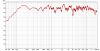
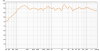
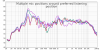
Here's a plot of the sweep, with the measurement microphone in several locations around my usual listening position:

Both speakers installed, multiple listening positions.png

Same speakers, output level, sweep parameters, and room. Only the mic position changed.

I take several things away from this set of sweeps:

  1. That peak around 2kHz that I saw in both speakers' plots, in the pseudo-free-space environment outdoors, was probably a measurement artifact... likely due to a reflection from the ground. It doesn't show up in these plots. I'll have to investigate having our patio re-done in anechoic concrete.
  2. There's clearly some bass-boosting reinforcement from the room around 100 Hz, but it's quite variable depending on the listening position.
  3. Similarly, there's a depression and suck-out around 400 Hz which affects many listening positions (and is worst at my usual listening position, with my head only a foot or so from the back wall). Mic positions further from the wall yield a much flatter frequency response.
  4. Nothing here is really a big surprise.
I'm not sure how much I'm going to be able to do about these things - due to the position sensitivity, no one attempt at equalization is going to be "right" all of the time (and trying to equalize cancellation nulls is usually an exercise in futility).

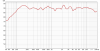
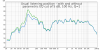
What I think I can do, is trim down the excess bass in the 100 Hz range somewhat. Here's the effect of the MoodeAudio parametric equalizer:

Preferred position, showing EQ effect.png

Further experimentation with this should be interesting. I'll also turn the subwoofer back on, and see if I can come up with an optimal level-and-cutoff-frequency setting for it.
 
With the amazing things that can be done to sound using digital analysis and correction, I'm wondering if it's even worth it to do an upgrade on desktop speakers any more.
I have a pair of inexpensive bookshelf speakers that someone did a "correction" plot for. Very small tweaks, big difference..

I know that you want to start with a "clean slate" before applying digital correction, but it's not as if the Min7s are horrendously out of whack to begin with (failed components notwithstanding).
 
With the amazing things that can be done to sound using digital analysis and correction, I'm wondering if it's even worth it to do an upgrade on desktop speakers any more.
I have a pair of inexpensive bookshelf speakers that someone did a "correction" plot for. Very small tweaks, big difference..

I know that you want to start with a "clean slate" before applying digital correction, but it's not as if the Min7s are horrendously out of whack to begin with (failed components notwithstanding).
I have thought this for quite a while. Does it matter a lot if you start with a mediocre speaker or an excellent one when you apply room correction software to it?
 
I have thought this for quite a while. Does it matter a lot if you start with a mediocre speaker or an excellent one when you apply room correction software to it?
I think it can matter in the end because a mediocre speaker will have its limits as to how good it can sound even when dialed in well.

In the realm of tweaking like this, I think digital correction might allow for more accurate results than any reasonably priced crossover, driver, or cabinet upgrades could achieve.
 
Back
Top Bottom