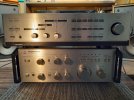
You are using an out of date browser. It may not display this or other websites correctly.
You should upgrade or use an alternative browser.
You should upgrade or use an alternative browser.
Mitsubishi DA-P30 Preamp
- Thread starter Soundit
- Start date
Register to hide this ad

This is my very first post after having been an eavesdropper for a year or so. I hope that the veterans hereabouts will forgive the length of this inaugural comment.
I picked up a P30 on the Bay about a week ago. I bought it in part because of nice things said on this very site about classic old Mitsu gear, especially the P10, P20, and this unit.
For the most part, I am very, very pleased with the P30. I have tested it with my 80s' vintage AR amp and my Acoustat Spectra speakers, but it is primarily driving some excellent AKG K701 headphones, as was my intention (I now live in a thin-walled, -floored, and -ceilinged NYC apartment, where not disturbing one's neighbors is a must if you want to keep them from disturbing you).
On an earlier thread (http://www.audiokarma.org/forums/showthread.php?t=59313), Mike Jarve, who gave the P30 a thorough review, thought it light in the bass. Perhaps it is, but I'd never know it and never say it. I listen only to classical music, and I loathe artificial audio fireworks. Besides, as I suggest above, I now never play music through my speakers for more than fifteen minutes in the middle of the afternoon and never, ever, at realistic concert or recital levels. That kind of listening is done strictly through the cans, and the P30 is a great match for the K701s. It drives them far more cleanly than several dedicated headphone amps I've heard (not really pricey ones, granted). Inner voices are remarkably clear; the bass is fast and strong but without being hollow, muddy, or overreverberant. On good recordings, the midrange sounds as naturally prominent as it would in live performance.
The bass, mid, and treble controls, as others have noted, have variable turnover frequencies. When the controls are left in the circuit (they are defeatable), they provide noticeable but not extreme alteration of the sound. As one might expect, LPs (of which I still have several thousand) and early CDs frequently profit from having their built-in exaggerations toned down. I haven't yet played any LPs or CDs where I've felt the need to adjust the midrange, but the subtlety and effectiveness of the bass and treble controls have prompted me to use them far more than I anticipated I would.
The only real minus about the unit is the absence of a balance control. What the devil was Mitsubishi thinking of! Had I realized that the P30's output balance couldn't be adjusted, I might not have bought it, but so far at least my disappointment is very well under control.
Another minus about the unit—well, not a minus to me—is its size (big) and its general appearance (inelegant). What I am trying to say roundaboutly is that my better half hates the sight of it. She is a wonderful person in her way, and since I have no intention of trading her in for a newer model, I sincerely hope she gets used to having the P30 around.
My final minor disappointment concerns the fact that there is some very slight bleed-through of sound from one input to the next. Fortunately, the bleed-through is inaudible at any tolerable listening level, but it is still disappointing to set the preamp's input to, say, Tape 1 (when not in use, that is), roll the volume up to the 2 or 3 o'clock position, and hear a faint murmur of the CD leaking through from the Aux input. I for one am convinced that the leakage must be having some deleterious effect on the sound, however small, even if my ears tell me that what I hear is splendid—as indeed they do.
In truth, however, I can literally count on the fingers of one hand the number of preamps and receivers I've heard during the past 45 years where there isn't a similar spillover. For that very reason I have never owned a receiver and probably never will. The idea of having the tuner always on, even or especially when I am trying to listen to something else, is more offputting than I could ever say. With separates, things not in use can be turned off or even temporarily removed from the system. Ah, the bliss of isolation!
I picked up a P30 on the Bay about a week ago. I bought it in part because of nice things said on this very site about classic old Mitsu gear, especially the P10, P20, and this unit.
For the most part, I am very, very pleased with the P30. I have tested it with my 80s' vintage AR amp and my Acoustat Spectra speakers, but it is primarily driving some excellent AKG K701 headphones, as was my intention (I now live in a thin-walled, -floored, and -ceilinged NYC apartment, where not disturbing one's neighbors is a must if you want to keep them from disturbing you).
On an earlier thread (http://www.audiokarma.org/forums/showthread.php?t=59313), Mike Jarve, who gave the P30 a thorough review, thought it light in the bass. Perhaps it is, but I'd never know it and never say it. I listen only to classical music, and I loathe artificial audio fireworks. Besides, as I suggest above, I now never play music through my speakers for more than fifteen minutes in the middle of the afternoon and never, ever, at realistic concert or recital levels. That kind of listening is done strictly through the cans, and the P30 is a great match for the K701s. It drives them far more cleanly than several dedicated headphone amps I've heard (not really pricey ones, granted). Inner voices are remarkably clear; the bass is fast and strong but without being hollow, muddy, or overreverberant. On good recordings, the midrange sounds as naturally prominent as it would in live performance.
The bass, mid, and treble controls, as others have noted, have variable turnover frequencies. When the controls are left in the circuit (they are defeatable), they provide noticeable but not extreme alteration of the sound. As one might expect, LPs (of which I still have several thousand) and early CDs frequently profit from having their built-in exaggerations toned down. I haven't yet played any LPs or CDs where I've felt the need to adjust the midrange, but the subtlety and effectiveness of the bass and treble controls have prompted me to use them far more than I anticipated I would.
The only real minus about the unit is the absence of a balance control. What the devil was Mitsubishi thinking of! Had I realized that the P30's output balance couldn't be adjusted, I might not have bought it, but so far at least my disappointment is very well under control.
Another minus about the unit—well, not a minus to me—is its size (big) and its general appearance (inelegant). What I am trying to say roundaboutly is that my better half hates the sight of it. She is a wonderful person in her way, and since I have no intention of trading her in for a newer model, I sincerely hope she gets used to having the P30 around.
My final minor disappointment concerns the fact that there is some very slight bleed-through of sound from one input to the next. Fortunately, the bleed-through is inaudible at any tolerable listening level, but it is still disappointing to set the preamp's input to, say, Tape 1 (when not in use, that is), roll the volume up to the 2 or 3 o'clock position, and hear a faint murmur of the CD leaking through from the Aux input. I for one am convinced that the leakage must be having some deleterious effect on the sound, however small, even if my ears tell me that what I hear is splendid—as indeed they do.
In truth, however, I can literally count on the fingers of one hand the number of preamps and receivers I've heard during the past 45 years where there isn't a similar spillover. For that very reason I have never owned a receiver and probably never will. The idea of having the tuner always on, even or especially when I am trying to listen to something else, is more offputting than I could ever say. With separates, things not in use can be turned off or even temporarily removed from the system. Ah, the bliss of isolation!
Last edited:

powerman
Super Member
Never had any problem with the DA-P30 preamp sounding thin on the bass.
Also though I have not tried it with other amps. Mine is setup with all the matching components. DA-A30 amp DA-M30 meters DA-F30 tuner and
DT-35 cassette with a Yamaha PX3 TT. Speakers that it is hooked up to
are JBL L1's and JBL L65A's
Also though I have not tried it with other amps. Mine is setup with all the matching components. DA-A30 amp DA-M30 meters DA-F30 tuner and
DT-35 cassette with a Yamaha PX3 TT. Speakers that it is hooked up to
are JBL L1's and JBL L65A's
This is my very first post after having been an eavesdropper for a year or so. I hope that the veterans hereabouts will forgive the length of this inaugural comment.
I picked up a P30 on the Bay about a week ago. I bought it in part because of nice things said on this very site about classic old Mitsu gear, especially the P10, P20, and this unit.
For the most part, I am very, very pleased with the P30. I have tested it with my 80s' vintage AR amp and my Acoustat Spectra speakers, but it is primarily driving some excellent AKG K701 headphones, as was my intention (I now live in a thin-walled, -floored, and -ceilinged NYC apartment, where not disturbing one's neighbors is a must if you want to keep them from disturbing you).
On an earlier thread (http://www.audiokarma.org/forums/showthread.php?t=59313), Mike Jarve, who gave the P30 a thorough review, thought it light in the bass. Perhaps it is, but I'd never know it and never say it. I listen only to classical music, and I loathe artificial audio fireworks. Besides, as I suggest above, I now never play music through my speakers for more than fifteen minutes in the middle of the afternoon and never, ever, at realistic concert or recital levels. That kind of listening is done strictly through the cans, and the P30 is a great match for the K701s. It drives them far more cleanly than several dedicated headphone amps I've heard (not really pricey ones, granted). Inner voices are remarkably clear; the bass is fast and strong but without being hollow, muddy, or overreverberant. On good recordings, the midrange sounds as naturally prominent as it would in live performance.
The bass, mid, and treble controls, as others have noted, have variable turnover frequencies. When the controls are left in the circuit (they are defeatable), they provide noticeable but not extreme alteration of the sound. As one might expect, LPs (of which I still have several thousand) and early CDs frequently profit from having their built-in exaggerations toned down. I haven't yet played any LPs or CDs where I've felt the need to adjust the midrange, but the subtlety and effectiveness of the bass and treble controls have prompted me to use them far more than I anticipated I would.
The only real minus about the unit is the absence of a balance control. What the devil was Mitsubishi thinking of! Had I realized that the P30's output balance couldn't be adjusted, I might not have bought it, but so far at least my disappointment is very well under control.
Another minus about the unit—well, not a minus to me—is its size (big) and its general appearance (inelegant). What I am trying to say roundaboutly is that my better half hates the sight of it. She is a wonderful person in her way, and since I have no intention of trading her in for a newer model, I sincerely hope she gets used to having the P30 around.
My final minor disappointment concerns the fact that there is some very slight bleed-through of sound from one input to the next. Fortunately, the bleed-through is inaudible at any tolerable listening level, but it is still disappointing to set the preamp's input to, say, Tape 1 (when not in use, that is), roll the volume up to the 2 or 3 o'clock position, and hear a faint murmur of the CD leaking through from the Aux input. I for one am convinced that the leakage must be having some deleterious effect on the sound, however small, even if my ears tell me that what I hear is splendid—as indeed they do.
In truth, however, I can literally count on the fingers of one hand the number of preamps and receivers I've heard during the past 45 years where there isn't a similar spillover. For that very reason I have never owned a receiver and probably never will. The idea of having the tuner always on, even or especially when I am trying to listen to something else, is more offputting than I could ever say. With separates, things not in use can be turned off or even temporarily removed from the system. Ah, the bliss of isolation!
Good review but are you aware the DA-P30 has a dual volume control? I believe many are not aware of this and fail to realize it acts just like a balance control.
Ganged volume controls
Soundit: Oh my. Indeed I had not been aware that the channel levels were independently adjustable. This design choice strikes me as being even better than including a balance control—i.e., one fewer inessential addition to the circuitry. Thank you for bringing this elementary matter to my attention. And how glad I am that you can't see my face, which is very red.
Only two things serve to lessen my embarrassment: (1) The two halves of the attenuator are not obviously ganged; in similar setups in other components, the top part is generally set off clearly from the bottom part, usually by reducing its diameter. Here the ganging is almost imperceptible—at least to me it was. (2) The user manual makes not the slightest reference either to the presence of this feature or to the little L-R emblem/device above the attenuator. Nor does it even suggest that the preamp allows the user to compensate for source material where the channel balance is askew. Didn't the folks at Mitsubishi realize that some of the purchasers of this component would be just plain thick?!?
Anyway, thanks to your helpfulness, I now have one bone fewer to pick with the P30, and as my original comment indicated, those bones are pretty microscopic.
Soundit: Oh my. Indeed I had not been aware that the channel levels were independently adjustable. This design choice strikes me as being even better than including a balance control—i.e., one fewer inessential addition to the circuitry. Thank you for bringing this elementary matter to my attention. And how glad I am that you can't see my face, which is very red.
Only two things serve to lessen my embarrassment: (1) The two halves of the attenuator are not obviously ganged; in similar setups in other components, the top part is generally set off clearly from the bottom part, usually by reducing its diameter. Here the ganging is almost imperceptible—at least to me it was. (2) The user manual makes not the slightest reference either to the presence of this feature or to the little L-R emblem/device above the attenuator. Nor does it even suggest that the preamp allows the user to compensate for source material where the channel balance is askew. Didn't the folks at Mitsubishi realize that some of the purchasers of this component would be just plain thick?!?
Anyway, thanks to your helpfulness, I now have one bone fewer to pick with the P30, and as my original comment indicated, those bones are pretty microscopic.
Soundit: Oh my. Indeed I had not been aware that the channel levels were independently adjustable. This design choice strikes me as being even better than including a balance control—i.e., one fewer inessential addition to the circuitry. Thank you for bringing this elementary matter to my attention. And how glad I am that you can't see my face, which is very red.
Only two things serve to lessen my embarrassment: (1) The two halves of the attenuator are not obviously ganged; in similar setups in other components, the top part is generally set off clearly from the bottom part, usually by reducing its diameter. Here the ganging is almost imperceptible—at least to me it was. (2) The user manual makes not the slightest reference either to the presence of this feature or to the little L-R emblem/device above the attenuator. Nor does it even suggest that the preamp allows the user to compensate for source material where the channel balance is askew. Didn't the folks at Mitsubishi realize that some of the purchasers of this component would be just plain thick?!?
Anyway, thanks to your helpfulness, I now have one bone fewer to pick with the P30, and as my original comment indicated, those bones are pretty microscopic.
You're very welcome. Don't feel bad about the volume control as I thought the same thing until I was cleaning mine and noticed it was a dual knob. And I do agree it would have been nice if they would have made the rear knob a bit bigger than the front one. But oh well enjoy the preamp it's a great one and like most would say a real sleeper.
D. C. Schafer
New Member
The DA-P30 Preamp
I bought/traded Jarve out of the AK inside-out featured P30 a couple of years back (a DA-P10 and DA-P30 set - as I recall), and then the we crossed traded some other items, and, as of about two years ago, I have the whole DA30 set - Amp, meter, Preamp, Tuner, Cassette, and the Linear Ttable. I also have the DT-40s, and the DT-35, and DT-25 cassetes (Mongo like big heavy cassettes). Everything in the set has been rebuilt/restored. As one might guess, I'm prejudiced here ( I have a dozen+ other pieces of classic Mitsu, including mini's too)
I have my original stacked set (two pairs) of AR LST 2's (I'm and old fart baby boomer - bought them new in the box) that I normally run all this through. I'm mostly jazz, and wife is classical.
I like the preamp a lot. As reference, I've had a Marantz 3800, and a Spec One, and currently use a Luxman TP-117 in my couch potato (one w/remote control) system. Occasionally when running old Rock music, I do wish for a tad more bass. – more of an in-the day the way it was tweaked feeling, rather than a real spectrum deficiency. Regrettably, the Mitsu folks never made, or at least, shipped any quality/Japan equalizers to the USA. So, to keep the system “authentic” Mitsu, I have settled for one of their Taiwan models with the “synthetic bass” setting – which seem to just right over the top 70-80’s Metal masnia.
I bought/traded Jarve out of the AK inside-out featured P30 a couple of years back (a DA-P10 and DA-P30 set - as I recall), and then the we crossed traded some other items, and, as of about two years ago, I have the whole DA30 set - Amp, meter, Preamp, Tuner, Cassette, and the Linear Ttable. I also have the DT-40s, and the DT-35, and DT-25 cassetes (Mongo like big heavy cassettes). Everything in the set has been rebuilt/restored. As one might guess, I'm prejudiced here ( I have a dozen+ other pieces of classic Mitsu, including mini's too)
I have my original stacked set (two pairs) of AR LST 2's (I'm and old fart baby boomer - bought them new in the box) that I normally run all this through. I'm mostly jazz, and wife is classical.
I like the preamp a lot. As reference, I've had a Marantz 3800, and a Spec One, and currently use a Luxman TP-117 in my couch potato (one w/remote control) system. Occasionally when running old Rock music, I do wish for a tad more bass. – more of an in-the day the way it was tweaked feeling, rather than a real spectrum deficiency. Regrettably, the Mitsu folks never made, or at least, shipped any quality/Japan equalizers to the USA. So, to keep the system “authentic” Mitsu, I have settled for one of their Taiwan models with the “synthetic bass” setting – which seem to just right over the top 70-80’s Metal masnia.

srs735
Super Member
DA-P30 Preamp
I've been listening to a DA-P30 for the past 2 or 3 weeks paired with a DA-A30 amp. I had read peoples comments about the lack of bass, personally I wouldn't want more bass. Prior to acquiring the DA P30 preamp I'd been enjoying a DA P20 preamp. Hands down I prefer the DA P30
From the various comments people had made I probably wouldn't have purchased the DA-P30, however it came as part of a package deal on GW auction that ended in late May.
With a winning bid of $29.39 I won the DA-P30 preamp and a DA-A30 amp
The amp is what I was wanting to acquire, however I haven't even taken it out of the box yet
I haven't tried either of the 2 MM settings, however the MC phono stage sounds incredible. I have a Mitsubishi DP-EC20 with a Denon DL 103r cartridge
I've been listening to a DA-P30 for the past 2 or 3 weeks paired with a DA-A30 amp. I had read peoples comments about the lack of bass, personally I wouldn't want more bass. Prior to acquiring the DA P30 preamp I'd been enjoying a DA P20 preamp. Hands down I prefer the DA P30
From the various comments people had made I probably wouldn't have purchased the DA-P30, however it came as part of a package deal on GW auction that ended in late May.
With a winning bid of $29.39 I won the DA-P30 preamp and a DA-A30 amp
The amp is what I was wanting to acquire, however I haven't even taken it out of the box yet
I haven't tried either of the 2 MM settings, however the MC phono stage sounds incredible. I have a Mitsubishi DP-EC20 with a Denon DL 103r cartridge
Last edited:

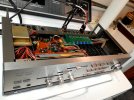
Old thread, but great equipment is timeless and always relevant. I just picked up a DA-P30 the other day and am looking forward to hearing how it compares to my DA-P20 and Sanyo Plus C55 preamps that I both recapped. For now, I've just done a partial disassembly because I wanted to clean the controls and was very curious to see what it looked like inside and how it was put together. It doesn't appear to have any pots to check/perform service adjustments which was also part of the reason for wanting to open it up. Once put back together, it's going to be a no-holds-barred, clash of the top-performing bargain preamps. So far, I give the slight edge to the DA-P20 for its superior stereo imaging that is slightly wider than the C55. It has THE best stereo separation I've ever heard [channel separation 100dB line]. It had a startup 'pop' that should be fixed by now, which was the only reason I had taken it out of rotation. It's hard to find the right words, but the DA-P20 sounds crystalline and liquid sounding, almost shimmering without ever coming across as edgy or sibilant. It sounds pure -with a very wide soundstage. The C55 is only about 1/4th! the size of the Mitsubishi at 1U in size, and has more of a meatier sound (mostly in the bass and midrange) that is still "detailed enough" with more 'music in the middle' of the L/R speakers- almost like it's conveying a third center channel that isn't there, when compared to the DA-P20. Both preamps are very satisfying to listen to. Each could be considered "endgame" in their own respect for only around $300 or so. From what I've heard online, the DA-P30 is every bit as good as (if not better than) the DA-P20. However, the DA-P30 feels a bit more plasticky than its predecessor and uses an integrated double volume control dial to adjust each channel separately. Turning them both at the same time applies volume equally to both channels. However, the double volume dial (for instance) is made of lightweight plastic and it isn't using ALPS pots inside anymore. However, it does have the adjustable bass, midrange and treble turnover frequencies which is nice. The DA-P30 is extremely limited I think. Every image I've seen of one on the internet has a serial number in the "one-thousand" range, so my guess is that they may have only made 1 or 2 thousand of them. It took me a few years to find one for sale that wasn't completely destroyed looking, but even then, it still needed a thorough cleaning and some touch-ups.
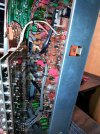
Inside, the DA-P30 is chock full of a certain type of tall/narrow completely transparent polystyrene cap (with copper inside) that I've never seen before, and I've seen alot of caps. My guess is that these will definitely be contributing to a very high-level of audio quality, as they always do whenever I see any polystyrenes in audio equipment. The electrolytics are green chemi-cons, and surprisingly, there are many small value bi-polar e'lytics used here (which I will upgrade to mkp film) which again, is indicative they cared alot about audio quality when they probably could've just used polarized instead.
Inside, the DA-P30 is chock full of a certain type of tall/narrow completely transparent polystyrene cap (with copper inside) that I've never seen before, and I've seen alot of caps. My guess is that these will definitely be contributing to a very high-level of audio quality, as they always do whenever I see any polystyrenes in audio equipment. The electrolytics are green chemi-cons, and surprisingly, there are many small value bi-polar e'lytics used here (which I will upgrade to mkp film) which again, is indicative they cared alot about audio quality when they probably could've just used polarized instead.
Last edited:

Nikkotopia
Active Member
I have a PA-D30 (SN US 0765), that I bought new and used with my Nikko Alpha II for many years, which was a nice combination. The Alpha II needs work, but the Mitsu is still in use. It has a scratchy dual volume pot at the low end. It's a Noble pot, but I haven't figured out an easy way to Deoxit yet, without de-soldering from the PCB it is attached to and then partially disassembling the segments.

PabloTincho
Super Member
I had a DA-P20 and the DA-P30 was much betterOld thread, but great equipment is timeless and always relevant. I just picked up a DA-P30 the other day and am looking forward to hearing how it compares to my DA-P20 and Sanyo Plus C55 preamps that I both recapped. For now, I've just done a partial disassembly because I wanted to clean the controls and was very curious to see what it looked like inside and how it was put together. It doesn't appear to have any pots to check/perform service adjustments which was also part of the reason for wanting to open it up. Once put back together, it's going to be a no-holds-barred, clash of the top-performing bargain preamps. So far, I give the slight edge to the DA-P20 for its superior stereo imaging that is slightly wider than the C55. It has THE best stereo separation I've ever heard [channel separation 100dB line]. It had a startup 'pop' that should be fixed by now, which was the only reason I had taken it out of rotation. It's hard to find the right words, but the DA-P20 sounds crystalline and liquid sounding, almost shimmering without ever coming across as edgy or sibilant. It sounds pure -with a very wide soundstage. The C55 is only about 1/4th! the size of the Mitsubishi at 1U in size, and has more of a meatier sound (mostly in the bass and midrange) that is still "detailed enough" with more 'music in the middle' of the L/R speakers- almost like it's conveying a third center channel that isn't there, when compared to the DA-P20. Both preamps are very satisfying to listen to. Each could be considered "endgame" in their own respect for only around $300 or so. From what I've heard online, the DA-P30 is every bit as good as (if not better than) the DA-P20. However, the DA-P30 feels a bit more plasticky than its predecessor and uses an integrated double volume control dial to adjust each channel separately. Turning them both at the same time applies volume equally to both channels. However, the double volume dial (for instance) is made of lightweight plastic and it isn't using ALPS pots inside anymore. However, it does have the adjustable bass, midrange and treble turnover frequencies which is nice. The DA-P30 is extremely limited I think. Every image I've seen of one on the internet has a serial number in the "one-thousand" range, so my guess is that they may have only made 1 or 2 thousand of them. It took me a few years to find one for sale that wasn't completely destroyed looking, but even then, it still needed a thorough cleaning and some touch-ups.
Inside, the DA-P30 is chock full of a certain type of tall/narrow completely transparent polystyrene cap (with copper inside) that I've never seen before, and I've seen alot of caps. My guess is that these will definitely be contributing to a very high-level of audio quality, as they always do whenever I see any polystyrenes in audio equipment. The electrolytics are green chemi-cons, and surprisingly, there are many small value bi-polar e'lytics used here (which I will upgrade to mkp film) which again, is indicative they cared alot about audio quality when they probably could've just used polarized instead.
The DA-P20 dual mono gimmick is useless, one channel with tone controls different with the other one, it make no sense
Last edited:

RemoWilliams
Addicted Member
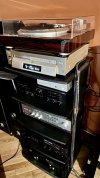
Just a bump - have been using a DA-P30 for the last few years after one came up for sale on the local Marketplace for 100 Cdn. and find it to be more than adequate. Definitely a versatile unit and I suppose one of these days I should ope it up for a good cleaning the switches etc.
Still sounds good to me so not sure about a recap, perhaps the power supply? Any suggestions on possibly improving audio quality?
Still sounds good to me so not sure about a recap, perhaps the power supply? Any suggestions on possibly improving audio quality?
There are more high-quality polystyrene caps in the P30 than I've ever seen in any piece of equipment. You definitely want to keep those in with any recap. I upgraded to BP, audio-rated types and installed as many radial WIMAs as possible replacing electrolytics altogether.