• The move to the new server is done. There are some software and database maintenance updates in process. This has us passing the hat around to help out. We appreciate any donations. Seriously, even a dollar helps. The payment page may be found here - https://www.audiokarma.org/support.html

NAD 1020 recap questions?!?

I've tried the automotive-grade R82 polyesters quite a bit. They don't sound as good as ES, even though they should be technically superior on paper as they are film. I recommend as much ES as possible for all cap positions up to 1,000uF instead of switching around between all these other polarized types with better (listed) specs on paper. Improved sound quality does not correlate to better listed specs compared to other alternatives that don't have competitively listed specs. The figure you really want to acknowledge is distortion which seems to have the most effect on SQ but isn't listed in datasheets but is lower with BP types and films. Either way, it will sound good and be an improvement over what it was. Some higher-performing alternatives to R82 are CBB, pio, polystyrene, mkp/fkp/pfr, teflon and perhaps even COG/NP0 MLCC.
I understand but I couldn't find any ES in that spec and the recommendation of where to use bipolar caps is mixed. According to Mouser they don't offer an ES in 4.7uF. And as far as WIMA goes, the the MKS4 is the only cap with close spec and I was concerned about the significantly larger lead spacing of 15mm+ in tight quarters. The closest spec they have in stock of MKS4 is 4.7uF 60V 20% and the service manual/what's in there now is 25V. Feedback on the MKS4 online seems mixed compared to the MKS2 which I presume may be discontinued?

here are the MKS4 options available at Mouser. Given that I'm flying blind a bit I tried to keep specs at what was already in the unit and not vary capacitance at all. Where voltage had to go up I tried to stay close to original spec and not increase by more than double. Fwiw there are a number of sellers on eBay who sell MKS2 with 5mm spacing but hard to trust they're legit product.
 
Last edited:
You can use bi-polars wherever polarized types were. It's possible that in some instances there may be re-biasing required if the piece was original set-up or adjusted using polar types? but that is the only instance/case maybe where it may not be plug and play but would still work or be the same if you re-biased afterwards. At least that is what someone told me once why you shouldn't always use BP in place of polarized. However, according to Cyril Bateman, BP can (and should) be used to replace all polarized types whenever possible. I wouldn't worry, it's kind of splitting hairs either way. While it does make some difference, it's not always necessarily going to be a "huge" difference. I've had zero issues replacing polarized types with bp types w/o re-biasing anything and have done many dozens of recaps. You have already chosen good components that will likely perform as good as (or better) than the originals. When choosing the box film or CBB types, the voltage ratings of 50,63 and 100V seem to consistently provide the correct pcb lead spacing to replace old through-hole components. Any radial film cap with a voltage rating above 100V is going to have the bad/wide lead spacing that may be better suited for tube amps or point-to-point soldering. You're well on your way to having a better sounding piece afterwards. Don't be afraid to stock up on CBB by purchasing a cap kit in either the 50,63 or 100V ratings because those will be polypropylene>polyester and be inexpensive and have the right lead spacing which can even be used to improve green mylars and single-layer ceramics. Either way, don't sweat it too much.

It can get really nitpicky, but it doesn't have to be either. I've just done so much of this and have paid very close attention to the results afterwards that I have my own preferences just like anyone else would. My thoughts are that the most important aspect of servicing is to enhance SQ through lowering distortion, but you can make the argument to replace a low-leakage or low-ESR component with a like component. It only makes sense to do that. It's just that in my experience, that doesn't improve SQ as much as using other e'lytics that aren't competitively listed but don't distort as much under a load. Otherwise, it's more of a theoretical or mental exercise in choosing the correct replacements to replace like with like, using lower ESR, lower impedance, and lower leakage which seems like it should be more impactful to increasing SQ, but hasn't been from my experience. I had associated lower leakage with a quieter, darker noise floor but when replaced with bp types with higher leakage, I didn't really notice the noisefloor went up like I had expected it to. That, to me, was all that mattered and encouraged me to stay on the path of using bp types whenever possible. We're taught that numbers matter and indeed they do. Lifetime, temperature rating or even the ratio of ripple current at LF compared to HF (emphasis) are also very important parameters. But as far as ESR or impedance, I've never been able to tell any difference between the sound of a cap with higher values for these compared to one with lower values.
 
Last edited:
Thanks for this - this will hopefully be the first a many down the line. Not too worried that it'll sound worse. Worst comes to worst I can always replace those two shortly after if I can find the correct wima or es
 
Got the unit de-capped yesterday without issue. Never done it before but didn't seem to have any trouble with the traces coming up. I marked each old capacitor for orientation and marked it with its respective location # - I'm waiting for my Mouser order to come in today before recapping tonight. Is there any useful tests that can be done on the old caps in the meantime that would provide any useful information? Fwiw, ironically only the two power supply caps that some previous owner had recapped with Nichicon Fine gold show signs of leaking on the board. Everything else looks clean to the eye.
 
You could test them with an ESR meter, but what's the point? They must be 40-50 years old now. The 2140 I'm working on currently has components in it dating back to 1982.
 
I like testing the ESR just to see how many are actually bad. Of course electrolyte capacitors can fail in other ways too but since I shelled out the money for the ESR meter, I like to use it when I can! Lol
 
Initial recap is largely complete now. I was able to find some MKS2 in the correct size and spec for the phono section and will try those in place of the Kemet R82 once they arrive. Everything went smoothly for a first time attempt so hopefully the results are positive.

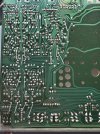
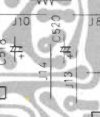
my only concern is this joint at C520. Some of the solder ran to the immediate joint to the left which according to the diagram is J14 but when I flip the board just looks like a bar across. I’ve tried to clean up and separate as best I can. Any advice?
recap1.jpeg

Second image zoomed out view
 

Attachments

  • recap2.jpeg
    recap2.jpeg
    189.5 KB · Views: 5
The manual shows those 2 joints to be connected as part of the pcb tracks anyway (if they weren't, you'd have one side of C520 'floating', which is not the aim. Just leave the 'extra' solder where it is.

C520-J14.jpg
 
Yes, provided the track is undamaged then they're connected electrically whether or not you remove the extra solder.
Leaving it just minimises the chance of damaging anything by unnecessarily removing it.
 
Got the WIMA mks2 installed this evening in C401/2 and the .68uF spec one behind the bass control. The R82s I had in temporarily are gone now.

Currently, I've got a Panasonic FR 10uf/50v in the C421/2 location as that's all I had at the moment. I'll soon have a Nich KL of the same spec I could sub in if that seems worth the small effort. If it's negligible I'll leave it. Would this be a location that a smaller WIMA mks2 (4.7/50) could sub in for the 10uF stock? This was an idea a forum member floated in a thread regarding my 1240 recap but the architecture is different. I'm not at the point of comprehending his logic yet as I'm still green with this stuff.

Finally, the line highlighted grey is listed as a solid - I assume a WIMA of similar spec can go in there? Oddly, I can't even find it on the board...
 

Attachments

  • Screenshot 2025-07-10 at 10.07.36 PM.png
    Screenshot 2025-07-10 at 10.07.36 PM.png
    122.3 KB · Views: 5
The original NAD 1020 caps in the C421/2 positions were just the 'usual' Matsushita grade used throughout the preamp, so nothing special, and I'd expect new Panasonic FR to be at least equivalent or better. Technically, for the C421/2 positions, the Nichicon UKL caps would be a better option (with lower leakage, in an audio coupling position). Whether you'd hear any difference..... try it.

C421 with R439 looks like a high pass filter to me, so decreasing C421 to 4.7uf would raise the cut-off frequency, albeit only to ca. 0.15Hz well below 20Hz. Again, one you could try if you want.

The grey highlighted caps you referred to, if they're present at all, are likely to be on the headphone amplifier pcb (with the '300' referenced parts) - but I'd be surprised if they're there.

Finally, could I just ask where you sourced the 4.7uf MKS2 (I need some) ?
 
MKS2 would always be an improvement/ upgrade over a polarized e'lytic. Would you always notice a difference? Not necessarily. It depends on what its function is within the circuit. Going from FR to KL is a lateral move in my opinion but that is just based off my experiences. Others may have had their own experiences with it where it seemed worth it for them. Check out this link for some smaller value Wima MKP/FKP with the right lead spacing and form factor for PCB through-hole work.

https://www.digikey.com/en/products/filter/film-capacitors/62?s=N4IgjCBcoGwJxVAYygMwIYBsDOBTANCAPZQDaIALGGABxwDsIAuoQA4AuUIAyuwE4BLAHYBzEAF9CAVgAMNRCBSQMOAsTLgAzPSohCcCgCYZzNp0g9+wsZJBwZCaIrRY8hEpHKaaNHRELevpoweiCB9IaapiAcXLyCohKEYIZwhgpKKm7qniCGMDIwUhAsMeaWCTbJqVFOma5qHuT5hcWh8DCp0bEW8dZJIAC0EHUuqu4aYGnyTLaD6aOQ-ACujRpSzHMbi1lruVGE6bPi4kA
 
Last edited:
Finally, could I just ask where you sourced the 4.7uf MKS2 (I need some) ?
Thank you for all of that. I don't yet understand it :) but I'm learning a bit with each job.

In terms of WIMA caps, specifically 4.7uF Digikey is the only reputable seller I can find. I ordered 20+ in hopes that that's all I'll need for a lifetime. Higher than 4.7 I've only found eBay and asking price is 5-10x higher than standard cost. Fwiw Mouser has WIMA lower values (>1uF) which I picked up a few as well.

N
 
@onanysunday - I don't disagree on the general film versus electrolytic point, but my comments were primarily regarding the specific caps in the 1020 (I also have one on the bench in front of me at the moment).

Some of the smaller MKP/FKP might be useful around the tone control or RIAA areas of the NAD 1020, but they're all too small (uf) to replace the electrolytics in there. The phono input cap (4.7uf) is about the only exception, being small enough to be replaced by film; the MKS2 is an ideal fit for that one, while it was available without a mortgage....

Beyond that though, I don't see much leeway for film replacements at least not without circuit changes, e.g., reducing the phono output coupling cap from 10uf to 4.7uf, as I noted, everything else is even higher uf.

@painttoad - many thanks - order accepted & confirmed :thumbsup:
 
5mm lead spacing:


they don't show up in searches and they say 'restricted' but they did ship out 30 to me, today.
Nice find - I wish I'd seen that before I ordered - I think mine are the shorter lead version - still okay but I'll have to swoop some of those before they're gone. I'll give both Mouser and DK a call and see if they have any of the 10uF variety hiding around and report back if I find anything.

In the meantime these ECQ from Panasonic were closest thing I could find in quick search. If the 100V isn't a dealbreaker, I imagine with those long leads it wouldn't be too much a to do to do a 2x 45 degree bend to make it effectively 5mm LS? It's my understanding that so long as you aren't putting stress where the lead connects to the body, bending the leads is fine. Seems like a miniature exercise in tube bending...
 
Last edited:
@Goldie99 @onanysunday et al: any suggested reading, vids, sites, tutorials, etc for someone trying to be able to learn - I'm not trying to get a second degree in EE for a side hobby but I would like to be able to look at a schematic and have some general understanding and be able to make reasonable, informed calls on my own what can be subbed in where. Additionally would like to be able to ensure I'm working safely when working with bigger amps/circuits.

Regarding the cap in question given the non-polarized nature of the WIMA maybe an ES in that spot at 10uF would fit the bill? I have some of those as well.

N
 
I'll give both Mouser and DK a call and see if they have any of the 10uF variety hiding around and report back if I find anything.
good luck.

i ran all 24 of these part numbers thru mouser and nada


Regarding the cap in question given the non-polarized nature of the WIMA maybe an ES in that spot at 10uF would fit the bill?
as long as it did not require low leakage, that's what i'd do.
 
The ECQ are very nice caps but all have lead spacing that is too wide for pcb through hole work. Painttoad's recommendation is spot-on. It can be hard to get mkp >1uF at times. Don't worry, we're all learning as we go. Nobody knows everything. ES and Wima would be fine and are both bi-polar types. FR,KL and others also work as long as the original you're replacing was also polarized. Some reading I'd recommend are Cyril Bateman's articles on capacitors/ sound. It helped me think differently about some of the choices I had been making with recaps in the past.

https://linearaudio.net/cyril-batemans-capacitor-sound-articles
 
Back
Top Bottom