• The move to the new server is done. There are some software and database maintenance updates in process. This has us passing the hat around to help out. We appreciate any donations. Seriously, even a dollar helps. The payment page may be found here - https://www.audiokarma.org/support.html

Non working Valencias, are they worth it?

Status
Not open for further replies.
Just curious:
While everyone seems to agree that Vals have the highs rolled off. How rolled off are they, in comparison to, say vintage Fisher's and Bozaks?

Two of my favorite speakers of all time, the Fisher XP7S and the Bozak 302A are also criticized as having extremely rolled off HF's, and I love both of their presentations. Stupendously wide, open and airy mids, rolled off HF's and solid, tight, bass, that doesn't go as low as some others, but suits me just fine.
I'd still be using the Fishers, but I put the foam rotted drivers in a box many moves ago, before I knew how to refoam, and they may be history at this point.
 
"While everyone seems to agree that Vals have the highs rolled off. How rolled off are they, in comparison to, say vintage Fisher's and Bozaks?"

Interesting question and one I was pondering the other day. I've read that Bozak tweets, the aluminum ones, start rolling off around 10K.

In my recent experiments with Bozaks (the 12" coaxials) I was struck by the lifelike midrange of the speakers, much like an Altec I thought.
 
How rolled off are they???

My 846A's VHF is completely gone by 13K. I just ran a sweep (with a very high end sound card (DAL card deluxe) and an spl meter) yesterday to check the high end and the low end. High end is going away at 12K totally gone at 13K, low end is weak at 50Hz pretty much history at 40Hz. Add to that a big fat boost from 200Hz to around 500-600Hz.
I have to admit they do sound "pleasant" but I have plans to improve them - without changing the looks.

Just curious:
While everyone seems to agree that Vals have the highs rolled off. How rolled off are they, in comparison to, say vintage Fisher's and Bozaks?

Two of my favorite speakers of all time, the Fisher XP7S and the Bozak 302A are also criticized as having extremely rolled off HF's, and I love both of their presentations. Stupendously wide, open and airy mids, rolled off HF's and solid, tight, bass, that doesn't go as low as some others, but suits me just fine.
I'd still be using the Fishers, but I put the foam rotted drivers in a box many moves ago, before I knew how to refoam, and they may be history at this point.
 
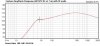
Kinda like this, perhaps?
 

Attachments

  • Valencia Tuning Corrected.jpg
    Valencia Tuning Corrected.jpg
    33.9 KB · Views: 280
Zilch, please interpret the above graph for us technically challenged non-curve junkies, like me.


BTW, have you ever run any curves on Bozak drivers, Zilch?
 
In my recent experiments with Bozaks (the 12" coaxials) I was struck by the lifelike midrange of the speakers, much like an Altec I thought.

Interestingly, Heathkit sold their TOTL speaker kit, in 1971 (and probably for years before that) with your choice of Bozak or Altec drivers, for the same price.

One might infer from the above that, in Heath's corporate mind, they were interchangeable.
 
Very interesting read for a "ribbon/planar" man. The ammount of fixing these speaker/drivers need and yet still a healthy following. (no highs no lows, but it's not Bose)
A question, the mid-range "love" I read about here (no doubt it must be quite good) could it be caused by the (I'm shocked at how much it rolls) HF rolloff causing the mids to "jump out" ?
I listened to these speakers many years ago and they just dident "do" it for me. :scratch2: Now I'm curious and if anyone is in No Cal and has a setup, I'd love to hear it.
 
Umm... I see about a 9 dB peak centered at 500 Hz.
Yup, the woofer efficiency is imaginary. They've got no balls down at 50 Hz and below, according to the simulation.

There are ways to deal with that, but you take the 9 dB efficiency hit, and they're still rolling off quickly at the bottom end.

Bear in mind that curve is generated using T/S parameters measured by an expert Altec Forum member; they're not published for 416 A/Z anywhere that I have located.

If that's indicative of the actual low frequency performance, as I stated above, I'd be looking at woofer upgrades, and it's why I'm arguing that Spartan should not be considering going back to the stock woofers except to flip his Valencias....

A question, the mid-range "love" I read about here (no doubt it must be quite good) could it be caused by the (I'm shocked at how much it rolls) HF rolloff causing the mids to "jump out?"
In my view, it has a BUNCH to do with the lineage, which is VOTT, purpose-built and voiced with (excessively) forward midrange, thus requiring that measures be taken to tame the response for home use. Altec knew that, and did it themselves (to a limited extent) in Vaencia and equivalent early iterations, then more comprehensively in subsequent models like M19.

I tried it with 806As, the obvious, and the answer is you can't get the VHF out of them, which might just be why Altec did NOT use that driver in their subsequent HF-compensated designs. Think "Tangerine," folks....

I listened to these speakers many years ago and they just didn't "do" it for me. :scratch2: Now I'm curious and if anyone is in No Cal and has a setup, I'd love to hear it.
The "Magic," if there is any, resides in the inherently damped aluminum-diaphragm compression driver on a radial horn. As a "Ribbon/planar" guy, you know the difference. Was similar done by others? Yup, and better, actually, in my view. :yes:

I'm doing more Valencia stuff this Sunday evening here in Berkeley. PM me if you want to participate....
 
Wineslob,
Response between 40Hz and 10KHz is hardly 'Midrange'.
'Bandwidth-limited' is a fair call.
Let's face it,how many speakers really do 20Hz to 20Kz?
Many claim it.Many do the 20 KHz.The majority of speakers manufactured are in fact 'bandwidth-limited'.
I feel it hinges more on the quality of what you get within the 40Hz to 10KHz.
No one argues that the Valencia has a curtailed high frequency response.That fact has been known for over 40 years.
For over 40 years.Not since recently.
What this speaker does within that limited bandwidth is gorgeous.
Okay it's response isn't even,it's got a resonant cabinet,it sounds sh*t house off-axis,but give it a good system(Garbage In= Garbage Out)and a good recording,and it'll put a big smile on your face.
I've listened to a lot of speakers with flatter responses,wider bandwidths,which don't do it.
I made another improvement to my system this week,a fellow Aussie AKer sent me a power conditioner(and I'm not a believer in these things at all)as a loan because he was very impressed with what it did for his system.
By the way this guy is the Head Physicist for an Oncology department of a major hospital in Sydney,so he's nobody's fool.
I don't want to send it back.I'm buying it.
What I'm hearing from my system now is incredible.
There's no point me trying to describe it,but once again these bandwidth limited speakers have taken another huge step forward,in response to the system being better sorted-out.
There's an honesty about them,that sounds like a cloudyness which is endemic to most speakers,is in this case absent.
Mind you I know that most speakers would sound good on my system because the individual components are bloody great.
Witness a couple of AKers who've just got PX-2s(Merrylander and Yamaha B-2) who are both thrilled.
Same goes for the Akers who've got a EchoWars modded Kenwood 700C.
My poweramps are similarly lauded.
My point is that all these items have come into the system one at a time.
All the components they replaced measured well(more data...)but weren't in the same league sonically,not even close in fact.
So there's something strange about this hobby of ours where two components 'face-off',both measure well,but one is undeniably the sonic superior of the other.
I have never found a component which excels at separating the wheat from the chaff,on a sonic basis,like my Valencias.
Where components are of a similar sonic nature,that's what it tells,they differ but neither really has a commanding lead.
The difference when a superior(measures the same)component comes along however is not subtle(not only to me but to others),it's in your face obvious.
I like that.
Go and do a search of AK,when people have acquired the individual components of my system(for their system) and see the reaction they had when they heard them for the first time.
They are stunned.
So was I.
One doesn't need Valencias to hear how good these items are,but I promise you the Valencias sound pretty marvellous at my place.
Bandwidth limited?How could they not be?
Glorious?
Most definitely.
That's why these speakers have their following,they are capable of sounding awesome despite the fact that they are bandwidth limited.
Is this making any sense?
 
Yup, the woofer efficiency is imaginary. They've got no balls down at 50 Hz and below.

There are ways to deal with that, but you take the 9 dB efficiency hit, and they're still rolling off quickly at the bottom end.

Bear in mind that curve is generated using T/S parameters measured by an expert Altec formum member; they're not published for 416 A/Z anywhere that I have located.

If that's indicative of the actual low-frequency performance, as I stated above, I'd be looking at woofer upgrades, and it's why I'm arguing that Spartan should not be considering going back to the stock woofers but to flip his Valencias....

Sorry as an Altec noob, I'm unfamiliar with Altec driver model numbers.
I'm still having a hard enough time deciphering speaker system names/numbers/variations.

What driver are we talking about here? The stock Val woofers, both A and B? Or just the 16 ohm models?

At least with Bozak's they used the same woofer model number for 40 years, although in a confusingly random and inconsistent, numbering and and naming system.
 
Sorry as an Altec noob, I'm unfamiliar with Altec driver model numbers.
I'm still having a hard enough time deciphering speaker system names/numbers/variations.

What driver are we talking about here? The stock Val woofers, both A and B? Or just the 16 ohm models?

At least with Bozak's they used the same woofer model number for 40 years, although in a confusingly random and inconsistent, numbering and and naming system.

I know with my 846a's all I needed to do was open up the back panel. You will find all the driver numbers stamped on the parts. This will give us a better idea of what you have.
 
That's a virtual reality curve,isn't it?
No actual Altec driver was measured.
 
wineslob,
AK member Mike Gibson lives in Oregon from what I can recall.
 
I'm not being flippant. But, is that just an hypothesis, that because measuring and plotting can not readily explain the 'Altec magic'?
That perhaps the 'magic' can be explained by saying, 'the premature roll off of the HF's somehow effects our human perceptions to the point of making the mids appear sweeter to the ear than they in fact truly are, in reality', at least the realities of measuring gear and the associated gear-heads?
 
That's a virtual reality curve,isn't it?
No actual Altec driver was measured.
That's a BassBox 6 Pro computer simulation of 416A(Z) performance based up measured T/S parameters, which appears to support Srbliss's findings.

T & S are kinda the authoritative Aussie guys on this particular subject matter, having revolutionized the design of loudpeaker systems some years ago based upon electrical models.

Surely, you don't want me to MEASURE actual Valencia low-frequency performance now, do you?

:lmao:​
 
My previous speakers were ProAcs.They have a more extended treble response.
I had a friend of 30 years(drummer)who stayed here for almost a year,and he liked my ProAcs because "the cymbals are defined".
That was also a response to the rest of the system,but I also liked the treble of my ProAcs.
Enter the rolled-off Altecs.They aren't as extended in the treble as the ProAcs,yet they define cymbals,glockenspiel,muted trumpets(lot's of overtones/harmonics there),the entire treble range they can convey,better than the ProAcs.
They aren't as extended..
So what's going on?
The same friend just adores the Altecs.
He lives in Brisbane now and last year we went and listened to a $93,000 system (at the time $77,000 US).
Ayre CD player
ASL tube preamp
Krell 'CAST' stereo poweramp(big sucker)
JM Lab Utopia Be speakers

The room was acoustically treated.Power conditioned.Megabuck power-cords.Ultra expensive interconnects.Ultra expensive speaker cable(thicker than garden hose).
We listened to a Patricia Barbour(sp?)CD.
All 'audiophile approved'.

It sounded 'nice'.
You know,like a visit to your great grandmother's place.
After we left,my friend said "I prefer your system".
My system doesn't sound 'nice'.It sounds like a visit to the home of the 10 out of 10 nymphomaniac who lives down the road. :D: :thmbsp:

I was in no doubt which system I preferred either.:smoke:
 
That's a BassBox 6 Pro computer simulation of 416A(Z) performance based up measured T/S parameters, which appears to support Srbliss's findings.

T & S are kinda the authoritative Aussie guys on this particular subject matter, having revolutionized the design of loudpeaker systems some years ago based upon electrical models.

Surely, you don't want me to MEASURE actual Valencia low-frequency performance now, do you?

:lmao:​

No.Just wanted to confirm that no driver was measured.
 
That perhaps the 'magic' can be explained by saying, 'the premature roll off of the HF's somehow effects our human perceptions to the point of making the mids appear sweeter to the ear than they in fact truly are, in reality', at least the realities of measuring gear and the associated gear-heads?
You may have a point there. A few years ago, Jean Hiraga, a somewhat well-known French audio reviewer, came up with a general guideline for psychoacoustic speaker quality that has come to be known as the 'Law of 400,000." The principle is basic, that as a speaker's bandwidth increases higher at the top end, then the bass response must deepen to result in a balanced sound or vice versa. A speaker that reaches 20kHz on the top end must achieve 20Hz on the bottom end to have that "magical" balanced sound, thus 400,000 (20x20,000).

For a speaker that can't reproduce frequencies below 40Hz, the ideal treble response limit according to this "law" would be 10kHz, which is the same bandwidth theophile stated just a couple of posts ago.

- JP
 
Status
Not open for further replies.
Back
Top Bottom