JIBBLES
New Member
Hi all. I could use some advice on my latest project. I've acquired (as the 2nd owner) a really well kept Onkyo TX2500 receiver. My list of upgrades/modifications might be lengthy (as there are subjectively 'better' receivers out there), but I'd really like to refresh this unit and have it be a centerpiece for years to come. There's a good bit of sentimental value with this too.
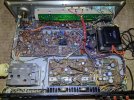
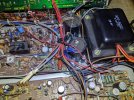
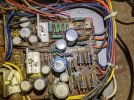
Anyhow...In popping the top and bottom covers off this thing looks REALLY great inside. I am struggling with whether or not to do a full recap and a full transistor replacement for all the boards. Currently NONE of the caps show signs of age (no bulging, leaking or issues) and the same goes for the transistors. No burn marks on any of the PCB's either. There's an extremely small amount of corrosion near the transformer board and fuse area (see pics) but I suspect that's from possible moisture with heat cycles - nothing that alarms me.
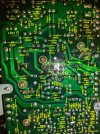
I've also included pictures of the main board and it's solder spots. It appears as if some of the transistors were replaced at one time? I honestly can't tell though so I thought sharing here for more experienced eyes could be helpful.
I've already listed and sourced all the caps to spec and am working on the transistor list this weekend. I'm not shy with a soldering iron and having the patience to do small sections at a time with detail...things just look so clean and potentially done at some point in time (which I can't confirm).
Is it worth the time & effort to change 70+ caps and 35+ transistors without risking damage? What would you do if this was your setup?
Anyhow...In popping the top and bottom covers off this thing looks REALLY great inside. I am struggling with whether or not to do a full recap and a full transistor replacement for all the boards. Currently NONE of the caps show signs of age (no bulging, leaking or issues) and the same goes for the transistors. No burn marks on any of the PCB's either. There's an extremely small amount of corrosion near the transformer board and fuse area (see pics) but I suspect that's from possible moisture with heat cycles - nothing that alarms me.
I've also included pictures of the main board and it's solder spots. It appears as if some of the transistors were replaced at one time? I honestly can't tell though so I thought sharing here for more experienced eyes could be helpful.
I've already listed and sourced all the caps to spec and am working on the transistor list this weekend. I'm not shy with a soldering iron and having the patience to do small sections at a time with detail...things just look so clean and potentially done at some point in time (which I can't confirm).
Is it worth the time & effort to change 70+ caps and 35+ transistors without risking damage? What would you do if this was your setup?