• The move to the new server is done. There are some software and database maintenance updates in process. This has us passing the hat around to help out. We appreciate any donations. Seriously, even a dollar helps. The payment page may be found here - https://www.audiokarma.org/support.html

Phase reverse

AlTinkster92

AK Subscriber
Subscriber
Just a quick question, what exactly does this function do in a integrated amplifier? I always thought that it reversed the channels in a stereo broadcast. Trying to learn here Thanks! Al
 
Last edited:

Register to hide this ad
It depends on the specific implementation, but in the integrated amps I've seen, it reverses the speaker + and - connections of one channel. One use for this is If you don't know the phasing of the left/right speaker connections (meaning, if you don't know which speaker lead is + and which lead is -), just hook them up any old way, then flip the phase reversal switch and see which setting brings the stereo image into focus.

By today's standards, I personally think this kind of "feature" is a lazy hack since even though one of the two settings would bring both speakers into the same phase, it could leave both speakers connected in reverse phase relative to the source recording (meaning, both speakers wired with speaker leads reversed) so that both channels are 180 degrees out of phase as compared to the source recording.

Let's say for example on a sharp transient attack like a piano key being hit hard, does the speaker cone push in first or push out first? Some people swear they can hear a difference--when phase is reversed relative to the live event, with the recording sounding just a bit mushy. Others will say that recording engineers may not have been cognizant of absolute phase anyway, and relative to the live recording session where the tracks were orignally laid down, the recording may be phase reversed anyway. And so how do you know anyway, especially since absolute phase could change from record to record. And rather than try to discern absolute phase from recording to recording, just sit back and enjoy the recording for what it is.

I don't spend hours worrying about this, but it does matter to me at least to build an amplification chain that preserves absolute phase all the way from cartridge pickup to loud speakers. If a piece of gear reverses phase of its output relative to its input, the owners manual should clearly state such, so that you have an opportunity to correct for it in your system.
 
Last edited:
I think its more for the simulcast stereo system. Apparently inverted phase with that system was more common but I don't know if that has to do with the transmission method or because of using two different tuners.

but yeah, its a relative phase switch, not an absolute.

In modern times its a switch to cause you trouble with random drop-outs or noise on one speaker.
 
Phase was taken to be the sonic polar relationship between channels, absolute polarity is the relationship between the original sound polarity and the polarity of the sound produced at the speaker or earpiece.
Think of a tin can telephone model, a push pulse in at the speaking end produces a push pulse out at the receiving end, reproducing the exact same acoustic polarity. Sounds that have an asymmetrical polarity with more energy on the push pressure side of the wave pulse will sound unnatural and "wrong" to some listeners if it is reproduced as a "pull".

As an aside, the Edison vertical acoustic recording process always reproduced an inverted acoustic polarity, the Berliner acoustic disc recording process could do either, but I don't know if that was ever a factor back then. It would have mattered for the "liveliness" of the sound of the reproduction.
 
Last edited:
Thanks for that clarification Pio. I was using "phase" to mean both sonic polar relationship between channels as well as absolute polarity between original recording and speaker. I now have better words to describe these two characteristics.
 
The purpose of these switches is primarily to determine whether the user has wired the speakers to the amplifier correctly. When the speakers are properly phased relative to each other, reversing the phase on one will cause a significant loss of bass due to acoustic cancellation in the listening area. This is how the user confirms for himself that the speakers are connected correctly. With the switch in one position, bass in good. In the other position, bass practically disappears. It's obviously not a feature that would be used very often, which is clearly why this function was not included in later designs.

Jack
 
I think it might have been a thing from The Golden Age of Vinyl.
If you want to check the azimuth of a phono cartridge and your speakers are symmetrically positioned, reverse the phase of one speaker and play a mono recording. If the azimuth is correct the sound waves will cancel in the center of the room.
If the sound cancels off center, check the azimuth of the mounted cartridge.
I learned that trick with my Hegeman Hapi2 preamp , it had a mono switch so I didn't even need a mono record to check the azimuth.
 
Hey is correct. The switch covered a whole host of possible issues from correcting improper speaker wiring (when identical speakers were used) or (sometimes) accounting for no phase information available if different speakers were used (rather common in the early days of stereo -- folks would just hook up any addition speaker they might have had for a second channel), to accounting for the invariable phase issues regarding AM-FM Stereo broadcasts, or in converting/changing out an old mono cartridge for a new stereo one (also not uncommon early on). The whole idea of correct phasing between stereo channels was new to many folks at the time, so just understanding the impact that out-of-phase connections had on the reproduced sound let alone the fact that it could be compromised in so many different places made the inclusion of a phase switch a nice value added feature on many vintage pieces back in the day. Today, with everything so standardized, such a feature is an anachronism leaving many to wonder what it ever was for. Back in the day however when nothing was standardized, it made proper reproduction of stereo sound just a little bit easier.

Dave
 
Hey is correct. The switch covered a whole host of possible issues from correcting improper speaker wiring (when identical speakers were used) or (sometimes) accounting for no phase information available if different speakers were used (rather common in the early days of stereo -- folks would just hook up any addition speaker they might have had for a second channel), to accounting for the invariable phase issues regarding AM-FM Stereo broadcasts, or in converting/changing out an old mono cartridge for a new stereo one (also not uncommon early on). The whole idea of correct phasing between stereo channels was new to many folks at the time, so just understanding the impact that out-of-phase connections had on the reproduced sound let alone the fact that it could be compromised in so many different places made the inclusion of a phase switch a nice value added feature on many vintage pieces back in the day. Today, with everything so standardized, such a feature is an anachronism leaving many to wonder what it ever was for. Back in the day however when nothing was standardized, it made proper reproduction of stereo sound just a little bit easier.

Dave
Whe have a local who's FM affiliate was broadcasting with one polarity reversed channel out of phase with it's mate for quite some time and may be still.
 
Slight clarification - phase switch reverses polarity of the preamp signal of one channel - not normally at the speaker output.

As said before, a relic from the early days of stereo where material- for whatever reason - was occasionally out of phase. Not so much to remedy improperly wired speakers but I'm sure it was used for that in some cases.
 
Depends on the implementation. My Fisher 600 and my Sherwood 5500II are both speaker wire reverses, the S-7000 does it in the preamp. With integrated and receivers I've seen more schematics flip the speaker wiring than change things in the preamp circuits. Stand-alone stuff I'm guessing is more common in the preamp but I only own two from the tube era and neither have that function.
 
Single speaker wire inversion is the easiest most practical. Few preamps provide line stage single channel inversion, I can't name one offhand.
 
As a kid I remember an old timer in our model railroad club explaining that with his first stereo: "It was very important to phase the speakers, the guy who sold it to me insisted it had to be done, but there was no mention of it in the manual." He went on to explain "you used a simple AA battery and momentarily hooked it up to the speaker to polarize the magnet"
That is of course not exactly 100% accurate, but he did remember the basics.
You dont actually polarize the magnet with a AA battery. You check the polarity of the voice coil relative to the magnet.


One of those old guys who at one point knew everything but forgot critical bits over the years.

Now I polarize once, and then label the wires.
The phase switch on my HH Scott doesn't get touched.
 
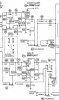
The way my Sherwood 7000 does it, one of the tubes at the tail end of the tone control stack has a coupling cap on both the plate and the cathode. Those both run to a switch and the output of the switch goes to the volume control. Throwing it gets you inverted phase from the plate or non-inverted from the cathode. Seems that would be the most logical way of doing it in a stand-alone preamp using circa 1960 tech that didn't require routing the speakers through the pre.
 
ok looks like I misremembered, this actually sits upstream of the tone controls, between the source selector and the line stage. Either way it does work the same way. Added bonus though, the tape outputs on an S-7000 are buffered which is a relatively uncommon thing for this era. Extra different, the record output is also phase inverted if the switch is thrown that way.

Sherwood 7000 phase reverse.jpg
 
Back
Top Bottom