• The move to the new server is done. There are some software and database maintenance updates in process. This has us passing the hat around to help out. We appreciate any donations. Seriously, even a dollar helps. The payment page may be found here - https://www.audiokarma.org/support.html

Phono Pre-Amp

M
So, here’s a question worth answering from the AKer’s that I am sure will invite a lively conversation:

What are the advantages disadvantages and or preferences of a dedicated tube phono pre-amp vs. solid state model?

Note: I am not qualified to have an opinion one way or the other
My fully qualified “opinion” is that a good tube phono preamp sounds just as detailed as a good SS phono preamp but also offers a more full, richer sound as well. I’ve used a few well regarded SS jobs; a Musical Surroundings Phonomena, a Phonomena II - and the Schiit Skoll. When I bought an 834 “clone” I was amazed by the improvement in sound over the Phonomena preamps I had, so I sold the Phonomenas. I decided to build myself an upgraded and improved version of the 834 clone, which I did. It does sound better to me than my pre-built 834 clone, but I missed all of the gain and load settings that the Phomenas had - so wanted to try a new Skoll - which I also like very much. I do think the 834 clone that I built sounds better than the Skoll but it sounds darned nice, too..and has all the gain and load options I don’t have with either of my 834’s… Just my opinion, of course… :)

BTW - I had a such good time building the DIY 834 clone that I’m now thinking of building another tube phono preamp, a VTA PH-16.

Here’s one recently done by another talented AKer:
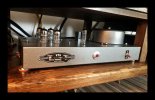
IMG_6640.jpeg

They’re sold in both kit or prebuilt form, use what are likely quieter tubes than than the 834 (which uses 12AX7’s), and has a good range of gain and loading options as well.. ;) Kits for those are also from USA, I believe.

Duane
 
Last edited:
Tube preamps should have died in 1965, but 60 years on they are still beloved for that "certain sound" that evades SS efforts to kill them off. Maybe it's the 2nd order harmonic distortion. Maybe it's the high head room. Whatever it is makes tubes always worth a listen just to see if that sound captures your senses. It's hard to quantize, but easy to hear. The market has dwindled from the hayday, but it's still there. The downside is that they can be extensive, fussy and fiddly compared to their SS brethren.
 
Tube preamps should have died in 1965, but 60 years on they are still beloved for that "certain sound" that evades SS efforts to kill them off. Maybe it's the 2nd order harmonic distortion. Maybe it's the high head room. Whatever it is makes tubes always worth a listen just to see if that sound captures your senses. It's hard to quantize, but easy to hear. The market has dwindled from the hayday, but it's still there. The downside is that they can be extensive, fussy and fiddly compared to their SS brethren.

Only a little more expensive than a good SS phono pre - but I love the sound, regardless. I have what I think is a very good SS unit as well - and prefer the tubes. As always, if it sounds good… :)
Besides, I’ll keep building or picking up more phono preamps that sound good. I think it wasn’t sound quality, but rather cost and “progress” that lessened popularity of the tube units; again - merely my opinion.. Phono preamps that you (and I) enjoy, are nice to have around, especially with multi-arm tables.

OK - you just convinced me to order the PH-16 kit.. ;)

Duane
 
Tube preamps should have died in 1965, but 60 years on they are still beloved for that "certain sound" that evades SS efforts to kill them off. Maybe it's the 2nd order harmonic distortion. Maybe it's the high head room. Whatever it is makes tubes always worth a listen just to see if that sound captures your senses. It's hard to quantize, but easy to hear. The market has dwindled from the hayday, but it's still there. The downside is that they can be extensive, fussy and fiddly compared to their SS brethren.
I've been using several tube phono preamps and haven't found them fussy at all. I guess ot depends on the pre?
I have one that use 6922's. That sound good. I built the more recent one.
To be fair they are hybrids. Using JFET's for the first gain stage. The latest one has a MOSFET buffer stage and uses 12AY7's. It makes it more easily used with SS if you wish having th2 buffer stage. I built a SS CNC phono pre also that I like.
When it comes to phono preamps I'm not picky about whether it's tube or SS though, it just has to sound good. I do like that the loading is adjustable in the CNC, the other tube phono preamps I have cant be adjusted. Just 47K loaded. But then so are most MM cartridges.
I bought an Ear clone and modified it. One of the cheaper versions, but sounds pretty good with the mods. One mod being correcting the loading.
I've noticed several of the Chinese "clones" with 62K loading.
I've wondered why that is. It doesn't seem to make sense.
 
A major shortcoming in internal phono stages in amps and preamps is the limited flexibility in loading. That's important for MC carts, otherwise you can be constrained in your choice of MC carts.

So I would sort your choices by their adjustment ranges and then pick the best price vs sound quality vs cosmetics.

Very high efficiency speakers are more sensitive to tube hiss maybe pointing towards SS if that's what you use.
 
A major shortcoming in internal phono stages in amps and preamps is the limited flexibility in loading. That's important for MC carts, otherwise you can be constrained in your choice of MC carts.
This thread would suggest otherwise.

Very high efficiency speakers are more sensitive to tube hiss maybe pointing towards SS if that's what you use.
The efficiency of the speakers is irrelevant. The tubes in a tube phonostage are before the volume control, therefore any tube hiss in the phonostage is attenuated by the volume control. With more efficient speakers the volume control is turned down for the same SPL, hence tube hiss is no louder than with less efficient speakers.
 
I’d recommend this one as well, unless you’re capable and willing to build yourself one of the better tube amp kits.

The Skoll sounds and looks very good, it has plenty of gain and loading options - and everything can be set with a remote control, making A-B comparisons quick and easy. Oh - they’re not only solid state but high voltage transistors (and NO op-amps), and they’re made in USA!

Schiit Skoll:

View attachment 3112901

View attachment 3112902
I have a question about the A B testing. There's only one set of RCA inputs on the back. How are you doing A-B testing with one set of inputs? An RCA switch box in front of the Schiit?
 
I have a question about the A B testing. There's only one set of RCA inputs on the back. How are you doing A-B testing with one set of inputs? An RCA switch box in front of the Schiit?
With the remote control. If I'm not mistaken he's talking about A-B testing different gain/load settings.
 
I have a question about the A B testing. There's only one set of RCA inputs on the back. How are you doing A-B testing with one set of inputs? An RCA switch box in front of the Schiit?
Really ? - this will sound a bit ‘snarky’..

A-B, meaning load settings on one turntable and cartridge that you’re setting up. Instead of having to move from your seated position to change DIP switch settings or turn a knob, flip a toggle, slide a slider switch, etc.., you can just focus on listening and change settings from where you are. Go back and forth on capacitance, for example, or adjusting resistance loading… (yes, that sort of A/B).
Nobody had even mentioned comparing multiple cartridges at the same time, had they? I must have missed that.

To switch cartridges - you need an input switcher.
BTW, you are welcome to read the manufacturer‘s description of that Skoll; Jeeze..! :rolleyes:

IF you need A/B switching of two tables you want to hear at the same time (?), there are several possible solutions for doing that - which the Skoll does’t do as designed. My next (tube) build though, may include that function using multiple pairs of RCA jacks, but manually operated, of course.. Skoll, while having one pair of XLR’s in and out, offers you the option of being able to use tables wired with XLR plugs...but they’re not for A/B load testing…

Duane
 
NAD makes competent phono preamps; they'll be hard to beat.

Yes @egellings... An interesting comparison below, from the respective service documentations of these instruments... :biggrin:;)

Here's the schematic of the Phono section of my NAD 114 preamplifier : discrete components solution, which includes MM/MC facility...

1707495569452.png

1707495710260.png

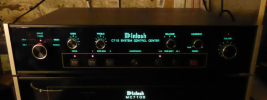
And here is the schematic of the Phono section of my McIntosh C712 preamplifier : no MM/MC option, and a NE5532...

1707495873484.png

1707495786944.png

T
 
Last edited:
Really ? - this will sound a bit ‘snarky’..

A-B, meaning load settings on one turntable and cartridge that you’re setting up. Instead of having to move from your seated position to change DIP switch settings or turn a knob, flip a toggle, slide a slider switch, etc.., you can just focus on listening and change settings from where you are. Go back and forth on capacitance, for example, or adjusting resistance loading… (yes, that sort of A/B).
Nobody had even mentioned comparing multiple cartridges at the same time, had they? I must have missed that.

To switch cartridges - you need an input switcher.
BTW, you are welcome to read the manufacturer‘s description of that Skoll; Jeeze..! :rolleyes:

IF you need A/B switching of two tables you want to hear at the same time (?), there are several possible solutions for doing that - which the Skoll does’t do as designed. My next (tube) build though, may include that function using multiple pairs of RCA jacks, but manually operated, of course.. Skoll, while having one pair of XLR’s in and out, offers you the option of being able to use tables wired with XLR plugs...but they’re not for A/B load testing…

Duane
I wasn't being snarky. I thought I was overlooking something.
 
Yes @egellings... An interesting comparison below, from the respective service documentations of these instruments... :biggrin:;)

Here's the schematic of the Phono section of my NAD 114 preamplifier : discrete components solution, which includes MM/MC facility...

View attachment 3113418

View attachment 3113420

And here is the schematic of the Phono section of my McIntosh C712 preamplifier : no MM/MC option, and a NE5532...

View attachment 3113423

View attachment 3113422

T
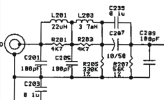
That multistage RLC filter on the phono input is interesting. Maybe I will SPICE it. Is L203 3.7uH or 37uH? Can't tell if there's a missing dismal point or not.
 
Last edited:
That multistage RLC filter on the phono input is interesting. Maybe I will SPICE it. Is L203 3.7uH or 37uH? Can't tell if there's a missing dismal point or not.

Here's a zoomed view of the input of the Phono section :

1707505507307.png

I think that L203 is rather 3.7mH. Maybe this input circuit contributes to the RIAA correction in a passive way, alongwith the following section below, located after the 1st amplifying stage (C219, C221, R223, R225, R227), which peculiar values and 1% tolerances :

1707505691510.png

Since I do not see any obvious trace of any active RIAA NFB - like it is on the C712 - I'm prone to think that the NAD 114 has two successive passive RIAA correction networks, as pictured above...

What's your advice on that @egellings ?

T
 
Here's a zoomed view of the input of the Phono section :

View attachment 3113602

I think that L203 is rather 3.7mH. Maybe this input circuit contributes to the RIAA correction in a passive way, alongwith the following section below, located after the 1st amplifying stage (C219, C221, R223, R225, R227), which peculiar values and 1% tolerances :

View attachment 3113604

Since I do not see any obvious trace of any active RIAA NFB - like it is on the C712 - I'm prone to think that the NAD 114 has two successive passive RIAA correction networks, as pictured above...

What's your advice on that @egellings ?

T
I see the large space between the 3 and the 7 on L203 and wonder if there's a missed decimal point there, or the added space is just a typo in itself.
 
Here's a zoomed view of the input of the Phono section :

View attachment 3113602

I think that L203 is rather 3.7mH. Maybe this input circuit contributes to the RIAA correction in a passive way, alongwith the following section below, located after the 1st amplifying stage (C219, C221, R223, R225, R227), which peculiar values and 1% tolerances :

View attachment 3113604

Since I do not see any obvious trace of any active RIAA NFB - like it is on the C712 - I'm prone to think that the NAD 114 has two successive passive RIAA correction networks, as pictured above...

What's your advice on that @egellings ?

T
I'm at a loss to know, based on looking at the schematic. I SPICED the circuit without terminating its output terminals with anything, and it did not seem to do much in the range of 10Hz to 30kHz; just milli-bels of amplitude change over that range, with well-behaved phase response. Question: what would be the intended load for that circuit?
 
Last edited:
I'm running Vincent "PHO-701" four about for years and I can recommend it. Constructed in Germany, produced in China.

pho.jpg
 
Back
Top Bottom