• The move to the new server is done. There are some software and database maintenance updates in process. This has us passing the hat around to help out. We appreciate any donations. Seriously, even a dollar helps. The payment page may be found here - https://www.audiokarma.org/support.html

Phono Preamp Kits from Boozehound Laboratories ?

View attachment 1878104 View attachment 1878106 View attachment 1878107 View attachment 1878108 View attachment 1878110

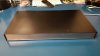
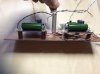
I’m just waiting on the RCA jacks, then I’ll put mine together. Got two wooden boxes to pick from; will probably use the bigger one and stain it to about the color of my turntable. Planning on using these two 12v SLA batteries. They’re fully charged and about 25v, as seen here in series. Battery box will sit on the floor, ‘bout 4’ away from the preamp.

Nice!

I will be really interested in your take on these kits, especially running on batteries vs. mine on an active power supply.

BTW, if anyone is interested it looks like AM Audio has listed more kits on Ebay (user name am_audio)[no affiliation]. I really can't believe how inexpensive his kits are, especially for dual mono boards.

As promised, here are better pics of the completed kit. It is quieter with the top on, but I think I can get it quieter. However, I'm not going to worry about it until it is burnt in for a while. As it is, it is totally acceptable. Even then, sitting on top of my tubed preamp is not ideal. It will be moved soon when I can find the time to rearrange my rack. This is my living room system.

20200525_093245.jpg
20200525_093310.jpg
20200525_093528.jpg
20200525_101502.jpg
20200525_093550.jpg
20200525_093807.jpg
 
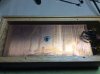
I was able to use the transformer that came in the in the chassis by changing the primary to 220v config which dropped the secondary from 27v to 13.5v
Very nice! May I ask why you chose to drop the secondary voltage then raise it again with the multiplier?
 
Very nice! May I ask why you chose to drop the secondary voltage then raise it again with the multiplier?

Mostly for simplicity's sake. Now keep in mind that I am a total hack, but still learning.

My reasoning was that if I left the transformer output at 27-30vac (depending on load), that after rectification the DC voltage would be 1.3-1.4x the secondary AC voltage. At least that's my understanding of the rule of thumb for rectification. This would exceed the input limit of my regulator (40vdc IIRC), or at least ask the regulator to dissipate a lot of excess voltage unnecessarily. It was easy to swap the primaries from parallel to serial windings (110v to 220v) with a jumper, which reduced the secondary by half. But then, a standard rectifier would only give me about 21vdc so a voltage doubler made sense to get me above the 25vdc minimum for the regulator.

I'm sure there are better ways to do this, but this made sense to me.
 
About 10 hours of vinyl spinning so far and this thing is growing on me!

Cymbals don't sound like gravel in an empty Coke can anymore.

I'm tempted to try and create a music file in reverse RIAA and load it on an old iPod, plug it in, adjust volume, and run it on repeat overnight. But alas, I am lazy. All my old editing software is on my old laptop which has a dead battery and won't even power up on its charger anymore.
 
Tell you what, boys and girls: this preamp sounds very nice. It has a really quiet background, with volume turned all the way up. Vocals sound clear and sweet. Detail is excellent. No complaints so far. If anything it sounds slightly “warmer” than the MS Phonomena II I was using yesterday. I’m only a half hour into playing time with this so far, but liking the sound quite a bit.

Since I started this thread asking about the Boozehound - and ended up building this instead, I probably should start a new thread about this AM Audio preamp. It’s a nice kit, inexpensive - and sounds great. Damn; really great. Makes me happy I brought out the soldering iron, after so many years..

Dogwan, how is yours sounding now?


530ADFE9-D69A-414D-ADD7-B13F3497198D.jpeg
 
Tell you what, boys and girls: this preamp sounds very nice. It has a really quiet background, with volume turned all the way up. Vocals sound clear and sweet. Detail is excellent. No complaints so far. If anything it sounds slightly “warmer” than the MS Phonomena II I was using yesterday. I’m only a half hour into playing time with this so far, but liking the sound quite a bit.

Since I started this thread asking about the Boozehound - and ended up building this instead, I probably should start a new thread about this AM Audio preamp. It’s a nice kit, inexpensive - and sounds great. Damn; really great. Makes me happy I brought out the soldering iron, after so many years..

Dogwan, how is yours sounding now?


View attachment 1884420


I've got about 15 hours on it now and your assessment pretty much mirrors mine. I found it sounded pretty good out the gate, but really started to smooth out after about 10 hours. I suspect you will notice that too. I also think that as people say these Russian PIO's really need at least 100 (up to 300?) hours to really shine, we will probably see continued improvement as everything settles.

If I could use one word to describe the sound it would be "Smooth". Mids are very, very good. Bass is strong and fairly tight. Sometimes I think the highs are slightly rolled off, but am not totally sure about this. If they are it's very slight.

One thing I noticed on mine was that since I am using an internal active PS that the noise level is something I can address. When I initially hooked it up it was pretty quiet, but not inky black if I cranked the volume. Using Spectroid on my phone I noticed a 60hz spike. Not super noticable while listening, but when I put my phone up against the speaker with volume at max I could definitely see and hear it. When I plugged it into my power conditioner instead of the temp power strip I had laid out that noise was reduced. Then I spent some time dressing my phono leads and it was further reduced. So I put shorting caps on the phono stage and re-measured and it was greatly reduced, but still slightly there. My next step when I get some time is to unbolt the power transformer and spin it 90 degrees, and add a copper shield panel to the interior. Don't get me wrong, the noise floor is certainly acceptable as is and I could easily live with it.

All in all, I think this is a keeper!

We need a name. It's not a Boozhound. It's not a Le Pacific. I'm not sure if I want to use the name AM_Audio since it's not a wholly original circuit. Maybe "AMA Pacific"?
 
...We need a name. It's not a Boozhound. It's not a Le Pacific. I'm not sure if I want to use the name AM_Audio since it's not a wholly original circuit. Maybe "AMA Pacific"?

Well - what it is, is what we should call it; AM Audio’s RIAA JFET Phono Preamplifier Kit. It may be my imagination, but mine sounds even smoother now, after 5 records in. I’m really liking this one.

Edit: just started a new thread, titled AM Audio’s RIAA JFET Phono Preamplifier Kit.
I didn’t want this tread, started with my asking ‘bout the Boozehound, to continue on after buying and building something else. No doubt that the Boozehound sounds equally nice, but I built the AM. Maybe I’ll order a Boozehound soon to compare them..
 
Last edited:
I know this thread is old but I thought I would give into my findings. Boozehound is done according to website address boozhoundlabs.com.

 
A friend of mine purchased the "phono deluxe" and built with Russian PIO. I thought it sounded quite nice. As an experiment he pulled all of those caps out of one channel and replaced them with polypropylene. I think the bass was definitely improved but I didn't hear much change in the midrange at least as much as he did stating it didn't seem as warm as the PIO. Wanting to build one of these myself was quite disappointed they are unavailable so I took his PDF instructions and made my own PCB layout incorporating a voltage regulator section as well so that battery operation would be more stable. The PCBs came from China cheap and quickly. I have three different decks and have built one for each. The voltage divider (gain) and capacitance load have all been customized with values based upon values stated in the manual of each individual cartridge. This was a fun project that yielded quite nice results. A friend of mine has a Nagoaka MP300 running through a Schiit Mani. We have done some comparisons on this set up using the one I have configured for my Ortofon Bronze and it sounds better than the Mani hands down.
 

Attachments

  • p1.jpg
    p1.jpg
    136.7 KB · Views: 43
  • p2.jpg
    p2.jpg
    65.6 KB · Views: 39
A friend of mine purchased the "phono deluxe" and built with Russian PIO. I thought it sounded quite nice. As an experiment he pulled all of those caps out of one channel and replaced them with polypropylene. I think the bass was definitely improved but I didn't hear much change in the midrange at least as much as he did stating it didn't seem as warm as the PIO. Wanting to build one of these myself was quite disappointed they are unavailable so I took his PDF instructions and made my own PCB layout incorporating a voltage regulator section as well so that battery operation would be more stable. The PCBs came from China cheap and quickly. I have three different decks and have built one for each. The voltage divider (gain) and capacitance load have all been customized with values based upon values stated in the manual of each individual cartridge. This was a fun project that yielded quite nice results. A friend of mine has a Nagoaka MP300 running through a Schiit Mani. We have done some comparisons on this set up using the one I have configured for my Ortofon Bronze and it sounds better than the Mani hands down.


You should look into the Wyn Palmer Phono pre amp builds.

I think you'd be very impressed.

Athanasios
 
A friend of mine purchased the "phono deluxe" and built with Russian PIO. I thought it sounded quite nice. As an experiment he pulled all of those caps out of one channel and replaced them with polypropylene. I think the bass was definitely improved but I didn't hear much change in the midrange at least as much as he did stating it didn't seem as warm as the PIO. Wanting to build one of these myself was quite disappointed they are unavailable so I took his PDF instructions and made my own PCB layout incorporating a voltage regulator section as well so that battery operation would be more stable. The PCBs came from China cheap and quickly. I have three different decks and have built one for each. The voltage divider (gain) and capacitance load have all been customized with values based upon values stated in the manual of each individual cartridge. This was a fun project that yielded quite nice results. A friend of mine has a Nagoaka MP300 running through a Schiit Mani. We have done some comparisons on this set up using the one I have configured for my Ortofon Bronze and it sounds better than the Mani hands down.
Nice! Who made the boards?
 
I will try a wyn palmer for sure as our breed are ALWAYS looking for an improvement and at times knowingly face the consequences of disappointment... i have built the hagerman bugle2 and swapped just about every talked about op amp out there setteling for sparko fet front and burson bipolar back, sound stage is limited in comparison to boozehound and bass seems exaggerated. fiddled with some values in riaa stage but at the end of the day the design values are best. i also changed the bass riaa on the boozehound as it was too light for my liking, all three have different values here. one is paired with a mc denon 301ii, sounded fine at first but as the cartridge was "broke in" too much bass and went back to original design values. at rmaf a few years back i had a lengthy discussion with a guy that makes only phono stage. he uses ALL discrete and his reasoning is that it sounds better but within that conversation he admitted in a nutshell his design used them as well but as discrete circuits, same as all other boutique brands and that housing them in one ic just can't give the same sonic results. I would love to here more on this from others without deviating from original thread.
 
Back
Top Bottom