


Pilot SA-232 – Electrolytic Capacitors and Heat
A couple of weeks ago, I was in the barn doing some cleaning and found my Pilot SA-232 stereo power amplifier, where it had been sitting for the last thirty plus years. I decided to pull it out of storage and see if I could get it to play music again. The two videos posted on youtube by blueglowelectronics on YouTube also inspired me to take on this project.
Based on my memory, I knew these units run HOT. I remembered that, years ago, I had replaced some of the electrolytic capacitors. This time around, I decided to replace all the electrolytic capacitors with ones rated at 105˚c.
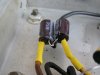
For the replacement of 24-124 (first and second B+ capacitors), I used an adapt-a-cap board fitted with United Cemi-Con EPAG451ELL470MK40S 47µF @ 450V, 105˚c capacitors.
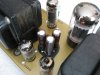
The 24—172 (B+ filter capacitors in the audio amplifier and phase inverter stage) are buried inside the chassis where the heat builds up and cooks them as the amplifier is played. I added a tag strip and mounted two modern 105˚c capacitors.

Cathode bypass capacitor(s) 24-170, were replaced with Nichicon UPS1V101MPD1TD, 100µF, 35V, 105˚c units.
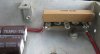
In addition to adding heat resilient capacitors, I relocated the 31-160, 100Ω, 10W, power supply resistor that used to reside just under the 24-124 capacitor(s). I remounted the resistor on a tag strip, away from the heat sensitive electrolytic capacitors.
Now I am burning in the amplifier with the new components and measuring the heat within the chassis. After an hour and a half, the internal temperature is reading 57.1˚c (135F) at the location just under the 24-124 capacitors. Earlier measurements, on the top side of the chassis, varied by location and read between about 40˚c and 55˚c without the tube cage installed. With the tube cage installed, the temperatures increased about 10˚c. All measurements are with the input AC voltage at 117V. I would expect that the temperatures would rise as the line voltage is increased to a more modern level.
Based on my temperature measurements, it would seem prudent to run the amplifier without the tube cage and or run a low speed fan to cool things down.
A couple of weeks ago, I was in the barn doing some cleaning and found my Pilot SA-232 stereo power amplifier, where it had been sitting for the last thirty plus years. I decided to pull it out of storage and see if I could get it to play music again. The two videos posted on youtube by blueglowelectronics on YouTube also inspired me to take on this project.
Based on my memory, I knew these units run HOT. I remembered that, years ago, I had replaced some of the electrolytic capacitors. This time around, I decided to replace all the electrolytic capacitors with ones rated at 105˚c.
For the replacement of 24-124 (first and second B+ capacitors), I used an adapt-a-cap board fitted with United Cemi-Con EPAG451ELL470MK40S 47µF @ 450V, 105˚c capacitors.
The 24—172 (B+ filter capacitors in the audio amplifier and phase inverter stage) are buried inside the chassis where the heat builds up and cooks them as the amplifier is played. I added a tag strip and mounted two modern 105˚c capacitors.
Cathode bypass capacitor(s) 24-170, were replaced with Nichicon UPS1V101MPD1TD, 100µF, 35V, 105˚c units.
In addition to adding heat resilient capacitors, I relocated the 31-160, 100Ω, 10W, power supply resistor that used to reside just under the 24-124 capacitor(s). I remounted the resistor on a tag strip, away from the heat sensitive electrolytic capacitors.
Now I am burning in the amplifier with the new components and measuring the heat within the chassis. After an hour and a half, the internal temperature is reading 57.1˚c (135F) at the location just under the 24-124 capacitors. Earlier measurements, on the top side of the chassis, varied by location and read between about 40˚c and 55˚c without the tube cage installed. With the tube cage installed, the temperatures increased about 10˚c. All measurements are with the input AC voltage at 117V. I would expect that the temperatures would rise as the line voltage is increased to a more modern level.
Based on my temperature measurements, it would seem prudent to run the amplifier without the tube cage and or run a low speed fan to cool things down.
Last edited:


