
• The move to the new server is done. There are some software and database maintenance updates in process. This has us passing the hat around to help out. We appreciate any donations. Seriously, even a dollar helps. The payment page may be found here - https://www.audiokarma.org/support.html

Proton: High End Or Junk?

Basically Proton is similar to NAD of the same era, built by the same outsourced company. Similar build quality, similar sound quality, similar reliability. Basically high end sound for those who could afford Panasonic prices. In good order, driving easy to drive, efficient speakers, they did fine.
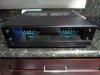
 
I have a Proton AA-2120 power amp. It's a dual-mono design, appears to be 120 W/ch and does NOT have the "dynamic power on demand" or whatever they call it. I don't have any literature on it at all. It sounds good and I think it looks nice. Anyone have any experience with this one?12513496_944097835638070_4006669201934203887_o.jpg
 
Hello All

I am new in this forum, I do have an AM 452 pro which is excellent integrated amp compared to many others however, I have a transformer failure and I found nowwhere any information in the net, can any one help please ? anyone having a 455/452 pro or not can mesure the voltage of the transformer please ?
many many thanks in advance
 
I have a Proton Pre amp, 1000 I think, Very nice, has bass management features. There definitely a few good pieces out there.
 
Just picked up a 1100 pre.

The MC phono stage sounds great with my Denon DL-103S, and this pre's phono configurability is better than I had on a Musical Fidelity piece (MC high/low output, MM impedance loading).

Bass management is nice too, as it shares the same Subsonic filter and bass EQ features many NADs have. I was worried I'd lose something skipping my Jolida's tube pre section, but I have not lost my mid presence nor "you are there" quality of the tubes.

Had it in my system for four hours and wonder how I ever lived without it. Only niggle is the bad anodizing on the unit's front which makes it look copper - though I think it looks kinda neat this way.
 
The heart of my system, for the past few decades, has been a Proton 1100 preamp. All discrete components and a huge Alps volume control. But the coolest thing about this is its high output level. It's the perfect headphone amp. Drives every headphone I have, even my 600 ohm Beyerdynamic DT-770 Pro's. You don't see many preamps with a headphone jack on the front. And as Scooter pointed out, bass control is sweet. The loudness control is subtle, and the bass control is unobtrusive.

Edit: That probably didn't make much sense. By unobtrusive, I mean the turnover point is "deep". It only adjusts the very deepest bass. A really nice bass control.
 
The heart of my system, for the past few decades, has been a Proton 1100 preamp. All discrete components and a huge Alps volume control. But the coolest thing about this is its high output level. It's the perfect headphone amp. Drives every headphone I have, even my 600 ohm Beyerdynamic DT-770 Pro's. You don't see many preamps with a headphone jack on the front. And as Scooter pointed out, bass control is sweet. The loudness control is subtle, and the bass control is unobtrusive.

Edit: That probably didn't make much sense. By unobtrusive, I mean the turnover point is "deep". It only adjusts the very deepest bass. A really nice bass control.

Sounds like the "bass eq" button on my NAD 7155 (on other models as well). Very useful and excellent sounding.

Yes, what is nice about the Bass EQ feature (and I read this in the manual which is available on AE) is that it was designed for acoustic suspension speakers, who's woofers have resonant frequencies in the 60-80Hz range, below which they experience a sudden (-12dB) roll-off. So it gives a 10dB boost at 42Hz, which has filled in the bottom end of my speakers beautifully. So you can get the low rumble, without the bloated bass you can sometimes get with bass controls (like in the 1100) that boost at 100Hz.

Makes me wonder how nice a NAD 7400 with its semi parametric EQ might sound being used as a pre.
 
+1 on the Proton 440 Tuner - I did sell mine and am stilling kicking myself...

I’m trying to figure out if a Proton 601T is worth purchasing.

I live about 40-45 miles from all the AM and FM stations in one metro and about 60 another direction from another.
 
A lot of the Proton gear you see listed on Ebay seems to be broken.
The 601 I found is described as fully tested and working with a money back guarantee.
It’s also only like $18.
I read through a lot of the tuner shootouts results on that site but it’s the one thing I’ve not had hardly any luck finding between FB Marketplace, CL, and local thrifts.
It’s only been about two months since I’ve started getting into all this stuff and I’ve found literally everything but that.
Receivers, amplifiers, integrated amps, HQ vintage 2.0 speakers, surround sound speakers, and a surround sound sub.
I think I have some ideas why a good separate tuner has been hard to find on the cheap but now I’m wondering just HOW HARD to find that’s going to be!
 
I run three Proton amps, 2 car and one home with another home amp I bought dead that needs repair.
Great stuff.
 
I have had a Proton clock radio for almost 25 years. It does duty now as the family room clock. Also have a D1200 amp, it is a cut above most of my other power amps with the exception my Soundcrsaftsmen PM840 and possibly my Sound Code SC250A. Of course both if these are almost twice the rated.output of the D1200. Just my personal opinion although I am always on the lookout for Proton equipment.
 
Last edited:
I just received a A455 which I was going to use only for the phono pre as there is a preamp out. It cost me $100au from EBay.
Turned it on ....the magic smoke appeared :(
It seems to have something loose in there.
I gave it a shake and turned it on again and the magic smoke had stopped.
Listened to the noise floor via headphones, but the left channels appears not to work.
I will test with other components tomorrow.
Does anyone know what the trick with taking the top cover off ?
I’m not a tech, but like to take things apart and poke around.... then I’ll bin it !
Cheers
 
Despite over a hundred amps/receivers passing through my hands for recaps or other "tune-ups" and upgrades, I seem to permanently own four Protons that I refuse to part with. They are more compact than similarly powered models, are sleeker, and have way more balls despite their comparatively lower wattage ratings than some of the flashier big dawgs. All mine have "DPD" which is essentially huge dynamic power and what you're looking for and trying to get (6 dB headroom) when looking for Proton. I have the D540 x 2, AM-300, D940 and still looking for two other models- a power amp and a preamp. Despite the NAD references, (which I guess will never pass for high-end by way of association and constant comparison) they have some black plastic here and there, require frequent control cleanings, are made in Taiwan which are the usual knocks against them. But, the circuits are good and simpler than some others. After upgrading their ceramics and other passive components where cost-cutting measures were taken, and when given their due; they're most certainly "high-end". However, they may need a little "nudge" getting there that few are willing (or able) to do. Once you break the lock and let the tiger out of its cage, it becomes apparent they are capable of some truly great things. I have a D540 that was spared no expense, crammed full of polypropylene and polystyrene caps that sounds better than most separates I've heard at only a fraction of the price with a buy-in of around a hundred $$ or so. You have to be a little handy and able to clean controls and replace lights when needed to get the most out of Protons, but if you do, you'll be rewarded with some of the best sound you can achieve for the money spent.

At this point in my audio journeying I've decided an amp/receiver has to have at least one of these four things going for it to get me to want to keep it around and not eventually flip. Interestingly, total wattage doesn't even make it into my top four considerations of the perfect amp. All would be ideal (for me). Everyone has their ideal laundry list of things they look for in an amp, but here's mine. I'm always willing to add a separate tuner or phono preamp to a really good sounding amp so I did not include those features which I regularly use. It must be:

  • rated to handle 4 ohm loads (even if you're not intending to match it up with any 4-ohm rated speakers)
  • have two transformers, either dual mono, or primary with a secondary for added impact
  • variable loudness feature that is adjustable
  • the highest "IHF Dynamic Headroom" spec you can find. Eg. 8 ohms, 3-4dB+ (can be hard to find as it's not always voluntarily provided as it shows just how "average" or ballsy and dynamic something is. Most fall below 8ohm/4dB+
 
Despite over a hundred amps/receivers .....

The D540 is a monster for its rating.
I bought one new in 1986 and swapped it for a boat about 5 years later.
Recently i found one on ebay for $90 and quickly snapped it up. It played well until i decided to clean it.
Now im having all sorts of issues.
Total loss of right channel unless in mono. Stereo worked but cut out and applying pressure to the volume knob up or down would make it work for a while but now it is total loss.
Now it starting to lose R channel again but on mono until i lever volume control (im guessing flexing the mainboard)
Also noticed i can now send it full volume without distorting speakers with both channels working in mono. Pretty sure i would have melted speakers if i tried that on this amp if fully working.
Looks like i have a "parts only" amp now but i will milk the remaining watts out of it until R channel fails fully in mono.
I didnt realise they had so many parts that could fail. :-(
 
I have had a Proton clock radio for almost 25 years. It does duty now as the family room clock. Also have a D1200 amp, it is a cut above most of my other power amps with the exception my Soundcrsaftsmen PM840 and possibly my Sound Code SC250A. Of course both if these are almost twice the rated.output of the D1200. Just my personal opinion although I am always on the lookout for Proton equipment.
Like @Old HiFi Guy, I too had a Proton clock radio for many years. One of the best that I ever owned!

Is this relevant to this thread? Perhaps very distantly (think 6 degrees of separation!). But, I thought I would throw my $.0001 in on this anyway.
 
The D540 is a monster for its rating.
I bought one new in 1986 and swapped it for a boat about 5 years later.
Recently i found one on ebay for $90 and quickly snapped it up. It played well until i decided to clean it.
Now im having all sorts of issues.
Total loss of right channel unless in mono. Stereo worked but cut out and applying pressure to the volume knob up or down would make it work for a while but now it is total loss.
Now it starting to lose R channel again but on mono until i lever volume control (im guessing flexing the mainboard)
Also noticed i can now send it full volume without distorting speakers with both channels working in mono. Pretty sure i would have melted speakers if i tried that on this amp if fully working.
Looks like i have a "parts only" amp now but i will milk the remaining watts out of it until R channel fails fully in mono.
I didnt realise they had so many parts that could fail. :-(

What did you clean it with; anything too oily that might leave a non-conductive residue behind? It could still be just a bad connection- either from a cracked solder joint from flexing on the board when pushing on the offending control(s) or the oxidized/dirty contacts within them. If I recall, the D540 uses carbon tracks (instead of metal) inside its volume pot. I once tore one of these traces by accident, lost volume on one side iirc, and later restored it using a Caig CircuitWriter silver pen.

Although they have great sound, some of the Protons plasticky controls or rca jacks have too much flex or aren't secured properly, sometimes relying on solder joints alone to secure them which become stressed over time, giving them failure-prone controls and a bad rep for longevity. I would spray them all down again with some plastic-safe contact cleaner while working them vigorously back and forth while also reflowing any sketchy looking solder joints at the controls (on the boards) that are giving you problems.
 
Back
Top Bottom