
beatcomber
AK Member
Who did the rebuild on your vintage wheel?



@beatcomber - would you be happy to post a profile view of your non-rebuilt idler making contact with the 33 RPM pulley on your ROK? I'd like to compare where yours is making contact with my ROK idler wheel.
If you need a better image, I can do that for you as well!
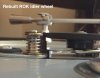
Thanks - could you post a photo from this angle showing where your original non-rebuilt ROK wheel touches the pulley?
View attachment 1247382
Will do!


Idler diameter itself doesn’t effect speed.
Thanks - could you post a photo from this angle showing where your original non-rebuilt ROK wheel touches the pulley?
View attachment 1247382

The ratio between the motor and the idler doesn't actually matter any. Its the ratio between the motor and the platter that set the speed. Changing the ratio between the motor and idler inversely affects the ratio between the idler and the platter, so basically any changes to the idler diameter are just cancelled out. If this were a two-step idler wheel, thats a different story.Wouldn't it change the ratio, which in turn would effect the speed?
The ratio between the motor and the idler doesn't actually matter any. Its the ratio between the motor and the platter that set the speed. Changing the ratio between the motor and idler inversely affects the ratio between the idler and the platter, so basically any changes to the idler diameter are just cancelled out. If this were a two-step idler wheel, thats a different story.
Is the motor spindle tapered on these, or maybe there is a worn area where the O-ring idler runs? Thinking the contact spot may actually have more to do with it than the durometer of the wheel. If you can adjust the height of the idler so they match it may alter the speed. I know I've run into that on Garrard machines, but I've seen those with visible wear on the motor spindle from heavy use.


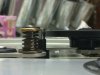
Thanks @beatcomber . Was this photo taken with the motor running or in the off position?
Why is your 33 pulley step a different color than the 45 and 78 steps? The ROK pulleys were phenolic material, but your 33 pulley step looks metallic. Is something wrapped around it, or was something grafted on to the rest of the pulley?
Thanks @beatcomber . It looks like your ROK idler wheel is making contact exactly in the middle of the pulley step. My fast running ROK (when using the rebuilt wheel) is making contact a little bit higher than that. Not sure if there is any significance.
