


You are using an out of date browser. It may not display this or other websites correctly.
You should upgrade or use an alternative browser.
You should upgrade or use an alternative browser.
SteveF 137
Active Member
Okay, relay cap is off with some pressure on the opposite sides. Contacts cleaned. Sounding good. I'll keep it open and see how it runs with some on/off switching through the weekend. If there's anything I should observe/clean while it's open please feel free to let me know. Thanks so much!!!
-Steve
-Steve
SteveF 137
Active Member
Thought I'd post a couple of pics. Everything looks okay except a couple of pots that appear burned on the top.
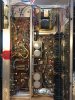


Probably just some oxidation as opposed to carbon from heat or smoke etc. That said, these open-frame pots can become flaky at this age. The bias adjusters in particular seem to develop dead spots around the correct setting, so if I can't get them 100% stable after cleaning with non-residue contact cleaner and some repeated rotations, I replace with a Bourns 15-turn part. 25 turn is overkill to me, the 15 turn are a couple of orders of magnitude more precise than the originals and it doesn't take a gazillion turns to dial them in.
Nice job on sorting out the relay. As long as you got the bulk of the carbon off the contacts, it'll probably be fine. The early 2075's are hard on the contacts and can destroy them with heat build-up, they switched to a doubled-up contact version later on and that turned out to be way more reliable. The contacts aren't handling quite as much work on the 2055 so less of an issue.
It's a good idea to deoxidize the pins and sockets on the coax lines (yellow and green) that connect the pre to the power amp; those can start getting flaky with age, which can cause transients - factory had a service bulletin for that on the 2055/2075.
Can you lift the tuner up from the front and take a picture of the boards underneath? Should be able to just tip it up lifting from the bottom front edge and there's a channel on the rear edge of the aluminum frame of the tuner section that then slides onto the vertical crossmember that separates those front end boards from the power amp - intended to make it easier to service what's underneath there. I'm curious about the caps on those boards. What I can see here looks 100% original and although it's no guarantee that they're all good, at least there are no Frako caps visible.
John
Nice job on sorting out the relay. As long as you got the bulk of the carbon off the contacts, it'll probably be fine. The early 2075's are hard on the contacts and can destroy them with heat build-up, they switched to a doubled-up contact version later on and that turned out to be way more reliable. The contacts aren't handling quite as much work on the 2055 so less of an issue.
It's a good idea to deoxidize the pins and sockets on the coax lines (yellow and green) that connect the pre to the power amp; those can start getting flaky with age, which can cause transients - factory had a service bulletin for that on the 2055/2075.
Can you lift the tuner up from the front and take a picture of the boards underneath? Should be able to just tip it up lifting from the bottom front edge and there's a channel on the rear edge of the aluminum frame of the tuner section that then slides onto the vertical crossmember that separates those front end boards from the power amp - intended to make it easier to service what's underneath there. I'm curious about the caps on those boards. What I can see here looks 100% original and although it's no guarantee that they're all good, at least there are no Frako caps visible.
John
SteveF 137
Active Member
Hi John,
Below are the pictures you asked for. The preamp has a bit of Deoxit still near the coax lines that I removed and sprayed as you suggested. I ran a few power cycles to full warmup and cool down without issue. Then I put the cap back on the relay, powered up and unfortunately had the issue return. Everything is fine now but I don't know if I have a solid fix yet. I did notice when cleaning that there was a bit less resistance between the two left contacts. The points felt slightly further apart than the two right contacts. Also I had no visual oxide on the card soaked in cleaner. I ran some 400 grit paper between the contacts and there seemed to be a bit on the paper. Then I ran the card through. Again it was clean.
I don't know if it matters but I did all my work with the unit up on its side and the bottom panel off. This was so I could support the board from below if needed when putting the cap back on. After replacing the bottom cover, and placing the unit back down I took your pictures. That was pretty cool just being able to lift up the tuner section. It was on the next power up that the issue presented itself again. I do have a picture of the bottom of the board. All the traces look good to me. Perhaps I need a new relay.
@dlucy It seems as though I have highjacked your thread. I can create another if you like.
Btw, I've been a recording engineer for the last 30 years. I came to it as a musician but took some electronics courses to better communicate to my tech department. They and you guys continue to have me in awe with your understanding of this stuff.
-Steve
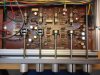
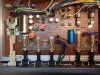
Below are the pictures you asked for. The preamp has a bit of Deoxit still near the coax lines that I removed and sprayed as you suggested. I ran a few power cycles to full warmup and cool down without issue. Then I put the cap back on the relay, powered up and unfortunately had the issue return. Everything is fine now but I don't know if I have a solid fix yet. I did notice when cleaning that there was a bit less resistance between the two left contacts. The points felt slightly further apart than the two right contacts. Also I had no visual oxide on the card soaked in cleaner. I ran some 400 grit paper between the contacts and there seemed to be a bit on the paper. Then I ran the card through. Again it was clean.
I don't know if it matters but I did all my work with the unit up on its side and the bottom panel off. This was so I could support the board from below if needed when putting the cap back on. After replacing the bottom cover, and placing the unit back down I took your pictures. That was pretty cool just being able to lift up the tuner section. It was on the next power up that the issue presented itself again. I do have a picture of the bottom of the board. All the traces look good to me. Perhaps I need a new relay.
@dlucy It seems as though I have highjacked your thread. I can create another if you like.
Btw, I've been a recording engineer for the last 30 years. I came to it as a musician but took some electronics courses to better communicate to my tech department. They and you guys continue to have me in awe with your understanding of this stuff.
-Steve
SteveF 137
Active Member
Well, intermittents like that usually manifest again eventually. I'd have probably done a microscopic inspection of the boards checking for cracked solder where those multipin connectors attach, and inspected all of the joints for the switch and potentiometers also. But, if it stays working that can always be done later should it return. Tapping on the relay or grabbing the knob to turn the volume up could have been making a bad connection come and go, though when they are that sensitive it's unsual to disappear as it has for you at this point.
On your pics: replace that large gold Frako-branded axial cap next to the power switch, it's a known failure component on all of the receivers in this series. They tend to dry out internally and leak electrically as they age and because that's filtering the +25V regulated supply that runs the tuner and other stuff downstream, can cause other components to fail or the tuner to behave erratically. You can get a Vishay axial part like that from Mouser or most electronics suppliers. 1000uF/63V part.
Those two plastic housing orange caps (should say ROE on top) are also suspect according to other folks here that have checked them during an overhaul, though I have not had a ton of issues with them myself.
Also, where those yellow and green cables connect to the preamp board, I'd deoxidize the connections - they are somewhat known for being intermittent at this age.
BTW this is the original version TR 2055, based on the knob style and board. They made a 2nd version to match the TR 2075 MkII later, with a satin-finish knob with no black pointer. Pretty much the same otherwise, though.
John
On your pics: replace that large gold Frako-branded axial cap next to the power switch, it's a known failure component on all of the receivers in this series. They tend to dry out internally and leak electrically as they age and because that's filtering the +25V regulated supply that runs the tuner and other stuff downstream, can cause other components to fail or the tuner to behave erratically. You can get a Vishay axial part like that from Mouser or most electronics suppliers. 1000uF/63V part.
Those two plastic housing orange caps (should say ROE on top) are also suspect according to other folks here that have checked them during an overhaul, though I have not had a ton of issues with them myself.
Also, where those yellow and green cables connect to the preamp board, I'd deoxidize the connections - they are somewhat known for being intermittent at this age.
BTW this is the original version TR 2055, based on the knob style and board. They made a 2nd version to match the TR 2075 MkII later, with a satin-finish knob with no black pointer. Pretty much the same otherwise, though.
John
SteveF 137
Active Member
Thanks again John for you generous sharing of knowledge! I had to take a break recently as the last part for my Thorens TD-124 rebuild arrived from Switzerland. I spent much of the weekend attaching the SME 3009 arm to the new board and doing alignment. It's now fully up and sounding beautiful!
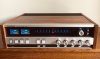
I put the Tandberg back together and hooked it up. The right channel sounded nice and clean but the left channel was down a bit. I measured it using my SPL meter and some white noise from the tuner. It's about 3dB lower than the right, lacking some mids and highs and slightly distorted. A bit of rebalance is a quick fix for now. I will order a replacement for the Frako cap the next time my studio techs need something from Digikey. I deoxidized the preamp board cable connects.
Thanks for the history on my TR 2055. I figured it was the original and built around 1976. The serial number has mostly come off but I can read 82370. I cleaned up the aluminum and wood veneer. It really is quite beautiful. I ran my turntable into PHONO 2 to avoid the extra electronics of the sensitivity pot. I wonder how the preamp was regarded back in the day?
Anyway, I think I would like to attempt to fix the left channel if possible. If you are willing to continue with troubleshooting I am happy to compensate you for your time.
Thanks again,
-Steve
I put the Tandberg back together and hooked it up. The right channel sounded nice and clean but the left channel was down a bit. I measured it using my SPL meter and some white noise from the tuner. It's about 3dB lower than the right, lacking some mids and highs and slightly distorted. A bit of rebalance is a quick fix for now. I will order a replacement for the Frako cap the next time my studio techs need something from Digikey. I deoxidized the preamp board cable connects.
Thanks for the history on my TR 2055. I figured it was the original and built around 1976. The serial number has mostly come off but I can read 82370. I cleaned up the aluminum and wood veneer. It really is quite beautiful. I ran my turntable into PHONO 2 to avoid the extra electronics of the sensitivity pot. I wonder how the preamp was regarded back in the day?
Anyway, I think I would like to attempt to fix the left channel if possible. If you are willing to continue with troubleshooting I am happy to compensate you for your time.
Thanks again,
-Steve
Last edited:
As long as you're wielding the screwdrivers, diagnostic tools and soldering iron and I'm just typing, no compensation required 
Given your description of the symptoms, next step is to try and sort out whether the low channel issue is in the preamp/filter/source end of things, or the power amp. These receivers lack a pre-out/main in but if you unplug the shielded cables next to the speaker selector (the yellow and green pair) you can probably rig that junction to pull preamp signal out of the receiver to check for signal balance & noise, or plumb a different known-good source back into the cables where they run back to the power amp board. Probably need to provide a chassis ground from the receiver itself into the (-) side of the coax cable when you try that on the power amp though, it won't be that happy being ungrounded IIRC.
John
Given your description of the symptoms, next step is to try and sort out whether the low channel issue is in the preamp/filter/source end of things, or the power amp. These receivers lack a pre-out/main in but if you unplug the shielded cables next to the speaker selector (the yellow and green pair) you can probably rig that junction to pull preamp signal out of the receiver to check for signal balance & noise, or plumb a different known-good source back into the cables where they run back to the power amp board. Probably need to provide a chassis ground from the receiver itself into the (-) side of the coax cable when you try that on the power amp though, it won't be that happy being ungrounded IIRC.
John
SteveF 137
Active Member
Thanks John...much appreciated! I'll probably have to wait to get the Tandberg on the bench at work for diagnostics. I hate to pull it out of service now because it's sounding so great. The FM specifically. There's not much discrepancy now between L/R. Intermittent...the word least liked by audio engineers
I just got a 5pin din to RCA adapter so if I do pull out the Tandberg I can patch my better turntable to my parents old Blaupunkt. I just cleaned it up and it works great tubes and all. 1964...I'm going further back in time with the gear!
Will let you know when I get things figured out.
-Steve
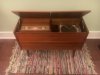
I just got a 5pin din to RCA adapter so if I do pull out the Tandberg I can patch my better turntable to my parents old Blaupunkt. I just cleaned it up and it works great tubes and all. 1964...I'm going further back in time with the gear!
Will let you know when I get things figured out.
-Steve

Riley Casey
Active Member
This is an exceptional thread, thanks to all the contributors. I've still got a 2040 and a 2075 in daily use and I've been in them occasionally over the years recapping and replacing failing tuner parts. Glad to find an output relay part number for Mouser in another thread here as I've been running the 2075 without for some time now. One thing I'm surprised at is no mention of intermittent interboard connectors as those have been a chronic problem for me. I've finally removed as many as possible and simply hardwired the connections in place. Both receivers have spent their lives in the middle of a large city on a busy bus route and the air pollution may have been a factor but it's been an issue with most of my electronics.
The 2075 (and IIRC the original Gen 1 2055) had a service bulletin related to failing connections at the shielded preamp signal cables that connect the preamp to power amp (or preamp to Main Out and Pre In to power amp, in the case of the 2075 which has rear panel I/O). They characterized the failure as causing power on or off transients (because it's the signal ground that develops resistance, leaving the amp vulnerable to swinging away from zero DC offset at the center crossing), but in my experience it's more likely to cause intermittent channel(s). They recommended either replacing those cables with the type used in the later 2075/2075MkII/2080 models, or worst case, soldering the cables permanently at either end. The other board to board connector harnesses weren't problematic, any more than any metal-to-metal contact is in aging electronics. They're on the small side but other than that, not made of metal that's prone to oxidation any more than normal.
But, I've NEVER had to do either of those - partly because the newer type aren't available anyway, unless you pillage them from a newer receiver - and partly because it's actually pretty easy to clean/deoxidize them. Just unplug the connector, spritz deox liberally on the exposed metal pins, and run the plug up and down the pins repeatedly. The scraping effect combined with some deox seems to make the connection quite reliable again, at least it has in my experience. You can do the same thing with the other board to board connectors, just spray the male pins and run the plug on and off several times. Just don't leave them reassembled wet with deox, use air or a non-residue solvent to spray them dry again.
The ONLY ones I've ever run into that are terminally oxidized and causing problems are the larger silver-plated pins they used on open reel decks like the 3600XD - those things seem to turn black again really quickly after having the tarnish removed.
John
But, I've NEVER had to do either of those - partly because the newer type aren't available anyway, unless you pillage them from a newer receiver - and partly because it's actually pretty easy to clean/deoxidize them. Just unplug the connector, spritz deox liberally on the exposed metal pins, and run the plug up and down the pins repeatedly. The scraping effect combined with some deox seems to make the connection quite reliable again, at least it has in my experience. You can do the same thing with the other board to board connectors, just spray the male pins and run the plug on and off several times. Just don't leave them reassembled wet with deox, use air or a non-residue solvent to spray them dry again.
The ONLY ones I've ever run into that are terminally oxidized and causing problems are the larger silver-plated pins they used on open reel decks like the 3600XD - those things seem to turn black again really quickly after having the tarnish removed.
John

Gaerisch
Member
If I remember correctly, Tandberg receivers could be separated as a tuner, pre amp, and amplifier and still work! Seen this a long time ago, it’s not meant to be operated with its 3 main functions separated, but they built it that way so each section could be separated if one should fail. Sort of like Quad amps which could be upgraded because of its modular construction.
Not exactly.
They actually designed the TR2075 to be three components in one, not from a reliability point of view but to counter the market view that separate components outperformed integrated amps or receivers. By building each section of the 2075 as a separate assembly (tuner, power amp, front end/preamp roughly) they were making a marketing statement that their receivers rose above the traditional limitations of putting all that stuff in the same enclosure.
Here's a couple of pages excerpted from their literature which outlines this design approach:
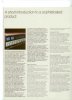

None of the main sections are entirely standalone, for instance both the power amp and the tuner sections rely on the +25V regulated supply that's part of the Source Select/Regulator board (sits below the meters in that picture above, where the power switch is).
By the way, they also designed these so the tuner section could be tipped up and slotted onto the horizontal crossmember extrusion so it stays in place, standing almost straight up. Allows access to the boards underneath the tuner without having to resort to propping it up or removing it completely.
John
They actually designed the TR2075 to be three components in one, not from a reliability point of view but to counter the market view that separate components outperformed integrated amps or receivers. By building each section of the 2075 as a separate assembly (tuner, power amp, front end/preamp roughly) they were making a marketing statement that their receivers rose above the traditional limitations of putting all that stuff in the same enclosure.
Here's a couple of pages excerpted from their literature which outlines this design approach:
None of the main sections are entirely standalone, for instance both the power amp and the tuner sections rely on the +25V regulated supply that's part of the Source Select/Regulator board (sits below the meters in that picture above, where the power switch is).
By the way, they also designed these so the tuner section could be tipped up and slotted onto the horizontal crossmember extrusion so it stays in place, standing almost straight up. Allows access to the boards underneath the tuner without having to resort to propping it up or removing it completely.
John
SteveF 137
Active Member
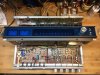
Very interesting John, thanks. Certainly a very creative component design. Here's a shot of my TR 2055 open with the new caps you suggested. Still humming and hawing about pulling the volume pot to confirm that it's faulty. In the meantime I measured and marked the balance control to give me unity LR output at mid volume.
-Steve
-Steve
I think he meant he himself is hemming and hawing about the decision to pull the pot out, it's a colloquialism slightly compromised by a spelling typo... don't think the receiver has a hum problem.
But, checking the grounds on these is good advice regardless; with a few exceptions (like that one small ground wire at the lower right side of the chassis), Tandberg relied on sheet metal screws that hold the boards in place to provide board grounds in many places. And, those are screwed into U-shaped channels in relatively soft aluminum - what could go wrong? Though in fairness, while I do find loose screws and tighten them as part of any service, and am also careful to get the screws back into the same "threads" rather than forcing them back in and cutting yet more metal in the process, they haven't been a frequent problem source for me on this series. In concept it's not a particularly robust way to ground things, but in practice they seem to have largely made it work pretty reliably.
John
But, checking the grounds on these is good advice regardless; with a few exceptions (like that one small ground wire at the lower right side of the chassis), Tandberg relied on sheet metal screws that hold the boards in place to provide board grounds in many places. And, those are screwed into U-shaped channels in relatively soft aluminum - what could go wrong?
Though in fairness, while I do find loose screws and tighten them as part of any service, and am also careful to get the screws back into the same "threads" rather than forcing them back in and cutting yet more metal in the process, they haven't been a frequent problem source for me on this series. In concept it's not a particularly robust way to ground things, but in practice they seem to have largely made it work pretty reliably. John

pari57
Member
I had a more or less same problem on a TR2045. I had checked all the cabble connections twice, even three times but could not find the source.
and be careful L + R Power Amp middle potential = 0V but NOT GROUND.!!!
As I measured ground vs ground on all board and the frame I noticed a slight difference between some boards and the frame.
After readjusting all, the hum was gone. As it was, I could open the volume full 100% (no input Signal) without any sparkle of noise or hum.
And yes I definitely would think twice before pulling out the pot.
but good luck anyway
Paul
and be careful L + R Power Amp middle potential = 0V but NOT GROUND.!!!
As I measured ground vs ground on all board and the frame I noticed a slight difference between some boards and the frame.
After readjusting all, the hum was gone. As it was, I could open the volume full 100% (no input Signal) without any sparkle of noise or hum.
And yes I definitely would think twice before pulling out the pot.
but good luck anyway
Paul
pari57
Member
BTW, today I received another TCD 440A. An absolute beauty MINT STATUS incl original Boxing.
It needs some cleaning, slider potis etc, but the rest and transport functions and so on are all OK! No tape wreaking etc.
And the best, the one I bought I from is sending me the RC unit (she found somewhere) as well.
how lucky can one get??
It needs some cleaning, slider potis etc, but the rest and transport functions and so on are all OK! No tape wreaking etc.
And the best, the one I bought I from is sending me the RC unit (she found somewhere) as well.
how lucky can one get??