• The move to the new server is done. There are some software and database maintenance updates in process. This has us passing the hat around to help out. We appreciate any donations. Seriously, even a dollar helps. The payment page may be found here - https://www.audiokarma.org/support.html

Recapping a Tandberg TR-2080

dlucy

dlucy67 (Doug)
Staff member
Moderator
Subscriber
IMG_8203.JPG

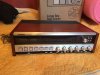
A friend asked me to recap his Tandberg and it is quite a different build than the Pioneers, Harman Kardons, and Kenwoods I'm used to. This TR-2080 is supposedly the TOTL receiver from the Norwegian Tandberg.

The receiver has pre-outs and main-ins, so it is easy to identify the constant distortion in one channel is in the main amp, not the prior preamp and such. This thing has gigantic can caps for the power reservoirs and an odd held-by-ribs way of mounting the PCBs. No apparent signs of overheating or other problems. The small signal transistors appear to be mostly BC series, so no "known noisy" candidates there. The service manuals don't list the parts, so this will be a BOM-from-the-pulled-parts job.

Start off with a full recap and see if the distortion is fixed.

The owner's manual and the service manual are available in AK's manual database https://akdatabase.org/AKview/albums/userpics/10007/Tandberg TR-2080 Service Manual.pdf
 
Last edited:
Register to hide this ad
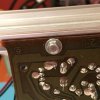
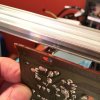
The PCBs are held in place by a few 5mm screws and the ribs of the aluminum chassis bars. So, one of those few times when a speed wrench or nutdriver is really helpful!

IMG_8332.JPG
IMG_8352.JPG
IMG_8351.JPG
 
Last edited:
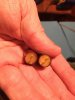
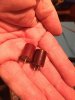
There are a few caps that are... what? They are cans, but plastic or phenolic cans. Filled with wax. The values are big, so they must be electrolytics, right?

IMG_8286.JPG
IMG_8288.JPG
IMG_8287.JPG
 
Interesting construction these Tandbergs, with the extruded aluminum panels instead of stamped steel.
those plastic caps are similar to some in the 70s era Crown gear. I used electrolytic to replace them. There isn't really anything that can provide 220µF of capacitance in a part that small except an electrolytic.
 
The PCB is silkscreened and the polarized capacitors are all properly marked.

IMG_8273_zoom_to_polarity.jpg
 
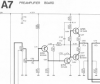
And the schematic has the signal path marked in bold so choosing Nichicon KL series for signal-path caps versus Nichicon PW series for power-path caps is easy.

Signal path marked on schematic.png
 
Recap-only BOM parts list for Tandberg TR-2080 receiver:

AM tuner Mk II board

C406,C412 22 uF 35 V 647-UPW1V220MDD or 647-UPW1V220MDD1TD
C418,C419 100 uF 25 V 647-UPW1V101MPD1TD or 647-UPW1V101MPD
C420 0.47 uF 50 V 647-UKW1HR47MDD or 647-UKW1HR47MDD1TD

FM board

C204,C210 47 uF 25 V 647-UKL1V470KPDANATA
C206,C207 0.47 uF 50 V 647-UKW1HR47MDD or 647-UKW1HR47MDD1TD
C213,C311 200 uF 16 V 647-UPW1V221MPD6TD or 647-UPW1V221MPD6
C234 100 uF 10 V 647-UPW1V101MPD1TD or 647-UPW1V101MPD
C236 1 uF 505-MKS2C041001FKI00
C301 2.2 uF 63 V 667-ECQ-E1225JF3 or 80-MMK5225K50J04TR18
C316,C317 4.7 uF 25 V 647-UKL1E4R7MDDANA
C336,C337 22 uF 50 V 647-UFW1H220MDD1TD

Mode filter board

C813,C814 2.2 uF 35 V 505-MKS2B042201FKI00 or 667-ECQ-E1225JF3
C815,C816 47 uF 25 V 647-UKL1V470KPDANATA

Power amp board

C901,C902 10 uF 25 V 647-UKL1V100KDD1TA
C905,C906 470 uF 35 V 647-UPW1V471MPD
C913,C914 220 uF 63 V 647-UFW1J221MPD or 647-UPW1J221MPD
C927,C928,C931,C932 4700 uF 63 V 647-UVR1J472MRD6 (an upgrade to 6.800 uF would be 647-UKW1J682MRD)
C971,C972 47 uF 16 V 647-UPW1V470MED or 647-UPW1V470MED1TD
C973 47 uF 63 V 647-UPW1J470MPD
C974 2.2 uF 63 V 647-UPW2A2R2MDD


Preamp board

C701,C702 10 uF 63 V 647-UKL1J100MED
C707,C708,C727,C728 47 uF 25 V 647-UPW1V470MED or 647-UPW1V470MED1TD
C709,C710,C711,C712 22 uF 35 V 647-UKL1V220MEDANA
C723,C724 10 uF 63 V 647-UPW1J100MDD or 647-UPW1J100MDD1TD
C729,C730 100 uF 10 V 647-UPW1V101MPD1TD or 647-UPW1V101MPD
C731,C732 10 uF 25 V 647-UKL1V100KDD1TA

Program select board

C601,C602 22 uF 35 V 647-UPW1V220MDD or 647-UPW1V220MDD1TD
C603,C604 1 uF 50 V 505-MKS2C041001FKI00
C605,C607 220 uF 16 V 647-UPW1V221MPD6TD or 647-UPW1V221MPD6
C606,C609 47 uF 35 V 647-UPW1V470MED or 647-UPW1V470MED1TD
C610 1000 uF 63 V 647-TVX1J102MCD or 647-UPW1J102MHD
C612 47 uF 25 V 647-UPW1V470MED or 647-UPW1V470MED1TD
C616 470 uF 16 V 647-UPW1V471MPD
C617 10 uF 63 V 647-UPW1J100MDD or 647-UPW1J100MDD1TD

RIAA (phono) and input board

C501,C502,C517,C518 10 uF 25 V 647-UKL1V100KDD1TA
C505,C506 470 uF 6 V 647-UPW1V471MPD
C509,C510,C523,C524 220 uF 6.3 V 647-UPW1V221MPD6TD or 647-UPW1V221MPD6
C531-C538 4.7 uF 25 V 647-UKL1E4R7MDDANA

 
Last edited:
If you just want to cut-n-paste into a BOM tool like the one at Mouser:

AM tuner Mk II board

647-UPW1V220MDD 2
647-UPW1V101MPD1TD 2
647-UKW1HR47MDD 1

FM board

647-UKL1V470KPDANATA 2
647-UKW1HR47MDD 2
647-UPW1V221MPD6TD 2
647-UPW1V101MPD1TD 1
505-MKS2C041001FKI00 1
667-ECQ-E1225JF3 1
647-UKL1E4R7MDDANA 2
647-UFW1H220MDD1TD 2

Mode filter board

505-MKS2B042201FKI00 2
647-UKL1V470KPDANATA 2

Power amp board

647-UKL1V100KDD1TA 2
647-UPW1V471MPD 2
647-UFW1J221MPD 2
647-UVR1J472MRD6 4 (an upgrade to 6,800 uF caps, much larger than stock, would be 647-UKW1J682MRD)
647-UPW1V470MED 2
647-UPW1J470MPD 1
647-UPW2A2R2MDD 1

Preamp board

647-UKL1J100MED 2
647-UPW1V470MED 4
647-UKL1V220MEDANA 4
647-UPW1J100MDD 2
647-UPW1V101MPD1TD 2
647-UKL1V100KDD1TA 2

Program select board

647-UPW1V220MDD 2
505-MKS2C041001FKI00 2
647-UPW1V221MPD6TD 2
647-UPW1V470MED 2
647-TVX1J102MCD 1
647-UPW1V470MED 1
647-UPW1V471MPD 1
647-UPW1J100MDD 1

RIAA (phono) and input board

647-UKL1V100KDD1TA 4
647-UPW1V471MPD 2
647-UPW1V221MPD6TD 4
647-UKL1E4R7MDDANA 8​

And remember sites like Mouser often have a price break at 10 piece quantities.
 
Last edited:
The red ones marked "ROE" are Roederstein caps... non-resonant housing electrolytics, more or less. Often measure bad these days.

Not sure I'd use KL for signal path personally, the factory used low-leakage for the orange electrolytic caps but there are plenty in the signal path that were not spec'd low-leakage. My respect for their engineering skills means I use what they used, to the extent you can - not possible on those red ones, but everywhere else I stick to OEM spec.

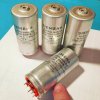
Have you tested those Siemens main filter caps? Have yet to see one measure out of spec myself... it's an extremely well-built cap and there are not a ton of suitable replacements that also fit the board spacing and mounting details closely. Your replacements are substantially smaller and will require mods to both of those areas to install them.

No speed wrenches please; those hex screws are into soft aluminum extrusions, and you do not want 1) strip them or 2) cut new threads. They used them for board grounds here and there, and it's important that they be reinstalled carefully in order to match the original intended torque/tightness. Easy to do that by hand, just reverse until you feel the thread line up, then ease them back in.

John
 
The red ones marked "ROE" are Roederstein caps... non-resonant housing electrolytics, more or less. Often measure bad these days.

Not sure I'd use KL for signal path personally, the factory used low-leakage for the orange electrolytic caps but there are plenty in the signal path that were not spec'd low-leakage. My respect for their engineering skills means I use what they used, to the extent you can - not possible on those red ones, but everywhere else I stick to OEM spec.

Have you tested those Siemens main filter caps? Have yet to see one measure out of spec myself... it's an extremely well-built cap and there are not a ton of suitable replacements that also fit the board spacing and mounting details closely. Your replacements are substantially smaller and will require mods to both of those areas to install them.

No speed wrenches please; those hex screws are into soft aluminum extrusions, and you do not want 1) strip them or 2) cut new threads. They used them for board grounds here and there, and it's important that they be reinstalled carefully in order to match the original intended torque/tightness. Easy to do that by hand, just reverse until you feel the thread line up, then ease them back in.

John

Thanks for the tips.
 
I am working on a TR2045 and I used Elna Silmic II as much as possible.
Electrical I have almost finished and
I do believe Elna caps reproduce the original sound of these machines better then Nichicon.

Further more do I agree with John on the engineering capabilities of the producer.
They have created absolute top of the bill Hifi audio machines using over 80% plain standard parts in it.
The quality is guaranteed by the way they putted it together in simplicity and precision.
When you recap your machine precisely and with the right parts, you will be amazed by the quality of this machine.
When you do it right and you are sure everything is okay just test it;
with no signal on your amplifier input, you can open up your volume 100% and you will hear nothing at all on your speakers.
that is no noise at all.
Signal-to-noise-ratio is far beyond human hearing abilities
That is how clear this machine is.

good luck, I sincerely hope you will succeed,
for there will be another skeptic that turns into a Tandberg lover

greetings

Paul
 
I am working on a TR2045 and I used Elna Silmic II as much as possible.
Electrical I have almost finished and
I do believe Elna caps reproduce the original sound of these machines better then Nichicon.

Further more do I agree with John on the engineering capabilities of the producer.
They have created absolute top of the bill Hifi audio machines using over 80% plain standard parts in it.
The quality is guaranteed by the way they putted it together in simplicity and precision.
When you recap your machine precisely and with the right parts, you will be amazed by the quality of this machine.

Well, I hear you and appreciate your views. I'm a bit perplexed, though. This is my first Tandberg restoration and... I don't think ALL of the components are top quality. They certainly aren't all Elna. And the Elnas aren't the TOTL Elnas.

This is just a small-but-representative selection of the caps coming out of this unit. I have no reason to believe it has been touched since it left the factory.

IMG_8482_edited.jpg

Sanyo is a fine brand as far as I know, but "Chang"?
 
A word of caution with this particular Tandberg. The circuit path traces do not like much heat. They lift pretty quickly with what I'd call a typical (Hakko FR-330) desoldering iron heat level.

:(
 
The power amp board, once complete, does look better with the thinner, cooler-looking Nichicon power reservoirs.

IMG_8477_edited.jpg
 
Have you tested those Siemens main filter caps? Have yet to see one measure out of spec myself... it's an extremely well-built cap and there are not a ton of suitable replacements that also fit the board spacing and mounting details closely. Your replacements are substantially smaller and will require mods to both of those areas to install them.

The Siemens caps test fine, but I'm not leaving them in there to degrade over time. They get replaced just like all the electrolytic caps while I've got the unit open and I'm in there.

The Nichicon UKW1J682MRD that I just now soldered in, with its 12.5mm lead spacing, fit perfectly. The factory-spec capacitance value 4,700 uF UVR1J472MRD6 replacement caps have the same 12.5mm lead spacing and should fit just as well.
 
The only caps in that picture that MIGHT be original are the orange low leakage ones (can't see enough of the markings to be sure). None of the others were EVER used by Tandberg. This receiver has already been recapped, poorly.

Can I have the Siemens? I'd put those back in an all-original 2080 or 2075 MkII in a heartbeat. Nothing against Nichicon, I use them as well... but they never made a part as well-built as those silver Siemens, and I'd put money on the Siemens continuing to work well for at least another decade, would not have the same confidence in the caps being sold today.

John

Well, I hear you and appreciate your views. I'm a bit perplexed, though. This is my first Tandberg restoration and... I don't think ALL of the components are top quality. They certainly aren't all Elna. And the Elnas aren't the TOTL Elnas.

This is just a small-but-representative selection of the caps coming out of this unit. I have no reason to believe it has been touched since it left the factory.

View attachment 1167344

Sanyo is a fine brand as far as I know, but "Chang"?
 
Can I have the Siemens? I'd put those back in an all-original 2080 or 2075 MkII in a heartbeat. Nothing against Nichicon, I use them as well... but they never made a part as well-built as those silver Siemens, and I'd put money on the Siemens continuing to work well for at least another decade, would not have the same confidence in the caps being sold today.

I'll have to ask the owner. They are not mine to part with unless he is OK with it.
 
100%. Doesn't have to be free mind you, just that I have a bunch of these with older caps (pre-Siemens) and those would drop right in, keeps them original etc. Thinking on particular about the 2075 MkII with acrylic cabinet, where they would be on display.

John
 
The power amp board, once complete, does look better with the thinner, cooler-looking Nichicon power reservoirs.

View attachment 1167348

@jdurbin1, the emitter resistors look odd to me. They are nice cement wirewound resistors, but they have their leads patched to be long enough to fit vertically off the power amp board. Is this normal for the otherwise-elegant design of the TR-2080?
 
Back
Top Bottom