
• The move to the new server is done. There are some software and database maintenance updates in process. This has us passing the hat around to help out. We appreciate any donations. Seriously, even a dollar helps. The payment page may be found here - https://www.audiokarma.org/support.html

Record Cleaning: Developing the Best Possible Methods

Status
Not open for further replies.
Thanks, now I'm more confused lol
I guess I should have been a little more clear.
Pictures of the products you're talking about.
Something to look at if I go shopping for the stuff.

Ha! Sorry. The non-ionic detergents (and Quats for that matter) are typically used in industrial and scientific applications so they come in rather technical packaging. For example, Triton X-100 can be purchased from Amazon like this (though they also have other brands):
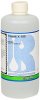
4145VcF9ODL.jpg

And you can get others like Tergitol NP-40 from Grainger

Refined alcohols are clearly marked as to percent content, but you may have to go to a pharmacy or on-line to get them:
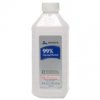
315H+gjEoNL._AA160_.jpg

As a practical note, you can't just add concentrated detergents like Triton or most Tergitols to water and expect them to dissolve. You have to add small amounts of water gradually and mix it in. It takes time for them to organize into hydrated micelles....In crude terms, their hydrophobic "tails" repel from water and have to "turn away" and towards each other. Never add them to hot water as they will take forever to dissolve. Once diluted to a 10% stock, they easily mix well in water to get to working concentrations.
 
I thought surfactants were used as a wetting agent. I understand surfactants may function as detergents, but are all detergents surfactants?
Which is precisely how that drop of dishwashing liquid acts, and why it is perfectly OK to use it in your home-brew record cleaning solution.

Somewhere along the line I can't help feeling the function of each component is being forgotten. Let's also remember wet cleaning a records usually only occurs once, and that static can be introduced through many other means.
 
Photoflo is a mixture of mainly Propylene glycol and a smaller amount of octylphenoxy polyethoxyethyl alcohol. Guess what the latter essentially is? Triton! The former is not really necessary (it's what keeps things moist, making films look and rinse spot free). A real rip off in terms of price per ounce compared to DIY detergent IMHO.


Just to clarify - besides being a rip-off in terms of price per ounce....is it okay to use?

Thanks
 
....I struggle knowing I have to spend $600 for one of these machines.


Why? I mean, I didn't spend $600 on my machine, I spent a little more than half of that... But $600 for a quality machine seems reasonable especially for a serious listener/collector. A RCM regimen is literally the only irrefutable upgrade to the quality of sound you'll perceive and it is literally the only accessory that enhances the value of your collection. No one can object a good squeaky clean record will sound better than a record sitting in a layer of dust and oil. And by just mentioning the fact that your records are cleaned on a machine make them much easier to flip -- if you're in to that sort of thing, which I believe is essential if you're interested in trading and acquiring records (aka collecting)

You'd probably not object to a $600 turntable purchase, but you object to a $600 RCM purchase? A $600 turntable won't make your records sound great, only a record cleaning machine will. I'd argue that approach to this hobby is wrong...spend the most on your record cleaning machine, spend less on a budget turntable and then get a budget cart. Doing this ensures high quality sound at a minimal expense.
 
Thanks to Vince for the responses. I might fool around and learn something here.

On the subject of RCMs: I've used a variety of home brew cleaning solution, typically ~1 part 95% isopropyl and 2 parts distilled water, with a drop of dishwashing detergent, but always vacuum this off within 20 seconds or so. I don't have any static problems with my LPs.

So the question is... How does the duration that the PVC is exposed to all these wrong chemicals come into play here?
I've sort of been operating on the assumption that vinyl can be exposed to a wide variety of cleaners *as long as it's removed quickly and followed with a distilled water rinse and vacuumed off thoroughly*. I've even used Simple Green (eek!) in this way, and my records seem just fine.
 
Last edited:
When I see "RCM's" I always thing "Record Cleaning Machine" the $600 variety. We should be thinking "RCMM" "Record Cleaning Machine Method". Equivalent to the RCM method. An RCM can be replicated for way less than $100. RCM's should be a time vs money option in my opinion. Discussing them as the best is just saying they save you time since it's packaged to sit next to your equipment and are a small footprint vs a spread out shop vac variety.

I'm also curious of the time factor for the vinyl to be effected. I for example use a RCMM to clean my albums. I wash and then rinse which should cut the solution in half. I have read on some threads where the solutions will embed themselves on the vinyl but no time factor. Are we discussing something that is inevitable anyway with time and the factor of solutions changes the course by a small %? I'm not trying to dispute this great information just wondering about the time factor? Thanks in advance!
 
Last edited:
The time factor is poorly researched and not well documented when it comes to vinyl records. It applies mostly to caustic chemicals or strong solvents that interact with surfaces and chemicals in the vinyl. This applies to acids, strong bases, and solvents and is concentration dependent. You can see this for yourself: Quickly wipe one side of the back of your hand with a swab of 99% Isopropanol and feel what it does. Then wipe the other side with 10%. Both remove the surface oils but the stronger one leaves the skin dry and rough (the stronger one will denature proteins on contact).
The time factor does not apply to detergents, even the charged variety as they are relatively harmless at the concentrations used. Please don't misunderstand my comments on household detergents: most won't kill your records. We just can do better with pure, uncharged cleaning agents that don't have included perfumes, moisturizers, salts, alcohols, and other components that in the long run can interfere with great sound reproduction.
It is critical to have the record surface as free of these chemicals as possible before it is dried as they can leave deposits, charges, and/or facilitate the attachment of further contaminants.
 
Regarding RCMs, yes they are very good. So are ultrasonic baths. What aren't very good are devices that have no mechanism for removing the contaminants after the detergent solubilizes them. They can be diluted out serially, but this requires multiple large volume rinses (there are some good devices that work this way with the added benefit of strong streams to physically dislodge contaminants). Vacuuming the fluid away greatly accelerates the dilution process. Some devices just brush the contaminants around and never remove much fluid. These are ok for a quick touch up, but they don't clean well and often just transfer the contaminants to the next record.
 
Based on what I am seeing here, it looks like I'm going to greatly reduce the concentration of isopropyl in my home brew.
 
Based on what I am seeing here, it looks like I'm going to greatly reduce the concentration of isopropyl in my home brew.
Great! Experiment around and use the minimal amount you find still provides the clean result. You will find drying may take longer. You can also adjust the concentration to match the level of contamination: records with lots of oily fingerprints may require higher alcohol concentrations, those with just dust may require very little.
 
What Hiball said.This is an interesting thread for sure. I may purchase a bottle of the Triton x-100 and brew up a new cleaning solution.
 
Vnce1. Do you have an exact recipe that you would recommend. I'm about to order my new RCM (Clearaudio Smart Matrix Pro) and I was going to order the AIVS osage cleaners but if there is something I could brew up my self that would be better and cheaper I'd be game to try.
Of course I'm not very well versed in the technical terms and explanations so if there was a recipe I could follow for "dummies" I'd appreciate it.
 
Vince, another great thread, and one I will link to this one.

http://www.audiokarma.org/forums/in...of-fact-fiction-and-collective-wisdom.633407/

I must mention that your comments on wood glue have me concerned, tho not much. I've glued over 200 craptastic and abused recordsl for digital transfer, and the results have been stupendous.

I have occasionally gone back and replayed them, and they are still clean and noise-free (or as clean and noise free as can be with abused and cheap records).

While I most certainly defer to your obvious expertise in chemistry, I think this vinyl is far tougher than we give it credit for. I've used Scrubbing Bubbles, glue, even a pressure washer. Is this good for long-term storage and safety?? Probably not.

For me, I don't buy the expensive vinyl, and if so, only use a dry brush. Almost all my collection is castoffs and second-hands. Frustrating, but I'm a cheap bastard (have to be, economically speaking)

Still, I think my record collection will suddenly take a tumultuous tumble into a dumpster about 24 hours after I expire, lol. No need to worry about its long-term stability for me. :(
 
Vnce1. Do you have an exact recipe that you would recommend. I'm about to order my new RCM (Clearaudio Smart Matrix Pro) and I was going to order the AIVS osage cleaners but if there is something I could brew up my self that would be better and cheaper I'd be game to try.
Of course I'm not very well versed in the technical terms and explanations so if there was a recipe I could follow for "dummies" I'd appreciate it.
The AIVS products are excellent, scientifically based, but very expensive (even their purified water is $1/oz!). They share my enthusiasm for enzymatic treatment of heavily soiled records (on which I posted a DIY method previously: http://sites.google.com/site/vincesaudiofiles/). For regular cleaning, all you need is your own detergent stock. For the homemaker, one easy method is to just mix a teaspoon of 100% Triton with a teaspoon of distilled water and work it in slowly to dissolve. Gradually keep adding more teaspoons of distilled water and mixing until a total of 9 teaspoons have been added (roughly a 10% detergent stock). I keep this 10% stock in a used dish soap bottle under the sink (Labelled "Don" :)). You want a final concentration of detergent around 0.1 to 0.2% so this 10% stock gets diluted 50 to 100-fold in the final working wash solution. Basically this amounts to a few drops of this 10% stock added to a cup of water (drop size varies tremendously, but absolute detergent concentration really doesn't matter as long as we are in a range where it can be easily removed in subsequent rinsing). The diluted solution is worked into the record with a paint pad or other device, then rinsed off just like if you were using dish soap. A final distilled water rinse is required to remove remaining chemicals and contaminants. For RCMs or as a daily cleaner of previously cleaned albums, this mix can be modified to much lower detergent concentration (500 fold dilution) and addition of isopropanol to 5% final concentration. For super soiled albums, you can use the 10% stock with very little dilution....just rinse well!
 
Darn I somehow find it hard to buy so much stuff to clean my records. Reminds me of all of the stuff I've bought to wax my cars for car shows. $200 wax! Yes I did! I have records from the 60's that were never taken care of and they play well. Not knocking you Vince your posting eye opening information. Technology has given use sooooooo much information at our finger tips. It's bitter sweet. :)
 
Status
Not open for further replies.
Back
Top Bottom