No problem James, and thanks for your summary thread which NEEDS TO BE A STICKY!. There are many different types of collectors out there. Yes, vinyl is tough, but it is the specific plasticizers that make PVC records different than, say, PVC pipe. Disrupt these and you disrupt the integrity of the lp. Does glue work, yes, I can attest to that. So does ammonia, Windex, TSP, Fantastic, and a slew of other nasty treatments. All the cleaning in the world wouldn't protect or revive an lp damaged from mishandling or a bad stylus. We can be heavy handed or gentle with our records. It's just a matter of how much we want to strive for perfection. Different strokes as they say.Still, I think my record collection will suddenly take a tumultuous tumble into a dumpster about 24 hours after I expire, lol. No need to worry about its long-term stability for me.


You are using an out of date browser. It may not display this or other websites correctly.
You should upgrade or use an alternative browser.
You should upgrade or use an alternative browser.
Record Cleaning: Developing the Best Possible Methods
- Thread starter guest110
- Start date
- Status
- Not open for further replies.
so much stuff? a bottle of concentrated detergent that will last you a lifetime and some deionized water. And maybe some alcohol if you wish. All for less money/oz than you would spend on household products because you're not paying for marketing, slick packaging, or all the perfumes, oils, salts, and other additives that you don't want or need. Heck, if you are sensitive or allergic, this simple detergent mix makes a great shampoo!Darn I somehow find it hard to buy so much stuff to clean my records. Reminds me of all of the stuff I've bought to wax my cars for car shows. $200 wax! Yes I did! I have records from the 60's that were never taken care of and they play well. Not knocking you Vince your posting eye opening information. Technology has given use sooooooo much information at our finger tips. It's bitter sweet.

Good stuff, Vince. I'm reminded of the old line from "Fletch Lives" in regard to my overly enthusiastic support of wood glue (which I'll still use, just less frequently)
"It takes a big man to admit when he's wrong. I am NOT....a big man."
Science is such a good thing.
"It takes a big man to admit when he's wrong. I am NOT....a big man."
Science is such a good thing.

wrbear
A man of many talents...a master of none...
A life time. Even unused engine oil has a shelf life. I think some of the cleaners etc we are discussing here are only good for a few years. I use Photoflo for example based on some internet searching. I bought a large bottle and use a few drops at a time. Will expire before I use a tablespoon....sigh....I have a really great collection of fluids for cleaning records...don't get me started on automobile waxes......
Last edited:
Do you worry about your Dawn dish soap expiring? I don't think the small amount of oxidation over time hurts anything and nothing will grow in this stock.A life time. Even unused engine oil has a shelf life. I think some of the cleaners etc we are discussing here are only good for a few years. I use Photoflo for example based on some internest searching. I bought a large bottle and use a few drops at a time. Will expire before I use a tablespoon....sigh....I have a really great collection of fluids for cleaning records...don't get me started on automobile waxes......

AvFan
Super Member
So Grainger has RPI Triton X-100 that is "scintillation grade". What does that mean for X-100? FYI the Grainger site says this stuff has an 18-month shelf life and product sheet says to dispose of it you need to mix it with a hydrocarbon and incinerate it.
Can you use a 10% solution of X-100 to wash your dishes? Seems like a way to use up a 500ml bottle.
Can you use a 10% solution of X-100 to wash your dishes? Seems like a way to use up a 500ml bottle.
So Grainger has RPI Triton X-100 that is "scintillation grade". What does that mean for X-100? FYI the Grainger site says this stuff has an 18-month shelf life and product sheet says to dispose of it you need to mix it with a hydrocarbon and incinerate it.
Can you use a 10% solution of X-100 to wash your dishes? Seems like a way to use up a 500ml bottle.
Yes, you can use this as you would any other detergent. I would not waste money on scintillation grade if other grades are available (this grade is certified not to interfere with optical readings of radioactivity using scintillation fluid which is only important for certain laboratory work). The shelf life is only important for scientific work as oxidation products can interfere with experiments. We don't need this level of quality. You can wash it down the sink just like you do your dish soap, shampoo, or laundry detergent. It's better to get a 100ml bottle if you can find it.
AvFan
Super Member
Thank you for the original posts and follow up. I use the typical home brew with Dawn, distilled water and isopropyl alcohol with a shop vac and wondered why the records didn't always easily slide into new plastic sleeves. Records also seemed to catch a fair amount of dust when on the TT.
One other follow up question: How long does the solution need to sit on the record assuming it is scrubbed with a paint pad, to remove fingerprints and other oils? Some of the albums I purchased in the '70s have never been cleaned and, well, they are a mess.
One other follow up question: How long does the solution need to sit on the record assuming it is scrubbed with a paint pad, to remove fingerprints and other oils? Some of the albums I purchased in the '70s have never been cleaned and, well, they are a mess.

. Not long, within seconds the surface tension is affected. Just keep wiping with the pad. Physical disruption allows the detergent to do it's work and it works fast. Really dirty albums may require an enzymatic step first to break the proteins, lipids, and sugars down into more soluble pieces and also release bound microorganisms (see previously attached link).One other follow up question: How long does the solution need to sit on the record assuming it is scrubbed with a paint pad, to remove fingerprints and other oils?
Yes, but you need VERY little of it to break the surface tension of water so only use a small amount as it will reside on the surface. Alcohol will also aid in distribution with the advantage it is volatile and can evaporate off (but also keep its concentration low).Can a surfactant be used in the rinse cycle to help with the distribution of the distilled water on the lp?
I don't know what rinse aid you are using, at what concentration, how much volume you are using to rinse, and how each application is being removed so it is difficult to say. Do you notice any spots after drying? If the rinse aid is one of the pH 1 dishwasher drying agents previously discussed, it doesn't matter as the acid has already done it's damage (you can't reverse it by rinsing).I use two rinse cycles after cleaning. Should this be sufficient if my cleaning mixture is iso alcohol, rinse aid, and distilled water?

vinyl1
Super Member
Darn I somehow find it hard to buy so much stuff to clean my records. Reminds me of all of the stuff I've bought to wax my cars for car shows. $200 wax! Yes I did! I have records from the 60's that were never taken care of and they play well. Not knocking you Vince your posting eye opening information. Technology has given use sooooooo much information at our finger tips. It's bitter sweet.
Your records may "play well", but the idea of deep record cleaning is to make them sound better. The tiny wiggles in the vinyl that an expensive cartridge responds to can easily be hidden by a layer of crud.
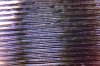
Correct. And it doesn't need to be an expensive cart to pick up the difference between this:Your records may "play well", but the idea of deep record cleaning is to make them sound better. The tiny wiggles in the vinyl that an expensive cartridge responds to can easily be hidden by a layer of crud.

and this:

You want a pH near neutral (7), but anywhere in the range of 6-8 should be fine. You could adjust the glue pH, but it might not harden or perform the way it was designed. Furthermore, there are other things in the glue formula that are bad for records, not just it's acidity.Thinking Out Loud: Could the harmful low pH of the glue or rinse aid be adjusted to a safe level with, say, household ammonia water ? What's the "safe" pH range we'd be shooting for?
I experimented a bit with making a PVA film cleaner with less harmful ingredients. It was similar to those cosmetic skin peels. Nothing too original: there is a record cleaning product like this sold commercially and a DIY recipe has been floating around for years. Mine had a neutral pH and incorporated a detergent as well as an antistat. The problem was I needed at least 50% alcohol for it to set up properly. Knowing this wasn't great for the records, I gave up. I may revisit this soon with some cross linking agents that may allow for less alcohol.

hi*ball
Records & Coffee
OK, my head is pulling in 3 directions right now...
I use a vacuum system (see post #14), so the cleaning fluid spends little time on the record. It is scrubbed and then vacuumed off.
Does this mean that my IDEAL home brew would consist strictly of Triton X-100 and distilled water? No alcohol at all?
I use a vacuum system (see post #14), so the cleaning fluid spends little time on the record. It is scrubbed and then vacuumed off.
Does this mean that my IDEAL home brew would consist strictly of Triton X-100 and distilled water? No alcohol at all?
OK, my head is pulling in 3 directions right now...
I use a vacuum system (see post #14), so the cleaning fluid spends little time on the record. It is scrubbed and then vacuumed off.
Does this mean that my IDEAL home brew would consist strictly of Triton X-100 and distilled water? No alcohol at all?
Yes, that is what the LOC would say, but a small amount of alcohol can be useful so it can be added to 5%. It really depends on what the condition of the record is. Some are very dirty, maybe their first clean, while others were recently cleaned but need a touch up. Some have fingerprints only, others have mildew, beer, cocaine, or whatever. The alcohol addition helps cover more of the bases.
Some difficult items often found on records are tiny droplets of paint and hard mineral deposits. These must be physically removed as the detergent and alcohol will not effect them. You need a microscope and a steady hand for this and it is always risky. Start with a fine scraping tool made of something softer than the vinyl (e.g. cardboard or rubber), then plastics, then move up to a superfine needle if need be.
hi*ball
Records & Coffee
Sounds like the 500mL bottle of the Triton X-100 is calling my name. I wonder if there is anyone in the SF Bay Area who would like to split a bottle. It sounds like it's enough for about 5 of us! 
With the Triton X-100 being just a surfactant, is the cleaning completely left up to the low percentage of isopropyl?
With the Triton X-100 being just a surfactant, is the cleaning completely left up to the low percentage of isopropyl?
hi*ball, I just ordered a bottle from Amazon for 30 bucks I think. Wish I was closer, we'd split it.
Vince, could I just add 10 drops of this to a gallon of distilled, or do I need to make the solution like you mentioned (DON) because it doesn't keep well??
Vince, could I just add 10 drops of this to a gallon of distilled, or do I need to make the solution like you mentioned (DON) because it doesn't keep well??

ripblade
Addicted Member
Then why not simply use just the conditioner as surfactant? Since the triboelectric property of vinyl is to develop a negative charge, a cationic surfactant seems to be the natural way to go. There's a fellow on another forum who's advocating the use of a 2-in-1 shampoo and among those who've tried it, all have given it great reviews.and finally Disteryldimethylammonium Chloride (a cationic detergent):
View attachment 650899
again, non polar tails, but a positively charged head (the ammonium group...Not shown is the balancing Cl- ion).This is a quaternary ammonium salt (four bonds on the N) or "Quat". These compounds have anti-static properties, mostly because they can hold water molecules at the surface and make it more conductive. If fact, this particular one is typically what you find in fabric softener and hair conditioner.
I've been using Tergitols 3 & 9 for several years now and prefer it for it's low foaming action, but recently started adding methyl hydrate to the mix for it's cationic properties. The solution really does reduce the static charge initially, but the effect is only temporary, decreasing with each play.
- Status
- Not open for further replies.