

You are using an out of date browser. It may not display this or other websites correctly.
You should upgrade or use an alternative browser.
You should upgrade or use an alternative browser.
Record cleaning fluids
- Thread starter Chet63
- Start date

The Spin-Clean is cheap, easy to use, and cleans unexpectedly well if you follow the instructions to the letter.is there any good ( simple) method which doesn't include any machine?
And it's small enough to store in a drawer when you're done with it.
My purely manual method follows the guide in the link in my poost above.
Yes, it's a bit time consuming but you pays your money and takes your choice.
Essentially 4 steps after fitting the record label protector:
1. Rinse under the tap then spray on the pre cleaner (1% Alconox™ Liquinox™), agitate with the brush over about 4 or 5 complete revolutions and rinse off. Flip over and repeat on side 2.
2. Spray with acid clean (1.5% Alconox™ Citranox™) and do the agitate with the brush over about 4 or 5 complete revolutions then rinse for both sides.
3. Final clean (0.1% Dow™ Tergitol™ 15-S-9) and agitate with the brush over about 4 or 5 complete revolutions then rinse for both sides. Make sure each side is thoroughly rinsed, use the brush to help - there should be no "soap" bubbles.
And finally
4. Rinse with distilled water. You should get "beading" water droplets.
I just "spin" the vinyl to get off most of the droplets and leave to dry.
There's a much more thorough description from Pg 31 (including photos) in the Guide.
Yes, it's a bit time consuming but you pays your money and takes your choice.
Essentially 4 steps after fitting the record label protector:
1. Rinse under the tap then spray on the pre cleaner (1% Alconox™ Liquinox™), agitate with the brush over about 4 or 5 complete revolutions and rinse off. Flip over and repeat on side 2.
2. Spray with acid clean (1.5% Alconox™ Citranox™) and do the agitate with the brush over about 4 or 5 complete revolutions then rinse for both sides.
3. Final clean (0.1% Dow™ Tergitol™ 15-S-9) and agitate with the brush over about 4 or 5 complete revolutions then rinse for both sides. Make sure each side is thoroughly rinsed, use the brush to help - there should be no "soap" bubbles.
And finally
4. Rinse with distilled water. You should get "beading" water droplets.
I just "spin" the vinyl to get off most of the droplets and leave to dry.
There's a much more thorough description from Pg 31 (including photos) in the Guide.
Ok, I do see that. But after further reading, the document seems to be riddled with trade names and I don't say a conflict of interest disclosure by the author. So I think I'll pass.I'm in the UK and the link (in the big red box about 1/2 way down the page) is in "American" (e.g. color (US) vs colour (UK).
Some of the products are not available in the UK but there's a very helpful table of alternatives (Go to Pg 17 on) along with links to suppliers.
Hope that helps.

grillebilly
Empty Head
I'm in your camp, no room first off, and I think I get them really clean. Never any buildup in stylus. I do the Magic Eraser dip every now and then, examine the stylus with a magnifying glass and light, just seldom ever see anything.ok, i believe ultrasonic is the best, but not everyone have time, money and space to invest in such thing...
is there any good ( simple) method which doesn't include any machine?
or everything about records must be complicated ( i know, i know...)
No doubt ultrasonic is head and shoulders better than any other method.
AK members turned me on to Blue Dawn dishwashing liquid. It uses a surfactant. Put the record at a slight angle downward in the sink and spin it as the water runs over the lower edge, almost all the way to the label. Get a piece of a soft cotton towel and soak it, put a drop or two of Dawn on it, and scrub the record good in the direction of the groves with one hand, while using your other hand to balance the record, same way you remove from sleeve. Spin it like you did earlier to rinse. Do other side. Rinse both sides again with tepid water a few times.
Drying can be tricky, it's easy to induce contaminants. A freshly laundered cotton T-shirt has given me the best results. Wipe gently in the direction of the groves. Air dry for a few minutes before playing.
It's definitely backyard compared to a professional clean, but it has worked well enough for me. It's free to try, the Dollar Store has the little travelling size Blue Dawn and I've had mine for a very long time already.
as far as i can tell, fairy is the european equivalent to blue dawn? i tried this already, and it makes things worse...records sounds like walking through mine fields? i heard stories around me from my friends who use the same fairy method, and they have succeed...it looks like i am doing something wrong, either use too much fairy, or didn't dry them good, or something else is wrong...I'm in your camp, no room first off, and I think I get them really clean. Never any buildup in stylus. I do the Magic Eraser dip every now and then, examine the stylus with a magnifying glass and light, just seldom ever see anything.
No doubt ultrasonic is head and shoulders better than any other method.
AK members turned me on to Blue Dawn dishwashing liquid. It uses a surfactant. Put the record at a slight angle downward in the sink and spin it as the water runs over the lower edge, almost all the way to the label. Get a piece of a soft cotton towel and soak it, put a drop or two of Dawn on it, and scrub the record good in the direction of the groves with one hand, while using your other hand to balance the record, same way you remove from sleeve. Spin it like you did earlier to rinse. Do other side. Rinse both sides again with tepid water a few times.
Drying can be tricky, it's easy to induce contaminants. A freshly laundered cotton T-shirt has given me the best results. Wipe gently in the direction of the groves. Air dry for a few minutes before playing.
It's definitely backyard compared to a professional clean, but it has worked well enough for me. It's free to try, the Dollar Store has the little travelling size Blue Dawn and I've had mine for a very long time already.
i have some more not so important records to try again, but so far i didn't have much luck...

As @noisefreq pointed out earlier, the problems you are experiencing might be in the area of failing to fully rinse the records you are cleaning. I forgot what you are using to wash with, but I highly recommend a paint-edge brush, the kind that are sold at Walmart for around $5, red plastic with little black roller wheels. Then, rinse, rinse, and rinse again. I think that is one of the places where many may not be doing enough......the rinsing process, because if you don't get all the cleaning agent back off the record, then without doubt your stylus will dredge it up. A very basic process just involves doing all this in the sink using warmish water, but even better to use distilled water for the final rinse(s). Short of that, if you have a faucet with a spray head option, use that and just turn it up and make numerous passes over the entire side and then the other. Something is not right here if you are already doing all that, but do try more complete rinsing and see if that helps......carry on, amigo.

twiiii
Lunatic Member
Go to the "lets Clean Records" site on You Tube . There is an episode where he tests a lot of different popular cleaning fluids. Showing the results with different types of cleaning machines. The best ones aren't cheap but there are some mid priced ones that come very close. Its a good thing distilled water is still reasonable as it always a necessity in cleaning records.

there’s 2 things that that need to be removed.
-Dirt/grime
-Plasticizers that have leached out (new records, and records coming out of storage)
Soap and water will remove both of these.
We did a study for Tesla back in the day, pvc instrument panels, but it’s a similar plastic.
I keep alcohol in my discwasher bottle because it evaporates quickly. But it won’t do as good a job on the grime.
-Dirt/grime
-Plasticizers that have leached out (new records, and records coming out of storage)
Soap and water will remove both of these.
We did a study for Tesla back in the day, pvc instrument panels, but it’s a similar plastic.
I keep alcohol in my discwasher bottle because it evaporates quickly. But it won’t do as good a job on the grime.
Is this the video you're referring to?Go to the "lets Clean Records" site on You Tube . There is an episode where he tests a lot of different popular cleaning fluids. Showing the results with different types of cleaning machines. The best ones aren't cheap but there are some mid priced ones that come very close.
I've used pre-mixed Nitty Gritty Pure 2 fluid for about 17 years and have never needed to buy distilled water. KAB makes Pure 2 available as a concentrate, and you do need to mix it with distilled water if you buy it in that form.Its a good thing distilled water is still reasonable as it always a necessity in cleaning records.

Lou G
Super Member
Just to clarify, PVC in various applications cannot be compared to PVC in a vinyl record. The formulations vary depending on the application. There can be significant differences in the type and concentration of additives in the formulation. Also a vinyl record consists of a copolymer of PVC and polyvinyl acetate (PVAc) so its physical properties are different from pure PVC.there’s 2 things that that need to be removed.
-Dirt/grime
-Plasticizers that have leached out (new records, and records coming out of storage)
Soap and water will remove both of these.
We did a study for Tesla back in the day, pvc instrument panels, but it’s a similar plastic.
Lou G
Super Member
Fairy dish soap is similar to Dawn with some different ingredients but like all dish soaps, it contains a significant amount of anionic surfactants, as high as 30%. For cleaning records, only nonionic surfactants are recommended. Dish soap will remove much of the contaminants on a record surface but the anionic surfactants in the dish soap will bond to the record surface and are difficult to remove. It requires extensive rinsing and physical contact to remove the anionic surfactants. In fact, the most effective way that I found to remove all the anionic surfactants, when cleaning records with Dawn, was with a distilled water ultrasonic bath.as far as i can tell, fairy is the european equivalent to blue dawn? i tried this already, and it makes things worse...records sounds like walking through mine fields? i heard stories around me from my friends who use the same fairy method, and they have succeed...it looks like i am doing something wrong, either use too much fairy, or didn't dry them good, or something else is wrong...
i have some more not so important records to try again, but so far i didn't have much luck...
Last edited:
Thanks, Lou, for providing once again a clear understanding of what we're dealing with here. Very early on, I also for a short time used a mix of Dawn and IPA in distilled water. Reading "phantomrebel's" comments, who then became "guest110" we surmise, provided me with information that inspired me to get something that was actually meant to clean records, a product from AudioIntelligent called "Down With Dirty Concentrate" and that worked pretty well.
This was all in efforts to remain in denial and avoid the intimidation that US cleaning, at the time, held for me. I finally bit the bullet and did my homework, reading as much as I could and studying the proposition of setting up a US cleaning system......that's when everything changed; especially after reading about Rushton Paul's methods (a little overboard in a few ways, but still quite useful to develop an understanding of the process) in David Robinson's article in Positive Feedback! See here, for those inclined:
So, I'm pretty confident that the anionic surfactants from the original go at it with Dawn that were left on the records are history!! I re-cleaned everything, all the records that I'd gummed up previously as well...... Now, I'm in the same boat as @noisefreq, needing to clean the stylus only very occasionally although I do have a look at it every time I put on a record just to be sure. It's truly amazing what happens when the detritus in the grooves, the stuff all the brushing one might do that's still left in there, is gone. The stylus doesn't lie......it faithfully contacts what is in the grooves and retrieves some of it each pass it makes. That's when you're still hearing "groove noise" and finding a dirty stylus at the end of play of each side of your records fairly often.
So, the moral of the story for me is, "if you're going to go fishing, spend all the time (and money) getting set up, you might as well use a fly that has a point on the hook!" (pun intended, although I'm a catch-and-release guy!) On the other hand, many just enjoy tying a piece of line to their big toe, fling a night crawler out there and close their eyes.....no problem with that either.....carry on, amigos!
This was all in efforts to remain in denial and avoid the intimidation that US cleaning, at the time, held for me. I finally bit the bullet and did my homework, reading as much as I could and studying the proposition of setting up a US cleaning system......that's when everything changed; especially after reading about Rushton Paul's methods (a little overboard in a few ways, but still quite useful to develop an understanding of the process) in David Robinson's article in Positive Feedback! See here, for those inclined:

So, I'm pretty confident that the anionic surfactants from the original go at it with Dawn that were left on the records are history!! I re-cleaned everything, all the records that I'd gummed up previously as well...... Now, I'm in the same boat as @noisefreq, needing to clean the stylus only very occasionally although I do have a look at it every time I put on a record just to be sure. It's truly amazing what happens when the detritus in the grooves, the stuff all the brushing one might do that's still left in there, is gone. The stylus doesn't lie......it faithfully contacts what is in the grooves and retrieves some of it each pass it makes. That's when you're still hearing "groove noise" and finding a dirty stylus at the end of play of each side of your records fairly often.
So, the moral of the story for me is, "if you're going to go fishing, spend all the time (and money) getting set up, you might as well use a fly that has a point on the hook!" (pun intended, although I'm a catch-and-release guy!)
On the other hand, many just enjoy tying a piece of line to their big toe, fling a night crawler out there and close their eyes.....no problem with that either.....carry on, amigos!frankmarsi
Active Member
In my first post I described the simplest and least costly method.
This method does not necessitate rising afterwards. I know because I’ve done testing using a number of varied methods before I decided on the final one I use consistantly. In do so, I learned using the least amount of additives assists in rapid drying of each disk with no residue.
Using 91% alcohol at temperatures of 32 to 35 degrees centigrade worked the best for me and enabled me to wash in groups of multiple disks at a time and as I mentioned earlier it hinges on the condition of each disk. I also use a new batch of distilled water and chemicals for each use of a full 5 liter vat.
One preliminary step is to purchase used disks that are in good to great condition. If I’m overly determined to purchase a disk that’s not such good condition or, because it’s a rare one or one I’ve been searching for and it’s of questionable condition or extremely dirty I carefully rise first under a faucet in the sink and quickly blot the label with a dry paper towel and quickly move it to the vat. Caution is advised though as tap-water does contain many contaminates and is not recommended as a cleaning method. And as someone has already mentioned, dish washing liquids will leave a residue also. However I seldom take that risk and 99.9% of the disks I buy are in better condition and go straight to the vat.
Another quick way to insure your disks stay clean is to use new poly/paper sleeves. Paper-sleeves usually will have tiny particles of paper dust and whatever else so, a new sleeve is always in order.
I also use new outer-jacket plastic sleeves. Record/cover jackets will usually have on the them greasy finger prints or whatever was on another’s fingers and hands before you purchased it as a used record. So, you touch the dirty jacket first and then touch your record’s edges only transfers that stuff from their fingers. I always use new outer plastic covers. And like I said earlier, this whole procedure of enjoying clean vinyl prompted me to spend much money on quality cartridges to better enjoy these cleaned disks. I’m certainly concerned about a clean stylus stays also. Most times there’s seldom any need to brush the stylus tip after a single playing of a US-vat cleaned record.
Regarding brand-new records; I have pile of new records that I refuse to play until they’re US cleaned as the US method if used properly reduces and eliminates static-charges.
So, afterward testing of both washing procedures and post washing listening to verify my methods used, my listening pleasure had increased exponentially many times over.
And since I had a mountain of 7000+disks scattered through out my domicile in every room waiting to be cleaned was a daunting task and so overwhelming that first I had to tighten my belt and seek the energy & mind-set to even attempt this journey to better listening. Like I indicated earlier, I’ve plowed/washed my way through just over 3500 disks and that at this point has given me endless hours of glorious listening.
I’d caution that the number of disks I own has become an issue in terms of storage that it’s actually changed the acoustics of my main listening room and I’ll have to remedy that also. In fact I have to store them in double thick large plastic bags to move them about as I’ve run out of shelve space.
I mostly listen to late ’50s R&R thru to ’60s,’70s,’80s Rock, ’90s prog-rock and own over 500+ disks of late ’50s thru ‘60s jazz. And with an additional 1000+ disks of classical music from the late 1800’s to 1900’s so, I’m prepared to listen for the rest of life.
Summing up, the pleasure of listening to a US-cleaned disk coupled with excellent cartridges is a pleasure I cannot ever deny myself of now, or in the future. Realizing the situation I’ve immersed myself in may sound crazy and some will believe that but, at least I’m doing it while beautiful music is playing.
FM
689
This method does not necessitate rising afterwards. I know because I’ve done testing using a number of varied methods before I decided on the final one I use consistantly. In do so, I learned using the least amount of additives assists in rapid drying of each disk with no residue.
Using 91% alcohol at temperatures of 32 to 35 degrees centigrade worked the best for me and enabled me to wash in groups of multiple disks at a time and as I mentioned earlier it hinges on the condition of each disk. I also use a new batch of distilled water and chemicals for each use of a full 5 liter vat.
One preliminary step is to purchase used disks that are in good to great condition. If I’m overly determined to purchase a disk that’s not such good condition or, because it’s a rare one or one I’ve been searching for and it’s of questionable condition or extremely dirty I carefully rise first under a faucet in the sink and quickly blot the label with a dry paper towel and quickly move it to the vat. Caution is advised though as tap-water does contain many contaminates and is not recommended as a cleaning method. And as someone has already mentioned, dish washing liquids will leave a residue also. However I seldom take that risk and 99.9% of the disks I buy are in better condition and go straight to the vat.
Another quick way to insure your disks stay clean is to use new poly/paper sleeves. Paper-sleeves usually will have tiny particles of paper dust and whatever else so, a new sleeve is always in order.
I also use new outer-jacket plastic sleeves. Record/cover jackets will usually have on the them greasy finger prints or whatever was on another’s fingers and hands before you purchased it as a used record. So, you touch the dirty jacket first and then touch your record’s edges only transfers that stuff from their fingers. I always use new outer plastic covers. And like I said earlier, this whole procedure of enjoying clean vinyl prompted me to spend much money on quality cartridges to better enjoy these cleaned disks. I’m certainly concerned about a clean stylus stays also. Most times there’s seldom any need to brush the stylus tip after a single playing of a US-vat cleaned record.
Regarding brand-new records; I have pile of new records that I refuse to play until they’re US cleaned as the US method if used properly reduces and eliminates static-charges.
So, afterward testing of both washing procedures and post washing listening to verify my methods used, my listening pleasure had increased exponentially many times over.
And since I had a mountain of 7000+disks scattered through out my domicile in every room waiting to be cleaned was a daunting task and so overwhelming that first I had to tighten my belt and seek the energy & mind-set to even attempt this journey to better listening. Like I indicated earlier, I’ve plowed/washed my way through just over 3500 disks and that at this point has given me endless hours of glorious listening.
I’d caution that the number of disks I own has become an issue in terms of storage that it’s actually changed the acoustics of my main listening room and I’ll have to remedy that also. In fact I have to store them in double thick large plastic bags to move them about as I’ve run out of shelve space.
I mostly listen to late ’50s R&R thru to ’60s,’70s,’80s Rock, ’90s prog-rock and own over 500+ disks of late ’50s thru ‘60s jazz. And with an additional 1000+ disks of classical music from the late 1800’s to 1900’s so, I’m prepared to listen for the rest of life.
Summing up, the pleasure of listening to a US-cleaned disk coupled with excellent cartridges is a pleasure I cannot ever deny myself of now, or in the future. Realizing the situation I’ve immersed myself in may sound crazy and some will believe that but, at least I’m doing it while beautiful music is playing.
FM
689
Last edited:
Some very good points being made here by @frankmarsi!!!
We've strayed away from the OP's topic of "record cleaning fluids," but it seems each time someone posts a question related to record cleaning, others chime in with a host of ideas and sometimes they are not exactly on-topic, but invariably valuable and useful! The whole idea of what to do with records once cleaned has also been discussed in other threads for sure, but since it is so very important I welcomed re-mentioning it here. Why go to all the trouble of getting records as clean as you can and then shoving them back in the same dirt trap they were in to start with, right? Inner, and outer sleeves for that matter, are really important if you are going to protect your collection properly and they don't have to be all that expensive either. Just look for some good quality ones and you'll be glad you did take that last step!
On the subject of "a mountain of records" to clean, yeah, I get that too!!! I was plowed under as well, but then I just started to make cleaning about a dozen every night that I had the time before going to bed and before I knew it, I had made a pretty good dent in those 3,000+ in my collection. I sometimes get hung up about getting things done, you know, good ol' OCD kind of stuff or maybe just the German in me, and that was not a good attitude for me to have. Instead, "I'll get there when I get there and let's enjoy the journey" worked out much better, however difficult the "training/taming" the compulsion might have been, it was definitely the way to go and worth it! So, just relax and have some fun.....look at the stuff you're cleaning, read the stuff written on the covers (you might be surprised at what you learn!!!) and "Take It Easy!" Carry on, amigos......
We've strayed away from the OP's topic of "record cleaning fluids," but it seems each time someone posts a question related to record cleaning, others chime in with a host of ideas and sometimes they are not exactly on-topic, but invariably valuable and useful! The whole idea of what to do with records once cleaned has also been discussed in other threads for sure, but since it is so very important I welcomed re-mentioning it here. Why go to all the trouble of getting records as clean as you can and then shoving them back in the same dirt trap they were in to start with, right? Inner, and outer sleeves for that matter, are really important if you are going to protect your collection properly and they don't have to be all that expensive either. Just look for some good quality ones and you'll be glad you did take that last step!
On the subject of "a mountain of records" to clean, yeah, I get that too!!! I was plowed under as well, but then I just started to make cleaning about a dozen every night that I had the time before going to bed and before I knew it, I had made a pretty good dent in those 3,000+ in my collection. I sometimes get hung up about getting things done, you know, good ol' OCD kind of stuff or maybe just the German in me, and that was not a good attitude for me to have. Instead, "I'll get there when I get there and let's enjoy the journey" worked out much better, however difficult the "training/taming" the compulsion might have been, it was definitely the way to go and worth it! So, just relax and have some fun.....look at the stuff you're cleaning, read the stuff written on the covers (you might be surprised at what you learn!!!) and "Take It Easy!" Carry on, amigos......

Thunderbox
Super Member
Just distilled water no chemicals. There is also a microscope picture to compare before and after.Simplify your life.
Get a HumminGuru ultra sonic cleaner. Just add distilled water. Nothing else.
I always run a new LP through the 'Guru. Used records usually get the long wash (10 minutes).
If by some chance I received a filthy LP I'd go the manual route, then into the 'Guru.
Last edited by a moderator:
frankmarsi
Active Member
This video gives the impression of shooting water like that to be harsh to the delicate shape of a record’s grooves let alone of the label being saturated and at serious risk of harm.
The cavitation of tiny bubbles, some micro sized when using US methods allows for a much more gentle procedure and treatment of vinyl grooves. Also, the big cumbersome handle of the illustrated method and hose if accidentally mishandled can cause harm to the record being sprayed. It also appears to waste much distilled water at $1.50 a gal. It wasn't mentioned how much water is used. Whereas a 6 liter US vat uses 1.5 gal. for 5 to 10 disks at once so, right there savings already.
The method I use is economical in cost and worlds apart more effective. The use of elaborate methods which eat up time and the wizardry-like use of many different chemicals is not only time consuming but, unnecessary as is rinsing if done correctly..
The method I’ve mentioned earlier is not only quick and easy but, also safe and thorough in the final results achieved.
The use of ‘dry’ methods with out the needed the fluids not only increases static-charges but, results in simply pushing dust and debris around while increasing those static-charges. These ineffective methods do-nothing to remove greasy finger prints or related debris.
For me, after cleaning of over 3500+ disks with the US method and using vinyl for many decades there is no other economical method that I know of. Even if air-borne dust attach itself when removing a disk from its new and clean sleeve can be removed with a ‘Zero-Stat’ or even a hand held rubber blower bulb as necessary.
It’s disheartening and frustrating to read so many ineffective and on the cheap methods from so many reluctant to face the music about tried and proven cleaning methods required for serious listening.
The News and methods of US cleaning have been described and made available to all here for more than a decade so there’s no reason to wastefully pursue other methods in 2025. One can look on Amazon or Temu for low cost US 6 liter vats and related tools.
FM
BELOW: System #1, a vinyl lovers dream playback system.

FM
873
The cavitation of tiny bubbles, some micro sized when using US methods allows for a much more gentle procedure and treatment of vinyl grooves. Also, the big cumbersome handle of the illustrated method and hose if accidentally mishandled can cause harm to the record being sprayed. It also appears to waste much distilled water at $1.50 a gal. It wasn't mentioned how much water is used. Whereas a 6 liter US vat uses 1.5 gal. for 5 to 10 disks at once so, right there savings already.
The method I use is economical in cost and worlds apart more effective. The use of elaborate methods which eat up time and the wizardry-like use of many different chemicals is not only time consuming but, unnecessary as is rinsing if done correctly..
The method I’ve mentioned earlier is not only quick and easy but, also safe and thorough in the final results achieved.
The use of ‘dry’ methods with out the needed the fluids not only increases static-charges but, results in simply pushing dust and debris around while increasing those static-charges. These ineffective methods do-nothing to remove greasy finger prints or related debris.
For me, after cleaning of over 3500+ disks with the US method and using vinyl for many decades there is no other economical method that I know of. Even if air-borne dust attach itself when removing a disk from its new and clean sleeve can be removed with a ‘Zero-Stat’ or even a hand held rubber blower bulb as necessary.
It’s disheartening and frustrating to read so many ineffective and on the cheap methods from so many reluctant to face the music about tried and proven cleaning methods required for serious listening.
The News and methods of US cleaning have been described and made available to all here for more than a decade so there’s no reason to wastefully pursue other methods in 2025. One can look on Amazon or Temu for low cost US 6 liter vats and related tools.
FM
BELOW: System #1, a vinyl lovers dream playback system.
FM
873
Last edited:
Thunderbox
Super Member
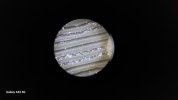
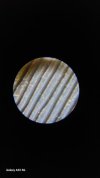
Considering that 3000-6000 psi pressure is exerted on the record grooves from the stylus, it is not even an issue with a nozzle pressure of 175 lbs. My first testing of a pressure washer was with a 3600 psi washer, with tap water and holding the nozzle 4 inches from the record ,in the same place for 5 minutes, didn't damage the record at all. US cleaning is one of the best methods but has some issues when used to clean records. You sound like you aren't interested in cleaning your records better than they are in a US machine, that I understand perfectly. Actually viewing the record with a microscope showed an improved result using the pressure washer as compared to the US cleaner and Vacuuming.. These are before and after pics. Hard to argue it is almost perfect which doesn't happen with the US cleaner. No chemicals and no requirement to rinse either. I air dry in an 8' by 8' room that has a Hepa filter running 24/7.This video gives the impression of shooting water like that to be harsh to the delicate shape of a record’s grooves let alone of the label being saturated and at serious risk of harm.
The cavitation of tiny bubbles, some micro sized when using US methods allows for a much more gentle procedure and treatment of vinyl grooves. Also, the big cumbersome handle of the illustrated method and hose if accidentally mishandled can cause harm to the record being sprayed.
The method I use is economical in cost and worlds apart more effective. Below is linked a basic and low cost method similar to what I use which has been very effective. The use of elaborate methods which eat up time and the wizardry-like use of many different chemicals is not only time consuming but, unnecessary as is rinsing if done correctly..
The method I’ve mentioned earlier is not only quick and easy but, also safe and thorough in the final results achieved.
The use of ‘dry’ methods with out the needed the fluids not only increases static-charges but, results in simply pushing dust and debris around while increasing those static-charges. These ineffective methods do-nothing to remove greasy finger prints or related debris.
For me, after cleaning of over 3500+ disks with the US method and using vinyl for many decades there is no other economical method that I know of. Even if air-borne dust attach itself when removing a disk from its new and clean sleeve can be removed with a ‘Zero-Stat’ or even a hand held rubber blower bulb as necessary.
It’s disheartening and frustrating to read so many ineffective and on the cheap methods from so many reluctant to face the music about tried and proven cleaning methods required for serious listening.
The News and methods of US cleaning have been described and made available to all here for more than a decade so there’s no reason to wastefully pursue other methods in 2025. One can look on Amazon or Temu for low cost US 6 liter vats and related tools.
FM
BELOW: System #1, a vinyl lovers dream playback system.
View attachment 3596127
FM
873
Attachments
Lou G
Super Member
The optical microscope is a great tool to observe gross contamination on records but due to its limited resolution, it cannot detect whether any lower level of contamination is coating the sidewalls of the grooves. This requires more surface sensitive analytical techniques such as Scanning Electron Microscopy (SEM) or Photoelectron Spectroscopy (PES) as examples. The large particles observed with an optical microscope typically are responsible for the ticks and pops when playing a record. The contaminants that coat the sidewalls of the groves typically affect detail and clarity and increased background noise when playing a record.Considering that 3000-6000 psi pressure is exerted on the record grooves from the stylus, it is not even an issue with a nozzle pressure of 175 lbs. My first testing of a pressure washer was with a 3600 psi washer, with tap water and holding the nozzle 4 inches from the record ,in the same place for 5 minutes, didn't damage the record at all. US cleaning is one of the best methods but has some issues when used to clean records. You sound like you aren't interested in cleaning your records better than they are in a US machine, that I understand perfectly. Actually viewing the record with a microscope showed an improved result using the pressure washer as compared to the US cleaner and Vacuuming.. These are before and after pics. Hard to argue it is almost perfect which doesn't happen with the US cleaner. No chemicals and no requirement to rinse either. I air dry in an 8' by 8' room that has a Hepa filter running 24/7.
I have analyzed numerous records after various cleaning methods that looked extremely clean with an optical microscope but had significant contamination when analyzed with more surface sensitive analytical techniques. In some of these records the top 10 to 20 nanometers contained as much as 75% primarily organic contamination. This level of contamination is below the resolution of the optical microscope but it has a significant effect on the SQ of the record.
Last edited: