Parallax982
Super Member
Pretty good. Not perfect though. It's a work in process.How'd they look out of their (records) bath?!?


Pretty good. Not perfect though. It's a work in process.How'd they look out of their (records) bath?!?

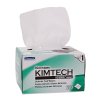
I would not use microfiber cloths for drying records. Most low cost polyester microfiber cloths leave behind micro polyester particles in the record grooves which will adhere to the stylus during playback and have an adverse effect on SQ. A much better choice are clean room wipes which will not leave behind any fibers or lint. I can highly recommend Kimtech clean room wipes. We routinely used them in our clean room applications in my laboratory.I live in the Pacific Northwest and in and in the woods so it seems to take a long time. I've got some edgeless microfiber towels coming from Amazon. Should have them tomorrow. Will pat them dry and then place them in the drying rack. Another hour or so should be adequate.
I'm going to be blotting off the water beads. Not wiping the grooves (or wiping at all for that matter). The towels will be new, washed once all by themselves, and not used for anything else. So while there is a risk of particle adherence if misused, I don't believe my plan will result in shedding. By the way, those Kimtrch/Kimwipes aren't lint-free either. The manufacturer claims they reduce the risk. I wouldn't want to misuse any towel. Part of the game plan is using towels unlikely to release lint. The other part is using them judiciously.I would not use microfiber cloths for drying records. Most low cost polyester microfiber cloths leave behind micro polyester particles in the record grooves which will adhere to the stylus during playback and have an adverse effect on SQ. A much better choice are clean room wipes which will not leave behind any fibers or lint. I can highly recommend Kimtech clean room wipes. We routinely used them in our clean room applications in my laboratory.
I never said kimwipes. The Kimtech wipes that I mentioned are their W4 clean room wipes which are lint free. It looks like the price for them has skyrocketed since I last purchased them for my lab.I'm going to be blotting off the water beads. Not wiping the grooves (or wiping at all for that matter). The towels will be new, washed once all by themselves, and not used for anything else. So while there is a risk of particle adherence if misused, I don't believe my plan will result in shedding. By the way, those Kimtrch/Kimwipes aren't lint-free either. The manufacturer claims they reduce the risk. I wouldn't want to misuse any towel. Part of the game plan is using towels unlikely to release lint. The other part is using them judiciously.
Got it. Well, the towels just arrived so I'm going to wash them and give them a try.I never said kimwipes. The Kimtech wipes that I mentioned are their W4 clean room wipes which are lint free. It looks like the price for them has skyrocketed since I last purchased them for my lab.

This is what I use.I would not use microfiber cloths for drying records. Most low cost polyester microfiber cloths leave behind micro polyester particles in the record grooves which will adhere to the stylus during playback and have an adverse effect on SQ. A much better choice are clean room wipes which will not leave behind any fibers or lint. I can highly recommend Kimtech clean room wipes. We routinely used them in our clean room applications in my laboratory.
The microfiber towels failed. They just don't absorb water. I'm finding it adequate to shake as much water as possible off the records before setting them in the drying rack. Cuts drying time way down, from 24 hours down to 3 or 4.
These are not microfiber towels. They are lab wipes.The microfiber towels failed. They just don't absorb water. I'm finding it adequate to shake as much water as possible off the records before setting them in the drying rack. Cuts drying time way down, from 24 hours down to 3 or 4.


I might try that. The time is no longer really an issue. More of an issue is that most of my records still crackle. Not all, so I assume it's just that the crap records I've picked up are pretty well worn. If it were the stylus or if the cleaning process were useless, they would all crackle.I'm not surprised about the microfiber towels not working out as I did the same thing when I first started out......seems like the water almost "beads up" on them much as like a newly waxed car would!
I'm still very curious about the fan proposition though......you mentioned earlier on that you have a lot of humidity, making drying times longer. So, if that is the case, high humidity usually also means less dust in the air so I'd be very eager to at least give a fan a shot. After all, you are in the experimentation stage of your project. Fans do a surprisingly good job of getting the water to evaporate more quickly and many would agree that they are the best possible solution as there is nothing "touching" the cleaned record. Besides, a bit of dust in the air is not likely to present you with much of a concern at all as nearly all of it remains on the surface and not in the grooves where it might tend to get stuck and build up, starting the need for the cleaning cycle all over again......just not likely to happen. The very small amount of airborne particulates that do happen to find a landing spot on the record are very easily removed with a carbon fiber brush applied before playing the record for the first time after cleaning. What's left, the stylus will move aside or, worst case scenario, will cling to the stylus but typically does not cause any untoward outcomes in terms of the listening experience.
The fan need not be one that moves small cars......just an ordinary, small fan will do if placed in the right spot to provide circulation that speeds drying time, especially if you are drying only a few records (3-5 e.g.) at a time. Just sayin......carry on amigo


Tell me again about your technique.Yes, that is very true.....once the record is damaged, as in scratched, no amount of cleaning is going to restore it......you will continue to hear the scratches in the form of pops, clicks, and just plain noisy playback. And I think you may be correct.....you just came into some records that had not been cared for very well and that's a shame but it happens.
However, many records that sound badly, meaning noisy, sound that way due to dirt in the grooves and those are the ones that you will be able to restore to very fine playback status. I'm thinking you will grow your collection and when you start cleaning records that are just plain dirty, then you will hear the big difference provided you are using the ultrasonic system properly. This means taking the time to address each aspect of the process in the most effective way. If you are happy with your present results then that's as far as you need to go. If not, then you focus on those aspects of the process where you may not have done quite enough.
This reflects my experience, actually, and I had to go back and do my homework a number of times before I was truly happy with the results. Once I made the necessary adjustments I can't tell you how much difference it made, it has to be heard. The downside was that some of these discoveries were such that I felt it necessary to go back and re-clean records I had already done once! Aaaaargh!!! But in the end, it was all worth it because now, no matter what album I select to hear, I know it is going to sound about as good as it can.
Happy listening, amigo......
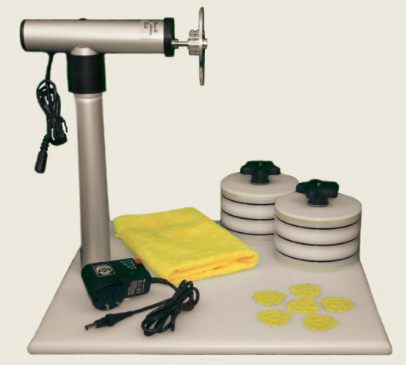

Thanks for the advice. I'm going to start very simple, as stated, though I'm not going to be using any records I'm particularly attached to. Free ones that I don't like.
I'm going to begin with tap water because my water is very soft (19.8 mg/l) and the mineral profile really benign. It's one of the four water systems in the nation to achieve the highest ranking available for water systems. I will spray each record after the bath with distilled water just to make sure any tap water doesn't remain on the record as it dries. I will place them in a rack and let them air dry. I'm going to start off with no surfactants of any kind. No alcohol or soap. Nothing whatsoever.
Since I'm not attached to these records, I'll start by running them for a half hour. If the result is good, I'll start cutting the time down and see what happens. I want to make the process as simple as possible. But if it's not doing the job, then I'll consider how best to up my game (distilled water, sulfactants, alcohol???).

