

You are using an out of date browser. It may not display this or other websites correctly.
You should upgrade or use an alternative browser.
You should upgrade or use an alternative browser.
Record Cleaning Question
- Thread starter Parallax982
- Start date
Parallax982
Super Member
Thank you.It's the same as this:
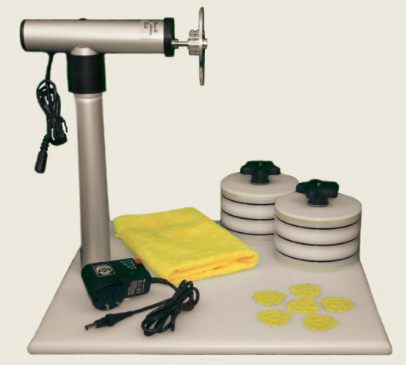
If you haven't read that article, considering doing so.....it was the key for me to overcome my inhibitions and in no small amount overcome the intimidation with the prospects of setting this cleaning system up. The only differences are that I just use distilled water, a 6L tank and do just one rinse. My formula is pretty much the same although I use Triton-X rather than Tergitol. You can see my formula in a previous post on this thread. I also don't use a filtration system. When the solution doesn't meet the "clean to the eye" test, I just dump it and start over......just pennies involved, and a filtration system adds more complexity than I was willing to engage in. I do believe it has merit but I'm achieving results I'm very happy with without one. I vacuum each record before it goes in the tank to remove most of the loose dirt (with a separate vacuum wand, not the one I use to dry the record with after the final rinse) and that helps a lot in keeping the tank clean.
So, here's another thing I'd suggest to you.......if you have some records that (1) you are very, very familiar with in terms of how they should sound, and (2) are in good condition, meaning they have no scratches or other physical damage that is irreversible, then put these on your audio system and listen to them, preferably with some good quality headphones where you can hear detail very well. Then, once you have listened for a while, put those 2 or 3 records in your ultrasonic tank and clean them, followed by another listening session and I think you will be hearing the improvement very plainly.
Note: I'm a bit skeptical by nature, so I went to the extra step of recording the albums so I could do a real-time, live comparison switching back and forth very quickly and heard even more positive differences doing that. The recording was done with a Tascam digital recorder recording in 96kHz, 24bit, so pretty high resolution stuff providing excellent reproduction characteristics. The biggest difference I found was a MUCH lower noise floor, and when you achieve this it produces other, very happy changes as noise veils detail......remove it, and the detail comes jumping out at you!
Example: Listening to Sade, Diamond Life, Your Love Is King there is a cabasa that starts around the second verse. I had always heard it, but after the US cleaning, it literally "jumped out" at me and took me by surprise in a most pleasing way.
This is the kind of stuff that many just don't care about or need to hear, but for me the music just comes alive when I do hear it and that's a big part of my listening pleasure. So, as I alluded to earlier, if you're happy with where you are, you need go no further but if not, try refining your process a bit much along the lines of what Rushton Paul has done and you might be very pleased.
In conclusion, I really think, from your description amigo, that you started with records that were so damaged that no amount of cleaning was going to do much for improvements in how they sounded which is why you continued having a "scratchy" listening experience......carry on!

Parallax982
Super Member
I've run about 20 records through so far and tried different things. I've run two records for 15 minutes. I've run two for 30. I've run five for an hour. No damage resulted. It's not clear if the extra time produced better results.
All of the records came out very clean looking. I am using tap water but my tap water is very soft and clean. I then shake off as much water as I can, spray them down with distilled water before shaking them dry again and putting them in a rack to dry thoroughly.
Some records have come through sounding really good. Others, not so much. I've noted that scuffs, scratches and oily marks remain. Some of the oily marks can be cleaned off with a record cleaning solution and a velvet brush but some don't seem to respond to anything. Many of my records are well worn and, if I like them enough, I'll have to replace them with better copies.
Right now I'm still doing my serious listening with Qubuz and my streaming equipment which is quite dialed in. Still in the experimental stage with LPs. I've got one coming that, while still used, is supposed to be in excellent condition. I'll clean it, probably all by itself, when it arrives, and report the results.
All of the records came out very clean looking. I am using tap water but my tap water is very soft and clean. I then shake off as much water as I can, spray them down with distilled water before shaking them dry again and putting them in a rack to dry thoroughly.
Some records have come through sounding really good. Others, not so much. I've noted that scuffs, scratches and oily marks remain. Some of the oily marks can be cleaned off with a record cleaning solution and a velvet brush but some don't seem to respond to anything. Many of my records are well worn and, if I like them enough, I'll have to replace them with better copies.
Right now I'm still doing my serious listening with Qubuz and my streaming equipment which is quite dialed in. Still in the experimental stage with LPs. I've got one coming that, while still used, is supposed to be in excellent condition. I'll clean it, probably all by itself, when it arrives, and report the results.

Plain water does not much with oils, this is part of why many chose to use a solution designed to give best possible results. And, scratches and scuffs unfortunately just aren't going anywhere no matter how long you clean them or with what.....your experimentation is beginning to return some good information regarding where the weak links might be in your regimen. Keep going, you'll get there amigo!I've noted that scuffs, scratches and oily marks remain.

...and no matter how careful you are don't eat chips and clean records at the same time.  I did once without thinking. Grabbed a chip as I was walking to the US cleaner, wiped my fingers on my shirt and, well that did not work.
I did once without thinking. Grabbed a chip as I was walking to the US cleaner, wiped my fingers on my shirt and, well that did not work.
drjohnnyfeva
Well-Known Member
I use the Vevor US cleaner after years of lazy susan and paint pads and before that Dawn, Dishwater, and Dish rag. lol
I found distilled water or RO water are better than the faucet. Another is that I cannot detect any benefit in sound quality from using some of the suggested "scientific" cleaners over Dawn and Jet Dry. I really wanted to, but I didn't hear any difference. And finally, instead of a tablespoon of isopropyl alcohol 90% try up to 1/4 cup in the US tank to get rid of the stubborn oil marks and fingerprints.
Also, I always pre-clean any records I buy, new or used, clean looking or not, with a quick round or two on the lazy susan with a paint pad and the same solution in a spray bottle, then rinsed with RO water since we installed that at home.
@Parallax982 you'll find what works for you. If you're interested, this long thread that @onwardjames started long ago has some very non-scientific things and even harebrained things we've tried over the years.
https://audiokarma.org/forums/threa...of-fact-fiction-and-collective-wisdom.633407/
I found distilled water or RO water are better than the faucet. Another is that I cannot detect any benefit in sound quality from using some of the suggested "scientific" cleaners over Dawn and Jet Dry. I really wanted to, but I didn't hear any difference. And finally, instead of a tablespoon of isopropyl alcohol 90% try up to 1/4 cup in the US tank to get rid of the stubborn oil marks and fingerprints.
Also, I always pre-clean any records I buy, new or used, clean looking or not, with a quick round or two on the lazy susan with a paint pad and the same solution in a spray bottle, then rinsed with RO water since we installed that at home.
@Parallax982 you'll find what works for you. If you're interested, this long thread that @onwardjames started long ago has some very non-scientific things and even harebrained things we've tried over the years.
https://audiokarma.org/forums/threa...of-fact-fiction-and-collective-wisdom.633407/
best cleaning method I have found over the years is Tergitol 15-S-3 then I rinse with L´Art du Son. All done on a Okki Nokki. I have looked under a microscope and the grooves are clean Occasionally there will be derbies actually wedged into the groove than no amount of cleaning will fix maybe a sewing needle to pry it out. I have no idea how it compares to a ultrasonic cleaning so I can't speak on that. Dwell time is important. I will let both diluted mixtures sit for several minutes especially on dirty records. Tergitol seems to do a very good job removing fingerprints.

Lou G
Super Member
Some suggestions and observations based on experiments in my laboratory.
There is no need to run your ultrasonic cleaner for more than 15 minutes. In a static ultrasonic mode, we observed complete removal of all contaminants between 1 to 2 minutes. That translates to ~ 3 to 6 minutes in a rotating spindle assembly because ~ 1/3 of the record is in the bath at any given time.
At 5 min in a static mode, we observed (SEM images) some potential micro pit formation and some rounding of the peaks on the groove sidewalls. At 5 min, we also observed significant leaching of additives (mostly plastizers) from the bulk to the surfece using several surface analytical techniques. This translates to ~15 min in a rotating spindle assembly.
We found that ultrasonic cleaning with a rotating disc was less aggressive compared to a static setup so the times for a rotating assembly are conservative and exhibit lessened detrimental effects compared to a static setup.
The addition of a surfactant will improve your cleaning efficiency significantly especially for oils, greases or lubricants.
Adding some isopropyl alcohol will aid in removal of oils, greases or lubricants but it is not as effective as a proper surfactant. Also isopropyl alcohol is flammable so the concentration should be kept at a few percent.
Dish soaps can be used in an ultrasonic cleaner and they will improve the cleaning efficiency. However I do not recommend them because they contain anionic surfactants and other ingredients that bond to the record surface and are difficult to remove even with extensive rinsing. Their effect on SQ can be minimal to significant depending on the quality of the record itself and the quality of the playback system. We found that their presence led to increased background noise and a veiled sound.
Even with soft tap water (19.8mg/l) there is enough mineral content to form significant mineral deposits on a record surface, especially at long ultrasonic cleaning times. In fact the high velocity micro-jets created by the bubble implosions can accelerate any minerals in the bath water and imbed them into the record surface. We have observed this with many polymeric materials using tap water. I would recommend using distilled water.
The record rotation speed has an effect on the ultrasonic cleaning efficiency. The cleaning efficiency decreases at faster rotation speeds.
There is no need to run your ultrasonic cleaner for more than 15 minutes. In a static ultrasonic mode, we observed complete removal of all contaminants between 1 to 2 minutes. That translates to ~ 3 to 6 minutes in a rotating spindle assembly because ~ 1/3 of the record is in the bath at any given time.
At 5 min in a static mode, we observed (SEM images) some potential micro pit formation and some rounding of the peaks on the groove sidewalls. At 5 min, we also observed significant leaching of additives (mostly plastizers) from the bulk to the surfece using several surface analytical techniques. This translates to ~15 min in a rotating spindle assembly.
We found that ultrasonic cleaning with a rotating disc was less aggressive compared to a static setup so the times for a rotating assembly are conservative and exhibit lessened detrimental effects compared to a static setup.
The addition of a surfactant will improve your cleaning efficiency significantly especially for oils, greases or lubricants.
Adding some isopropyl alcohol will aid in removal of oils, greases or lubricants but it is not as effective as a proper surfactant. Also isopropyl alcohol is flammable so the concentration should be kept at a few percent.
Dish soaps can be used in an ultrasonic cleaner and they will improve the cleaning efficiency. However I do not recommend them because they contain anionic surfactants and other ingredients that bond to the record surface and are difficult to remove even with extensive rinsing. Their effect on SQ can be minimal to significant depending on the quality of the record itself and the quality of the playback system. We found that their presence led to increased background noise and a veiled sound.
Even with soft tap water (19.8mg/l) there is enough mineral content to form significant mineral deposits on a record surface, especially at long ultrasonic cleaning times. In fact the high velocity micro-jets created by the bubble implosions can accelerate any minerals in the bath water and imbed them into the record surface. We have observed this with many polymeric materials using tap water. I would recommend using distilled water.
The record rotation speed has an effect on the ultrasonic cleaning efficiency. The cleaning efficiency decreases at faster rotation speeds.

@Lou G I very much appreciate your taking the time to spell all this out for us. With facts and RL experience and a non-judgmental approach. A lot of folks feel like theirs is the only way and the best way and sometimes say it loudly. I like your style and I like the fact that you are repeating knowledge that was already presented in a prior thread without attitude.
Thank you, between you and @Fishead, I've learned a lot
Thank you, between you and @Fishead, I've learned a lot
Lou G
Super Member
I typically discarded my cleaning solution after each batch. When I initially ultrasonic cleaned my record collection, I typically cleaned 10 records at a time on my spindle assembly. I replaced the bath solution after each batch of 10. Later as I acquired new records, I might clean a few at a time. I might reuse this solution if I antipicated acquiring more records shortly thereafter, otherwise I would discard it.@Lou G what did your assessments come up with regarding particulates in the solution from batch 1 causing problems for the records in batch 2 (etc.)? i can imagine what’s on the first batch will be floating around even a coffee-filtered use of the same solution on a second batch…
thanks! i’d imagine a batch of 10 would fill the solution with at least as much crap as is dissolved in tap water…I typically discarded my cleaning solution after each batch. When I initially ultrasonic cleaned my record collection, I typically cleaned 10 records at a time on my spindle assembly. I replaced the bath solution after each batch of 10. Later as I acquired new records, I might clean a few at a time. I might reuse this solution if I antipicated acquiring more records shortly thereafter, otherwise I would discard it.
Last edited:
I was not quite that fastidious with my approach......I say "was" because my entire collection is now cleaned so all I clean these days are new records when I get them. However, I'll add that vacuuming the records before they went in the bath really cut way down on the dirt in the solution after doing even up to a couple dozen records! Also, you will find that when cleaning records that appear quite clean to begin with you will not find it as necessary to renew your solution. So,@Lou G, do you perhaps have other reasons that make the solution less effective after cleaning that many records? I kind of remember that the cleaning process involves the solution (given one such as you and I both are using) developing micelles over time which actually assist in the cleaning, unless I didn't understand that properly. That is one of the reasons I believe it was guest1 or Vince (developing the best possible methods thread) who actually discouraged the idea of filtering the solution as it would not just remove dirt, but these helpful molecules as well......please help me out here, and thanks for your patience amigo!I typically discarded my cleaning solution after each batch.

Dried surfactant residue — like soap scum or those aftermarket record treatments — attracts dust and leaves a sticky residue over time. This combo gloms onto your stylus, leaving a tacky, dusty goobah that's hard to clean off.Dish soaps can be used in an ultrasonic cleaner and they will improve the cleaning efficiency. However I do not recommend them because they contain anionic surfactants and other ingredients that bond to the record surface and are difficult to remove even with extensive rinsing. Their effect on SQ can be minimal to significant depending on the quality of the record itself and the quality of the playback system. We found that their presence led to increased background noise and a veiled sound.
These records need extensive pre-washing before being placed in the ultrasonic cleaner. I really need to rinse any records well, after using Dawn to clean up the old mess. Rinse with 100ºF tap water until all bubble residue is gone. Like 5 minutes' worth of rinsing.
Last edited:
drjohnnyfeva
Well-Known Member
I reuse the cleaning solution a few times. Mainly because I only ever have 8-12 records to do at a time a few times a year, but I always strain the US water thru a coffee filter before putting it back in a jug to be used another time.
Lou G
Super Member
Yes, the formation of micelles are important in the record cleaning process. With the formation of micelles, contaminants on the record surface can be solubilized and dispersed into the bath solution. Filtering the solution after cleaning a batch of records will reduce the surfactant concentration.So,@Lou G, do you perhaps have other reasons that make the solution less effective after cleaning that many records? I kind of remember that the cleaning process involves the solution (given one such as you and I both are using) developing micelles over time which actually assist in the cleaning, unless I didn't understand that properly. That is one of the reasons I believe it was guest1 or Vince (developing the best possible methods thread) who actually discouraged the idea of filtering the solution as it would not just remove dirt, but these helpful molecules as well......please help me out here, and thanks for your patience amigo!
The micelles themselves are on the order of 2 to 20 nanometers in diameter. However the aggregate contaminant encapsulated by micelles can be on the order of several hundred nanometers to microns in size depending on the size of the contaminant. These larger aggregates will be filtered out by the coffee filter resulting in a decrease in the surfactant concentration. In addition even some of the micelles themselves will adhere to the paper fibers in the filter and reduce the surfactant concentration. So once filtered, the bath solution may need to be replenished with more surfactant.a quick google search says micelles are nanometer size, and coffee filters are micrometer size. so excepting micelles bound up with larger particles of dirt, etc., i'd guess filtration through a coffee filter won't mess with the micelles...
Last edited:

jqp
Well-Known Member
I think you are using a good cleaning method. Dwell time is important, just like soaking a dirty frying pan for a while before giving it a good scrubbing. The amount of dwell time is proportional to the amount of dirt revealed after an initial wipe down with a clean and dampened white cloth.best cleaning method I have found over the years is Tergitol 15-S-3 then I rinse with L´Art du Son. All done on a Okki Nokki. I have looked under a microscope and the grooves are clean Occasionally there will be derbies actually wedged into the groove than no amount of cleaning will fix maybe a sewing needle to pry it out. I have no idea how it compares to a ultrasonic cleaning so I can't speak on that. Dwell time is important. I will let both diluted mixtures sit for several minutes especially on dirty records. Tergitol seems to do a very good job removing fingerprints.
Glad to see you are using a microscope to examine how clean your records are...I do the same. I have seen pictures of US cleaned records that have many tiny white specks on the lands and in the grooves. There should be zero white specks on the record after cleaning. Specks could be from dust landing on them if they sat in a drying rack or from dirt particles floating on top of the water in the US tank and sticking to the record when removed from the tank.

@Parallax982 My Kimwipes I bought in bulk, like a 10 pk years ago, are Lint Free and Anti-static. I seriously clean my needle every time I use it, but could easily go 6 months, nothing ever comes off. Oh and to explain so there's no confusion, I don't use the Kim to clean my stylus, just on slightly damp records.
Last edited:
Kimwipes are great for cleaning the tonearms and other delicate bits. No dust left behind.@Parallax982 My Kimwipes I bought in bulk, like a 10 pk years ago, are Lint Free and Anti-static. I seriously clean my needle every time I use it, but could easily go 6 months, nothing ever comes off.