• The move to the new server is done. There are some software and database maintenance updates in process. This has us passing the hat around to help out. We appreciate any donations. Seriously, even a dollar helps. The payment page may be found here - https://www.audiokarma.org/support.html

Rectilinear III crossovers

Jon Haring

New Member
I am a Noob here but I need to draw on the people that know what's up. Diging in to a set of Rectilinear III's that were givin to me. I have some drivers that need to be replaced (on the Ebay hunt now). The real issue is the one crossover tweeter pot is welded. These pots seem to be nonexsistant 32 ohm units. HELP!!!
 
Register to hide this ad
No sir. I didn't know such a thing was possible. I need to do a full re-cap on these. So I have not bothered to de solder anything just yet.
 
Not sure where this pot is in the circuit (is it an L-pad or ?), but if it's not anything fancy and it's just a 32 ohm pot, it would seem that a 30 or even 50 ohm should work. 50 would give extra attenuation for the driver that you may not use, but it would still go down to 0 ohms for full volume just like the original pot.

Hopefully it's fixable.
 
Also, a crossover pic will show capacitors - - - if original, good chance you'll find black/red Callins/Temple caps and possibly Mullard tropical fish caps, too.
 
I found pics of the crossover online, although no schematic. It doesn't look all that complicated. Pots look like regular pots with 3 terminals. And apparently some black and red Callins caps.
 
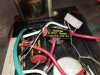
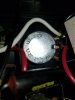
Yes, three ptong L pads, Temple pots 60uf & 5uf. I am having issues with uploading pics. Trying to navigate this forum on a smartphone is not ideal! I will try to open up the pot and investigate further. I was having difficulties any source for a replacement in the 30 ohm range.15833699848581274218259833044833.jpg15833699848581274218259833044833.jpg 15833699848581274218259833044833.jpg 15833701006275895702610183256728.jpg 15833699848581274218259833044833.jpg
 
I do have the schematic and the knowledge to do the soldering required. I am not comfortable with choosing replacement caps. These speakers are in a 9.5 out of 10 physical condition and sounded amazing with three of the tweeters and one midrange inoperable. Would realy like to bring them back to their original glory.
 
Yep, much better to use a desktop or laptop computer to interact with this site when it involves uploading. Your x-o pics look typical and fully original for this vintage of Rectilinears, and it looks like you've been able to successfully remove the plastic crossover panels from the cabinet boxes. All of those original electrolytic caps require replacement. The Rect-III was built with a few iterations over the years, and the only thing that jumps out at me is I'm more used to seeing a 2uF or 2.2uF cap on the small cone tweeters, and a 90uF cap for the Phillips midrange. I think I've seen versions with the 60 cap but have never seen a 5 cap before.

Generally speaking, film caps (polypropylene, polyester, etc.) tend to be much larger in size than same value electrolytic caps, and somewhat more costly, too. The smaller value replacement cap could easily become a film cap, but the high value (60uF) for the midrange cap would become surprisingly dimensionally large and rather costly if you used a film cap here. Probably, I would use good quality electrolytic caps here, and it may require combining additive values to reach something close to 60uF.

If you could share your schematic, that would be of interest - - there are a few schematics for this model floating around, but they seem to vary in configuration or stated values.

 
Usually one as high as 60 would be replaced with a non polar electrolytic (NPE) same as what's in there. Those are inexpensive. The 5 uf many would replace with a metallized film or film and foil cap. There are lots of choices which is intimidating. One thing to keep in mind is that any decent audio grade caps are going to sound worlds better than those horrid old things.

That said, an easy choice would be Dayton metallized polyprop for the 5 from Parts Express, and their generic NPE for the 60.

https://www.parts-express.com/dayton-audio-dmpc-51-51uf-250v-polypropylene-capacitor--027-423
https://www.parts-express.com/68uf-100v-electrolytic-non-polarized-crossover-capacitor--027-356

The 5 uf film cap is 5% tolerance which is fine. You can spend more for 1%. Or you can get a film and foil cap in separate layers, a little tighter tolerances. Or move up to a fancier cap. A lot of us find the basic Daytons are pretty darn good.

For the electrolytic you could upgrade to something like Mundorf Ecap which you can get at Parts Connexion along with many other film caps. Sky is the limit.

Finally, just to be clear, a pot is not the same as an L pad which is two pots in a reverse parallel arrangement. Yours are small enough I do not think they are L pads.
 
One of my III's had the parallel crossover and one had the series. The series mid range cap was marked 60uF. The parallel mid range cap wasn't marked but measured 89uf. The thing is caps generally go up in their old age by typically 10% or so which would make it's original value about 80uF which would be in line with the official crossover frequency. Rectilinear III's are all about that mid range driver with the woofer next most important and the tweeters just filling in the top octave and a half. Put all your money in that mid range cap.
 
Heck man, I'd just mark the wires well, take lots of photos and pull that pot (or L-pad). Then I'd spray the livin' crap out of it with some deoxit and let it sit a while. If it doesn't loosen up and turn, I'd bend the tabs back and open it up. Nothing to lose. Worst case scenario, try some DW40 then clean it up really, REALLY well and lubricate it before putting it back together. The phenolic board inside might swell if you don't get it cleaned up. I bet you can get it going again.
 
The mid-range pot is wire wound and the tweeter pot seems to be a regular one.
The thing is unless you live in a unfinished cement room you aren't going to use the level controls much.
In the late 1960's, the fashion in New England speakers was to have a much reduced treble output ie: AR and KLH.
In a current "soft" room, I run my tweeters wide open and the Mids down just a bit.
If you have the parallel crossovers and can't get the pots to work it's easy to just replace them with switches and resistors.
Not authentic but it works.
If you have the series crossover it is much more complicated. The pots are in parallel with fixed resistors so some calculation is required.

Once you've got the crossover sorted you can start on the woofer. The woofer isn't really suited to a ported box but hey, this was before Thiele/Small and like muted treble, slightly plummy bass was in fashion. Rectilinear III's were miles ahead of most designs back then (thanks Jon Dahlquist!) and they're still really good with a bit of help. They aren't as efficient as you'd think because the woofer measures slightly over 11ohms.
If you jam some thick foam in the port (removable), it turns the enclosure into just about a perfect acoustic suspension box for that woofer. On modern recordings with normal amounts of bass it sounds better with the port plugged. On old stuff (The Beatles) the bass bump with the open port sounds better.

YMMV Good Luck.
 
One of my III's had the parallel crossover and one had the series.
This is interesting - - I had never known there were two completely different wiring configurations for the Rect-III. Do you have schematics you can share and post here?
 
There are a bunch of different parallel ones they used essentially differing in the attenuation to the mid and tweeters.
They are just standard 1st order parallel crossovers.
The original had fixed resistors in line with the drivers.
They then added a pot with a fixed in line and finally went to 2 pots with 1 fixed resistor to the tweeters.
I think the change to the serial crossover was in 1971.
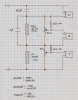
Here's the one I drew up of my series type.
 

Attachments

  • Series.png
    Series.png
    366.8 KB · Views: 124
Series crossovers are SO weird the first time you look at one. It doesn't even seem like it should work. :biggrin:
 
I am not a fan of series crossovers.
They are a pain to tweak.
They have no real advantages.
If something goes wrong, you could fry all your drivers.
2 ways aren't too complicated but it gets crazy fast after that.

/rant on/
I would love Jon Dahlquist to actually explain what is going on with the DQ-10 crossover.
Yeah, I know they sound great but that crossover eats watts.:eek:
The other thing is the same woofer in an OLA isn't lacking bass so where did that go in a DQ-10?
/rant over/

Here's a good comparison.

https://sound-au.com/parallel-series.htm
 
Here's the one I drew up of my series type.
Thanks for providing the schematic - - - it's a really good sketch, but I'm unable to understand that type of circuitry. I can't even figure out which x-o components are associated with which drivers. :crazy:
 
Back
Top Bottom