• The move to the new server is done. There are some software and database maintenance updates in process. This has us passing the hat around to help out. We appreciate any donations. Seriously, even a dollar helps. The payment page may be found here - https://www.audiokarma.org/support.html

Reisong A10: Technical review.

You can't bridge tube amps like you can SS but you could bi-amp your speakers, remove the internal crossovers and use an active crossover on the input of the amps.
I have actually been thinking of looking at the internal crossovers to see if there was room for improvement. I don't see many people talking about my model online, so I am going in blind. Thanks for the answer Stephe! From you that is definitive. Love the channel and watch all the time. The Willenston vs Muzishare was a great one!
 
I have a friend who is a member here, and dropped off an A10 along with some other stuff to see if anyone was interested in buying any of it. I hadn't tried any of it out, but someone has indicated interest in it, and when I did a web search I found this thread. I will be doing Stephe's mods before it leaves my hands. Thanks for your work, Stephe!

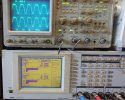
I put it on my distortion analyzer, and it's every bit the steaming pile as the A12. Here are my results at its rated 6 watts/channel:

DSC00810.JPG
 
I bought the Reisong A10 as my first tube amp with the intention to get my feet wet with electronics and tube sound.
Well, they are quite soaked at this moment and a few questions came up regarding the Skunkie Mod.

Since I have the A10 and not the A12, are there any additional wirings necessary which are not covered in Stephe's Mod1 and Mod2 Video?
As far as I understood when I copy the wiring from the Videos the A12 mod is already in place and I have to change the tubes to 12AX7s, which I already ordered. Is that correct?
(I also ordered a Sovtek 5AR4 rectifier tube.)

The second question is about safety working on the amp. I haven't found any detailed instruction for this specific model how to discharge the capacitors or any other safety measures.
I watched some Videos how to discharge capacitors in different ways, but also encountered while watching that there are some amps which are a bit tricky or dangerous.
And since working on it can be deadly it should have been actually my first question.

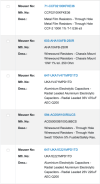
For the last question I have a list of parts attached to this post from mouser.
Some of the parts vary in some characteristics from other "identical" parts. Is that an issue or can the Mod be done with the parts as listed. Is it complete?

Oh, and another maybe stupid question: In Skunkies Video she uses every part only once, on her list are always two parts listed. Why ist that?

Thank you for taking the time to answer!


Edit:
A list with links to the parts:
1. 71-CMF601K0000BHEB
2. 71-CMF602K0000BEBF
3. 71-CMF601M0000BER6
4. 603-MFR200FRF52-1K
5. 594-5083NW4K300J
6. 594-5083NW820K0J
7. 71-CCF02100KFKE36
8. 603-AHA10AFB-250R
9. 647-UKA1V471MPD1TD
10. 594-AC05W100R0JCS
11. 647-UKA1E221MPD1TD
 

Attachments

  • 1.png
    1.png
    148.8 KB · Views: 14
  • 2.png
    2.png
    169.4 KB · Views: 11
Generally amps have 2 identical circuits for left and right channel, many schematics show one channel for ease of publishing. No point in speaking about the other channel if it's exactly the same...

Mark has a bunch of educational videos on safety, from isolation transformer to Capacitor discharge stick.. highly recommend....

 
I just use a voltmeter to verify caps are discharged. The tricky thing with big caps though, they can "recharge" after a while. If you're concerned about it, once the voltage is down you can leave a clip wire to ground across one of the caps in the chain to prevent that from happening. Just make sure you remove it first. The power supply will not appreciate working into a dead short.
 
The parts BOM I publish is a guide as to what is needed. Specific part number availability changes and honestly it would be a full time job to constantly monitor these lists over time to ensure they remain stocked parts. I also, I am sent at least 3-4 emails a day asking me to look up every part on someone's list to ensure they are ordering the right parts, again that would entail hours a day reviewing people's parts lists for them, not something I would enjoy doing nor am I going to do. Finally, you should check the BOM against the schematic to ensure I didn't make any mistakes! Can you tell I loath these BOMs?

On the caps and being safe, I have done videos on this subject and I don't intend to spend 1/2 of every video revisiting this info on every specific amp. It's why I have a warning at the start "Don't do this work if you haven't researched and understand safety!" If you don't understand how to apply safety protocols to this specific amp and have to be shown on this specific amp how to test for residual voltages etc, honestly you should NOT work on this amp or any other tube device until you can understand this stuff clearly.

On the A10 vs the A12, I don't have an A10, have never seen one in person nor am I going to go buy an A10 just to show the difference on camera. I've seen pictures and more importantly, I looked at the data sheets on the two different input tubes used and the only difference is how the heaters are wired. Below is a picture of the difference in the heater wiring. Again if you can't read a schematic or can't figure this out from the below info, you should NOT be working on any electronic gear until you do.

The last question always baffles me, I show on camera how to modify one channel of the amp. It's a stereo amp so of course there are two channels and I mistakenly assumed people would understand that you simply repeat the same mods to the other channel, pretty sure I actually say this on camera, and I didn't make a second video repeating this same process. Again, if you can't figure out how to repeat this mod to the other side of the amp, you need to learn more about reading a schematic and understanding that you connect this value resistor or wire from this point in the amp to this tube pin etc.

Sorry if this sounds harsh but this isn't like building a lego kit, it can be deadly and if you don't do it right it can destroy parts etc. Against I have made several instructional videos about safety, reading schematics and there are endless resources online to gain this knowledge.

A10 vs A12.jpg


https://youtu.be/Ou33pF9aYbk
 
The parts BOM I publish is a guide as to what is needed. Specific part number availability changes and honestly it would be a full time job to constantly monitor these lists over time to ensure they remain stocked parts. I also, I am sent at least 3-4 emails a day asking me to look up every part on someone's list to ensure they are ordering the right parts, again that would entail hours a day reviewing people's parts lists for them, not something I would enjoy doing nor am I going to do. Finally, you should check the BOM against the schematic to ensure I didn't make any mistakes! Can you tell I loath these BOMs?

On the caps and being safe, I have done videos on this subject and I don't intend to spend 1/2 of every video revisiting this info on every specific amp. It's why I have a warning at the start "Don't do this work if you haven't researched and understand safety!" If you don't understand how to apply safety protocols to this specific amp and have to be shown on this specific amp how to test for residual voltages etc, honestly you should NOT work on this amp or any other tube device until you can understand this stuff clearly.

On the A10 vs the A12, I don't have an A10, have never seen one in person nor am I going to go buy an A10 just to show the difference on camera. I've seen pictures and more importantly, I looked at the data sheets on the two different input tubes used and the only difference is how the heaters are wired. Below is a picture of the difference in the heater wiring. Again if you can't read a schematic or can't figure this out from the below info, you should NOT be working on any electronic gear until you do.

The last question always baffles me, I show on camera how to modify one channel of the amp. It's a stereo amp so of course there are two channels and I mistakenly assumed people would understand that you simply repeat the same mods to the other channel, pretty sure I actually say this on camera, and I didn't make a second video repeating this same process. Again, if you can't figure out how to repeat this mod to the other side of the amp, you need to learn more about reading a schematic and understanding that you connect this value resistor or wire from this point in the amp to this tube pin etc.

Sorry if this sounds harsh but this isn't like building a lego kit, it can be deadly and if you don't do it right it can destroy parts etc. Against I have made several instructional videos about safety, reading schematics and there are endless resources online to gain this knowledge.

View attachment 3111487


https://youtu.be/Ou33pF9aYbk

Hi Stephe, thank you for taking the time replying to the message and attaching the instructional videos.
I realized now there is a DIY Playlist where I can learn.
I am aware of my lack of knowledge about tube amplifiers and I will open the thing until I have a clear understanding.

To your question if I saw you loathing the parts, - some. A few were already loathed before you made the video, but with the help of the schematic and your videos how to read them I can figure that out.

That the parts have to be loathed on both sides I understood, somehow, but was a bit confused since only one part of the tube will be in use and can be swapped after some time when its not working sufficiently anymore. So I thought there were some differences.

I am getting there... Thank you!
 
The whole idea of using one side of the tube, and the reverse side of the other so when they eventually wear out you can swap them came out of the forums, isn't necessary to make the amp sound good and would require more creative heater wiring etc to pull it off. Given how long a 12AX7 tube will live in this amp anyway, I personally wouldn't bother worrying about that.
 
The whole idea of using one side of the tube, and the reverse side of the other so when they eventually wear out you can swap them came out of the forums, isn't necessary to make the amp sound good and would require more creative heater wiring etc to pull it off. Given how long a 12AX7 tube will live in this amp anyway, I personally wouldn't bother worrying about that.
copy that.
 
I'm going to order BOM to do Stephe's A12 upgrade.
I'm starting with an A10. So I need the 12ax7 tubes. Wondering what new 12ax7, people have used in this and liked?

In the JJ 12AX7 tube line:

I used JJ E83CC A-frame Grid short plate, in an EAR834 clone that sounds good and quiet. About $75 pair. Guess I could borrow these for trial in A12.

There's also JJ ECC83S at about $36 pair.

And JJ ECC83-M Mid-gain $53pair. I assume this mid-gain isn't what is desired here?

I have left over Psvane 12ax7 that were brittle sounding in EAR834. Won't use them, past testing unit.
I realize this is very subjective.
 
Last edited:
Kicking the dust off this thread…I recently picked up an A10, just ordered a pair of NOS 6V6GT’s , a new genalex 5AR4 and a new set of the Voskhod 6N2P’s

replaced the “not really “ orange drop coupling caps with Jantzen silver’s

Also using the 4 ohm taps

We will see, should be interesting, this amp will be pushing a set of Altec 605b’s
 
It is very possible that this amp has some good units and some bad units, if the quality is not well managed. So a positive reviewer may have gotten a good one and a negative reviewer may have gotten a bad one.
Where are you finding these negative reviews? can’t say I’ve come across any, in fact I can’t come across any reviews that take a close enough look at this amp to see any. just about all the reviews i come across are endorsements. ive come across 2 stories of a company suing a reviewer for critiqueing their product and one of those reviews.
I am not defending the manufacturer nor recommending the amp. I am just explaining that maybe all the reviewers are speaking well informed truth. I see lots of foreign made solid state equipment that has more than 1,000 online reviews, most positive, but ten to twenty percent are negative! Often the negative reviews say, "Junk, broke immediately" and the positive reviews say "It works great!"
 
Last edited:
So, something went sideways…

I replaced the cheesy coupling caps with some jantzen silvers…been soldering and what not for many years so I’m not new to this

But

It went very warm, really warm, played some records that are very bright and just scratched my head, like I turned the treble knob by accident (that I obviously don’t have)

I’m gonna play it for a while but need to peek back inside I guess….immediately I noticed less tube hiss and nothing seems wrong, but…
 
If it sounds rolled off after just swapping coupling caps, the first thing that comes to mind is the wrong value was used. This happened to me with one of the Magnavox console amps I went through. I read the value wrong on some orange drop film caps I had and picked the wrong value. It sounded very rolled off. Replacing them with the right value fixed the problem.
 
If it sounds rolled off after just swapping coupling caps, the first thing that comes to mind is the wrong value was used. This happened to me with one of the Magnavox console amps I went through. I read the value wrong on some orange drop film caps I had and picked the wrong value. It sounded very rolled off. Replacing them with the right value fixed the problem.
Hmmmmm, should’ve known schem vs reality, damn
 
The whole idea of using one side of the tube, and the reverse side of the other so when they eventually wear out you can swap them came out of the forums, isn't necessary to make the amp sound good and would require more creative heater wiring etc to pull it off. Given how long a 12AX7 tube will live in this amp anyway, I personally wouldn't bother worrying about that.

I actually did that, on the Eico ST70 "Hot Rod" KT88-based monoblocks that I built. They only used one-half of the 12AX7 input tube per channel- but, naturally, I had to install a 12AX7 in each amp.

So, I wired one monoblock to use pins 1, 2 and 3, with pins 4 and 9 heater, and the other one to use pins 6, 7 and 8, with pins 5 and 9 heater. I only heated the one side of the tube that was in use, in each amp. So- as mentioned- if one or both 12AX7s got weak, noisy, or stopped working- you had a good chance you could just swap them- voila, you would be using effectively a brand-new half of each tube again.

In this case- it was a new build, so it was trivially easy to just wire the 12AX7 that way, from the get-go...

Regards,
Gordon.
 
What is the schem was based on the 230 or 240 volt…

This is what came out
 

Attachments

  • IMG_0686.jpeg
    IMG_0686.jpeg
    95.9 KB · Views: 21
Back
Top Bottom