beatcomber
AK Member
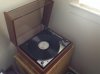
A couple of months ago I did some good old fashioned horsetrading with local AK'er LexDM, and as part of the deal ended up with a Dual 1219 in need of some TLC.
Like most old Dual idler-drive models, it suffered from the usual symptoms of dried, sticky lube. It was stuck in multi-play mode, the speed selector switch was seized up, and the auto functions were extremely sluggish and noisy. The motor also would not shut off at the end of a cycle.
My mechanical skills are rudimentary at best, but I figured this would be a good opportunity to learn how to sort out a record changer. I dutifully downloaded the official 1219 service manual as well as the DIY guide to servicing a 1219 that's circulating around the web, but I quickly ascertained that, even with these reference guides, I was way out of my league and needed to call in a pro.
There is a generally well-regarded Dual repair tech in the midwest, but I have made no secret of the dissatisfactory experiences I had with his servicing of 1019's for me on two occasions, so I wasn't about to deal with that again.
I had been reading about an AK'er in Brooklyn, NY with the handle NoTransistors who is experienced at servicing Dual turntables and whose work has gotten positive feedback. I contacted Seth (NoTransistors) and his quoted price for servicing the 1219 was in line with what the other guy charges, and so I made arrangements to drop the 1219 off with him during a visit to NYC.
This past Sunday I made a return trip to pick up the 1219, and Seth took the time to go over the special challenges he faced with my particular machine, showed me the parts he needed to replace and why he needed to replace them, and then hooked up my 1219 to his stereo and gave me a brief demo.
He also gave me a tip about using some silicone to fill the hollow areas on the underside of the platter, to reduce resonances (which I haven't yet done) and warned me against over-dampening the platter and completely deadening the sound.
I am happy to report that, unlike my two experiences with the other guy, Seth's work has completely met my expectations. All of the table's functions operate smoothly with no play in the levers, the arm moves perfectly freely with no apparent binding, the platter maintains instant and consistent pitch, and all of the auto functions work perfectly. Mechanical noise is very low and, unlike the two 1019s that the other guy worked on, this 1219 has absolutely zero rumble (which was a relief).
It's worth pointing out that potential customers will need to be patient with the process. Seth does not work quickly but his work is thorough and complete, with no short-cuts taken. Just don't expect it to be ready in a week.
After getting the 1219 home and set-up, there was one problem I found; even with the pitch adjustment lever all the way to the negative side, the platter ran considerably fast, as verified with a strobe. Uh oh.
I consulted the service manual on VE and adjusted the height of the motor pulley, but couldn't get the pulley low enough so that the platter would spin at 100% with the pitch control centered. I sent an email to Seth and he immediately diagnosed the likely source of the problem; he told me to pop off the pulley and check for burrs or rust causing the pulley to not be fully adjustable. Sure enough, there was a burr on the pulley's mounting spindle, which I removed with some gentle filing. Voila, problem solved!
Like most old Dual idler-drive models, it suffered from the usual symptoms of dried, sticky lube. It was stuck in multi-play mode, the speed selector switch was seized up, and the auto functions were extremely sluggish and noisy. The motor also would not shut off at the end of a cycle.
My mechanical skills are rudimentary at best, but I figured this would be a good opportunity to learn how to sort out a record changer. I dutifully downloaded the official 1219 service manual as well as the DIY guide to servicing a 1219 that's circulating around the web, but I quickly ascertained that, even with these reference guides, I was way out of my league and needed to call in a pro.
There is a generally well-regarded Dual repair tech in the midwest, but I have made no secret of the dissatisfactory experiences I had with his servicing of 1019's for me on two occasions, so I wasn't about to deal with that again.
I had been reading about an AK'er in Brooklyn, NY with the handle NoTransistors who is experienced at servicing Dual turntables and whose work has gotten positive feedback. I contacted Seth (NoTransistors) and his quoted price for servicing the 1219 was in line with what the other guy charges, and so I made arrangements to drop the 1219 off with him during a visit to NYC.
This past Sunday I made a return trip to pick up the 1219, and Seth took the time to go over the special challenges he faced with my particular machine, showed me the parts he needed to replace and why he needed to replace them, and then hooked up my 1219 to his stereo and gave me a brief demo.
He also gave me a tip about using some silicone to fill the hollow areas on the underside of the platter, to reduce resonances (which I haven't yet done) and warned me against over-dampening the platter and completely deadening the sound.
I am happy to report that, unlike my two experiences with the other guy, Seth's work has completely met my expectations. All of the table's functions operate smoothly with no play in the levers, the arm moves perfectly freely with no apparent binding, the platter maintains instant and consistent pitch, and all of the auto functions work perfectly. Mechanical noise is very low and, unlike the two 1019s that the other guy worked on, this 1219 has absolutely zero rumble (which was a relief).
It's worth pointing out that potential customers will need to be patient with the process. Seth does not work quickly but his work is thorough and complete, with no short-cuts taken. Just don't expect it to be ready in a week.
After getting the 1219 home and set-up, there was one problem I found; even with the pitch adjustment lever all the way to the negative side, the platter ran considerably fast, as verified with a strobe. Uh oh.
I consulted the service manual on VE and adjusted the height of the motor pulley, but couldn't get the pulley low enough so that the platter would spin at 100% with the pitch control centered. I sent an email to Seth and he immediately diagnosed the likely source of the problem; he told me to pop off the pulley and check for burrs or rust causing the pulley to not be fully adjustable. Sure enough, there was a burr on the pulley's mounting spindle, which I removed with some gentle filing. Voila, problem solved!
Last edited: