• The move to the new server is done. There are some software and database maintenance updates in process. This has us passing the hat around to help out. We appreciate any donations. Seriously, even a dollar helps. The payment page may be found here - https://www.audiokarma.org/support.html

Sansui AU-11000 Restoration Questions

Connor G

Ear conditioned
Subscriber
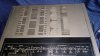
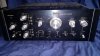
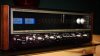
I just bought a Sansui AU-11000 online with intentions to restore it and make it as good as new... here are a few photos:
ASRETWEWY.jpg sansuiii.jpg ZFAEFSAERRWGHQET.jpg AFQWFQWGFQW3.jpg sansuiiiiiiiii.jpg SDFGWERGWTW.jpg HJFHJFHFHFHF.jpg
I have looked around online about this amplifier and I have seen both very good and also not so good things said about it regarding the sound. Any other opinions about it?
Personally, I love the looks of it and I'm sure I speak for a lot of people when I say that.
My questions are as follows:
Cosmetically, there are barely any scratches on the faceplate, only the top where there are some minor scuffs and abrasions.
I want to polish it up and I have some Barkeepers Friend Liquid for polishing stainless steel, etc... Is that okay to use on this black anodized metal? I don't want to discolor it or cause any hairline scratches so I'm on the fence about using it. Should i just stick with a microfiber cloth and light dish soap?

Now about the actual electrical side of things...

I also hear these amps are troublesome in the amp stage, especially the transistors. In some cases needing full transistor and capacitor overhauls :eek:
I will be giving this to my local tech and I'm hoping that I don't have to pay an arm and a leg getting it to factory specs because I've already lost a kidney purchasing it :rflmao:
The guy I bought it from said it sounds good with no hum, hiss, or crackle audible in the sound output
(Haven't gotten it yet, still waiting for it to arrive)
I'm hoping for a smooth restoration and an even smoother sound from it.
Anything else that I have overlooked?
Any info or help is really appreciated :)
Thanks
 
Register to hide this ad
Nice piece sir,
All the usual suspects apply, the switches need serious cleaning or you will have channel dropouts, especially the connected separated switch. The power supply board will need attention as those caps are held captive and tend to deteriorate over time. Been a year since I redid my 9900a and do not remember it causing me much angst during the rebuild. Ask away, lots of good Sansui techs on the forum.
-Lee
 
It's a 'peach' of an amplifier for sound quality once properly restored, it's nice that your example is very good cosmetically. These amplifiers are not nearly so much trouble as some you could see, but well worth the effort. I used to have an AU-9900 (the lower powered brother of this amplifier) - I gave it the full treatment (as best I can do anyway ;) ) - and then sold it, and have regretted doing so almost ever since. (its present owner says its a "cold dead hands" piece as far as he is concerned :D - explanation available if needed).

Trouble taken now to clean the switches and controls as Lee says, will pay dividends. If this is not done properly, any amount spent on reconditioning the rest will be wasted.
 
Last edited:
Nice piece sir,
All the usual suspects apply, the switches need serious cleaning or you will have channel dropouts, especially the connected separated switch. The power supply board will need attention as those caps are held captive and tend to deteriorate over time. Been a year since I redid my 9900a and do not remember it causing me much angst during the rebuild. Ask away, lots of good Sansui techs on the forum.
-Lee
Thanks for the information! I just bought some DeoxIT D5 for all the potentiometers and switches about a day ago, knowing that it would most likely need to be done. I had a hell of a time trying to troubleshoot random popping and crackling coming from my Pioneer SX-9930 and it ended up being the push buttons on the front of the receiver having oxidized/dirty contacts. a shot of contact cleaner and a little bit of working it in and the problem was solved. Thanks again! :)
 
It's a 'peach' of an amplifier for sound quality once properly restored, it's nice that your example is very good cosmetically. These amplifiers are not nearly so much trouble as some you could see, but well worth the effort. I used to have an AU-9900 (the lower powered brother of this amplifier) - I gave it the full treatment (as best I can do anyway ;) ) - and then sold it, and have regretted doing so almost ever since. (its present owner says its a "cold dead hands" piece as far as he is concerned :D - explanation available if needed).

Trouble taken now to clean the switches and controls as Lee says, will pay dividends. If this is not done properly, any amount spent on reconditioning the rest will be wasted.
Glad to hear your positive opinion about it. No need for an explanation ;) Pity you sold yours, but the collection must always move on. (Hindsight is 20/20)
As for the contacts, I recently got a can of DeoxIT for them. I was planning on disassembling the amplifier once I get it and dusting it out, making sure there is no obvious signs of extensive heat damage, and giving the contacts a thorough cleaning and exercise.
I'm hoping that after I give it an extensive cleaning, inside and out, that it will look as good as some of the others out there. only time will tell though :)
Thanks!
 
Fidelity is quite poor considering its supposed to be a very high model. Even fully restored! It cannot compare to even the lousiest 80s models. It looks cool though. Restoration is a hugely massive task, it requires a LOT of stuff to be replaced.
 
Fidelity is quite poor considering its supposed to be a very high model. Even fully restored! It cannot compare to even the lousiest 80s models. It looks cool though. Restoration is a hugely massive task, it requires a LOT of stuff to be replaced.
Elaborate please? are you talking through experience? :)
 
Fidelity is quite poor considering its supposed to be a very high model. Even fully restored! It cannot compare to even the lousiest 80s models. It looks cool though. Restoration is a hugely massive task, it requires a LOT of stuff to be replaced.
It is one guys biased opinion, but I do agree it is a job for someone experienced and fairly costly exercise.
I would trust member Hyperion's opinion over the above imo.
 
If memory serves me correctly I restored mine over the course of two bench days. Only fiddly board was the power supply with everything else easy to get at. Since the OP suggested the unit is working now should be a no issue rebuild for any tech with experience. As far as sound goes I invite ZOOM to listen to any fully rebuilt and adjusted unit (if he even has ever heard one). Ran mine solo for a while, then used the pre-amp section to drive a Nikko 450 amp (225wpc) into jbl 4211's while I await bench time to restore a Sansui matching power amp. Also, the unit is soooo flexible in terms of outputs/inputs/coupled/separated/tone/turnover etc etc along with its looks it sits happily next to my restored 1980 and with the Nikko amp for output increase holds no shame in its shadow, except perhaps at sub 1 watt listening.
I might also add that the tone controls to my ears are best set flat for bass and treble and 1 click down on mids as the jbl's are plenty hot through the midrange area. Gosh knows what the sound would be if I hauled it down to the house and ran it through my Cornwalls but thats for another day.
-Lee
 
And, waaay off topic, sure would like to find a way to get that cool silkscreen of the signal path on the top of the non a versions duplicated.
 
And, waaay off topic, sure would like to find a way to get that cool silkscreen of the signal path on the top of the non a versions duplicated.

I guess one would have to get a top quality picture of a reasonably intact one - and send it for picture retouching and conversion into a new silk screen, so it can be re-silk screened onto the top panel. (mine was a little beaten up in that respect). ;)

However, if you just want the diagram, this can sometimes be found in the SM. :idea:
 
Last edited:
Faceplate cleaning --- I use dawn dish soap and a soft towel and warm water and q-tips to get the faceplate clean, others like diluted simple green. Follow up with Birchwood Casey aluminum black paint 15125-pab found at gun and sporting stores for any scratch repair (use a very fine artist brush) finishing with a light spray of wd-40 then buffing with a microfibre cloth.
 
If memory serves me correctly I restored mine over the course of two bench days. Only fiddly board was the power supply with everything else easy to get at. Since the OP suggested the unit is working now should be a no issue rebuild for any tech with experience. As far as sound goes I invite ZOOM to listen to any fully rebuilt and adjusted unit (if he even has ever heard one). Ran mine solo for a while, then used the pre-amp section to drive a Nikko 450 amp (225wpc) into jbl 4211's while I await bench time to restore a Sansui matching power amp. Also, the unit is soooo flexible in terms of outputs/inputs/coupled/separated/tone/turnover etc etc along with its looks it sits happily next to my restored 1980 and with the Nikko amp for output increase holds no shame in its shadow, except perhaps at sub 1 watt listening.
I might also add that the tone controls to my ears are best set flat for bass and treble and 1 click down on mids as the jbl's are plenty hot through the midrange area. Gosh knows what the sound would be if I hauled it down to the house and ran it through my Cornwalls but thats for another day.
-Lee
My thoughts exactly regarding the flexibility of inputs, outputs, etc...
You are blessed to have a SX-1980... those things are the epitome of the receiver wars of the 70's... probably could withstand a nuclear explosion and live to see another 30 years of every day use.
I am planning on using dish soap and a natural sponge to clean the front side, and use some DeoxIT on the silver bezel for the volume (it looks pretty oxidized in the photos) and also for all of the silver knobs and switches
Thanks!
 
I guess one would have to get a top quality picture of a reasonably intact one - and send it for picture retouching and conversion into a new silk screen, so it can be re-silk screened onto the top panel. (mine was a little beaten up in that respect). ;)

However, if you just want the diagram, this can sometimes be found in the SM. :idea:

I have been taking pics of all stickers or silk screening for a while, just in case there is a need later. I was thinking to do exactly as you describe on my AU-9900 top panel diagram (but doing my own image restoration). Also have a few button stickers to remake for the Eight Deluxe.
 
In your first post you mentioned Bar Keepers Friend liquid. I would keep this far away from any surface of the amp if it was mine. The regular Bar Keepers Friend is great for scouring sinks, but it is very abrasive. I assume the liquid version is similar.
 
In your first post you mentioned Bar Keepers Friend liquid. I would keep this far away from the amp if it was mine. The regular Bar Keepers Friend is great for scouring sinks, but it is very abrasive. I assume the liquid version is similar.
I thought the same... thanks for the heads up. I heard WD-40 will work great after a solid and gentle cleaning to polish it up.
 
I don't know about WD-40, but it would have to be safer than Bar Keepers. Experimenting (carefully) with Deoxit is an OK idea, I have had excellent results with D100L on the knobs and face plate of a KA-7100 (required thorough cleaning to remove the Deoxit afterwards). Cleaning up the cosmetics of an amp is a whole subject unto itself. There have been many threads, i.e. searching AK (via google) will give you some ideas if your first attempts don't do the job to suit you.

Great amp I'm sure, from what I've read in this forum. Good luck with your project, the guys in this forum are very knowledgeable and helpful. Ignore ZOOM.
 
I don't know about WD-40, but it would have to be safer than Bar Keepers. Experimenting (carefully) with Deoxit is an OK idea, I have had excellent results with D100L on the knobs and face plate of a KA-7100 (required thorough cleaning to remove the Deoxit afterwards). Cleaning up the cosmetics of an amp is a whole subject unto itself. There have been many threads, i.e. searching AK (via google) will give you some ideas if your first attempts don't do the job to suit you.

Great amp I'm sure, from what I've read in this forum. Good luck with your project, the guys in this forum are very knowledgeable and helpful. Ignore ZOOM.
I have cleaned and polished numerous silver faced receivers and amplifiers before, but surprisingly enough, I've never had to clean a black faceplate unit before, other than my SX-9930. The 9930 already had discoloration making the faceplate a "camo" of black and purple patchiness. (amazingly cool IMO) Here's a pic of the beauty:

ssssss.jpg

Ain't she puuuurdy? Sorry, I digress.

Anyway, I was comfortable cleaning that one because the "damage" was already done by the original owner who had left it out in the sun, altering the anodization (so I'm told)
I think it turned out good though :)
 
Last edited:
Back
Top Bottom