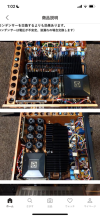
Since those virtual ground points are joined to the amp ground, they cannot be "separate".So if I had said "virtual grounds" it would have been correct?
However, if you want to have multiple/separated grounds, so be it.
No. It's not about revenge or anything. It's just about that the people who are reading around have the right to know that they are reading technically incorrect things that will put them on the wrong path.Someone has held things back for far too long!
Now whether this really concerns or not anyone reading that information, that's another story and not my decision.
That this is not usually happening around here (aka people being told that they are wrong), I also know that very well.
But such attitude really helps nobody, as when it comes to technical things a forum goes up or down by the knowledge level of its members. And troubleshooting amps and other devices is not poetry. Everybody knows this equally well as I do.
I just wanted to raise an alarm signal and that was it. Don't get me wrong, I'm not expecting people to do anything different tomorrow or after 10 years from now.
just google "stereo crosstalk meaning", there is plenty of information availabledual mono power supply design. Whatever that means...
"In stereo audio reproduction, crosstalk can refer to signal leakage across from one program channel to another, reducing channel separation and stereo imaging." - wikipedia
crosstalk is what's happening in a shared power supply (between L/R channels) due to the finite resistance of the wires (depending on the internal wiring/traces) and the internal impedance of the power supply itself.
dual mono implies that there are separate power supply units for each L and R channels. in other words, no crosstalk which yields better separation.
not a night-and-day difference, if the shared power supply is well engineered. so the effect/size of the benefit for "dual mono" is debatable and depending on each particular implementation
For anybody wanting to learn but fearing formulas and "too many technical details" - then maybe check out this book:
Ethan Winer - The Audio Expert: Everything You Need to Know About Audio
Over & out
Last edited: