

You are using an out of date browser. It may not display this or other websites correctly.
You should upgrade or use an alternative browser.
You should upgrade or use an alternative browser.
SCA-35 Project
- Thread starter albusark
- Start date
-
- Tags
- dynaco sca 35

albusark
Dynaco Fan
Yes I was able to by using a heathkit signal tracer that I rebuilt. About the most useful tool in my arsenal now, you just hook one end of the probe to signal ground and you can follow the signal path until you find the stage of amplification producing the noise. I think I saw that you're using Gillespie boards so this would be a great way to solve your issue.I'd be interested to hear if you resolved the problem with hum on the phono input.
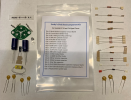
My model is the IT-12. I used the following kit which is easy to find to replace the can cap and other components. I really admire the design of the can cap replacement board so I grabbed it, but you could just wire it up without honestly. It's a great kit none the less. Comes with parts to restore the probe components and sticker too.
Last edited:

StarsAtNight
New Member
We bought a supposedly properly working Dynaco SCA-35 on eBay - the tone control circuitry had been removed, other parts are modified, and it doesn't work as an amplifier. (It seemed pretty well packed, so not sure how much of the trouble is shipping damage.) Saw another eBay ad with pictures of old used 555002 parts, which look like what's needed to restore the tone controls. I'm a new audiokarma.org forum member today.
...PeterH responded to my request, but now audiokarma.org won't accept my password and I'm not sure how to reach him. (Sorry to be a bother.)
...PeterH responded to my request, but now audiokarma.org won't accept my password and I'm not sure how to reach him. (Sorry to be a bother.)
Last edited:

I'm listeningWe bought a supposedly properly working Dynaco SCA-35 on eBay - the tone control circuitry had been removed, other parts are modified, and it doesn't work as an amplifier. (It seemed pretty well packed, so not sure how much of the trouble is shipping damage.) Saw another ad with pictures of 555002 parts, which look like what's needed to restore the tone controls. I'm a new audiokarma.org forum member today, and hope I can figure out how to talk to Peter.

what are the speakers?View attachment 3498034
Did some bluetooth streamer testing tonight, it's sounding very sweet. I love this circuit.
StarsAtNight
New Member
Someone recommended you as a source for 555002 circuits, ours are missing, can help? Also, what's your best source for schematic & maintenance documents?I'm listening

StarsAtNight
New Member
Wonderful clear scan thank you Nerdorama
Yes i have made a clone of these. They are significantly smaller, built on a board using surface mount components.Someone recommended you as a source for 555002 circuits, ours are missing, can help? Also, what's your best source for schematic & maintenance documents?
If you want a pair we need to discuss shipping and this weeks tariffs so they won't be confiscated.
As nerdorama said, use the Dynaco manual which is available on a lot of places, i can supply one if needed.
PEC555002
Last edited:
albusark
Dynaco Fan
Dynaudio Emit 20's I think there. They're a fantastic pairing with tube amps from 20-150 watts, for example great with EL34 / KT88 designs too. Very good bass response, no need for a subwoofer, easy to listen to and very detailed. Delightful.what are the speakers?

Dandy
Addicted Member
Thanks for your reply to my question. I've been offline for a few weeks helping a family member move and so just seen it now. As it happens, I recently bought a Heathkit AV-3U AC Valve Millivoltmeter for similar signal tracing purposes, so I'll return to my SCA-35 to investigate.Yes I was able to by using a heathkit signal tracer that I rebuilt. About the most useful tool in my arsenal now, you just hook one end of the probe to signal ground and you can follow the signal path until you find the stage of amplification producing the noise. I think I saw that you're using Gillespie boards so this would be a great way to solve your issue.
My model is the IT-12. I used the following kit which is easy to find to replace the can cap and other components. I really admire the design of the can cap replacement board so I grabbed it, but you could just wire it up without honestly. It's a great kit none the less. Comes with parts to restore the probe components and sticker too.
View attachment 3719177
albusark
Dynaco Fan
I know it's extremely dangerous, but nothing beats a plate of copper wired to ground that you can manipulate around the circuit. If you're lucky enough you'll shield the hum if it is being induced. There is always the possibility of power supply hum too so you're set for a workbench adventure.Thanks for your reply to my question. I've been offline for a few weeks helping a family member move and so just seen it now. As it happens, I recently bought a Heathkit AV-3U AC Valve Millivoltmeter for similar signal tracing purposes, so I'll return to my SCA-35 to investigate.

albusark
Dynaco Fan
A lot of the advice that is given here assumes common sense, and I realize that was an especially bad comment to make without making it clear the plate should be covered, thank you Gadget. Sometimes it feels like it's just a few of us in here but audiokarma gets half a million visits every month.if you're going to do that, I'd suggest insulating the copper plate to at least make it less likely to short out on things. Even just a layer of electrical tape will be better than nothing. The good stuff is rated for 600v per layer.
albusark
Dynaco Fan
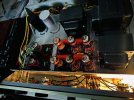
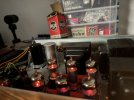
Have been enjoying this amp a lot lately, both can capacitors were replaced as well as bias supply components underneath. I don't use the phono board but was able to quiet it down with mica caps I think and some reflowing of solder joints. I do plan to rebuild it completely at some point just for fun. But many hundreds of hours later I'm still loving this beauty, currently playing Junior Kimbrough's early tracks.
A great tip I saw Mend it Mark do was to run a dremel type rounded wire brush around each rca connector on the back, it really cleans up the old corrosion although can't say it makes any difference in signal transfer.
One issue I'm currently having, which is no issue at all really, is that the treble pot can be spun around completely, so I'll need to take it out and tighten its case up I think - but it works perfectly fine. Otherwise this 60 year old is completely quiet and sounding like his master's voice.
A great tip I saw Mend it Mark do was to run a dremel type rounded wire brush around each rca connector on the back, it really cleans up the old corrosion although can't say it makes any difference in signal transfer.
One issue I'm currently having, which is no issue at all really, is that the treble pot can be spun around completely, so I'll need to take it out and tighten its case up I think - but it works perfectly fine. Otherwise this 60 year old is completely quiet and sounding like his master's voice.
albusark
Dynaco Fan
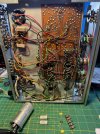
I don't have any photos of the bias supply / can capacitor work for this one, but in case it helps others here's how I did another for a client. Those with sharpshooter vision will notice I put the phenolic on the second can cap on top of the chassis, and it just seemed to fit and look better that way. Make sure to test with chassis lid screen before soldering, authenticaps and some ce cans tend to be shorter but the manufacture size isn't very predictable, some ce cans will touch the chassic cover but still fit ok. In this case I had already replaced the 50/50 can (black). To those new to the hobby, the third photo you'll see the new diodes installed with yellow leads - the SCA-35 did come with silicon diodes but it's smart to replace them considering their age.
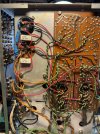
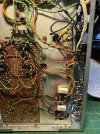
Attachments
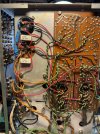
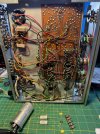
Last edited:
