• The move to the new server is done. There are some software and database maintenance updates in process. This has us passing the hat around to help out. We appreciate any donations. Seriously, even a dollar helps. The payment page may be found here - https://www.audiokarma.org/support.html

selenium rectifire replacement ?'s

Endspec

Super Member
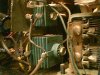
I am trying to get this table radio up and running and have replaced the filter caps but I want to replace the two rectifires before meltdown, how do you size the diodes for this? and or do I need a rectifre bridge or two.
I have a drawer full of assorted diodes and bridges on hand.
Any help will be nice. This is in an arvin tube table radio from the early 60's.
 

Attachments

  • 08_30_0.JPEG
    08_30_0.JPEG
    108.5 KB · Views: 74
  • 08_30_1.JPEG
    08_30_1.JPEG
    104 KB · Views: 59
Register to hide this ad
I did a search and did read your post and several others and am thinking I will hold off till I got to Jay's in october and see if some one there will help me there.
 
I am trying to get this table radio up and running and have replaced the filter caps but I want to replace the two rectifires before meltdown, how do you size the diodes for this? and or do I need a rectifre bridge or two.
I have a drawer full of assorted diodes and bridges on hand.
Any help will be nice. This is in an arvin tube table radio from the early 60's.

I know my opinion here is in the minority, but I would leave those in there.
 
silicon will replace those 1n4007 but make note of voltages present before replacement you might haft to use resistor to drop voltages back to spec.
 
1 amp or so on the diode is enough. a 1n4007 as suggested is usually a good replacement choice. Resistor is also a probable, since selenium drops more than silicon. A neat replacement option is to install a terminal strip mounted to the chassis where the original stack went and attach the new diode and dropping resistor to it.

Also I'm sort of with NYListens on this, but with a caveat. If the voltage is in spec, leave it alone. If its low, replace them. Low voltage is the more typical failure mode for selenium, and thats not really any big deal. When the filter caps go and short them out, they tend to fail in a much more spectacular and stinky fashion.
 
I have replaced the filter caps already but have not fired the unit up yet. And I do not know what the voltages should be as I have not found a service manual yet for it.
 
Hey Steve, how's it goin? What voltages are you wondering about? I'd probably just fire it up and see what my meter says. If it seems reasonable, I'd record it on a hunk of paper, then when you come up, we can stick in the diodes and get the V back where it needs to be with a dropping R. Don't buy any diodes, I have hundreds and hundreds of them here.:thmbsp:
 
Thanks Jay I will probly do that, I got lots of diodes a and resistors now too, the funny thing is with all this stuff I cleand out of this house I got power trannys, diodes, resistors, few small caps and tubes but not one output tranny.

I might need to replace the other caps in the radio too but just am not in a rush.
 
I know my opinion here is in the minority, but I would leave those in there.

On another forum, some guys who have a lot of experience gave me the same advice. But I'm still not clear why. I may repalce the in my PAS-3x just because it's so well documented I don't have to figure anything out.

Take care,

Ed
 
I have replaced the filter caps already but have not fired the unit up yet. And I do not know what the voltages should be as I have not found a service manual yet for it.

Do you have the model number on that?
 
IIRC I'd used a resistor of around 22 ohms in series with the garden variety 2.5A 1000PIV silicon diode. But empirical work may indicate raising or lowering that value of resistance to put the voltages back to spec.

Seleniums had their day, but we have come up with better ways of making such a check valve. Increased voltage drop is common with Selenium diodes, and an indicator of eventual failure.They can flash over, and also outgas with an odor suggestive of a violent flatulence. The big thing is that such effluvium is as poisonous as it is malodorous. My own humble philosophy is the preemptive replacement of these dinosaur rectifiers once they are found.
 
Diodes and resistors are so cheap, why have to take the item back apart to replace the selenium? I know there is a following that says to leave it all original. Personally, I replace them. And, I have experienced the odor that a selenium rectifier will give off when it "goes". It ain't too kind to the olfactory system...
 
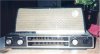
It is an Arvin model 3586 pp 6aq5 outputs. here is a picture of it.
 

Attachments

  • Arvin 2.JPG
    Arvin 2.JPG
    31.4 KB · Views: 43
I personally would leave them in if the unit is working. I think there is too much written on wholesale parts replacement when not needed. I'm sure most would suggest wholesale replacement of tubes should be done just to be safe is nuts, so why other parts. I do agree that is a part is out of spec, then it is probably advantagious to replace. Caps, also probably are replaced too often. Back in the tube days cap tolerances were as much as +/-60%. If needed, I'd prefer subbing a tube rectifier for the selenium as the diodes have very short delay.

I recently picked up a tube radio that the seller had plugged in so the variac route was too late. The thing hummed and was picking up local stations though it should have been picking up as it is a dx'er. Over a few weeks of using it, it was apparent the caps were reforming. Now there is no hum, the unit is dx'ing and sounds great. Oh, the unit's selenium is working fine.
 
IIRC I'd used a resistor of around 22 ohms in series with the garden variety 2.5A 1000PIV silicon diode. But empirical work may indicate raising or lowering that value of resistance to put the voltages back to spec.

Seleniums had their day, but we have come up with better ways of making such a check valve. Increased voltage drop is common with Selenium diodes, and an indicator of eventual failure.They can flash over, and also outgas with an odor suggestive of a violent flatulence. The big thing is that such effluvium is as poisonous as it is malodorous. My own humble philosophy is the preemptive replacement of these dinosaur rectifiers once they are found.

One good reason, as mentioned above, for replacing selenium rectumfriers is that although they may seem to be working fine they will all have drifted in resistance over the 30 or 40 years since they were installed. This increase in resistance not only leads to their eventual failure it will also throw out the optimum voltages in the B+ of the amp.

I do have to ask 'Old' though just exactly what a violent flatulence is. Is it: a toot in B major or: A major flatus?

Lar
 
One good reason, as mentioned above, for replacing selenium rectumfriers is that although they may seem to be working fine they will all have drifted in resistance over the 30 or 40 years since they were installed. This increase in resistance not only leads to their eventual failure it will also throw out the optimum voltages in the B+ of the amp.

I do have to ask 'Old' though just exactly what a violent flatulence is. Is it: a toot in B major or: A major flatus?

Lar

You can check those things. If they are off, replace them.
 
On another forum, some guys who have a lot of experience gave me the same advice. But I'm still not clear why. I may repalce the in my PAS-3x just because it's so well documented I don't have to figure anything out.

Take care,

Ed

I had some engineers in another radio forum basically convince me that the selenium rectifier problem is mostly urban legand more than reality. Just to be safe, perhaps you should check the bias at the output tube and resistence of the rectifier.
 
I started a tread on this subject 5-6 days ago(?) either in speakers or turntables because as usual ,I was doing one thing and thinking about another . I too am somewaht in the school of "if it ain't broke, don't fix it. Probably the most sensible post that I read said if it is within 5% of the voltage(?) it should be at, leave it alone. I am very concerned about changing the way my amp is going to sound when replacing old components with new. I think I may even have a small stash of NOS selenium rectifiers somewhere from when I bought a bunch of junk from an old TV station.
 
Back
Top Bottom