• The move to the new server is done. There are some software and database maintenance updates in process. This has us passing the hat around to help out. We appreciate any donations. Seriously, even a dollar helps. The payment page may be found here - https://www.audiokarma.org/support.html

selenium rectifire replacement ?'s

I started a tread on this subject 5-6 days ago(?) either in speakers or turntables because as usual ,I was doing one thing and thinking about another . I too am somewaht in the school of "if it ain't broke, don't fix it. Probably the most sensible post that I read said if it is within 5% of the voltage(?) it should be at, leave it alone. I am very concerned about changing the way my amp is going to sound when replacing old components with new. I think I may even have a small stash of NOS selenium rectifiers somewhere from when I bought a bunch of junk from an old TV station.

I know some in here will disagree with me, but I am not convinced that a rectifier will change the sound (I don't believe in cryo-treated power cords either.)
 
I know my opinion here is in the minority, but I would leave those in there.

You are not alone.

I've never understood the bad rap?

They always fail (when they do) in an "open" state.

I myself like pieces that fail like a fuse. :yes:

Craig
 
I had some engineers in another radio forum basically convince me that the selenium rectifier problem is mostly urban legand more than reality. Just to be safe, perhaps you should check the bias at the output tube and resistence of the rectifier.

Well, here's the deal.

I'm sure that there's SOME selenium rectifiers still working out there.

HOWEVER- MANY of them DO fail, and when they do, they fail in a very SPECTACULAR fashion. As in sparks, smoke, and noxious (potentially poisonous- selenium is a poison in excessive quantities in the human body!) fumes.

I think the (unintentional?) mis-spelling in the thread title says it pretty well... "selenium rectiFIRE"... the FIRE part certainly seems to be accurate. :D

And BTW: As for the "urban legend"... I've WITNESSED selenium rectifiers fail in this fashion... sparks, smoke, and the works. In radios, TVs, battery chargers (this is what killed MOST older small auto battery chargers, BTW... my dad and I got to where we would just sub in a silicon diode bridge from a dead alternator into battery chargers, and by that, fix them where they wouldn't die again, EVER), you name it... several times...

Regards,
Gordon.
 
Well, here's the deal.

I'm sure that there's SOME selenium rectifiers still working out there.

HOWEVER- MANY of them DO fail, and when they do, they fail in a very SPECTACULAR fashion. As in sparks, smoke, and noxious (potentially poisonous- selenium is a poison in excessive quantities in the human body!) fumes.

I think the (unintentional?) mis-spelling in the thread title says it pretty well... "selenium rectiFIRE"... the FIRE part certainly seems to be accurate. :D

And BTW: As for the "urban legend"... I've WITNESSED selenium rectifiers fail in this fashion... sparks, smoke, and the works. In radios, TVs, battery chargers (this is what killed MOST older small auto battery chargers, BTW... my dad and I got to where we would just sub in a silicon diode bridge from a dead alternator into battery chargers, and by that, fix them where they wouldn't die again, EVER), you name it... several times...

Regards,
Gordon.

I've seen such pyrotechnics many times--hence my previous diatribe on these devices. One of the more spectacular failures was in a salvaged table model television my brother and I were watching one evening. As Hawkeye was getting ready to cold-cock Frank Burns the picture winked out along with a fusillade sounding like a string of firecrackers, smoke and a hellish stench. This all came without warning from a set that was working perfectly well. Bro and I left the room in a hurry, with one of us pulling the plug on the way out. I later examined the selenium array and found pockmarks and lots of soot between the plates of one of them. A set of silly-con diodes put in place restored the set to perfect working order.

A mechanic friend of mine called me to his garage to look at a large roll-about battery charger/booster. "Don't have the oomph it usedta, and smells like a fart when I try to use it." was his terse remark. I pulled the selenium array from the unit, and managed through rummaging the basement of an old radio shop near here to find two VERY large stud rectifiers, which I mounted on a respectable heatsink assembly. This not only restored the unit to full operation, but my friend claims it now really kicks ass.
 
Maybe the question should be what are the chances of the rectifier failing in a spetacular fashion in an audio application? All components are prone to failure over time am I'm sure some of those have to be due to manufacturer defects. I have little experience with them . If I remember right, there was one in each chassis that controlled the pinspotters in the bowling center I worked at and I never replaced one in 17 years. The only thing there that smelled like stinky farts was me........
 
Maybe the question should be what are the chances of the rectifier failing in a spetacular fashion in an audio application? All components are prone to failure over time am I'm sure some of those have to be due to manufacturer defects. I have little experience with them . If I remember right, there was one in each chassis that controlled the pinspotters in the bowling center I worked at and I never replaced one in 17 years. The only thing there that smelled like stinky farts was me........

It is all a matter of how "conservative" the parts selection is. In a machine that is used in an industrial application there is not just loss of enjoyment when failure occurs as with home consumer equipment, but the loss of business and money in commercial use that makes such failure an extreme liability. So components are selected as a rule that are rated with parameters far and above the ones encountered in operating conditions.

In a consumer product the chances for failure are greater, as component selection is apt to be such that the operating conditions leave a very thin margin with the design maximum ratings of the component in application.

I've worked on everything from cheap stereo compacts to CNC machines, and have seen the difference.
 
Maybe the question should be what are the chances of the rectifier failing in a spetacular fashion in an audio application? All components are prone to failure over time am I'm sure some of those have to be due to manufacturer defects. I have little experience with them . If I remember right, there was one in each chassis that controlled the pinspotters in the bowling center I worked at and I never replaced one in 17 years. The only thing there that smelled like stinky farts was me........

If this were an audio application, this isnt exactly something I would be bragging about. Its like bragging you've had sky high blood pressure for years! Let me put it this way. Only an idiot would leave them in:yes: And get ready, sooner or later to pay a large payment to the tution of life, "hardhead 101" now open for class!:D

Russellc
 
Caps, tubes, transformers all are a disaster waiting to happen. A selenium has charactoristics that a diode does not and it is better replaced with a tube rectifier. Measuer the voltage and if in spec leave it alone. I just checked one in a 50 year old radio and it was bang on. For some reason there is all kinds of over emphasis as to these things doing all kinds of nasty things that in their heyday I never experienced, back then we could replce them with new seleniums or diodes and we used seleniums. There is plenty of warning before these fail so don't be fearful of them.
 
Well, we certainly seem to be divided into the "Old-dude-bench-tech-need-to-swap-it-out camp" and the "Wait-until-it-fails-Can't-see-why-it-needs-to-go camp."

While there's, perhaps, reason to be in either camp, it seems to me that it comes down to how much risk one is willing to take. Clearly, those that have witnessed failures of the component in question, Selenium Rectifiers, are quite concerned for others. This is a good thing.

Since I am one of those old-dude-bench-tech guys, I am not willing to risk the dangers of an uncontrolled component failure when I have some reason to avoid it. Selenium Rectifiers are one such device. This is especially pointed for me since we are discussing something that creates arcing, smoke and flames. After experiencing a full-blown house fire in the mid-90s, I would not wish on anyone. Why take the risk just for a hobby?

I, for one, do not want to have to repeatedly go back into a piece of gear to replace yet another component just because it measured out ok when I _know_ from the reports of others that they're prone to failure. Add 40+ years of periodic use onto some of these components and it seems that it should be more clear that precautions should be taken.

Ok, off my soapbox........thanks for reading this far....

Cheers,

David
 
Let's put it this way... if you leave the seleniums in there, and they do fail, you will regret your choice.

This is all about risk management.
 
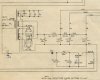
I plan on replacing the selenium rectifier in the bias circuit on my Fairchild 260 and want to know if it is a simple 1 for 1 replacement of silicon for selenium. Or, is there any modification necessary other than substitution of one part for the other?
Schematic.jpg

Thanks!
 
ya Db its 1 for 1.
If your that hardcore about keeping what you have stock they do make them new. Might haft to really look around but I have seen new selenium stacks on the bay before.

BUT if yer running an amp with a selenium stack in the bias supply you have a ticking time bomb when that little stinker goes it will take yer output tubes with it and possibly a transformer or 2. Not to mention there toxic as hell and should be disposed of properly.....:yes:
 
Industry still uses them. I was surprised how much data poped up on the web when I did a search on them. All are out of my gear except for my MR67 and that is next.
 
I plan on replacing the selenium rectifier in the bias circuit on my Fairchild 260 and want to know if it is a simple 1 for 1 replacement of silicon for selenium. Or, is there any modification necessary other than substitution of one part for the other?
View attachment 106734

Thanks!

The only modification that is sometimes necessary, is the addition of a dropping resistor to reduce the voltage back to spec, with a silicon diode. Silicon diodes have much lower internal impedance and lower voltage drop than selenium diodes... both characteristics can be emulated with a series resistor.

It can be a bit of a trial-and-error process to get it perfect... but you can get into the ballpark, by spec-ing out a resistor that will drop about 5 volts at the rated current draw for the line that the rectifier is used in, using Ohm's Law (V/I=R). That should get you pretty close...

Regards,
Gordon.
 
The only modification that is sometimes necessary, is the addition of a dropping resistor to reduce the voltage back to spec, with a silicon diode. Silicon diodes have much lower internal impedance and lower voltage drop than selenium diodes... both characteristics can be emulated with a series resistor.

It can be a bit of a trial-and-error process to get it perfect... but you can get into the ballpark, by spec-ing out a resistor that will drop about 5 volts at the rated current draw for the line that the rectifier is used in, using Ohm's Law (V/I=R). That should get you pretty close...

Regards,
Gordon.

There is your answer Ducati EL34
 
There is your answer Ducati EL34

What? The addition of a series resistor added to drop voltage? This is not hard. Ohm's law is your friend here.

If your line voltage is like mine, all the voltages are off for the entire piece of vintage equipment.
 
What? The addition of a series resistor added to drop voltage? This is not hard. Ohm's law is your friend here.

If your line voltage is like mine, all the voltages are off for the entire piece of vintage equipment.

Hey, I am not looking for an argument here. I have no opposition to the idea of taking it out. Based on what I have read in other forums, I just don't think it is as "critical" as some would have you believe. For the likelihood of their demise is a bit over exaggerated and may not be worth the effort to replace them. I have replaced them in the past myself.
 
Hey, I am not looking for an argument here. I have no opposition to the idea of taking it out. Based on what I have read in other forums, I just don't think it is as "critical" as some would have you believe. For the likelihood of their demise is a bit over exaggerated and may not be worth the effort to replace them. I have replaced them in the past myself.


Whether their demise is exaggerated or not is of little concern to me. Just avoiding the stinky smell they leave is reason enough to replace them. :D

Selenium rectumfriers were great in their day, but now we have rectifiers made out of silicon and they work so much better.:thmbsp:
 
Back
Top Bottom