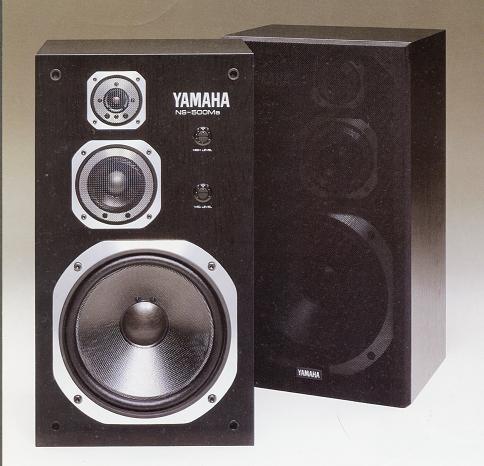
The NS-500a I'm pretty certain uses a 10cm Nate titanium carbonate diaphragm midrange driver, but it does use a pure beryllium VD dome tweeter. It matters not, I've heard a friend's the NS-300X, silked aluminum and titanium drivers and even they sound really nice, just smaller stage. I'd hazard they could outperform some highly regarded speakers in several areas, number one being detail. Smaller speakers sometimes just fall short in a bigger room and staging size.
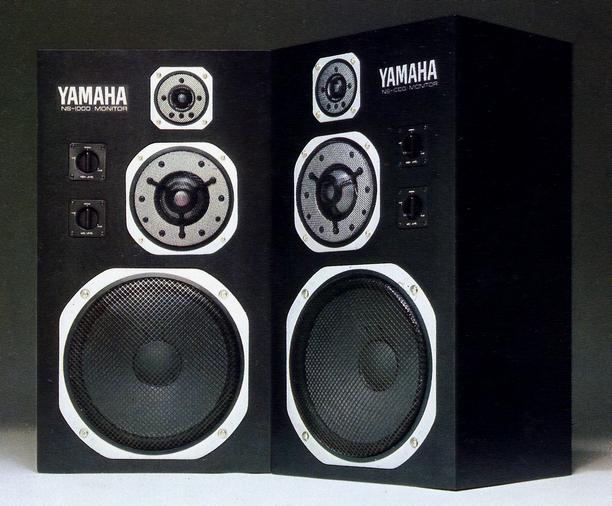
Hello Cosworth, the NS-1000 modification encompasses a completely new crossover using modern Jantzen poly caps and air-core inductor on the mid. I enjoy Gravensen's opinions on things. He's a denmark-Jantzen-Seas-Scanspeak-Accuton guy who ended up loving the NS-1000 Monitors, because he recognized the drivers' potential and made it work for him. The unusually wide dispersion would explain past comments like "you can be to the side/behind the speakers and they still sound clear". Even stock NS-1000Ms appear to have zero lobbing and good dispersion until you are below the drivers, and even then its still good.
One of the pressing issues to audiophiles in low treated rooms or with a different taste was some wanted to tone down the midrange and/or treble, but this left the woofer covering more the midrange than desirable and obviously its not on the same sonic clarity level in this region as the dedicated dome mid. The woofer is interesting, its not particularly suited to midrange, but has a nice character. It appears almost as a low excursion subwoofer with 22Hz resonance on its own, and modeled in 100L with 25Hz passive radiator tuning your only down -6dB at 26Hz with smooth acoustic phase & respectable group delay at about 20ms for that tuning. Prefers low Qts sealed box alignments, I think, anyhow. My impressions have been it's cleanest reproduction is on the bottom end.
Gravensen modified the crossover with a 3rd order lowpass to roll the woofer off acoustically 4th order as per the original design target, and redesigned the midrange bandpass filter and attenuation slope to tilt the midrange response instead of just attenuating it as stock, leaving the low end of the midrange output unaffected in his new revised crossover. He steepened the tweeter roll off too for a proper 4th order acoustic contour. In stock form it overlaps a bit too much with a phase misalignment and can be the cause for "harsh" that people experience if your ears are above tweeter level. It's been said that the NS-1000M was a cost-no-object speaker, that isn't completely true. This speaker had to be made to a price point and that's evident in the design of the cabinet and crossover. And no the cabinet is not flimsy, its pretty dead, not perfect but a league above many highly regarded modern speakers as well. This new crossover appears to allow you to keep the stock cabinet and driver compliment while notably improving the major issues. There is still tons more potential. They went to all that work to design those drivers then installed grills that contribute to sound and uses a non-time aligned cabinet. Accuton did the same thing and they say removing the woofer grills can make a worthwhile difference at reference output levels, albeit it's there for protection.
"I'm not sure there's a plug'n play speaker, but this is not one of them." Isn't this the truth. If your room is wrong, your doomed from the get-go. I use mine with no attenuation, the sound control panels absorb the dispersion leaving a very neutral response. All too often I hear " I have a rug and drapes, and two corner traps but it sounds a bit bright", that is not enough for a speaker with this dispersion character. Think thick panels on many surfaces. The unusually wide dispersion would explain past user comments like "you can be to the side/behind the speakers and they still sound clear". In light of this, the best spot is somewhere near the center axis, I only find I realized full potential when ear level is at the top of the mid, this might be because of the lack of impulse (baffle time) alignment.