• The move to the new server is done. There are some software and database maintenance updates in process. This has us passing the hat around to help out. We appreciate any donations. Seriously, even a dollar helps. The payment page may be found here - https://www.audiokarma.org/support.html

Show us Videos of your systems! Let's see and hear them!

Do you have any China Crisis on that playlist? :idea: :)

Wishful Thinking.
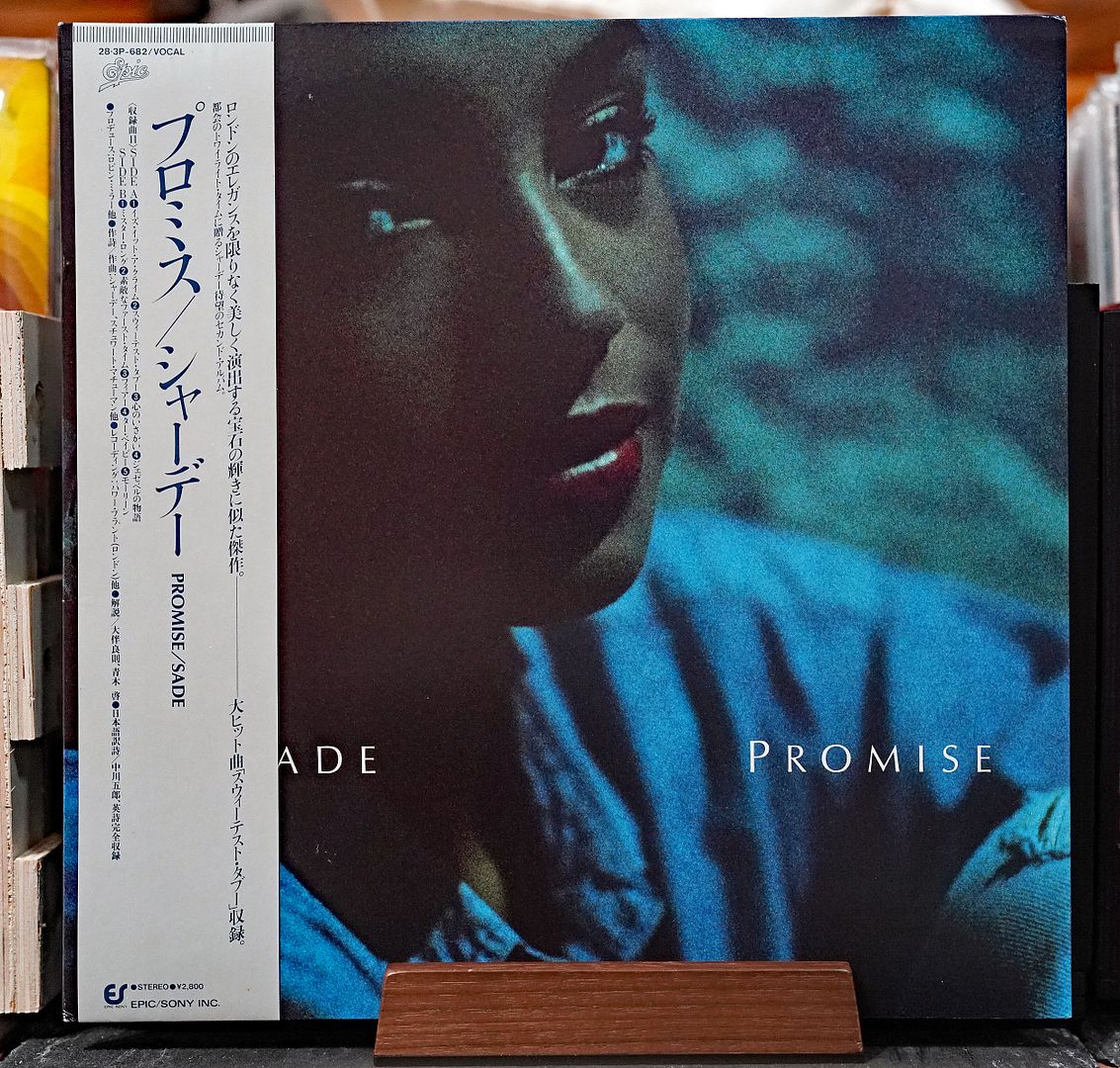
Off China Crisis "Working With Fire And Steel." Virgin. VIL-6090. Victor Musical mastering. Promo copy. 1983.
Runout: V - 2286B 111 *

5182afd7-4ffe-47fd-8190-ddab5a6242bc.jpg


7ff6b690-c2cb-49c4-9b51-0dc980582796.jpg
 
Nice! Are you running subwoofers?

Thanks for doing this! :) :thumbsup:

Yes, it is fun, thank you for posting your audio recording, and I’m glad that I saw your post prior to my listening session last night. I’m using a pair of TBI Emperor subwoofers. The microphone does not respond to the lowest frequencies so some of the low end does not get captured. Also when listening to these audio recordings, keep in mind that I’m recording from the listening chair position and what you hear on my recording is the composite resultant sound, while you are recording the direct sound of the speakers and not the sound at the listening chair position.
 
Keep in mind that I’m recording from the listening chair position and what you hear on my recording is the composite resultant sound, while you are recording the direct sound of the speakers and not the sound at the listening chair position.
One other thing that I've found out. The bass you hear in real time from your system (at listening distance) is different from the bass you hear on a recording. I could never get the real feel of the bass and bass-mid transition with mics at 8-10 foot listening distance. Also, the stereo is all smooshed together at these distances. Even though it seems fine in real time. I think the brain is doing a lot of processing that is eliminated in the recordings. Recordings reveal the pimples. :(

Bass energy drops off as the inverse square of the distance from the source. You really hear this in recordings.

You need mics that can handle 100+ dB without clipping or compressing the music. My favorite are large-diameter directional (hypercardioid) condenser mics :thumbsup:

Two mics separated by 24 inches. Recorded at a 10-foot distance from the plane of the speakers.

Recorded at 18 inches from the speaker's front.

Make It Real.
Off The Jet's "Magic." MCA Records. P-13585. Warner-Pioneer (Japan) pressing. 1987.
Run-out: P-13585-1 TO 1-A-1 A-Δ 〄

f72e3fed-a68e-4036-bc19-039105ea597b.jpg

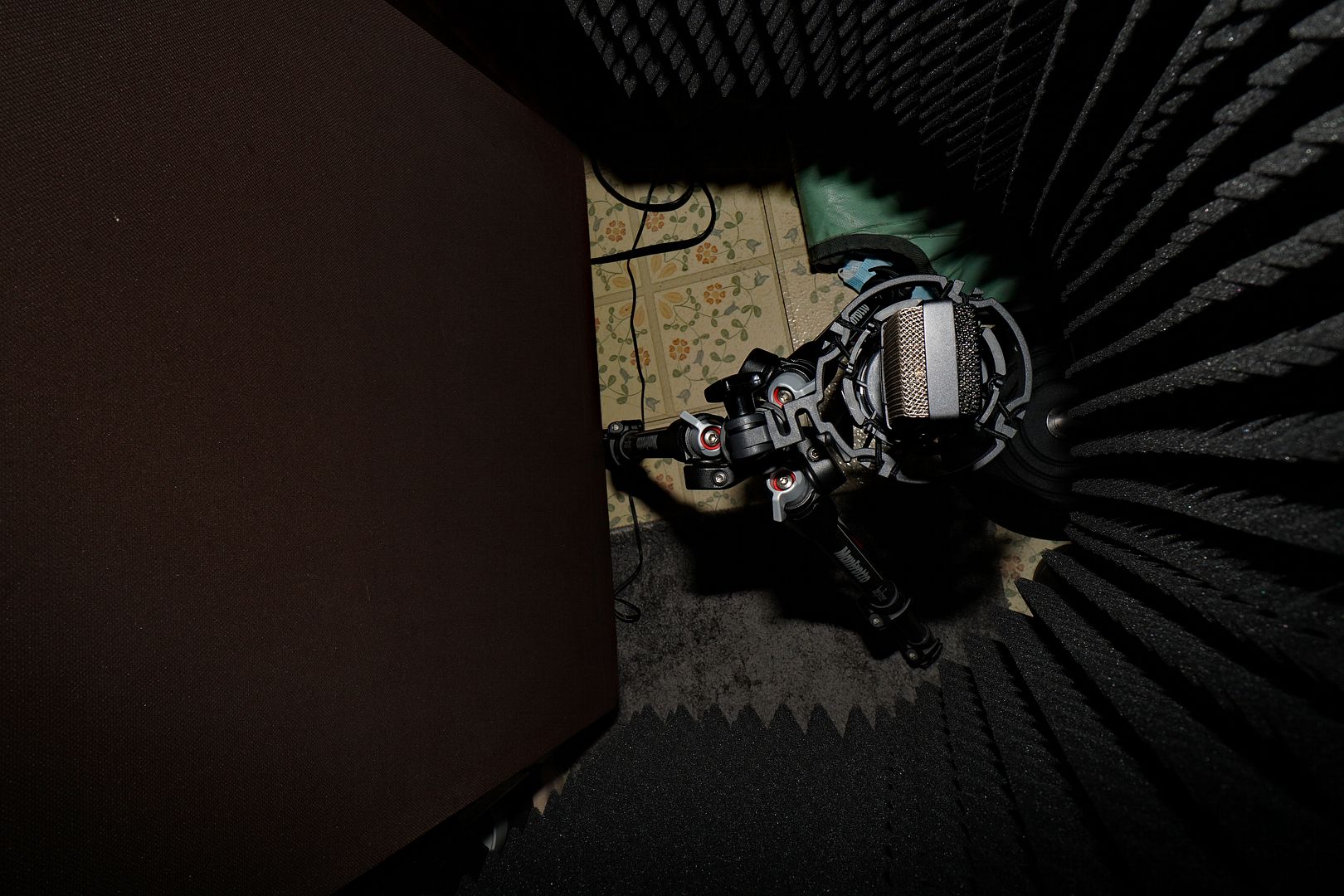
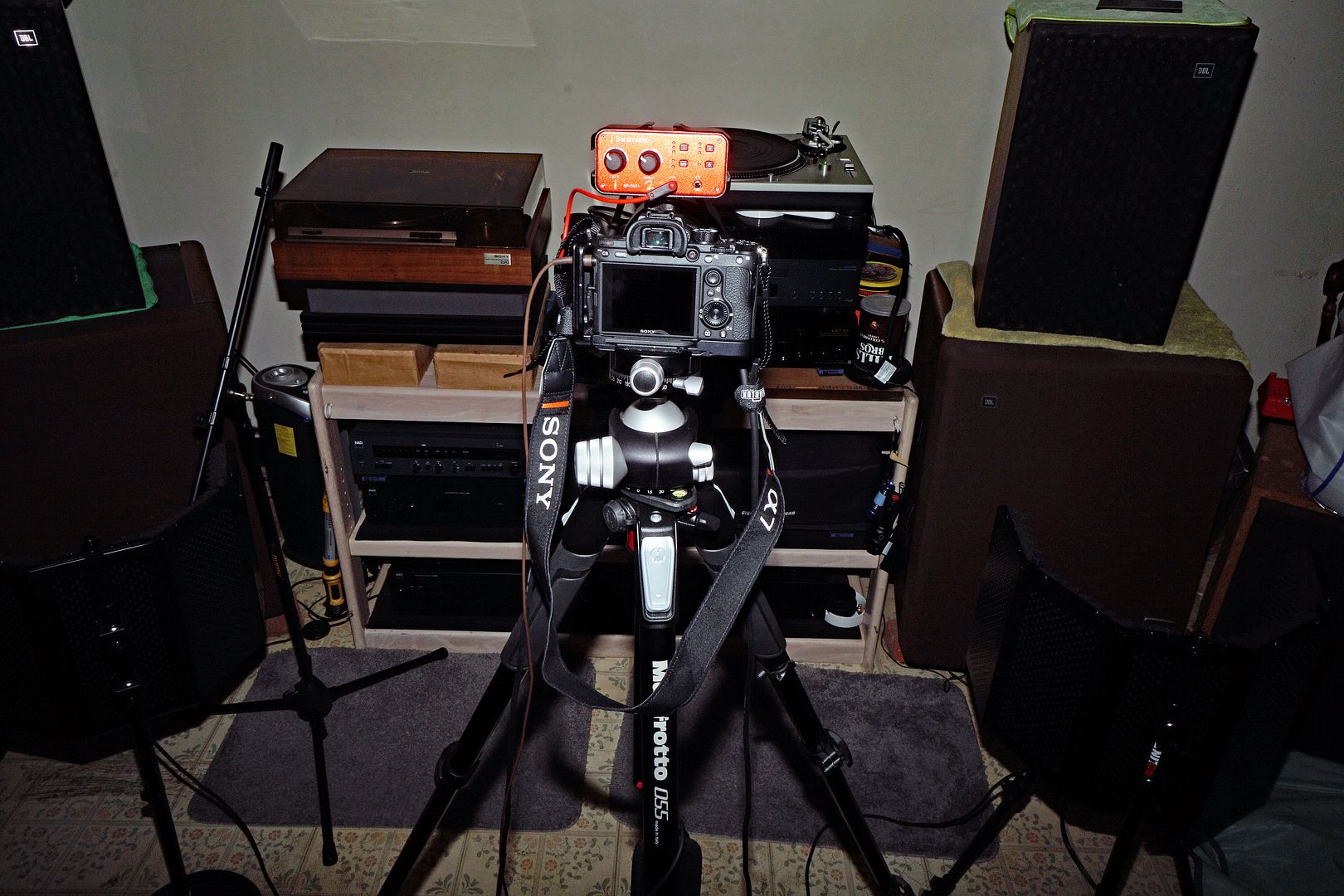
Mics are hiding behind the sound panels. In this photo, I had the mics at a distance of 28 inches. I did the Jets recording at 18 inches.

1f450dea-d63d-480f-84b6-50ef4ab900d1.jpg
 
Last edited:
One other thing that I've found out. The bass you hear in real time from your system (at listening distance) is different from the bass you hear on a recording. I could never get the real feel of the bass and bass-mid transition with mics at 8-10 foot listening distance. Also, the stereo is all smooshed together at these distances. Even though it seems fine in real time. I think the brain is doing a lot of processing that is eliminated in the recordings. Recordings reveal the pimples. :(

Bass energy drops off as the inverse square of the distance from the source. You really hear this in recordings.

You need mics that can handle 100+ dB without clipping or compressing the music. My favorite are large-diameter directional (hypercardioid) condenser mics :thumbsup:

Two mics separated by 24 inches. Recorded at a 10-foot distance from the plane of the speakers.

Recorded at 18 inches from the speaker's front.

Make It Real.
Off The Jet's "Magic." MCA Records. P-13585. Warner-Pioneer (Japan) pressing. 1987.
Run-out: P-13585-1 TO 1-A-1 A-Δ 〄

f72e3fed-a68e-4036-bc19-039105ea597b.jpg

Mics are hiding behind the sound panels. In this photo, I had the mics at a distance of 28 inches. I did the Jets recording at 18 inches.

1f450dea-d63d-480f-84b6-50ef4ab900d1.jpg

Excrly. Perfect example of what I was speaking of on your post above. Thank you for posting this compare and contrast example of the two methods with the same system, in the same room.
 
I havent been posted a video here in a while. The mic on my phone is less then ideal for recording now so I might wait a while and find a pair of matching condenser mic so I can properly record the audio right. However, I dont know what software has the ability to a an audio only recording and video only recording and sync them into one. I do have a digital mixer I use for our band which has the capabilities to multitrack audio to a computer. I currently use Cubase for track recording. Just need to get the video in sync.
 
I havent been posted a video here in a while. The mic on my phone is less then ideal for recording now so I might wait a while and find a pair of matching condenser mic so I can properly record the audio right. However, I dont know what software has the ability to a an audio only recording and video only recording and sync them into one. I do have a digital mixer I use for our band which has the capabilities to multitrack audio to a computer. I currently use Cubase for track recording. Just need to get the video in sync.
I use a mixer fed into my camera's MP4 software (3.5 mm stereo jack).

e9e79f93-231c-44cc-9173-4fbbc9bc9bec.jpg

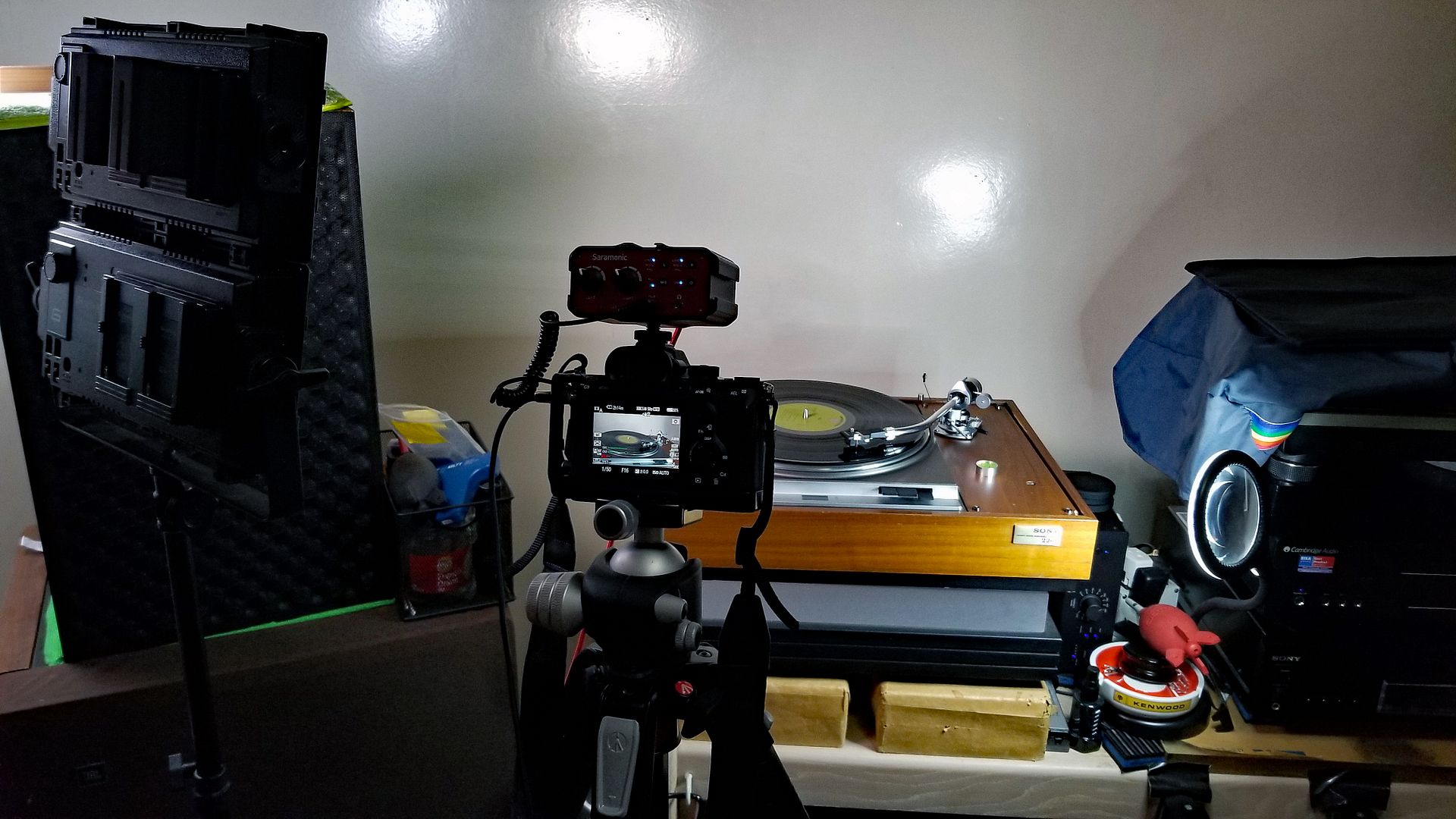
Saramonic on-camera mixer with Sony A7 camera.

3b8b8b0d-4bfa-427e-b495-1bb266193631.jpg

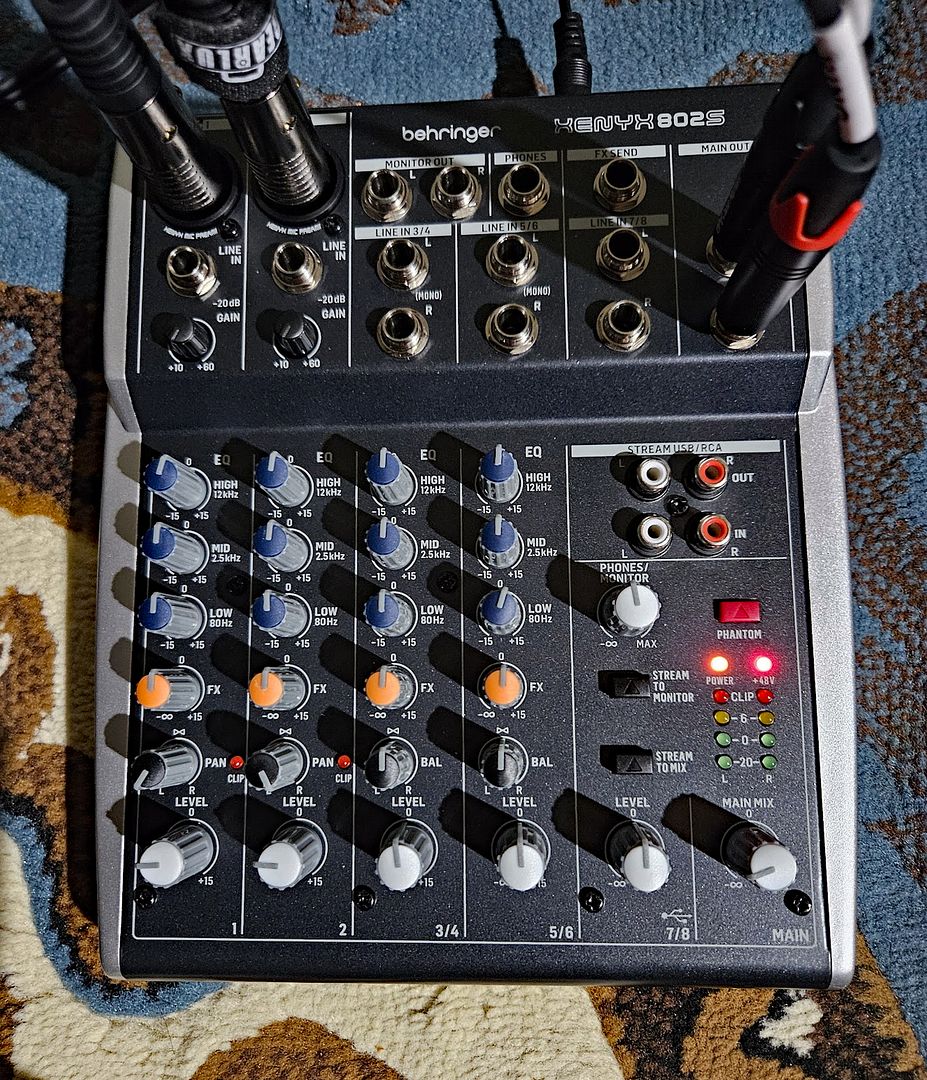
I've been using a separate Behringer mixer lately. For most large condenser mics, you need 48VDC phantom power.


You can hear that the phone's mic hardly picks up any of the subwoofer's output.

I'm uploading to Windows Media Player as an MP4 file. Then, upload to YouTube as an MP4 file. You can use Adobe Video Editor to change the format from a High Definition 1080p file (which can take a long time to upload) to 720p (which is significantly faster). The difference can be 2-3 minutes (720p) versus 20-30 minutes (1080p), depending on the Internet traffic at the time. To me, there isn't much difference in audio between the two formats. But, a big video difference.


cell phone iPhone mic frequency spectrum SMALL.jpg
Just as an aside. Phone mics and software are designed mostly for the human vocal range. They roll off, on top and bottom. With a bump between 5 and 10K.
 
Last edited:
Another note. As with live studio or band recordings, it takes several tries to get the camera volume (an important one) and the mixer right. Mic placement around the speaker is critical. One inch here or there makes a world of difference in the final product.

Good luck! :thumbsup:
 
Last edited:
Another note. As with live studio or band recordings, it takes several tries to get the camera volume (an important one) and the mixer right. Mic placement around the speaker is critical. One inch here or there makes a world of difference in the final product.

Good luck! :thumbsup:
Thanks. You can always monitor the output mix with your headphones prior to any adjustments. Where are you sending recording to and how? A other option you can do is get an interface like Focusrite. Make sure it has phantom power. :thumbsup:
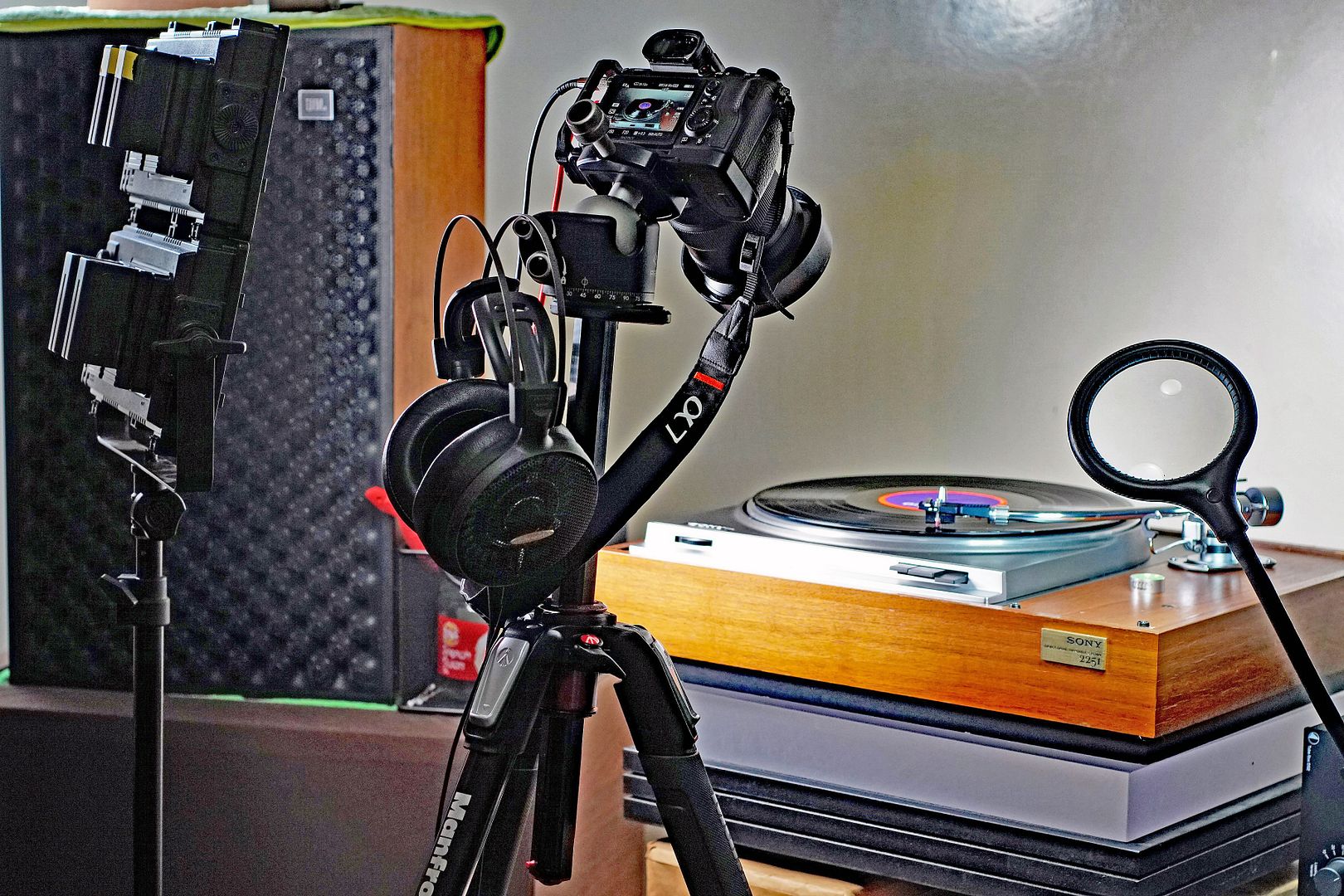
 
Thanks. You can always monitor the output mix with your headphones prior to any adjustments. Where are you sending recording to and how? A other option you can do is get an interface like Focusrite. Make sure it has phantom power. :thumbsup:
I always use headphones to monitor while recording and to check the MP4 files on my computer.

1e823bfb-a8de-4412-9639-21013fc68b58.jpg

I like using open-back headphones while recording. That way, I can hear any major background noises. This is important, as these mics are super sensitive and will pick up any and all extraneous noise, especially during lead-ins and run-outs — including cars on the street, accelerating outside the house (if a window is open). Strategically placed sound panels are a must for clean, quiet recordings.

The Sony A7 has a removable SD card for transferring the MP4 files from the camera to the computer. I like the Sony SD cards for the camera. They have a low failure rate. I have had issues with other cards. Some are faster, but seem more fragile for in-field use. I have a LEXAR USB 3.1 card reader attached to the computer.

Upload from the camera's SD card takes about 5 to 10 seconds for a 5-minute song.

A 5-minute song in 720p uses about 250 MB of hard drive space on the computer. A 1080p recording of the same song might be 600 MB or more.
 
Last edited:
I saw some Blondie tunes on YouTube. When I tried a few years ago, BMG blocked it. So, I'd thought I try today.

It worked! :thumbsup:

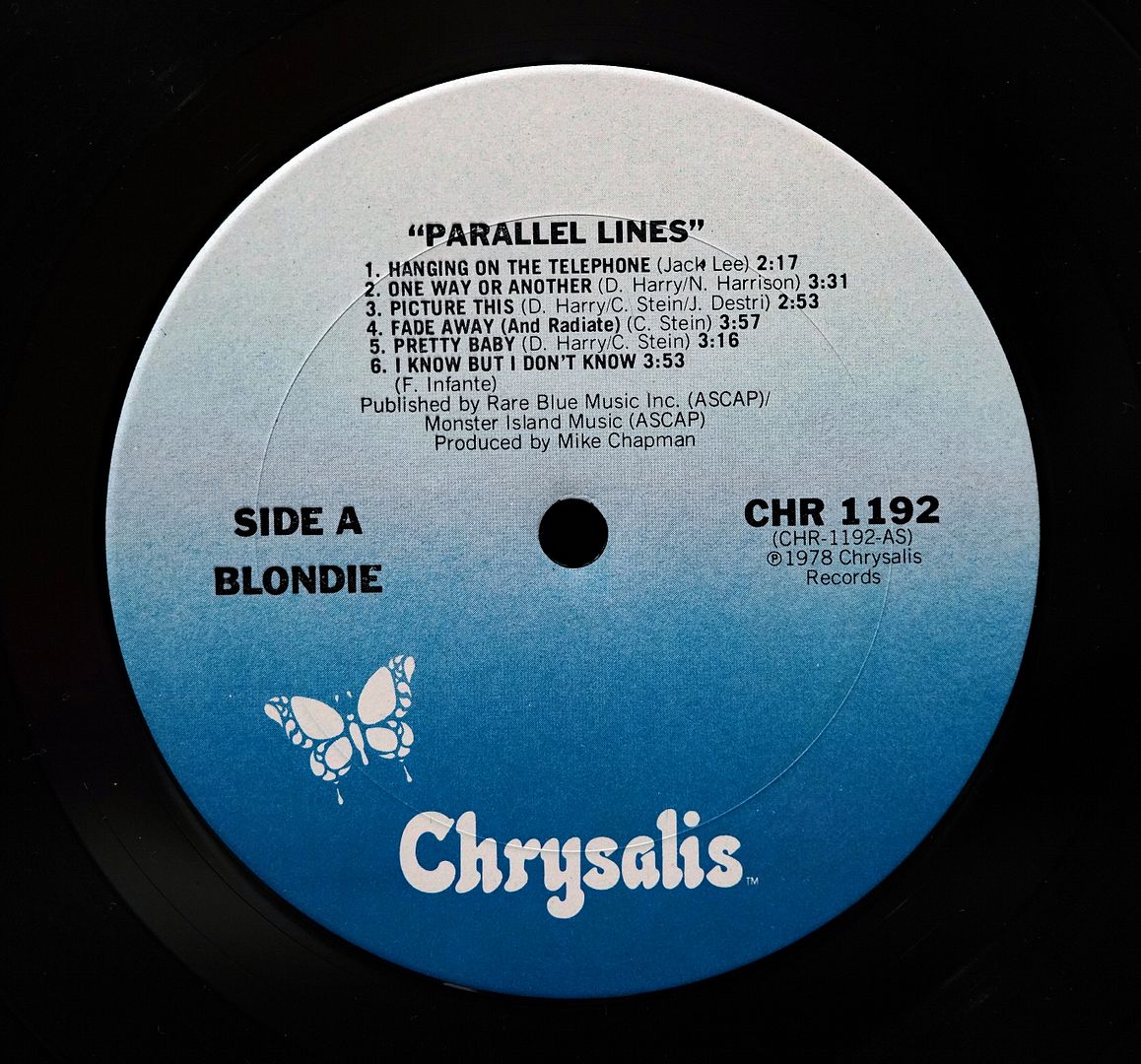
Sunday Girl.
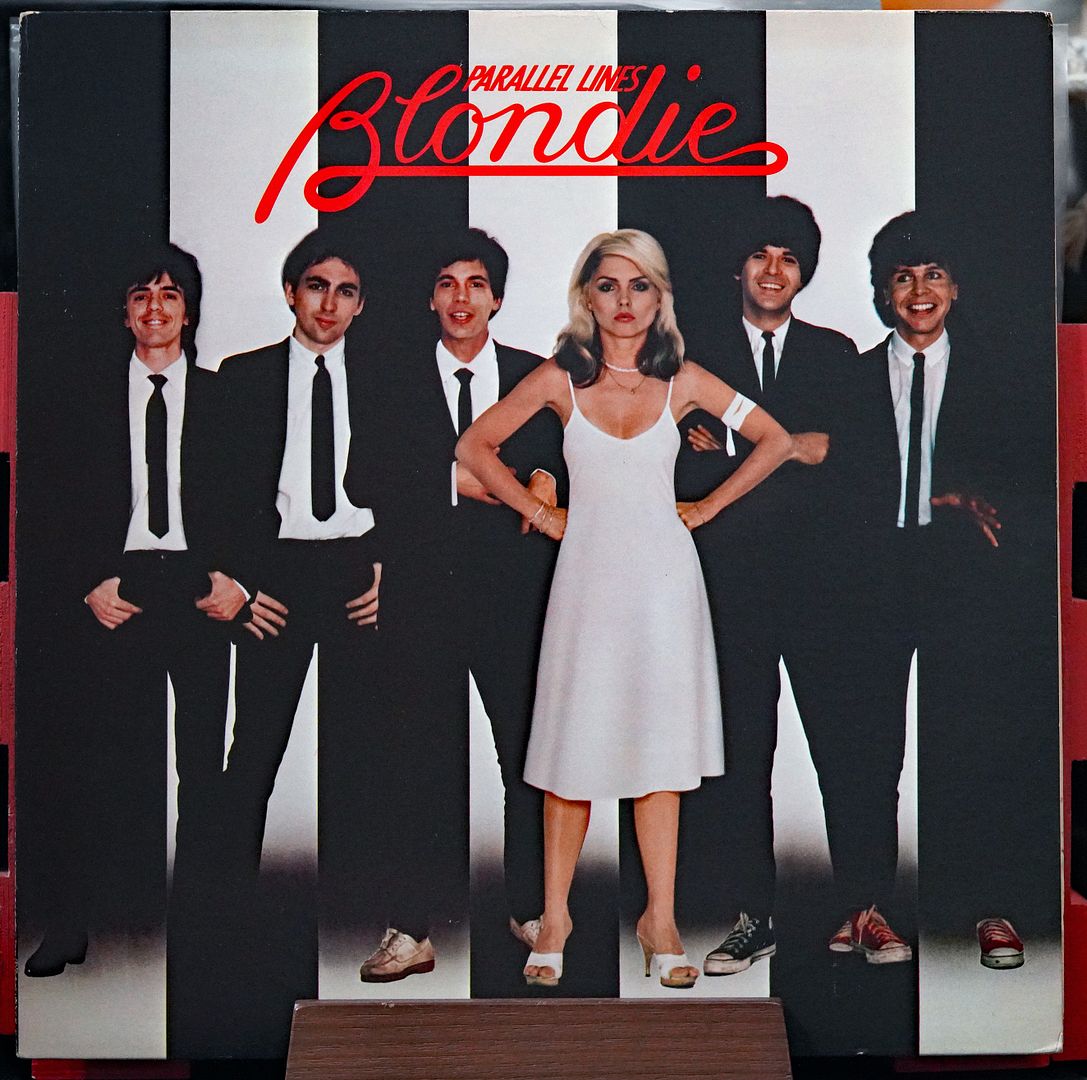
Blondie - "Parallel Lines." Chrysalis Records. CHR 1192. Terre Haute pressing. 1978.
Run-out: CHR-1192-AS-1B MCA-1 A3 1S

23b5e8cc-235b-47d6-b2e6-1fa47cb4cb87.jpg


7b9bf09e-6f3d-4296-bf03-1a1cd503d5cb.jpg
 
Last edited:
Mic placement can have a greater impact on the final product than any EQ controls. :)

The first video was done 4 years ago. Mics at 24 inches distance from the front of the speakers — centered between the top of the midrange horn lens and the tweeter (28 inches from the floor). Second video mics are closer (18 inches, 1/2-inch higher or closer to the tweeter). I also recorded the second upload at a higher ambient volume (prolly about 3dB louder on average, at one meter). Louder recordings can help maintain the dynamics of quieter tunes.

For this particular song, mic placement really does make a difference. Other songs with more instruments and background going on — are not as sensitive.


Early upload.

Uploaded last month.

0dc0cebc-773b-461f-a8a1-f378c1d0742f.jpg

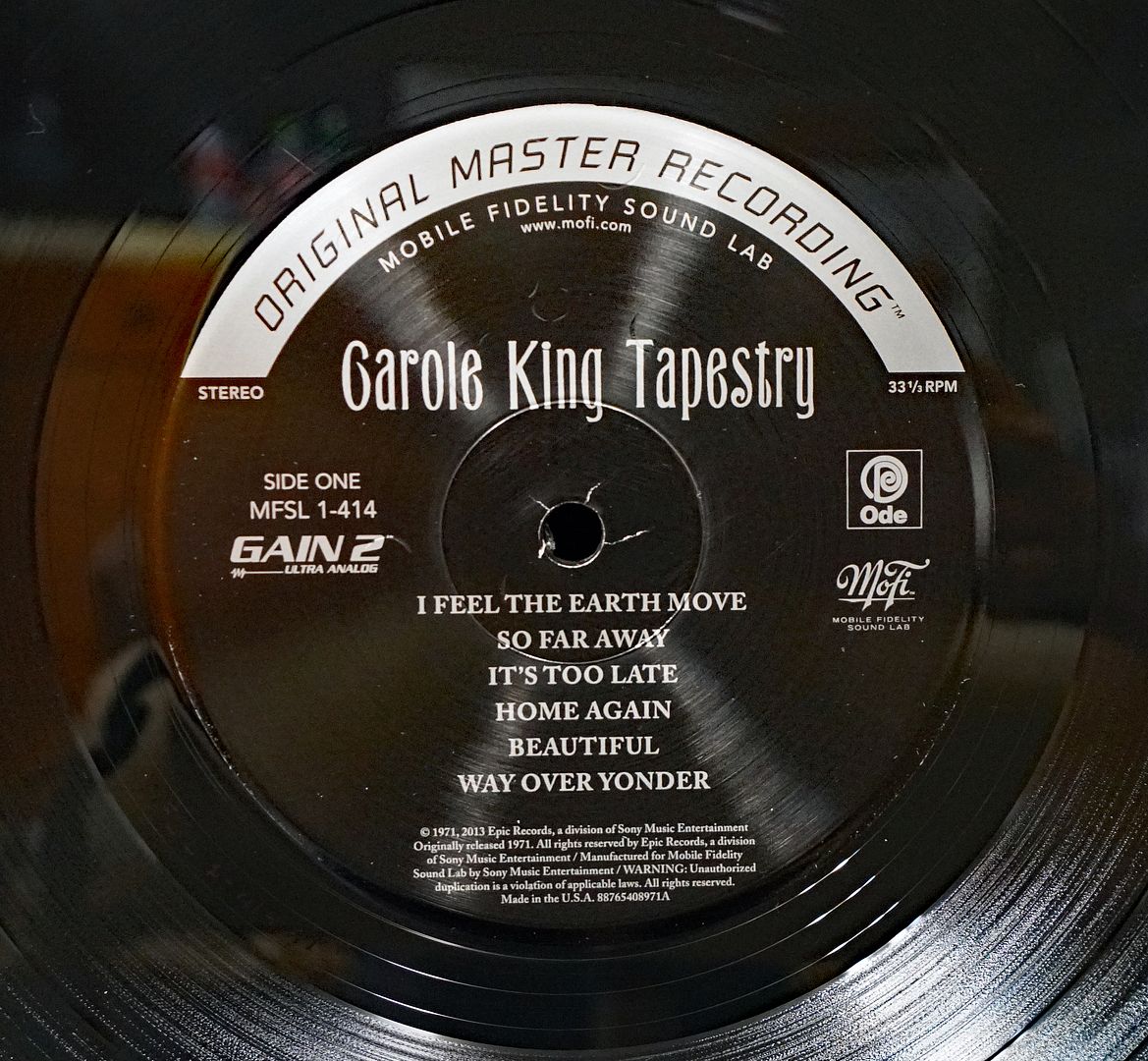
So Far Away.
Off "Tapestry." Mobile Fidelity. MFSL 1-414. Krieg Wunderlich remaster. 2013.
Run-out: MFSL1-414A1 KW @ MoFi 22358.2(3)m
 
Last edited:
Back
Top Bottom