Threadjack or no, this is an interesting discussion, and a worthy one -- probably worthy of some work by our mods to abstract it into its own thread, if Byrd would prefer.
The subject is relative merits of different 15" woofers, and that's where I started what I do, with which you are all quite familiar by now, many years ago. 2235H was my platform, an extraordinaily capable extended-bass kick-ass woofer that was used in the JBL 4430 Studio Monitor, font for EconoWave and similar 2-way designs for decades, which also happens to make beautiful subs that anyone can build DIY modeled on the B380. The little BX63A active crossover for those is an easy clone, and I'm surprised nobody has built up a bunch of those. Maybe ZilchLab will design/build a version of that with some additional features. As subs, the crossover is not essential; they'll run without it nicely, or with assist from an alternative external with the requisite VLF boost, as well.
2226H plays higher, with more articulate midrange and more "punch," does not reach as low, but with it's extraordinary power-handling capability, can also be used with assist to dig deeper. Over on LHF is a link to a design (I forget the name right now, but will try to look it up) which uses 2226H as an assisted sub. I never tried that, largely because I was off and running with my main gig, EconoWave, and never got the opportunity, which takes me to what I'd like to contribute here.
I don't do 15" 4430 equivalents anymore, though I do understand and appreciate them, and generally support the platform. There are two primary issues: 1) midrange articulation and 2) center-to-center distance between woofer and waveguide for directivity matching the design. 12" woofers are simply easier to get happening with these, and extended-bass is now offloaded to external subs(s) in many contemporary applications such as HT.
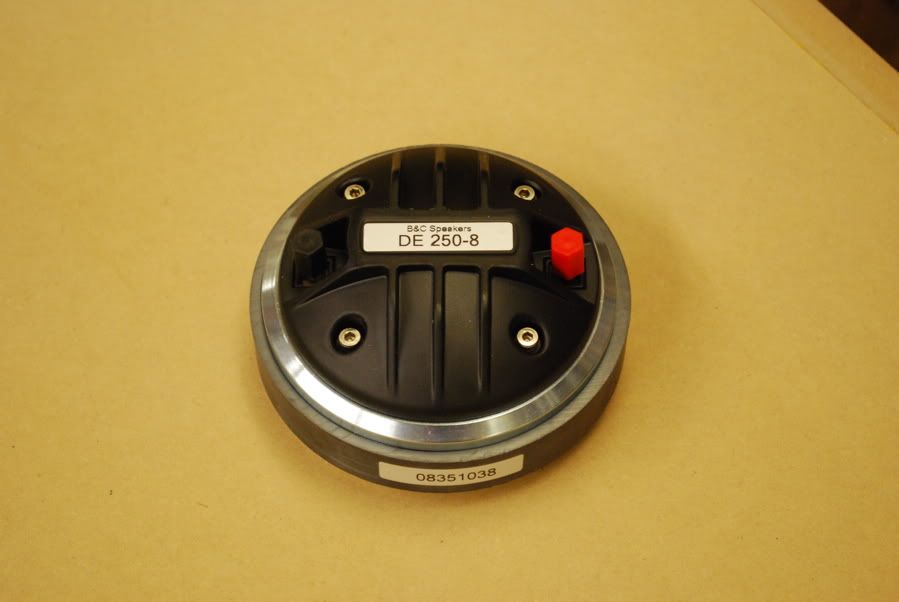
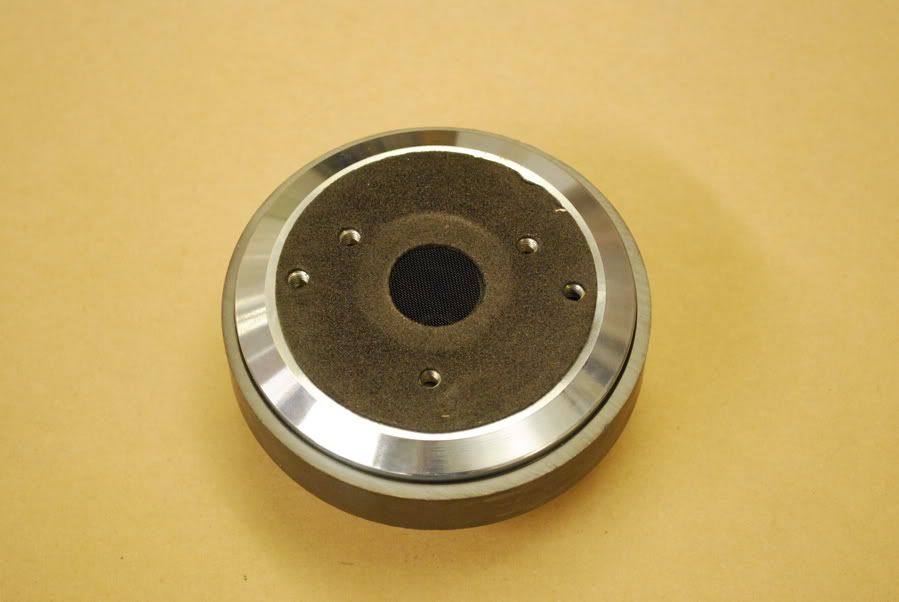
As soon as we start talking about 15" woofers that'll play to 2 kHz and beyond, it's merely an academic advantage in the context of what I do; the physics of piston diameter mandates 15" dispersion collapsing in the range of 100° an octave lower, at 4430's 1 kHz crossover frequency, typical horizontal beamwidth for directivity-matched 2-ways using waveguides in domestic applications. There is considerably leeway in achieving a successful blend through the transition region, and up to 1.5 kHz is probably well workable with careful design, but beyond that, not optimum, and I just don't see much of a point in paying a premium for unused HF extension capability. Yes, horns, waveguides, and compression drivers that'll play down to 800 Hz are available, and that works too, but pushing that envelope is not my gig anymore.
As Gordon just pointed out, more typical crossover frequencies above 1 kHz stretch the capabilities of 2235H with respect to midrange performance. Without the mass ring as 2234H, still available factory direct from JBL, gets up a bit higher, has higher efficiency, sounds nice, but loses a bit of LF extension. JBL doubled them up in 4435 running 2.5 mode to make up for that. Another option for getting here is to recone the 15" musical instrument woofers like E140 which have higher magnet strength than the 2225H/2234H/2235H motors and play nicely a bit higher up, as well.
The second issue is not so insignificant as many suppose -- for any given crossover frequency, the height of the resultant vertical forward lobe between the nulls is reduced as a consequence of center distance between the drivers, and what can be achieved with -6 dB as the definitive criterion is compromised by the larger diameter of 15" woofers themselves when mated with typical waveguides. Yes, with careful attention to steering the forward axis, acceptable compromise is achievable, as Wayne Parham does in his larger Pi-Speaker designs, but there's just not a wealth of understanding of what's required among DIYers with respect to this concept, and it takes measurement sophistication to work through it. Actively crossed with delay capabilities, it's easier, but you still end up with a relatively short forward lobe in comparison to what is more easily accomplished using smaller woofers snugged up with typical axi-asymmetric waveguides.....
The subject is relative merits of different 15" woofers, and that's where I started what I do, with which you are all quite familiar by now, many years ago. 2235H was my platform, an extraordinaily capable extended-bass kick-ass woofer that was used in the JBL 4430 Studio Monitor, font for EconoWave and similar 2-way designs for decades, which also happens to make beautiful subs that anyone can build DIY modeled on the B380. The little BX63A active crossover for those is an easy clone, and I'm surprised nobody has built up a bunch of those. Maybe ZilchLab will design/build a version of that with some additional features. As subs, the crossover is not essential; they'll run without it nicely, or with assist from an alternative external with the requisite VLF boost, as well.
2226H plays higher, with more articulate midrange and more "punch," does not reach as low, but with it's extraordinary power-handling capability, can also be used with assist to dig deeper. Over on LHF is a link to a design (I forget the name right now, but will try to look it up) which uses 2226H as an assisted sub. I never tried that, largely because I was off and running with my main gig, EconoWave, and never got the opportunity, which takes me to what I'd like to contribute here.
I don't do 15" 4430 equivalents anymore, though I do understand and appreciate them, and generally support the platform. There are two primary issues: 1) midrange articulation and 2) center-to-center distance between woofer and waveguide for directivity matching the design. 12" woofers are simply easier to get happening with these, and extended-bass is now offloaded to external subs(s) in many contemporary applications such as HT.
As soon as we start talking about 15" woofers that'll play to 2 kHz and beyond, it's merely an academic advantage in the context of what I do; the physics of piston diameter mandates 15" dispersion collapsing in the range of 100° an octave lower, at 4430's 1 kHz crossover frequency, typical horizontal beamwidth for directivity-matched 2-ways using waveguides in domestic applications. There is considerably leeway in achieving a successful blend through the transition region, and up to 1.5 kHz is probably well workable with careful design, but beyond that, not optimum, and I just don't see much of a point in paying a premium for unused HF extension capability. Yes, horns, waveguides, and compression drivers that'll play down to 800 Hz are available, and that works too, but pushing that envelope is not my gig anymore.
As Gordon just pointed out, more typical crossover frequencies above 1 kHz stretch the capabilities of 2235H with respect to midrange performance. Without the mass ring as 2234H, still available factory direct from JBL, gets up a bit higher, has higher efficiency, sounds nice, but loses a bit of LF extension. JBL doubled them up in 4435 running 2.5 mode to make up for that. Another option for getting here is to recone the 15" musical instrument woofers like E140 which have higher magnet strength than the 2225H/2234H/2235H motors and play nicely a bit higher up, as well.
The second issue is not so insignificant as many suppose -- for any given crossover frequency, the height of the resultant vertical forward lobe between the nulls is reduced as a consequence of center distance between the drivers, and what can be achieved with -6 dB as the definitive criterion is compromised by the larger diameter of 15" woofers themselves when mated with typical waveguides. Yes, with careful attention to steering the forward axis, acceptable compromise is achievable, as Wayne Parham does in his larger Pi-Speaker designs, but there's just not a wealth of understanding of what's required among DIYers with respect to this concept, and it takes measurement sophistication to work through it. Actively crossed with delay capabilities, it's easier, but you still end up with a relatively short forward lobe in comparison to what is more easily accomplished using smaller woofers snugged up with typical axi-asymmetric waveguides.....
Last edited: