The 0.1 would probably work fine though.
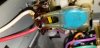
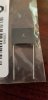
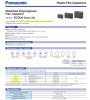
Thank you for this remark @egellings - this is from Panasonic:Any cap placed across the AC line needs to have the appropriate UL

I have the same figure, but there is more to it than you think. 4.5 mA on 120 V is a reactive power of 0.5VAr ("VAr" is the name of the reactive watt). Assuming you don't turn on the device at all, this means it draws 4.5 kVArh each year while not doing anything for you. Granted, this is not a big part of your yearly electricity bill, but if you consider that the cost of a kVArh is the same as a kWh (now that we have meters that measure both active and reactive powers), that small capacitor will cost you much more than its price in electricity for no particular reason, so you might want to pick the correct value in the first place. Many years ago a consumer association calculated that over its lifetime a domestic appliance (they took the example of a VCR) drew more energy when it was off than when you used it - not just because of the switch caps, of course, but they did have their share. And as I said, I've even seen a case (a turntable, if I remember well) where this very mistake caused the appliance to stay on while the switch was off - a strange experience.In this case the cap won't really drain anything, it will just pass some small amount of current through it to the load. Z of 0.1uf at 60hz is basically 26.5k, so 120v / 26500 = 4.5 milliamps of current leakage. Original 0.01 would have beeb 265k, so 0.45 ma of leak current.
I have never seen that, yet I've gone through a lot of old clunkers. I don't know what kind of machines you were working on, but I assume they were not the same as those that I work on. I've seen very high end machines (Schlumberger comes to mind) that don't even have an X capacitor and are still perfect after 50 years. It all depends on the specifics of the design, so if the schematic says you need an X capacitor, you may not need to try and improve it - especially given the difficulty to determine the right snubber and source it on the retail market. Besides, Kenwood engineers were not necessarily idiots, you know.I have seen an awful lot of failed switches that had an X (if even that) cap across them instead of a correct snubber.