Or lacking of... Before I retired I worked at a place where there was about 500-600 men and women who used to solder circuit boards. We did have a few flow soldering stations, but mostly they were soldered by hand. I used to always watch them and pick their brains. That's where my education in soldering began. That was many years ago. I also had a couple of friends who would teach me about working on radios, testing tubes etc. for several years. Now, I have a lot of radios and stereo equipment that has been sitting and waiting to see if I can get lucky to revive one or two. Obviously, my skills are limited. Any way, I have a McIntosh 7007 CD player that after several years of loyal service seems to have been damaged (along with another one) by another piece of audio equipment that went died and tried to them with it. So now I figure being I live out in the sticks and I already have replaced all the damaged audio equipment, so my music is still alive, finding a good tech. is getting harder and harder and honestly, I don't want to put all the $$$ into them that some techs. want. So, now I figure I'll practice my soldering skills replacing the resistors on this CD player. Right off the bat, I noticed that someone had replaced a couple of resistors and didn't seem to be a very good job of it. That's also when I noticed that this circuit board has traces on both sides of the board. Personally, I found that impressive. Thing is, the fit for resistors is tight...so I have to be very patient and very careful. I switched my soldering tip to a pointy one, I now spend a lot of time trying to get the solder out on both sides and I used the heat from the soldering tip to pry the resisters out the possible. I find being patient is a lot better than having to fix traces. If any of you guys have any tips or advice it would be appreciated.


You are using an out of date browser. It may not display this or other websites correctly.
You should upgrade or use an alternative browser.
You should upgrade or use an alternative browser.
Soldering skills
- Thread starter OldStuff
- Start date
Register to hide this ad


billyz
Super Member
Get some flux, it will be your friend. Sometimes it is better to cut the part out before desoldering. Takes a lot less heat to remove the remainder and less chance of damaging the board.Or lacking of... Before I retired I worked at a place where there was about 500-600 men and women who used to solder circuit boards. We did have a few flow soldering stations, but mostly they were soldered by hand. I used to always watch them and pick their brains. That's where my education in soldering began. That was many years ago. I also had a couple of friends who would teach me about working on radios, testing tubes etc. for several years. Now, I have a lot of radios and stereo equipment that has been sitting and waiting to see if I can get lucky to revive one or two. Obviously, my skills are limited. Any way, I have a McIntosh 7007 CD player that after several years of loyal service seems to have been damaged (along with another one) by another piece of audio equipment that went died and tried to them with it. So now I figure being I live out in the sticks and I already have replaced all the damaged audio equipment, so my music is still alive, finding a good tech. is getting harder and harder and honestly, I don't want to put all the $$$ into them that some techs. want. So, now I figure I'll practice my soldering skills replacing the resistors on this CD player. Right off the bat, I noticed that someone had replaced a couple of resistors and didn't seem to be a very good job of it. That's also when I noticed that this circuit board has traces on both sides of the board. Personally, I found that impressive. Thing is, the fit for resistors is tight...so I have to be very patient and very careful. I switched my soldering tip to a pointy one, I now spend a lot of time trying to get the solder out on both sides and I used the heat from the soldering tip to pry the resisters out the possible. I find being patient is a lot better than having to fix traces. If any of you guys have any tips or advice it would be appreciated.
The solder I use already has flux, is that what you are referring to? I would have never thought of cutting the resistor out, that sounds like good advice, I will try that, Thanks!Get some flux, it will be your friend. Sometimes it is better to cut the part out before desoldering. Takes a lot less heat to remove the remainder and less chance of damaging the board.


AudioAvarice
Super Member
I use a flux pen, which is basically a felt tip pen with flux in it, to add extra flux, alongside fluxcore solder. Works well, and keeps excess flux to a minimum.

Quadman2
Lunatic Member
what kind do you recommend?
Did a quick look-see online, and there' a host of variable heat iron for sale ($40-$100), with everything needed to go with it.
"Weller" as an estab brand that has been round for years, but lots more brands are offered, if not wanting to spend a lot on one.
Depends on how often, and what different temps you will require most times.
Q
Last edited:

mrehorst
Super Member
You'll be needing a solder sucker, too. I use this one.
The soft silicone tip makes it MUCH more effective than those things that have PTFE tips. It's a little small, but with practice you'll be able to handle it like a pro.
The soft silicone tip makes it MUCH more effective than those things that have PTFE tips. It's a little small, but with practice you'll be able to handle it like a pro.

I'd look at thrift stores for older, cheap electronics. Some actually check (at least power on) before putting it on the shelf. You could ask for their throwaway's.practice on something you don't care about first.

1tumbleweed
Kozmik Kowboy
I'll throw this in, since no-one has mentioned it yet: Always heat the work, not the solder. First thing I learned, in twelfth grade shop class.
I've never heard that either. Sure glad I started this post! I'm finding all kinds of gold nuggets. I use a Weller adjustable heat soldering iron. I've noticed that I've been having to turn the heat up a little at a time on this board. I think some of the old solder needs a higher heat . I have an old "Pace thermal control" system that I started to set up, but I never finished it. I'm not sure if it would help with this board. Number one thing I have learned working on it board is "Patience". I have to go back and forth, top and bottom to try to get all the solder I can out. I'm also using wick...there is probably a better way, but I don't know if a solder sucker would work, because it is taking a lot of heat to get the solder out. With my sharp pointed tip I can get the wick on the opening and will get a small pin drop of solder (if I'm patient). There is also no getting the resistor in unless I get ALL the solder out. In the past, I actually damaged a trace putting a resistor in. I need to look up PTFE tips, I've never heard of them. I think I have only 11 more resistors to go on this board, so there's hope. Oh... and maybe 4-5 more boards to go.I'll throw this in, since no-one has mentioned it yet: Always heat the work, not the solder. First thing I learned, in twelfth grade shop class.
billyz
Super Member
I run my weller wes51 full on most of the time . I try to heat the joint as quickly as possible. I seldom lift or damage a trace that way. Heating the joint at the lowest possible temp just heats it up longer . This is also where added flux and prewetting the tip helps . The joints go liquid faster. I always use a solder wick with added flux to the wick , really sucks up the old solder fast. I have tried the solder suckers with lesser results . But , I guess everyone has their technique that works best for them .

Oasis8
Well-Known Member
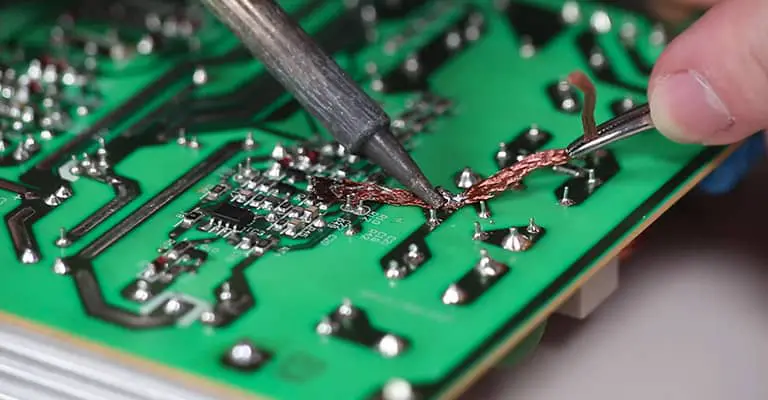
11 ways to remove solder you should know!
Do you need to remove solder from a project? Then my article will help! I outline 11 different ways you can remove solder easily.
 toolsdoctor.com

practice on something you don't care about first.
Painttoad gave you the best advice of the thread....... ya may really want to heed it....
Learning on your "keeper" equipment is a surefire recipe for disappointment. A McIntosh 7007 CD player sounds like more of a keeper to me than, for instance, a cheap kit from someone like Jameco electronics, , , , like this kit for example;
Build a few cheap kits from Jameco or another similar company, and in no time you'll be doing professional quality repairs on the stuff you want to keep

PS, along with all of the great advice the guys have posted here, don't discount the value of spending a few hours watching Utube video tutorials on soldering.... If a picture is worth a thousand words, a decent video is worth thousands of pictures. Watch a bunch of them and cross reference the info. Yeah, of course there will be some hackish oafs, but you'll quickly pick up on who has real skills. Follow their technique while building your cheap kits and soon that Mac will be spinning discs like new....

I only thought flux was used when soldering, not for removing solder. I have a new bottle of rosin flux, will it work? So, I guess I just dip the wick in the flux before I try to desolder? I noticed that some of the older solder takes a blow torch to get it to melt. So, running a Weller on full heat isn't hard on it? Desolder with a drill bit?? I can see my traces now... Even if I just used my fingers... not me,,, That would be like shooting myself in the foot with a 22 cal. then cleaning it out with a shotgun.I run my weller wes51 full on most of the time . I try to heat the joint as quickly as possible. I seldom lift or damage a trace that way. Heating the joint at the lowest possible temp just heats it up longer . This is also where added flux and prewetting the tip helps . The joints go liquid faster. I always use a solder wick with added flux to the wick , really sucks up the old solder fast. I have tried the solder suckers with lesser results . But , I guess everyone has their technique that works best for them .