• The move to the new server is done. There are some software and database maintenance updates in process. This has us passing the hat around to help out. We appreciate any donations. Seriously, even a dollar helps. The payment page may be found here - https://www.audiokarma.org/support.html

Sounds cuts out on subwoofer at higher volume

audio rookie

New Member
I have a powered subwoofer that recieved a loud surge of sound. Thats the way my son tells me. Here is the problem I am having. The sub is fine at low volumes, but as soon as the output is turned up it pops and cuts out. The sound will return once volume is decreased again. Nothing special about this sub, it is an old Atlantic Technology, so no big deal if it does not get fixed. No schematic. Outputs are the 2sc5200/2sa1943 pair and thinking to order those along with the IRF540 transistors. Looking for info from anyone if I am on the right path, or if I should be looking into something else?
 
Last edited:
Register to hide this ad
No amp expert but I'd not think it the outputs if it seems to work normal until you crank it up. If the outputs of an amp go out usually it no worky at all.
 
Not sure about going into protection. I will have to listen closer for a relay. The speaker itself is disconnected. And I did verify that the speaker is fine.
 
In my honest opinion, It sounds as if your thermal overload resistors have started to fail or a blown voice coil since it was a loud noise that started it all . The amplifier may need to be recapped. If you have access to the amplifier look and see if there is seepage of a brown gooey substance on the circuit board or if they have not gotten that far if there is a bulging of the capacitors themselves. If all is well there check the woofer for a blown voice coil, In fact, check the woofer first
 
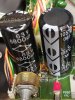
I did notice some of the brown stuff you are mentioning right at the bottom of the filter caps. (At least I assume these are filter caps, 6300µF, 63V). But it is very hard so i was thinking it just the glue to hold them in. I have read the stories about glue and shorting out components.
 
I did notice some of the brown stuff you are mentioning right at the bottom of the filter caps. (At least I assume these are filter caps, 6300µF, 63V). But it is very hard so i was thinking it just the glue to hold them in. I have read the stories about glue and shorting out components.

More than likely it is glue.

The couple of caps I've actually seen leaking looked more like an oily residue, not gobs of goo.
 
More than likely it is glue.

The couple of caps I've actually seen leaking looked more like an oily residue, not gobs of goo.
they would not have been glued in place, soldered yes, glue no. and it won't be gobs, just enough to let you know they've gone bad.
 
they would not have been glued in place, soldered yes, glue no. and it won't be gobs, just enough to let you know they've gone bad.

While I can't speak to the specific amp of topic, it is not uncommon for caps to have glue securing them to the board. And, yes, of course, solder in most cases (some large caps have screw terminals).

This isn't the best pic but it came up near the top in a quick search. Clearly there was glue used to help hold the caps. It's the stereotypical "brown stuff" but it's glue, not leaked electrolyte.

index.php
 
Last edited:
While I can't speak to the specific amp of topic, it is not uncommon for caps to have glue securing them to the board. And, yes, of course, solder in most cases (some large caps have screw terminals).

This isn't the best pic but it came up near the top in a quick search. Clearly there was glue used to help hold the caps. It's the stereotypical "brown stuff" but it's glue, not leaked electrolyte.

index.php
since neither of us knows how Atlantic Technologies manufactured their circuit boards I dare to say if they did or did not use glue. But looking how the other caps are mounted I don't agree with you, that's my opinion only!
From my search, I've found that glue is used to adhere item to a board if the initial solder joint has gone weak over a period of time causing erratic behaviour of the unit, and mostly used by journeymen that have no idea how to use a solder gun properly.
 
Glue was used on big components to hold them in place during wave soldering. The conveyor that takes the boards through the wave tends to rattle the boards about a bit...

Small, through-lead components would happily stay in place due to the friction of the long leads. These leads would then be removed by a rotocropper.

Big caps don't have long leads, and usually have big holes because the pin positions on the components aren't very accurate, and can't be adjusted by a stuffing machine. So they were commonly glued in place.

Even if large components are hand soldered, gluing them in place can make for more efficient production, as the technician doesn't have to find a way to hold iron, solder and component at the same time.

When SMD components were first introduced, we had to glue them to the board, too, otherwise they'd either drop off into the wave bed, or tombstone. We also learnt that the solder bed tin content eventually got too high, due to the component tin plating leaching into the bed.
 
since neither of us knows how Atlantic Technologies manufactured their circuit boards I dare to say if they did or did not use glue. But looking how the other caps are mounted I don't agree with you, that's my opinion only!
From my search, I've found that glue is used to adhere item to a board if the initial solder joint has gone weak over a period of time causing erratic behaviour of the unit, and mostly used by journeymen that have no idea how to use a solder gun properly.

There are countless examples where caps and other components are glued to the board by the OEM for added stability or aid in assembly, or whatever. It is fact.
 
I re-state, since i do not know how Atlantic manufactured their circuit boards or if the boards themselves were outsourced for Atlantic, nor have I seen the unit in question, I cannot agree or disagree with everyones opinion.
Just remember, this is a forum where anyone can voice their opinion when a fellow AK'er voices a problem and is looking for directions to look. I merely, suggested areas to to look at and to guide our fellow AK'er. My initial comment was pursuant to the age of the unit and the report given to him by his son as to what happened and the experience the owner had after the event.
 
1582242907978344055790352030784.jpg Ok. No need to battle over glue, or not glue. I think it is glue, trying to get a pic to load. Further testing, I do hear the relay click back into protection when I turn up the volume to the amp.
 
I have the same issue with my Atlantic Technology 172 PBM, I opened it up and visibly there doesn't seem to be any issues with the capacitors. I found this in the manual and maybe it could shed some light on the situation.

93204725_231189868094926_4053792023197515776_n.jpg
 
Back
Top Bottom